Critical Thinking Normal Word Problems Worksheets for 3-Year-Olds
3 filtered results
-
From - To
Introducing Critical Thinking Normal Word Problems Worksheets, specially designed for 3-year-olds! Foster young minds with our fun and engaging math challenges that blend basic arithmetic with everyday scenarios, sharpening problem-solving skills and comprehension. These thoughtful exercises pull three-year-olds into the magic world of numbers and reasoning. Perfect for home or classroom, the worksheets promote critical thinking development with creative, age-appropriate problems tailored to nurture little learners’ mathematical abilities. Boost confidence and ignite a lifelong love for learning with Kids Academy’s expertly crafted word problem worksheets, where play meets education in the most captivating way!
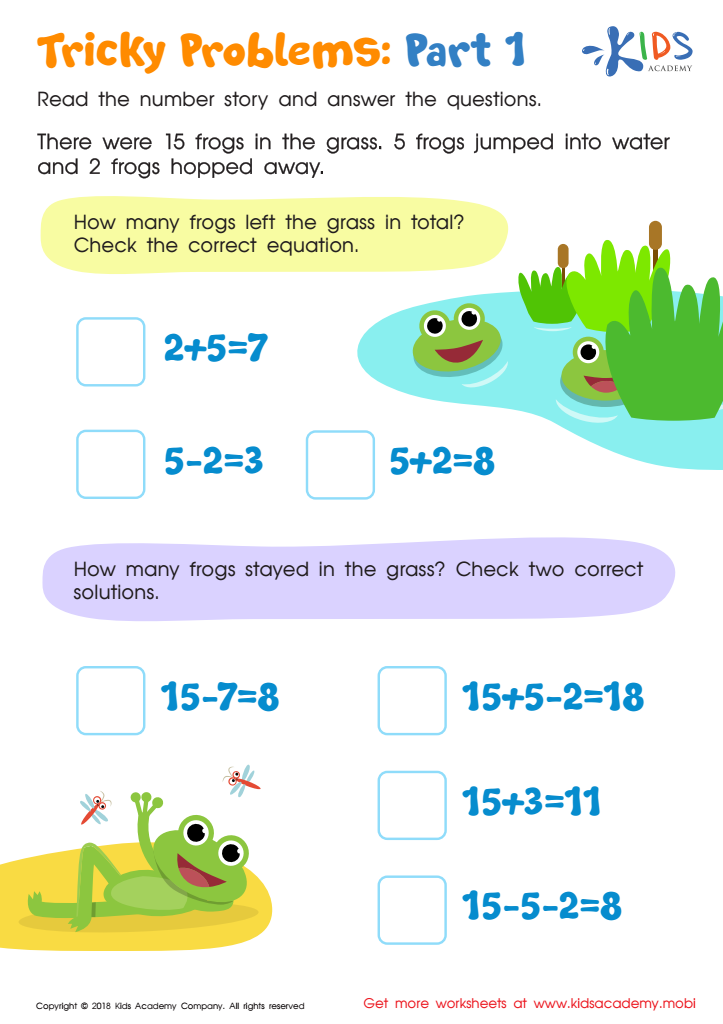
Tricky Problems Worksheet: Part 1
 Assign to My Students
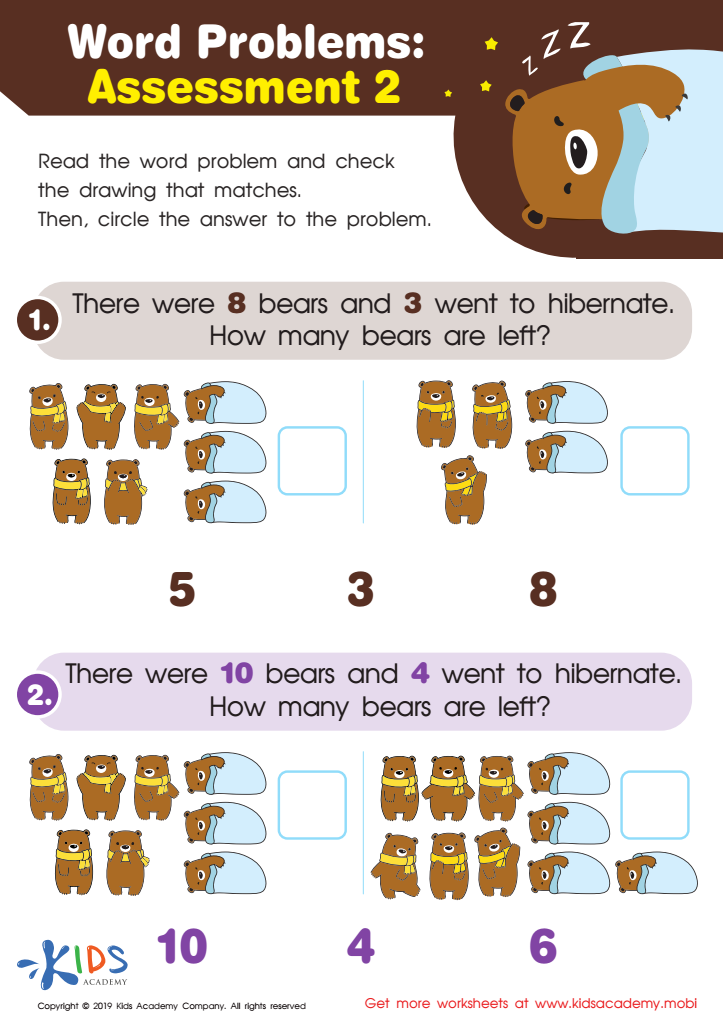
Word Problems: Assessment 2 Worksheet
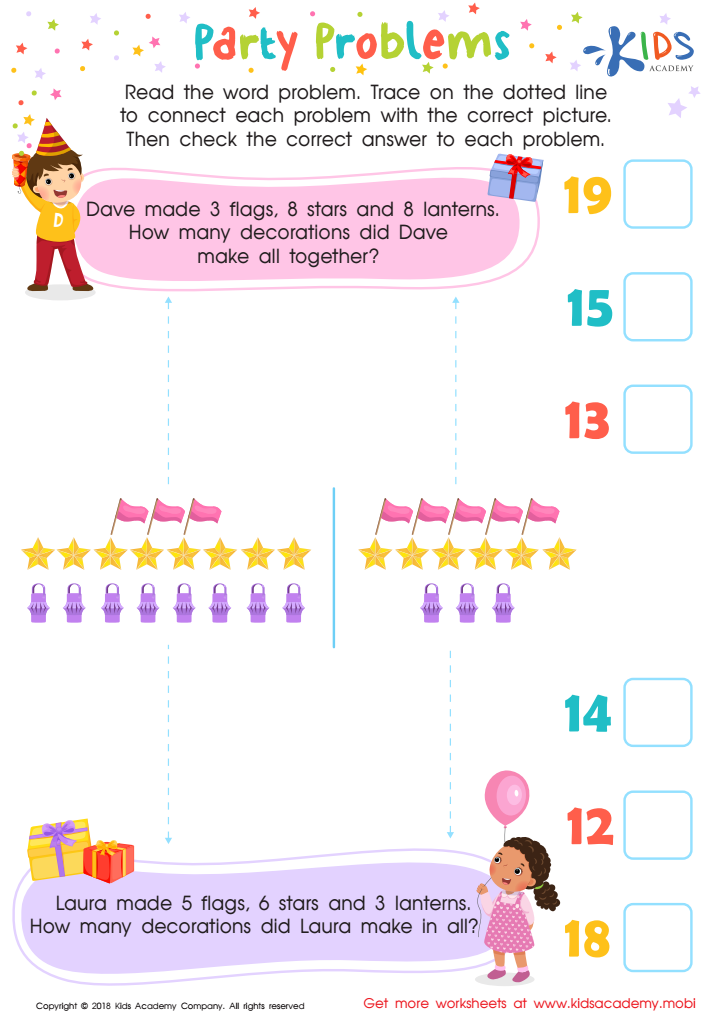
Party Problems Worksheet








Critical thinking is a foundational skill that supports children's lifelong learning and problem-solving abilities. Introducing critical thinking through normal word problems for 3-year-olds plays a crucial role in their early cognitive development. Young children are naturally curious and adventurous in exploring their environments. By engaging in age-appropriate word problems, they learn to apply logic, reasoning, and interpretation skills, which can shape their ability to analyze situations and make sound decisions.
Parents and teachers should care about fostering critical thinking at this early age because it provides several developmental benefits. These word problems nurture a child’s attention span, memory, and socio-emotional growth by encouraging active engagement and patience in finding solutions. Moreover, presenting young children with gentle challenges helps them build confidence and resilience, learning that making mistakes is part of the learning process.
Furthermore, critical thinking activities promote language development as children learn to comprehend and articulate their thought processes. This early exposure to problem-solving situations ignites curiosity and promotes a love for learning, setting a strong base for later academic and real-life challenges. By caring about these experiences, parents and teachers are equipping children with essential tools that extend well beyond the skill itself, contributing to their overall development and future success.








