Rhyming skills development Normal Reading Worksheets for 3-Year-Olds
3 filtered results
-
From - To
Our Rhyming Skills Development Normal Reading Worksheets for 3-Year-Olds provide a fun and engaging way to build early reading abilities. Designed specifically for preschool learners, these worksheets use colorful illustrations and simple word pairs to help children recognize and create rhymes. This early exposure to rhyming boosts phonemic awareness, which is crucial for developing strong reading skills. Our thoughtfully crafted activities encourage young minds to practice, play, and fall in love with language. Perfect for both classroom and home settings, our worksheets promote a joyful learning experience that sets the foundation for future literacy success.
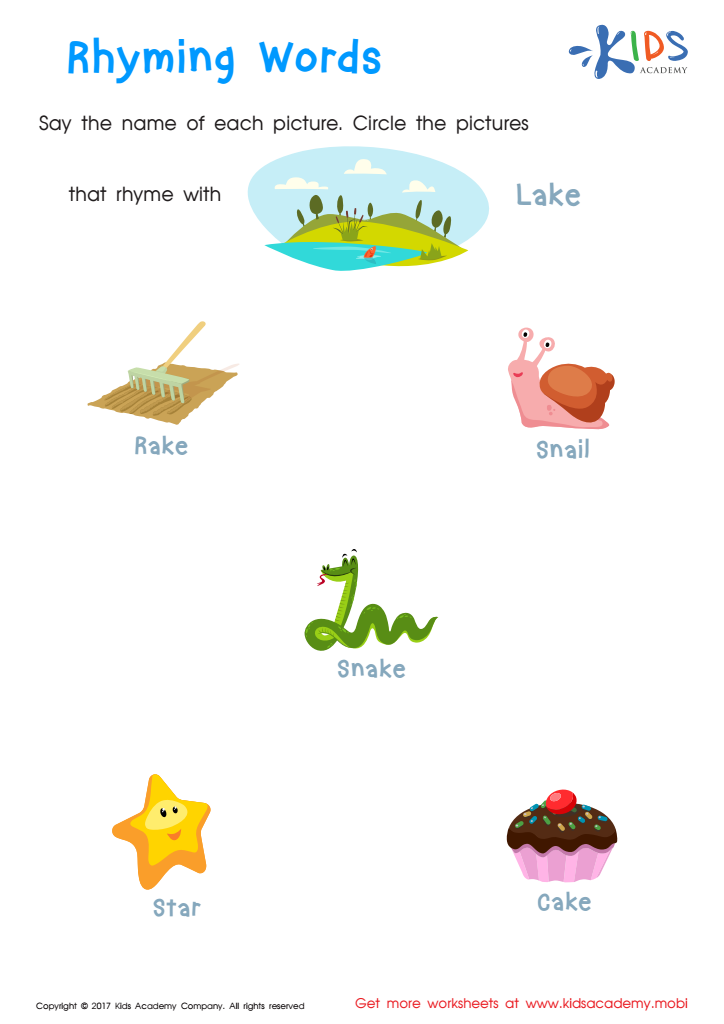
Rhyming Words Rhyming Worksheet
 Assign to My Students
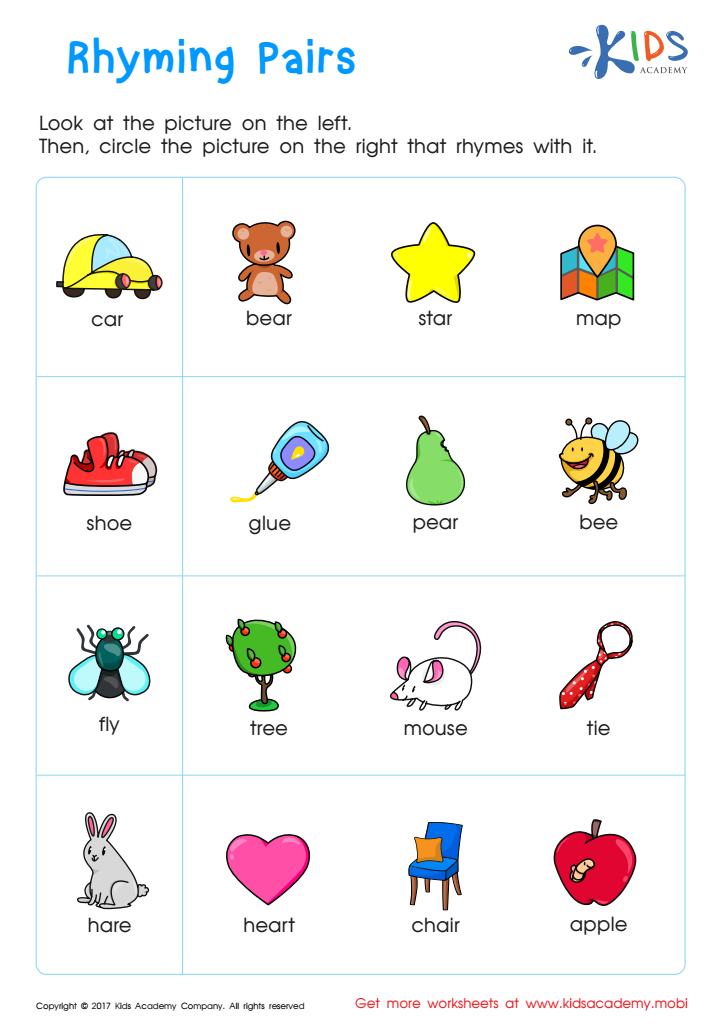
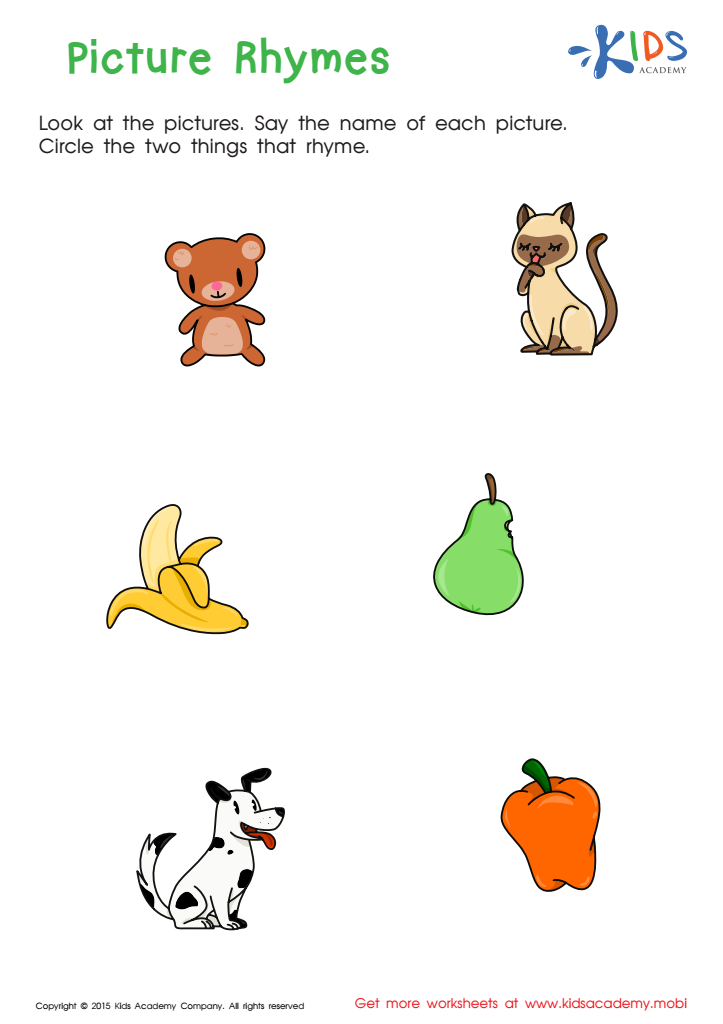
First Words: Picture Rhymes Worksheet








Developing rhyming skills in 3-year-olds is crucial for several foundational reasons. Firstly, rhyming enhances phonemic awareness, the ability to recognize and manipulate individual sounds in spoken words. This forms an essential building block for early reading skills. Through rhyming, children learn to identify patterns in sounds, which directly contributes to their understanding of how words are constructed, making it easier for them to decode and spell words as they progress in their reading journey.
Additionally, rhyming enriches vocabulary. As children are exposed to a variety of rhyming words, they naturally expand their vocabulary, which is fundamental for both language comprehension and communication. Rhyming also supports memory and cognitive function. Rhymes often come in rhythmic patterns, making information easier to remember, which bolsters both short-term and long-term memory.
Furthermore, engaging in rhyming games and activities fosters a love for language and reading. When parents and teachers involve children in playful, enjoyable rhyming exercises, it encourages a positive attitude toward literacy. Lastly, rhyming activities promote social interaction and bonding. Whether parents sing nursery rhymes or teachers conduct group rhyming games, these activities create a connection between the child and the adult, reinforcing emotional security and encouraging social skill development.
In sum, early rhyming skills pave the way for comprehensive reading and language proficiency, making them indispensably valuable for young learners.








