Counting skills Normal World Around Us Worksheets for 3-Year-Olds
3 filtered results
-
From - To
Enhance your 3-year-old's understanding of counting with our engaging "Counting Skills: Normal World Around Us Worksheets." Tailored for young learners, these worksheets introduce number recognition and basic counting through familiar themes from their environment, such as animals, plants, and everyday objects. Colorful illustrations and simple activities like matching and counting enhance your child's learning experience while making it fun! These resources support early math skills, promoting cognitive development. Ideal for parents and educators, our worksheets encourage experiential learning and foster confidence in counting. Start your child's mathematical journey today with these educational and entertaining materials!
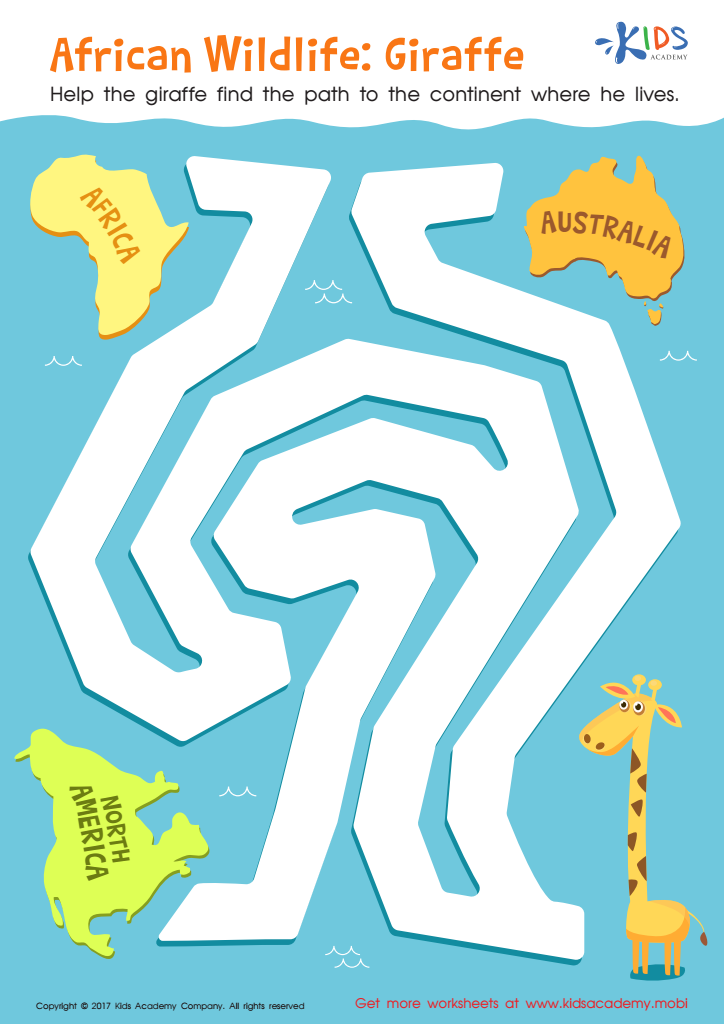
African Wildlife: Giraffe Worksheet
 Assign to My Students
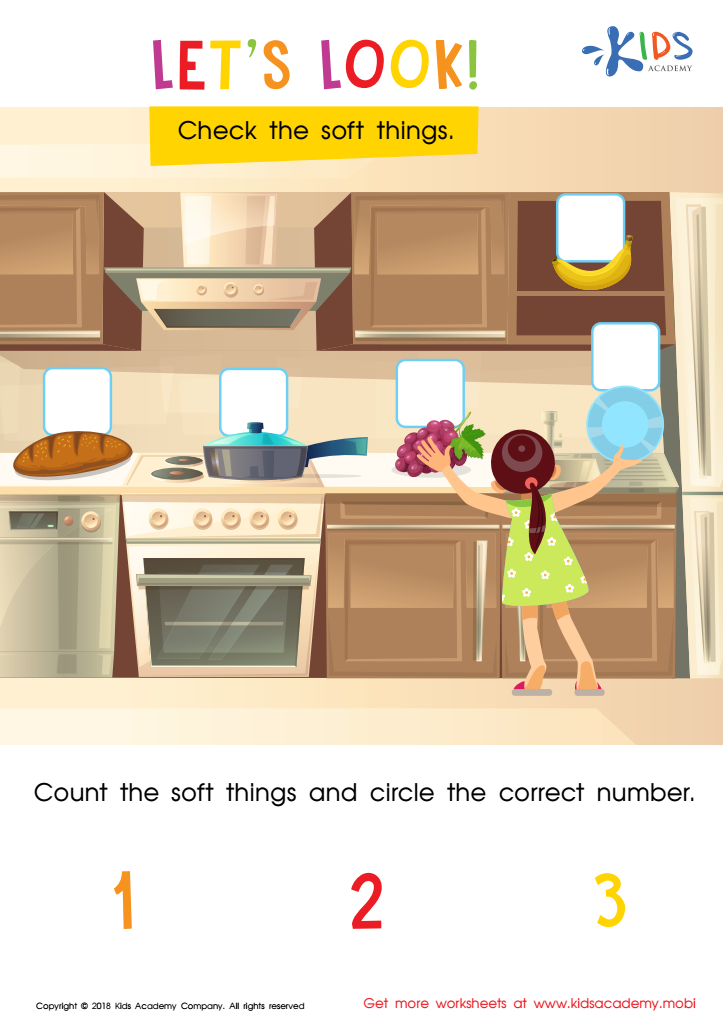
Let's Look! Assessment Worksheet
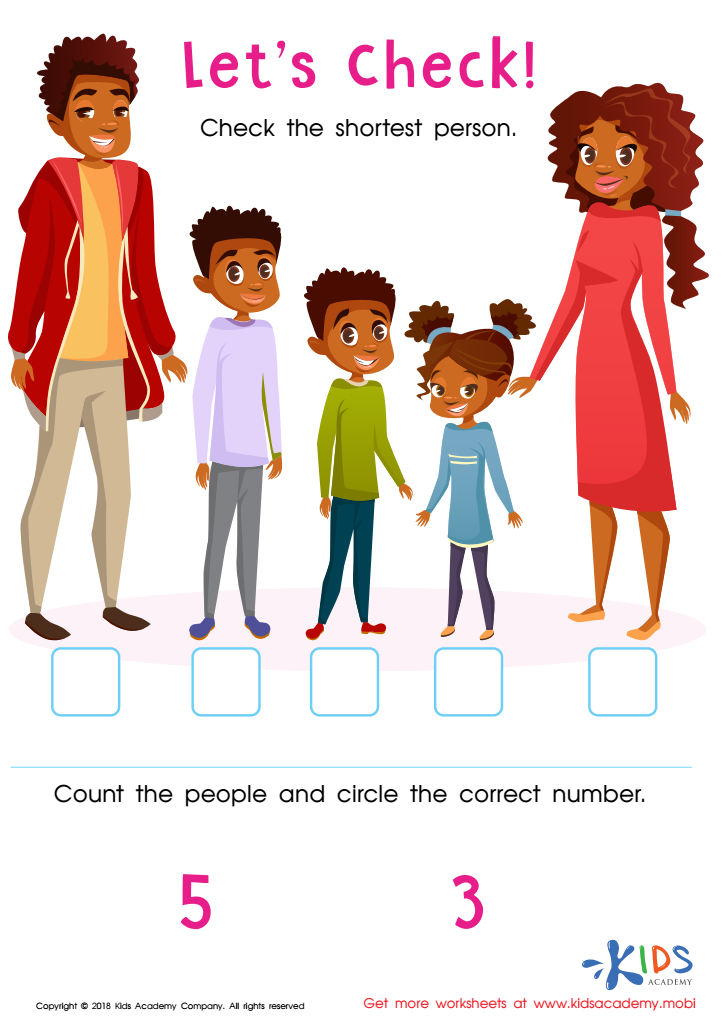
Let's Check! Assessment Worksheet







Counting skills are fundamental for young children's cognitive development and play a crucial role in their understanding of the world around them. For 3-year-olds, learning to count fosters early numeracy skills, builds a foundation for mathematical understanding, and enhances critical thinking abilities. Engaging in counting activities encourages children to recognize patterns, categorizing objects, and developing spatial awareness—all essential skills as they grow.
Moreover, counting is an integral part of real-life experiences. Whether it’s counting toys, steps while walking, or fruit at the grocery store, these everyday activities make mathematics relatable and fun. When parents and teachers introduce counting in familiar contexts, they help children make connections between numbers and their environment, transforming abstract concepts into tangible learning moments.
Supporting the development of counting skills also promotes a sense of accomplishment and boosts self-esteem. As children become more proficient in counting, they gain confidence in their abilities, which can encourage further exploration and learning.
Lastly, nurturing counting skills at an early age lays the groundwork for future academic success. By prioritizing counting activities, parents and teachers equip children with the essential tools they need for lifelong learning and problem-solving in a numerically-driven world.