Spelling Skills Normal Tracing Words Worksheets for 3-Year-Olds
4 filtered results
Difficulty Level
Grade
Age
-
From - To
Subject
Activity
Standards
Nurture early literacy with our "Spelling Skills Normal Tracing Words Worksheets for 3-Year-Olds." Designed to develop essential spelling abilities, these engaging worksheets help preschoolers recognize and trace simple words. Each playful exercise introduces foundational spelling concepts through age-appropriate activities. With visually appealing illustrations and interactive tasks, children will enjoy tracing letters while enhancing hand-eye coordination and fine motor skills. Perfect for parents and educators, our worksheets offer a balance of fun and education, preparing young learners for future writing success. Explore our collection today and give your child a head start in spelling and language development!
Favorites
With answer key
Interactive
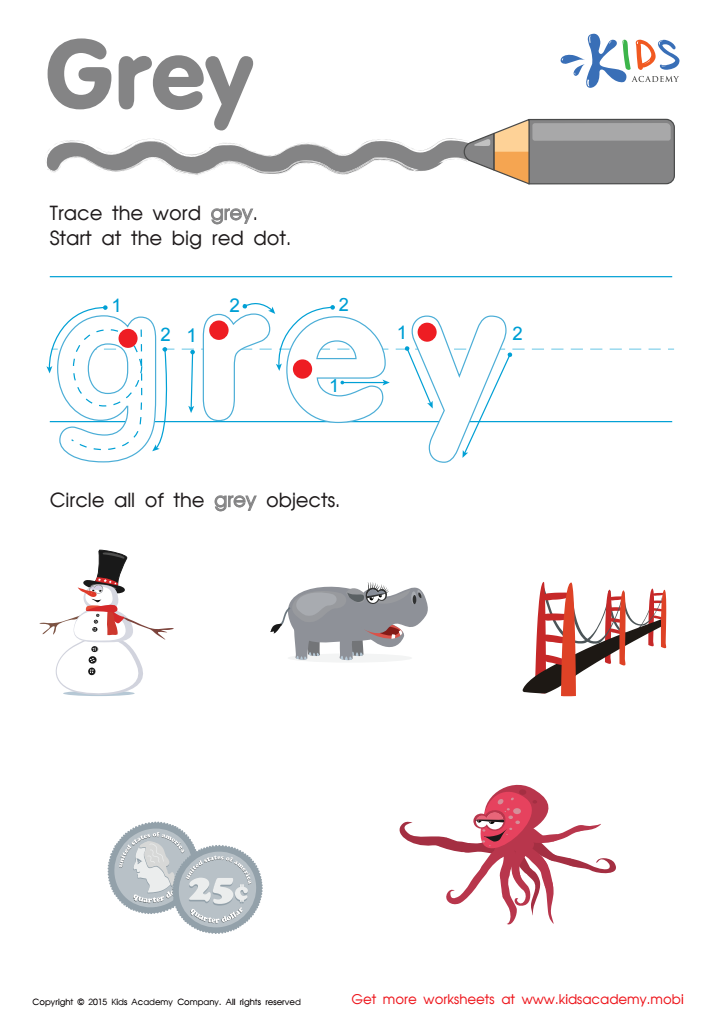
Grey Tracing Color Words Worksheet
Help your kindergartener boost their writing skills with this free printable handwriting worksheet! They can trace the sight word "grey" with a grey crayon, starting at the big red dots. Sounding out and tracing the letters can help strengthen their handwriting. Ask them to name and circle all the grey objects to give extra practice. Get more free worksheets here!
 Assign to My Students
Grey Tracing Color Words Worksheet
Worksheet
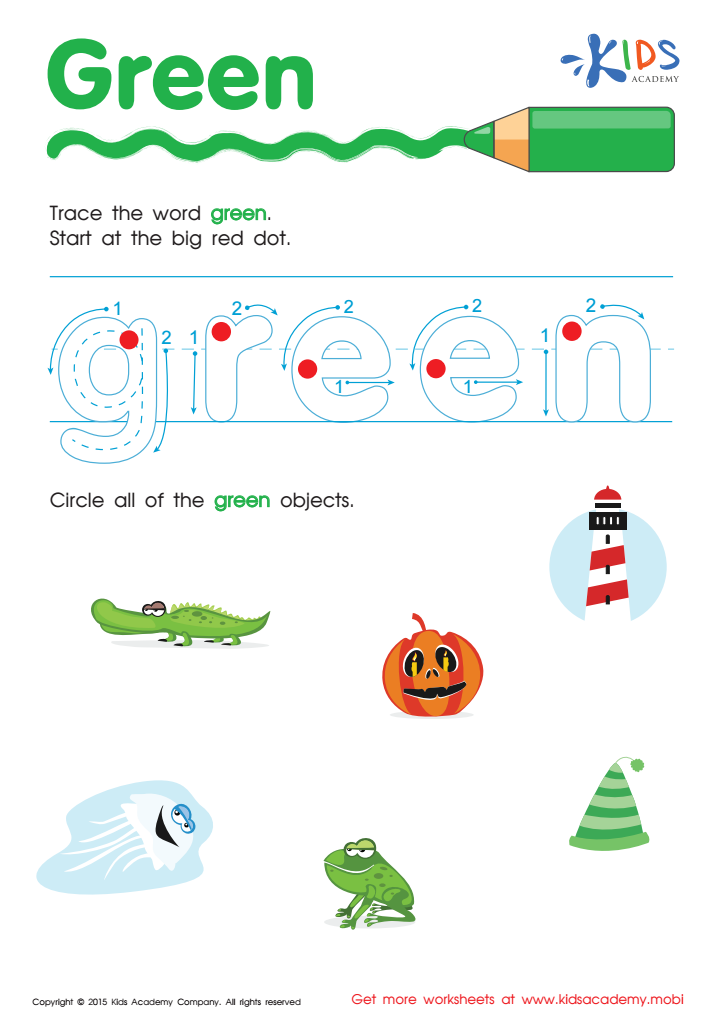
Green Tracing Color Words Worksheet
Encourage writing and spelling practice with this vibrant free handwriting worksheet. Have your child trace the new name of a primary color, "green," and circle green items in the picture. Ask them what else can be green for a challenging activity. Through this worksheet, your kindergartener can learn and play at the same time. For more free printables, look here.
Green Tracing Color Words Worksheet
Worksheet
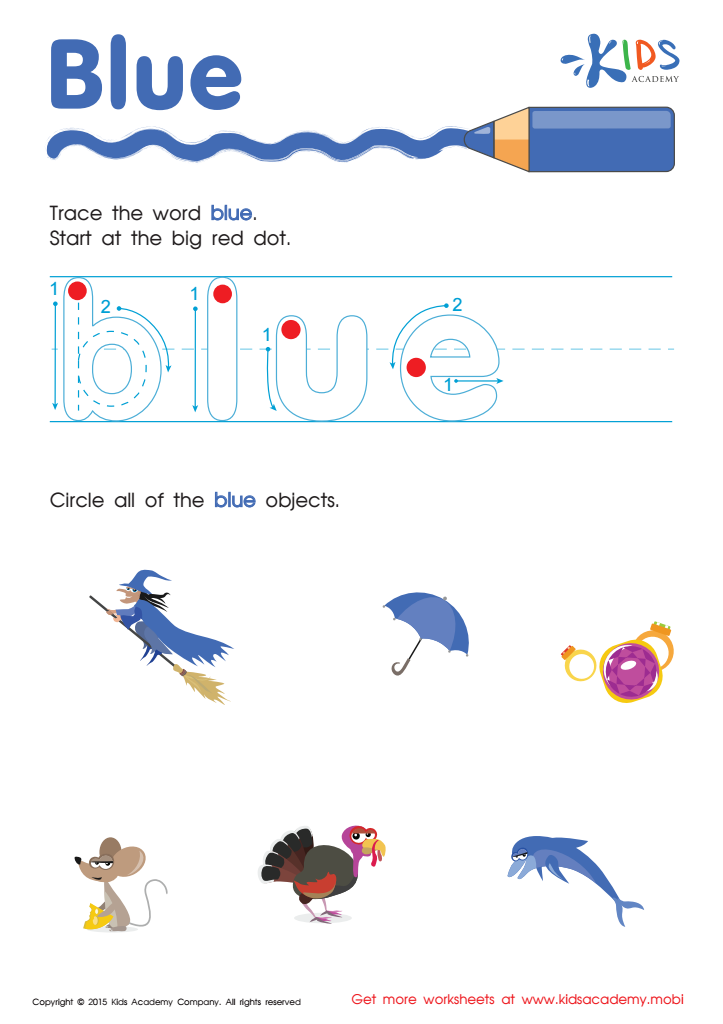
Blue Tracing Color Words Printable
Encourage your child's motor skills by having them trace the word "blue" with their blue crayon on this free printable handwriting worksheet, starting at the red dots. Ask them to circle all the blue objects they see. Check out here for more handwriting practice.
Blue Tracing Color Words Printable
Worksheet
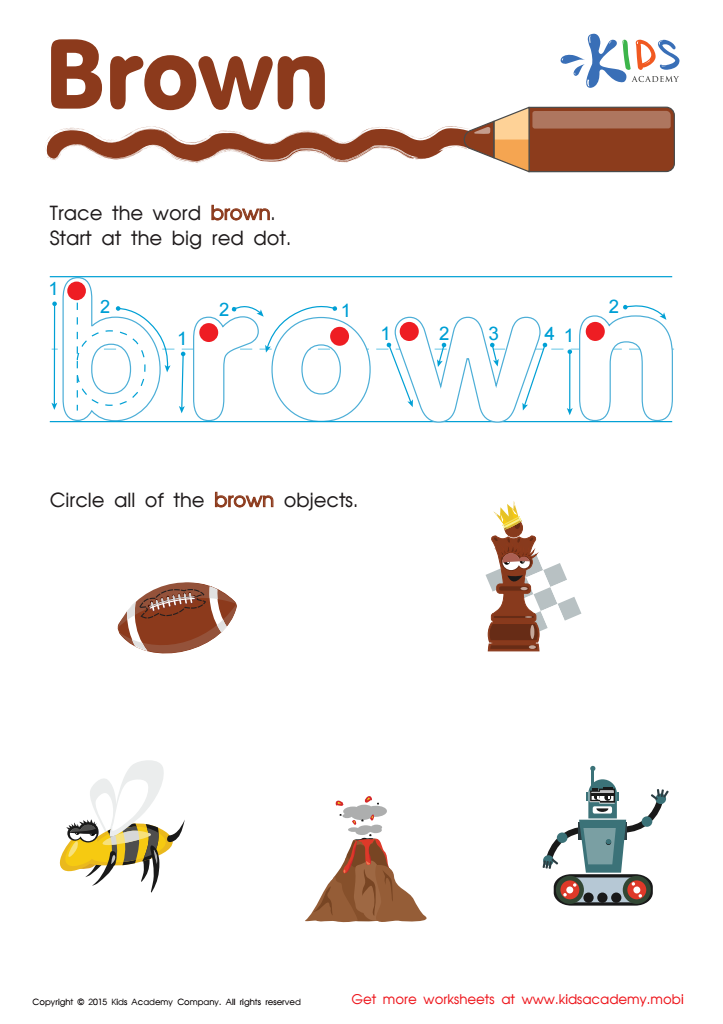
Brown Tracing Color Words Worksheet
This worksheet helps kids develop fine motor muscles and practice writing. Have them trace the word "brown" with a crayon, then find the brown objects in the picture. Ask them to look around and say what's brown in their room to make it more fun. Writing basics and a bit of fun - check out this free printable handwriting worksheet! For more tracing color words, check out here.
Brown Tracing Color Words Worksheet
Worksheet
Join Kids Academy for Free
Who is primarily going to use this learning content?








Spelling skills, even in simple forms like tracing words, play a crucial role in early childhood development for 3-year-olds. At this impressionable age, engaging in activities like normal word tracing can provide multiple benefits. First, it enhances fine motor skills; holding and controlling a pen or pencil helps young children develop the hand-eye coordination needed for writing. Second, it introduces letter recognition and phonetic awareness. By tracing, children begin associating shapes with sounds, which is foundational for reading.
Furthermore, such activities can foster cognitive development by enhancing memory and concentration. Spatial awareness and pattern recognition are also cultivated, as children learn the forms and structures of letters and words. The satisfaction of tracing successfully boosts self-esteem and encourages a positive attitude towards learning.
For parents and teachers, incorporating spelling skills via tracing into daily routines prepares children for future academic activities. It's not merely about letter formation—these early practices set the stage for literacy skills essential in all subjects. Consequently, investing time in tracing exercises for spelling aids smooth transitions into more complex language tasks, fostering a well-rounded early educational foundation. Ensuring these activities are engaging and appropriately challenging keeps young learners motivated and curious, paving the way for continued educational success.