
Basic math practice Normal Worksheets for Ages 4-5
3 filtered results
Difficulty Level
Grade
Age
-
From - To
Subject
Activity
Standards
Introducing our Basic Math Practice Worksheets for ages 4-5, designed to build strong foundational skills in young learners! These engaging worksheets cover essential math concepts such as counting, number recognition, simple addition, and subtraction. Each carefully crafted activity captures children's interest while making learning fun and interactive. Perfect for both classroom and at-home practice, our resources support early math proficiency and pave the way for future academic success. Help your child or students develop confidence in their math abilities with these age-appropriate, effective, and enjoyable worksheets from Kids Academy. Start their mathematical journey today!
Favorites
With answer key
Interactive
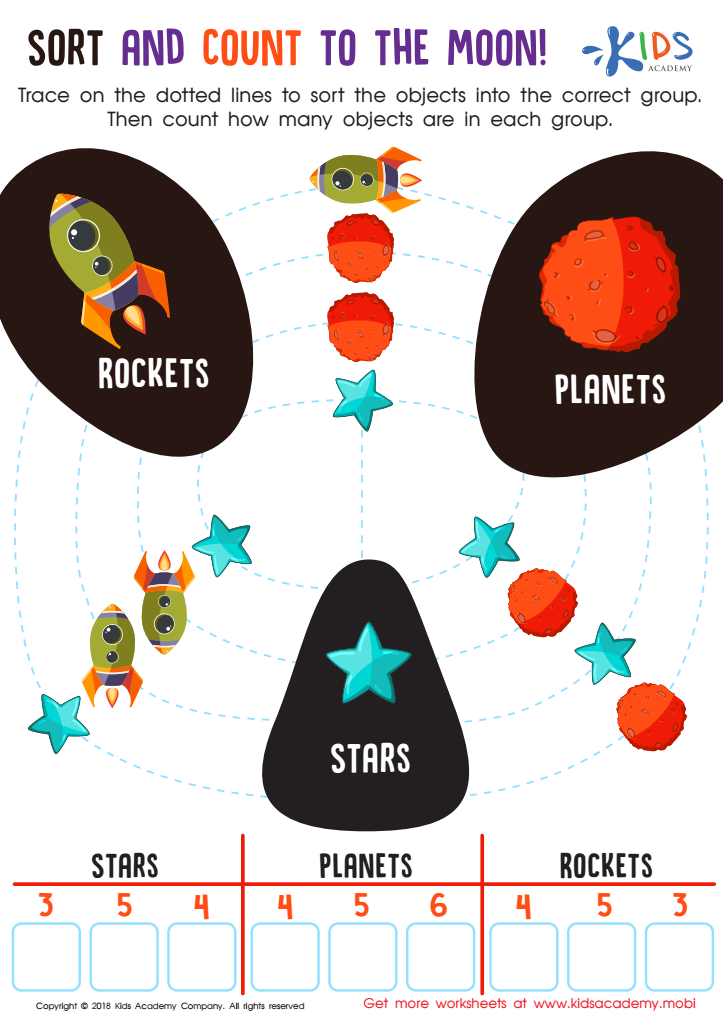
Sort and Count to the Moon Worksheet
Little space explorers will love counting, sorting and strengthening number sense with this galactic worksheet! They'll use traceable lines to sort pictures of stars, planets and rockets into categories according to properties. After sorting, they'll count each item and fill in the boxes. Bold pictures make it fun and build critical thinking skills.
 Assign to My Students
Sort and Count to the Moon Worksheet
Worksheet
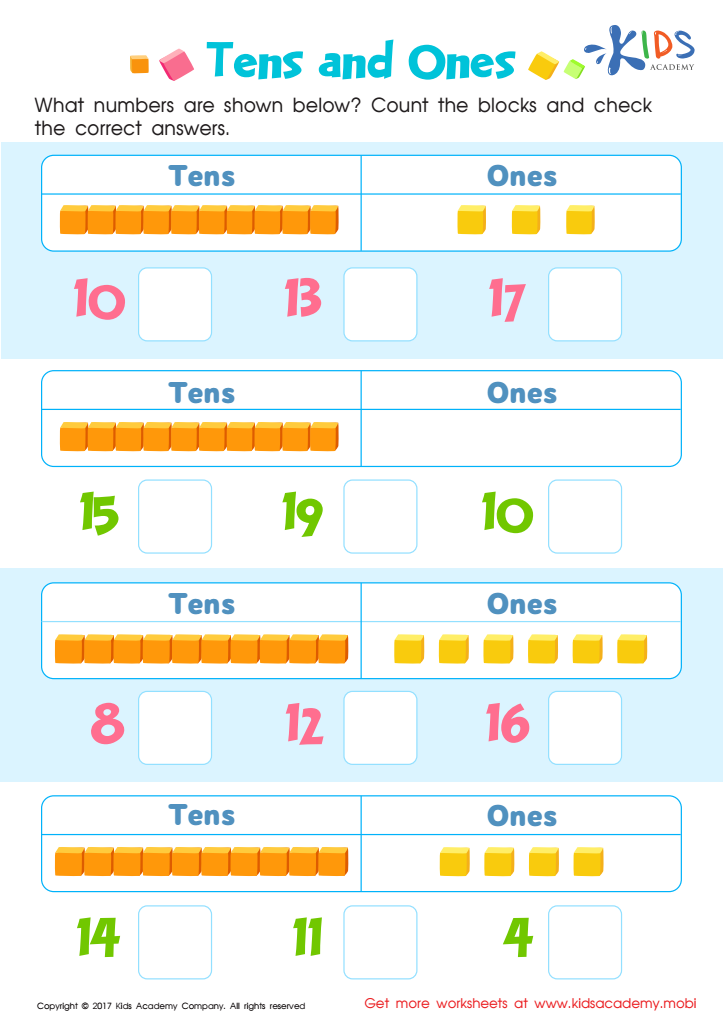
Tens and Ones Worksheet
Help your child make math fun with this worksheet! Count the blocks on both sides and enter the total in the box below the figures. This will help them overcome any math-related anxieties they might have and let them enjoy the learning process.
Tens and Ones Worksheet
Worksheet
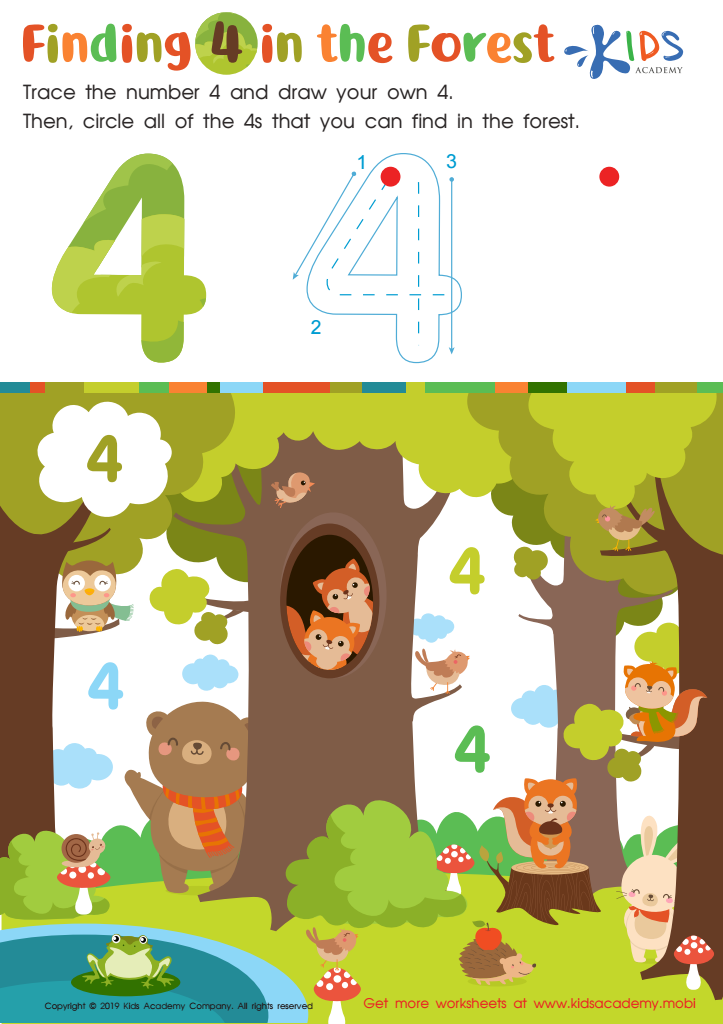
Finding 4 in the Forest Worksheet
Before starting, have your kids count as high as they can. Ask them to identify the setting and point out the 4s. Trace 4 and draw your own. Help your kids circle all the 4s they can find in the forest. How far can they count? How well did they find the hidden 4s?
Finding 4 in the Forest Worksheet
Worksheet
Join Kids Academy for Free
Who is primarily going to use this learning content?


.jpg)




Basic math practice for children aged 4-5 is essential as it lays the foundation for their future mathematical learning and overall academic success. Early exposure to math concepts such as counting, number recognition, basic arithmetic, and pattern identification helps children develop critical thinking and problem-solving skills. These skills are not only important for their math courses but also for other areas like science, technology, and everyday life.
At this age, children's brains are highly adaptable and are in a prime developmental stage for acquiring new skills. Engaging with basic math through playful and interactive activities can make learning enjoyable and instill a positive attitude towards the subject. Simple activities like counting toys, sorting shapes, or playing number games can significantly boost a child's confidence and interest in math.
Furthermore, early math proficiency has been linked to higher academic achievement in later years. Studies show that children who enter school with strong math skills tend to perform better not only in mathematics but also in reading and overall academic performance.
Therefore, parents and teachers should incorporate basic math practice in daily routines to support children's developmental needs and set a strong educational foundation. This preparation is crucial for fostering a lifelong love of learning and for equipping children with the necessary skills to succeed in an increasingly complex, numerically-driven world.








