Basic measurement concepts Normal Worksheets for Ages 4-5
3 filtered results
-
From - To
Introduce young learners to the world of measurement with our Basic Measurement Concepts Worksheets, designed for children ages 4-5. These engaging and educational printables help kids grasp essential measurement concepts such as length, height, and weight through fun, hands-on activities. Each worksheet encourages kids to compare, estimate, and measure using everyday objects, fostering critical thinking and observational skills. Perfect for home or classroom use, our visually appealing worksheets make learning an enjoyable experience, laying a strong foundation for future math success. Explore our collection and start your child's measurement journey today!
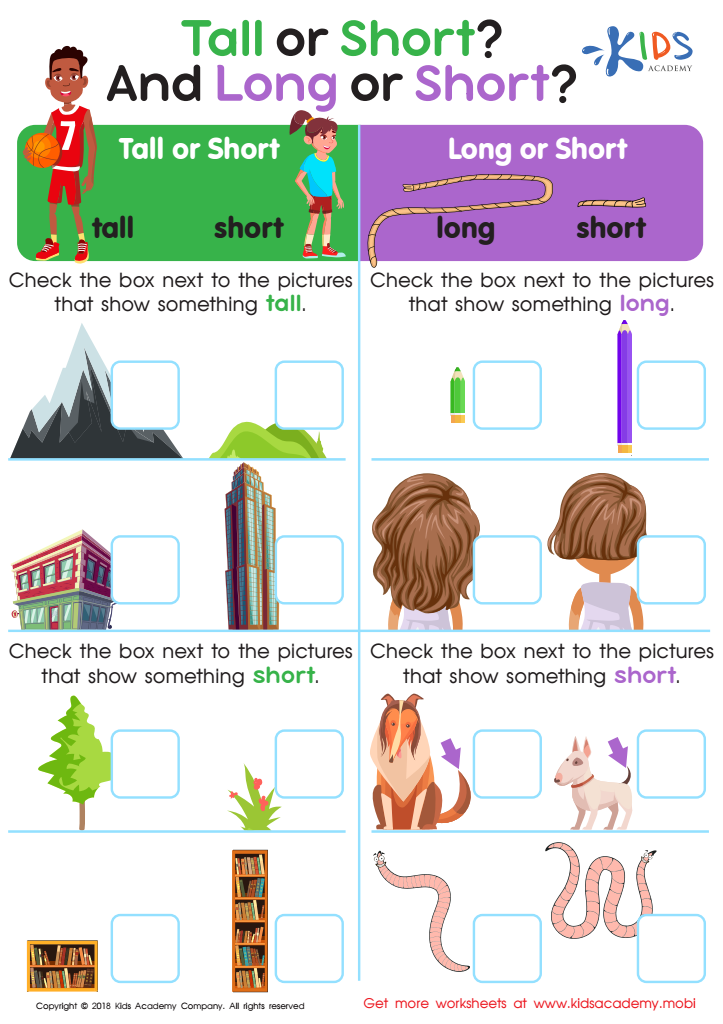
Tall or Short and Long or Short? Worksheet
 Assign to My Students
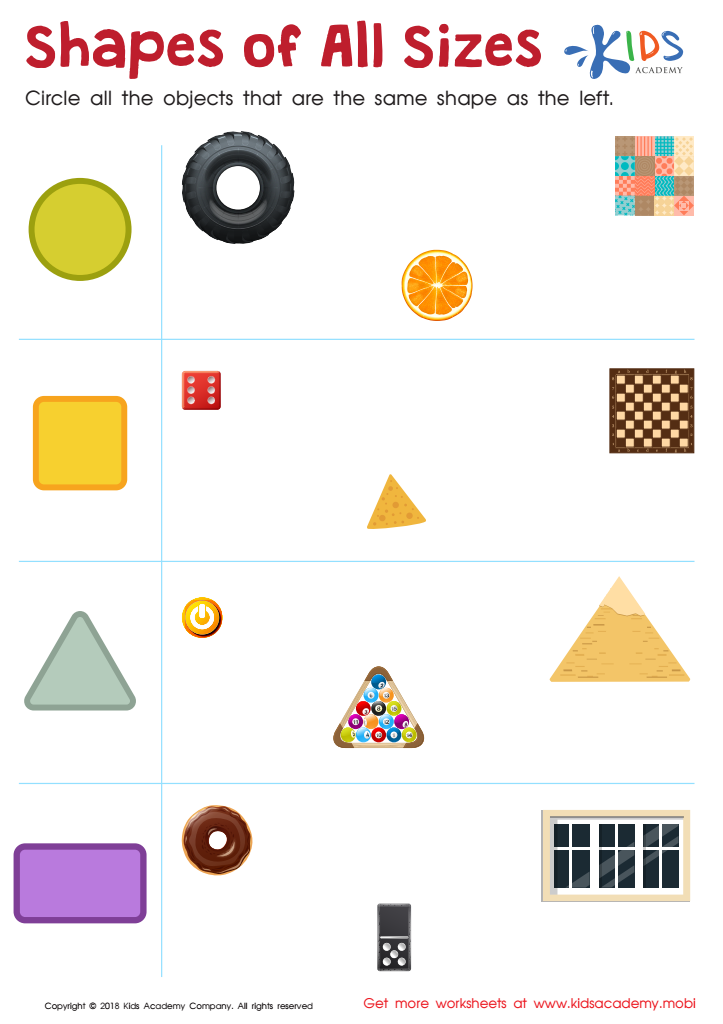
Shapes of All Sizes Worksheet
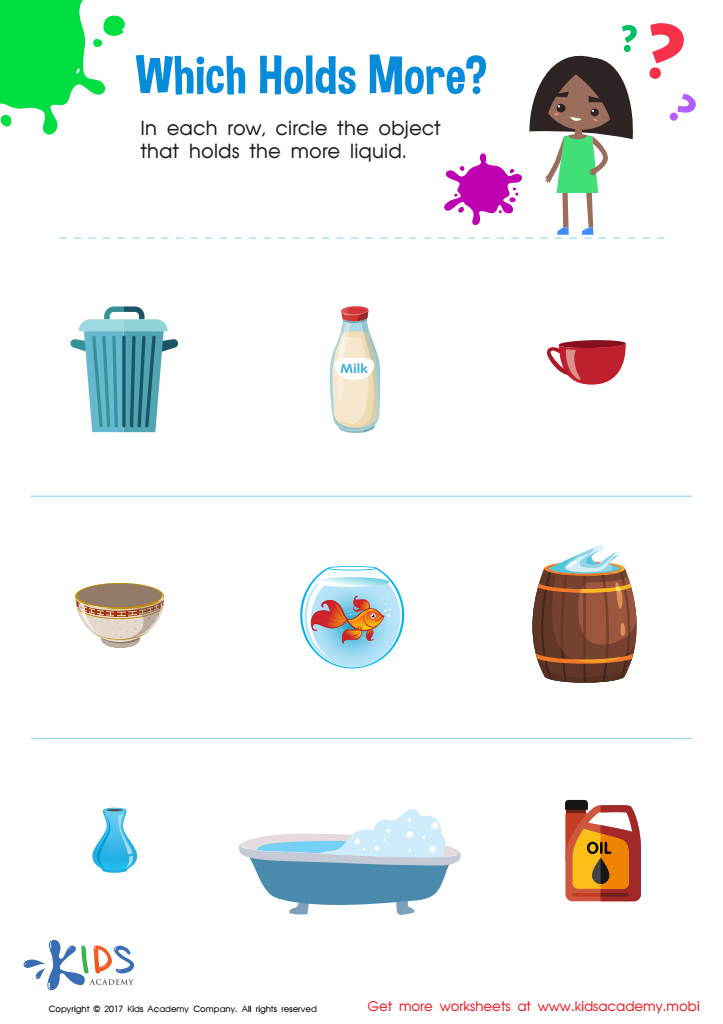
Which Holds More: Capacity Worksheet







Teaching basic measurement concepts to children aged 4-5 is crucial for several developmental reasons. At this early stage, children are like sponges, rapidly absorbing information from their surroundings. Introducing them to measurement concepts such as size, length, weight, and volume helps nurture their cognitive development and mathematical thinking.
Understanding measurements helps children make sense of the world around them. For example, knowing how to compare the height of two objects or how much a container can hold instills a sense of order and structure in their everyday lives. These skills aren't just for math lessons; they apply when cooking, playing, or even sorting toys.
Moreover, learning about measurements enhances a child's problem-solving skills. It encourages them to think critically and asks questions like “Which box is heavier?” or “Which line is longer?” This kind of thinking lays the foundation for more advanced mathematical and scientific concepts.
Additionally, these early math skills are known predictors of later academic success. When parents and teachers prioritize teaching measurement, they are setting the stage for children to excel in school, particularly in STEM (Science, Technology, Engineering, and Mathematics) subjects.
In conclusion, prioritizing basic measurement concepts for young children equips them with essential skills for everyday life and future academic endeavors, making it a fundamental aspect of early childhood education.








