Problem-Solving Skills Normal 2D Shapes Worksheets for Ages 4-5
5 filtered results
-
From - To
Introduce your little learner to the world of 2D shapes with our Problem-Solving Skills Normal 2D Shapes Worksheets for ages 4-5! Perfectly designed for early childhood education, these engaging worksheets enhance problem-solving abilities and boost cognitive development. Your child will have fun identifying and categorizing common shapes like circles, squares, and triangles while solving age-appropriate challenges. These enriched activities will help them grasp basic geometry concepts and improve critical thinking. Make the journey of learning exciting and interactive with our expertly crafted 2D shapes worksheets that lay a strong mathematical foundation for young minds.
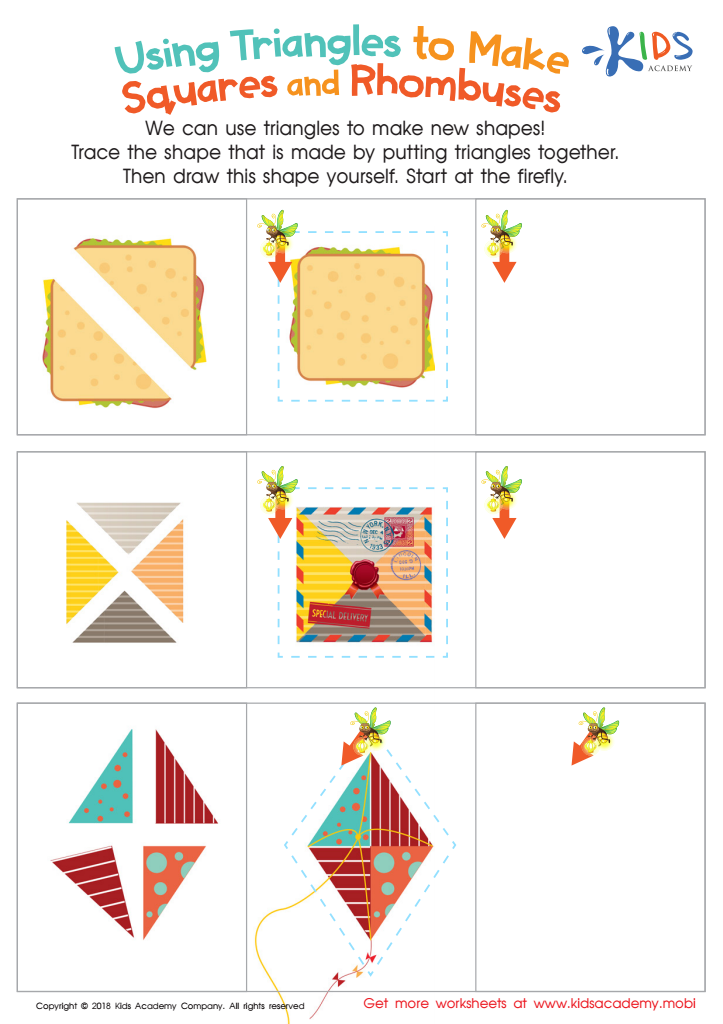
Using Triangles to Make Squares and Rhombuses Worksheet
 Assign to My Students


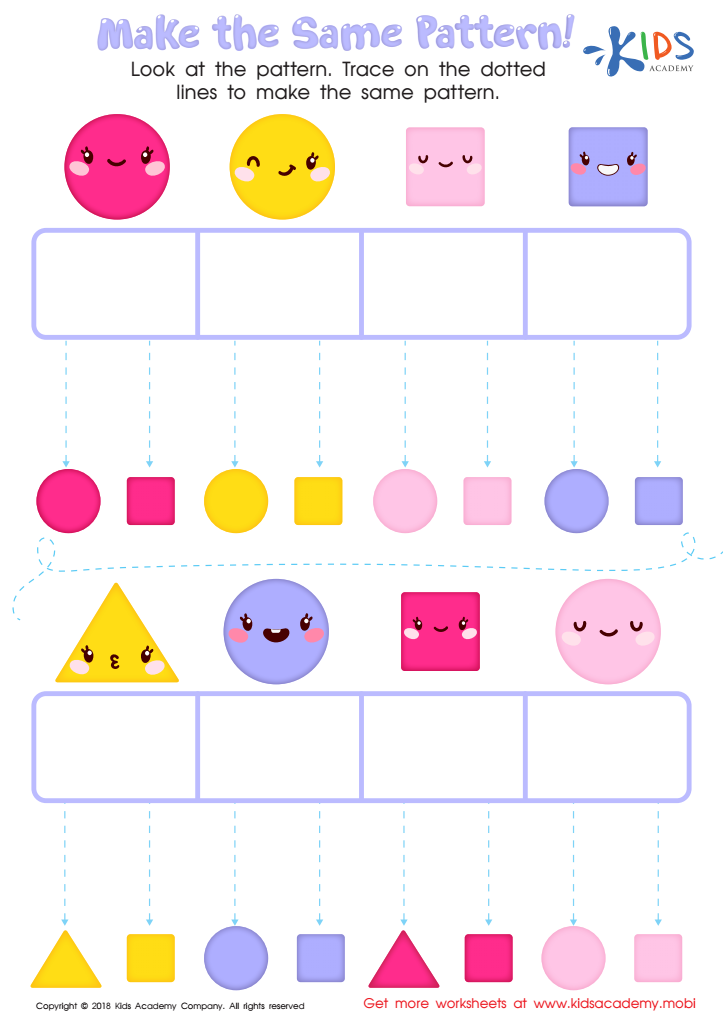
Make the Same Pattern Worksheet
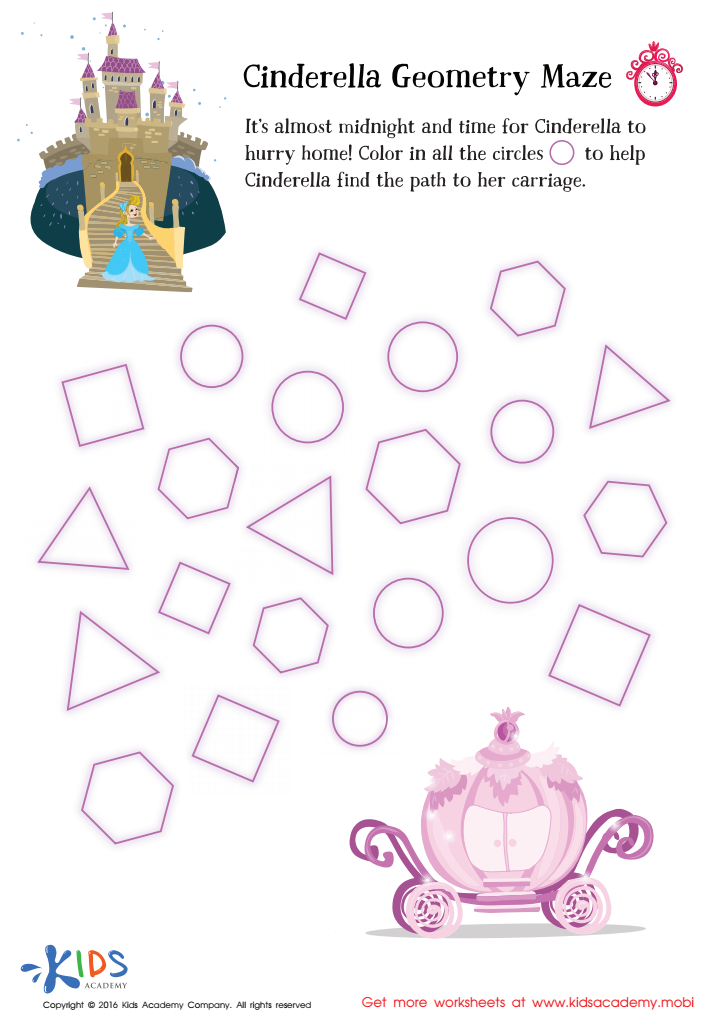
Cinderella Geometry Maze Worksheet
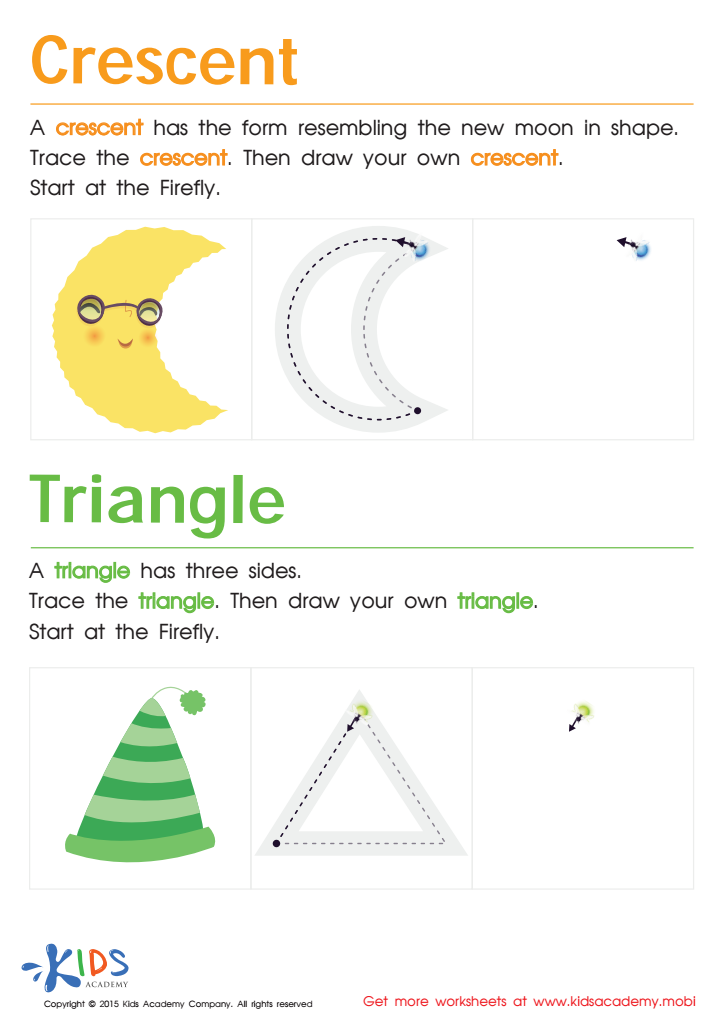
Learning to Draw Crescents And Triangles Worksheet
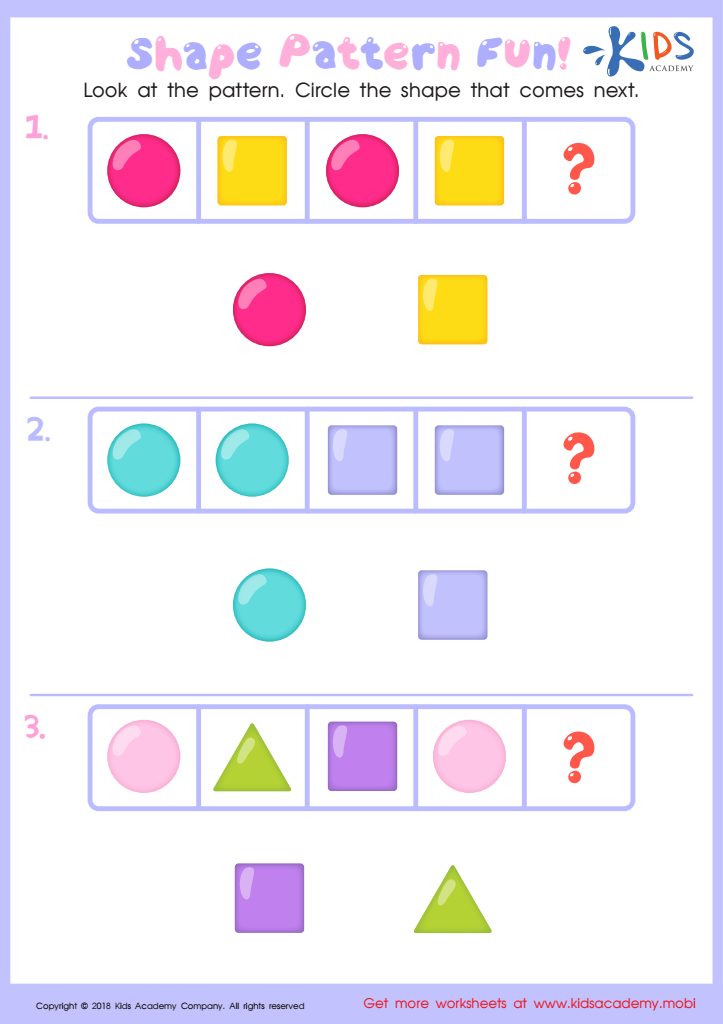
Shape Pattern Fun Worksheet








Parents and teachers should place great importance on developing problem-solving skills related to normal 2D shapes for children aged 4-5 because these skills form the cornerstone of early mathematical and cognitive development. At this formative age, children's brains are rapidly absorbing information and making new connections, so introducing them to basic geometric concepts like circles, squares, and triangles can stimulate their curiosity and imagination.
Understanding 2D shapes lays the groundwork for more complex mathematical concepts that they will encounter in later years. By associating shapes with everyday objects, children learn to recognize and categorize information, which enhances their spatial awareness and critical thinking capabilities. These skills are fundamental for everyday problem-solving, ranging from figuring out how to fit pieces of a puzzle together to recognizing patterns in their environment.
Moreover, engaging in activities that require manipulating and identifying shapes can improve children’s fine motor skills and hand-eye coordination. It also fosters a sense of confidence as they successfully complete tasks and solve problems independently. Overall, introducing problem-solving with 2D shapes creates a fun, engaging play that is also educational, forming a positive association with learning that can benefit children throughout their academic careers.