Counting skills Normal Geometry Worksheets for Ages 4-5
6 filtered results
-
From - To
Enhance your child's learning journey with our Counting Skills Normal Geometry Worksheets designed specifically for ages 4-5. These engaging and colorful worksheets aim to introduce young learners to foundational counting concepts while incorporating basic geometric shapes. As children explore counting within geometric contexts, they develop critical thinking and problem-solving skills in a fun and interactive way. Our user-friendly format allows parents and educators to easily guide children through each activity, reinforcing essential math concepts. Perfect for at-home learning or classroom activities, these worksheets will lay the groundwork for your little one's future mathematical success while sparking their creativity and curiosity!
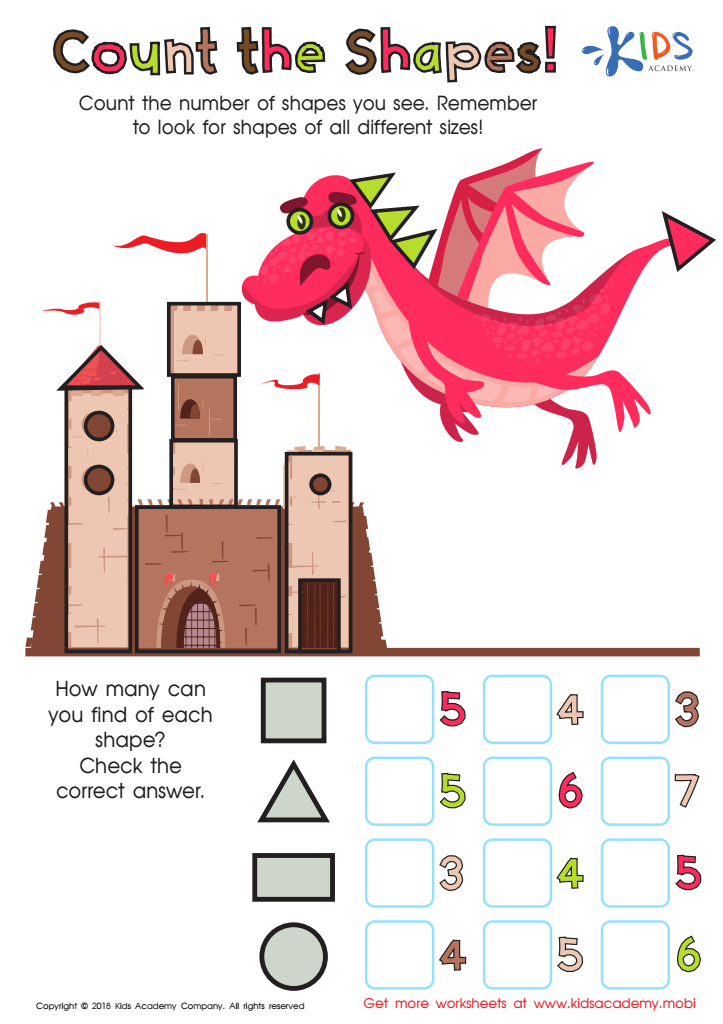
Count the Shapes Worksheet
 Assign to My Students











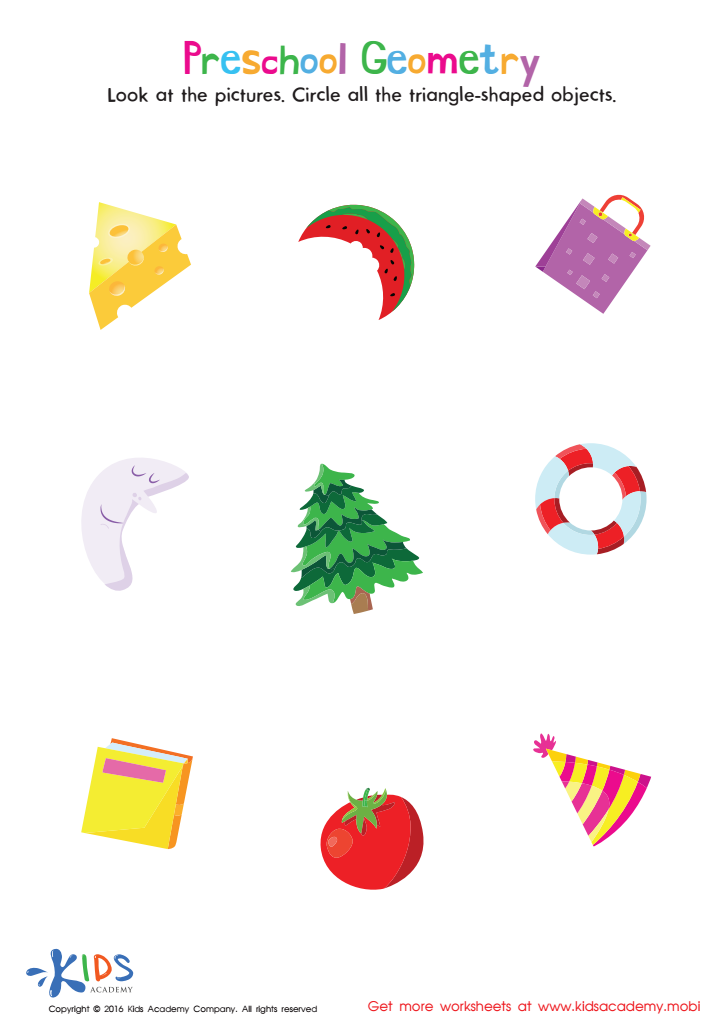
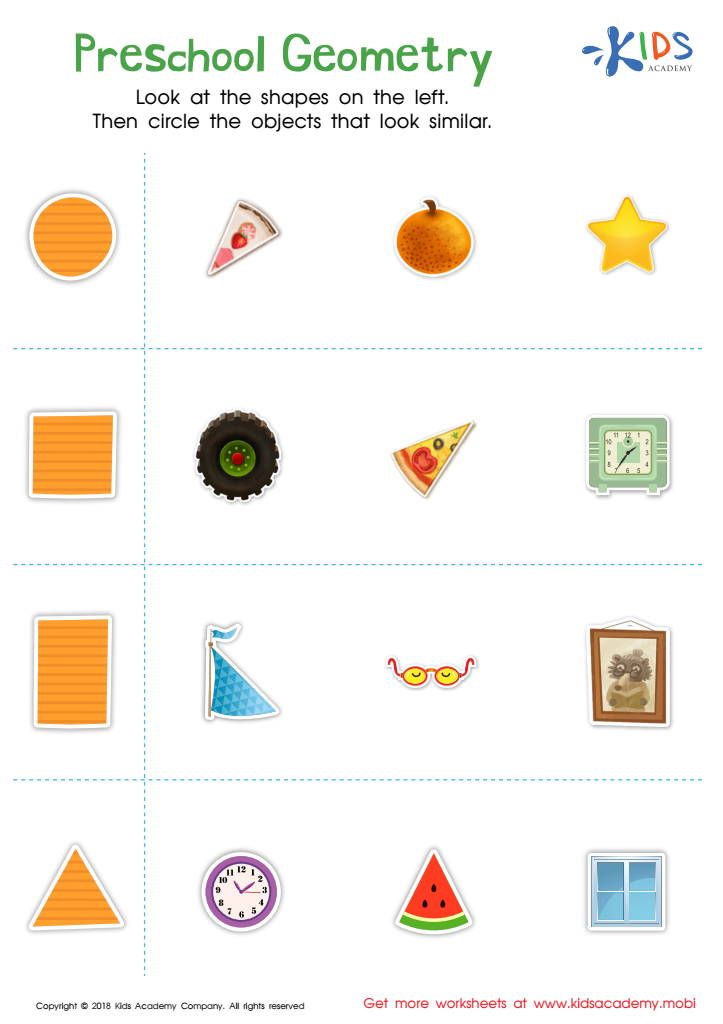
Preschool Geometry Worksheet
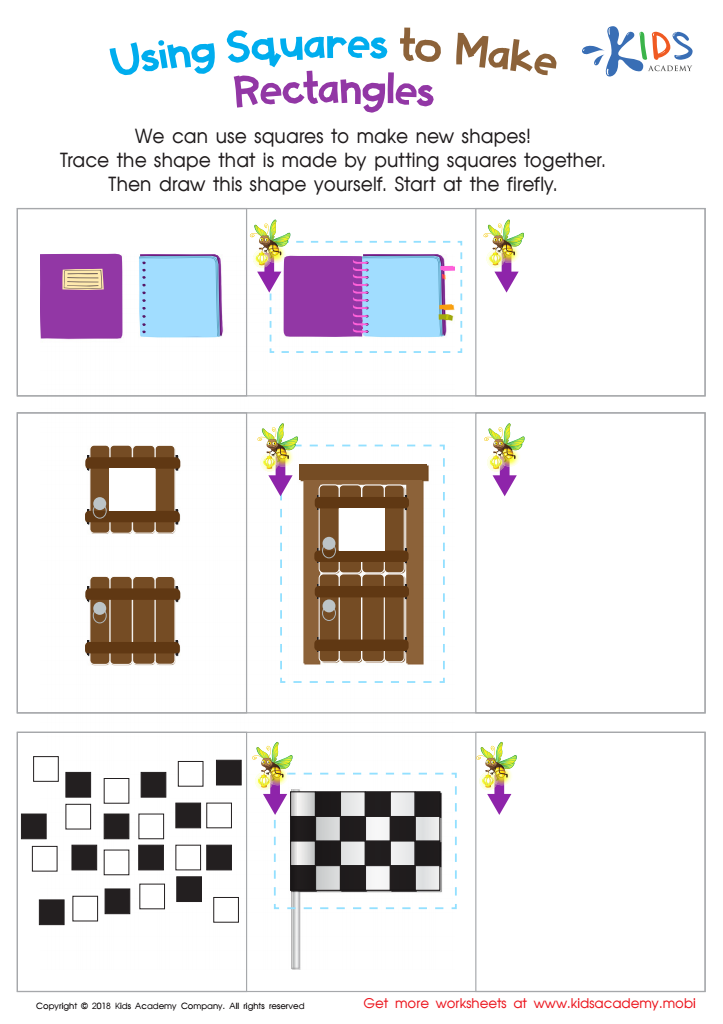
Using Squares to Make Rectangles Worksheet
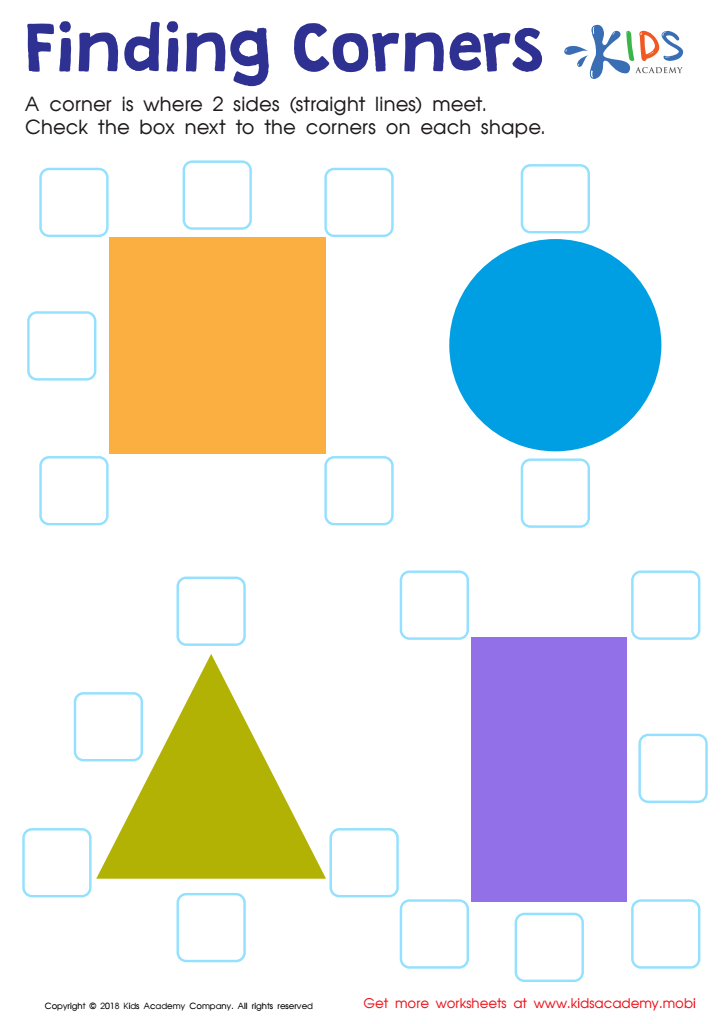
Finding Corners Worksheet
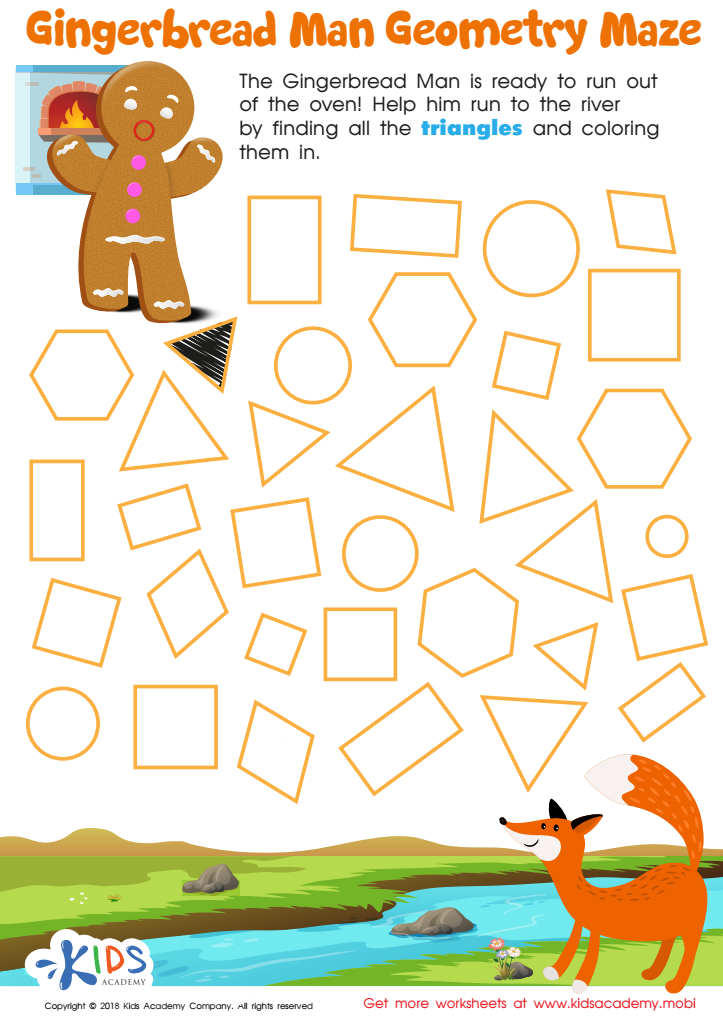
Gingerbread Man Geometry Maze Worksheet








Counting skills and understanding basic geometry are foundational elements of early childhood education that significantly impact a child's cognitive development. For children aged 4-5, mastering counting helps them grasp the concept of numbers, which forms the backbone of math later on. This skill encourages logical thinking, problem-solving, and the ability to recognize patterns. When children learn to count, they also enhance their memory and attention span, critical components for overall learning.
Conversely, normal geometry introduces children to shapes, spatial awareness, and relationships between objects. Recognizing shapes helps children make sense of their surroundings and encourages creativity through play and exploration. For instance, identifying round, square, or triangular objects in their environment fosters observational skills and critical thinking.
When parents and teachers emphasize these skills, they create enriching learning experiences that extend beyond the classroom. Engaging with counting and geometry through games, songs, and hands-on activities makes learning enjoyable and effective. Early mastery of these skills not only prepares children for more complex mathematical concepts but also boosts their confidence, making them more inclined to explore and excel in future academic endeavors. Supporting these skills lays the groundwork for a lifelong affinity for learning and discovery in mathematics.








