Reading comprehension Normal Geometry Worksheets for Ages 4-5
4 filtered results
-
From - To
Jumpstart your child's learning with our "Reading Comprehension Normal Geometry Worksheets for Ages 4-5". Specifically designed for early learners, these worksheets combine fundamental geometry concepts with engaging reading comprehension tasks. Children will explore shapes, patterns, and spatial understanding while improving their reading skills. Our carefully crafted activities not only nurture geometric reasoning but also enhance vocabulary and sentence comprehension. Perfect for both classroom and at-home learning, these worksheets foster a love for learning and build a strong academic foundation. Printable and easily accessible, they are a wonderful resource for parents and teachers aiming to make learning both fun and effective.
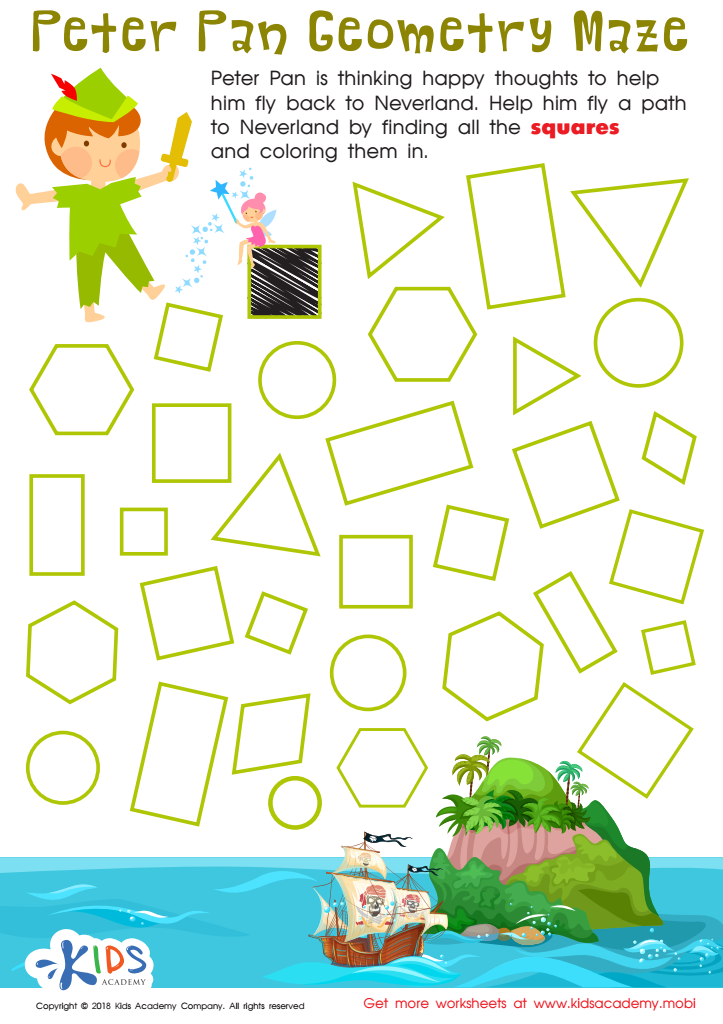
Peter Pan Worksheet
 Assign to My Students











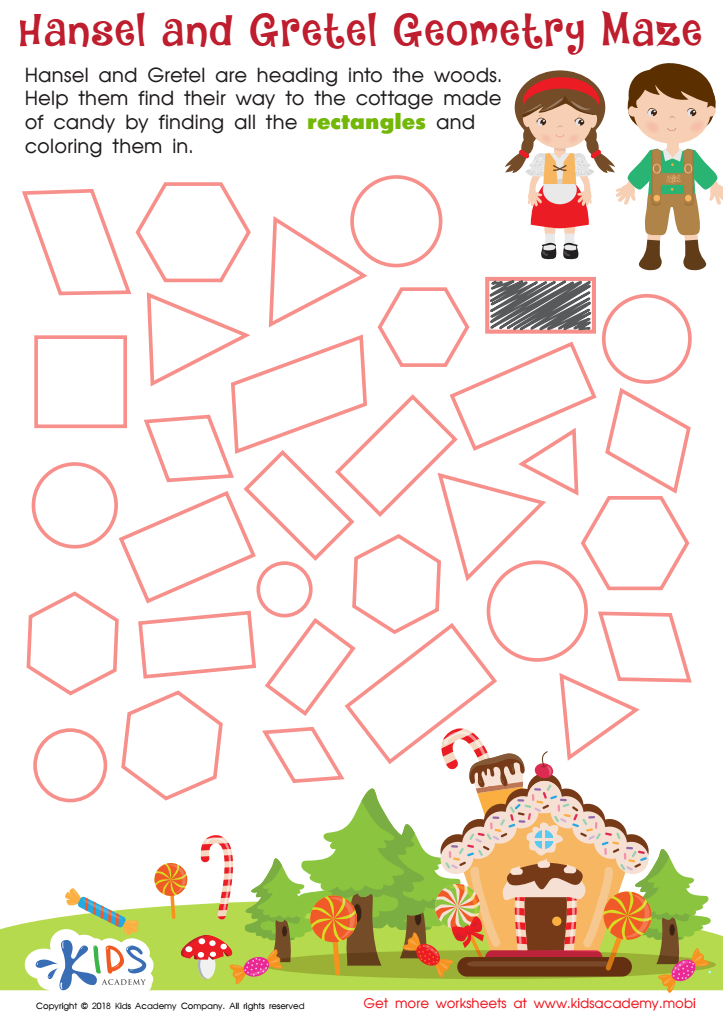
Hansel and Gretel Geometry Maze Worksheet
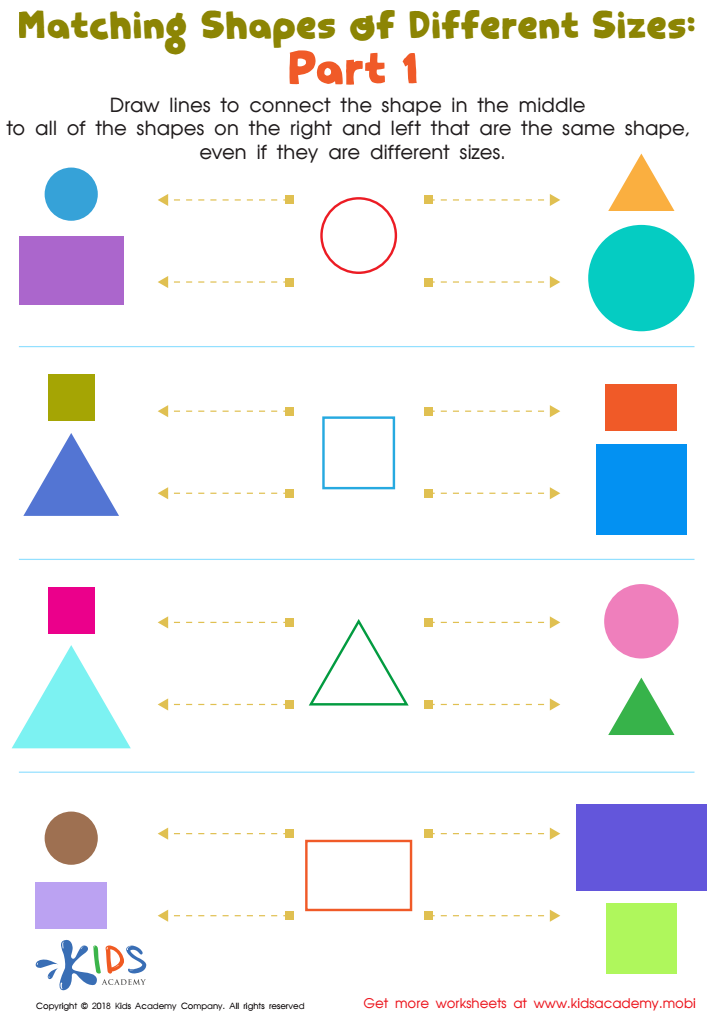
Geometry: part 1 Worksheet
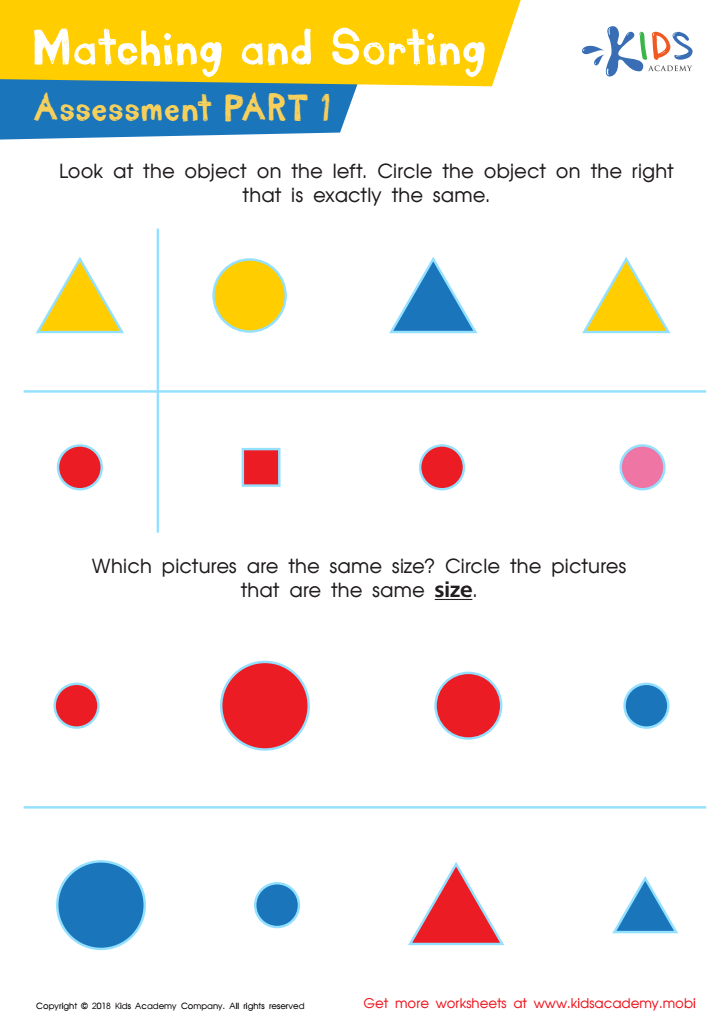
Matching and Sorting for Kindergarten: Assessment 1 Worksheet








Reading comprehension and basic geometry for children aged 4-5 form crucial elements in early childhood education. At this developmental stage, fostering strong reading skills and an understanding of simple geometric concepts sets the foundation for more complex cognitive skills later on.
Reading comprehension doesn’t only mean recognizing words but also involves interpreting stories, understanding plots, and grasping the emotions of characters, which aids in developing empathy and emotional intelligence. Early exposure to books enhances vocabulary, language skills, and even fosters a love for reading—a vital skill in academic success.
On the other hand, early geometry teaches kids about shapes, patterns, and spatial reasoning. Recognizing and categorizing shapes such as circles, squares, and triangles form the basis for mathematical thinking. Geometry also involves skills such as comparing sizes and understanding positional words (like "above," “next to,” and "behind"), which are essential for following instructions in class activities.
Both reading comprehension and geometry play a synergistic role in developing a child's problem-solving skills and logical thinking. By caring about and investing time in these aspects, parents and teachers ensure that children have a collaborative learning environment that balances literacy and numeracy, ultimately supporting their overall academic and personal growth.








