Hand-eye Coordination Normal Numbers Worksheets for Ages 4-5
3 filtered results
-
From - To
Our Hand-eye Coordination Normal Numbers Worksheets for ages 4-5 are expertly designed to develop young learners' numerical skills and fine motor abilities. These engaging activities aid in the recognition and writing of numbers, while simultaneously honing hand-eye coordination through tracing and drawing. Perfectly suited for preschoolers, the worksheets combine fun illustrations with educational content, fostering a love for learning early on. Excellent for both classroom and home use, these resources support foundational math skills and physical development, ensuring children are well-prepared for future academic success. Enhance your child's number learning journey with our thoughtfully crafted worksheets today!
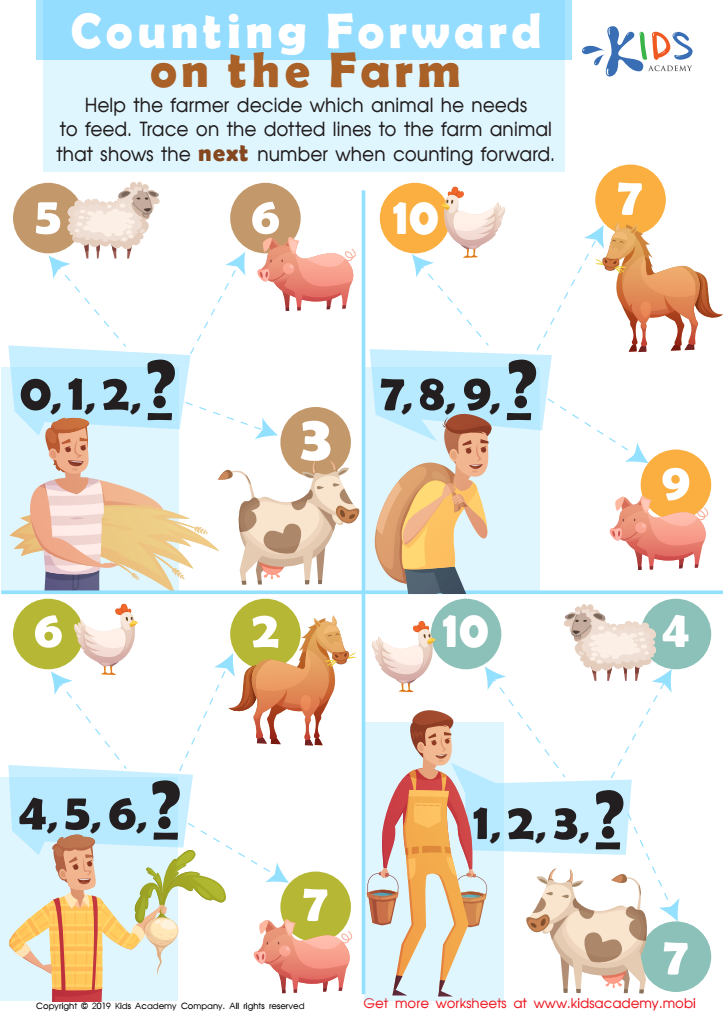
Counting Forward On the Farm Worksheet
 Assign to My Students
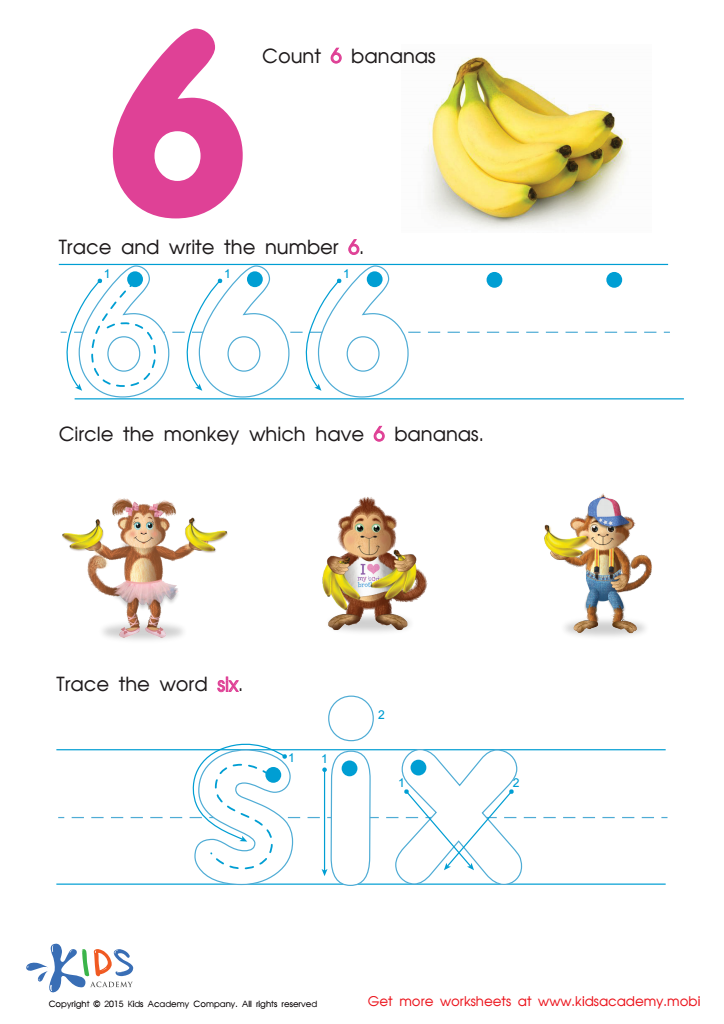
Tracing And Writing Number 6 Worksheet
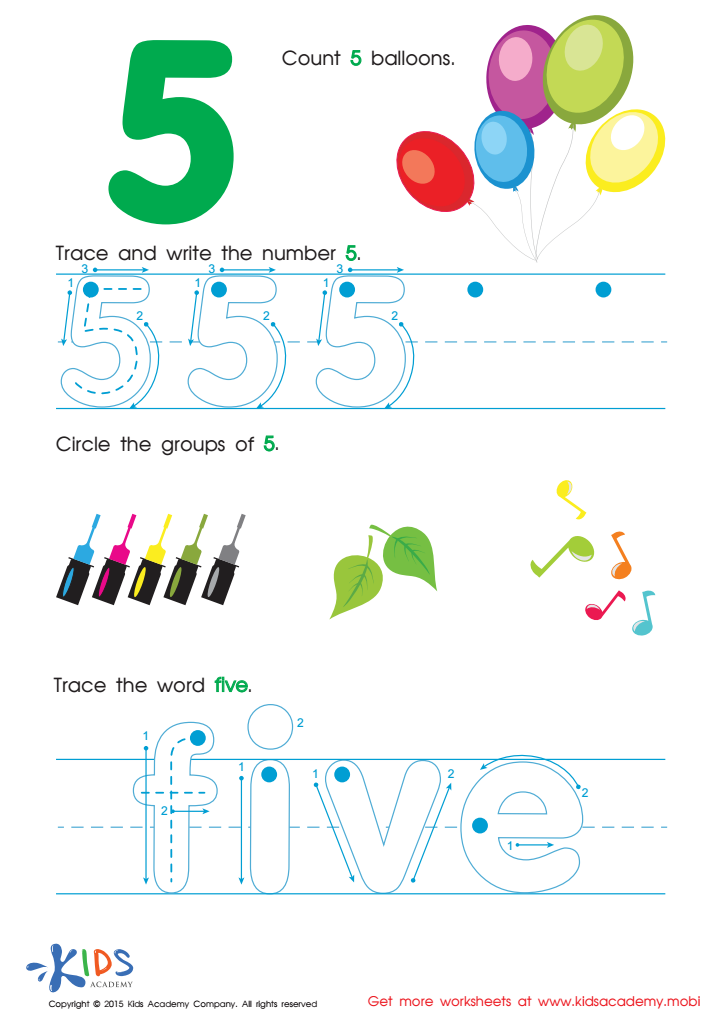
Practice Writing Number 5 Worksheet








Hand-eye coordination is a fundamental skill that significantly impacts a child’s ability to perform everyday activities and learn new tasks. For children ages 4-5, this developmental milestone is importantly tied to future academic success and overall motor skill development. Parents and teachers should be aware of normal hand-eye coordination benchmarks to ensure that each child is progressing appropriately and to intervene early if necessary.
Normal hand-eye coordination involves the child's ability to perform tasks that require simultaneous use of their hands and eyes. At this age, children typically begin refining skills such as cutting with scissors, stringing beads, catching a ball, or drawing simple shapes. Recognizing the expected range of abilities helps adults provide the necessary support and practice in these areas, fostering confidence and independence.
Moreover, the foundational skills developed through improved hand-eye coordination are critical for future academic activities such as writing, reading, and using technology. Proper development also contributes to self-esteem, as children are better able to perform tasks alongside their peers. Identifying and addressing any delays early ensures that targeted interventions can be employed, potentially mitigating more significant issues later on. For these reasons, understanding and supporting the normal range of hand-eye coordination in young children is crucial for their holistic development.








