Matching skills Normal Math Worksheets for Ages 4-5
7 filtered results
-
From - To
Our "Matching Skills Normal Math Worksheets for Ages 4-5" provide engaging and educational activities to help young learners develop essential math skills. Designed to enhance pattern recognition, counting, and basic number concepts, these worksheets offer fun and colorful exercises that keep children interested. Perfect for preschoolers and kindergarteners, the activities support cognitive development and critical thinking. Parents and educators will find these worksheets an excellent resource for both classroom use and at-home practice, ensuring kids build a strong mathematical foundation while enjoying the learning process. Explore our collection and watch your child’s math confidence grow!
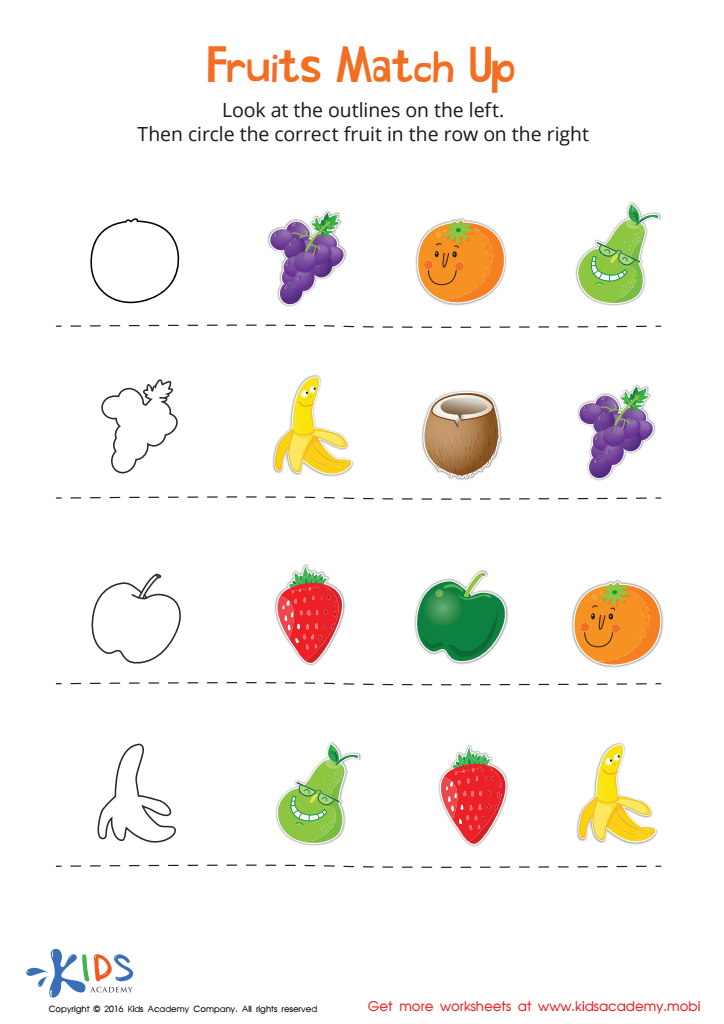
Fruits Match Up Worksheet
 Assign to My Students
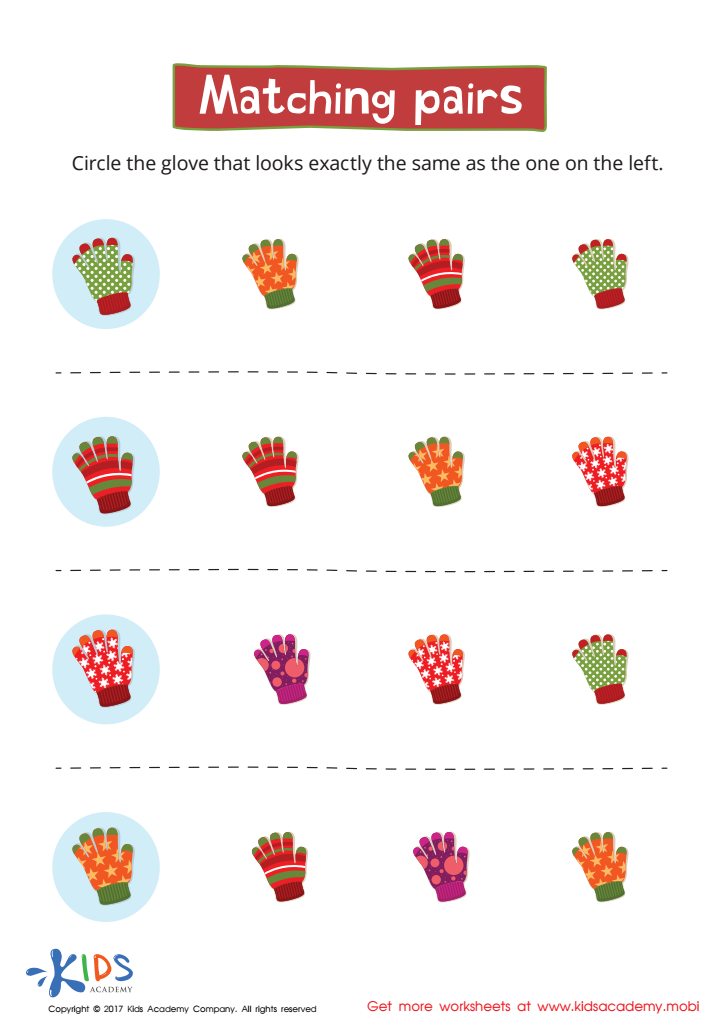
Matching: Matching Pairs Worksheet
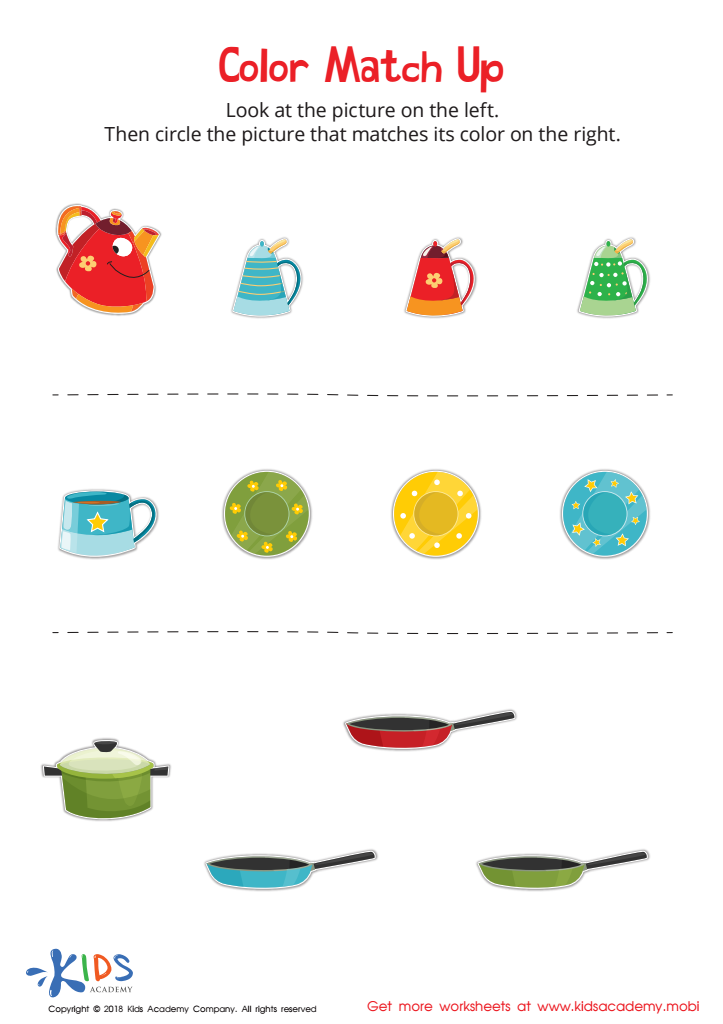
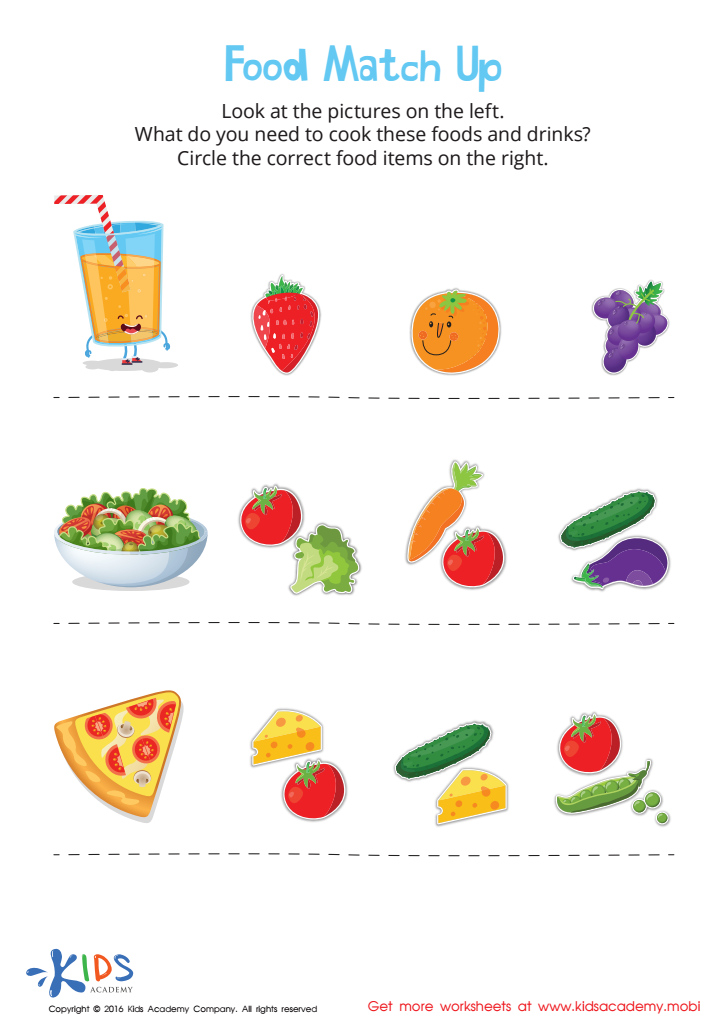
Food Match Up Worksheet
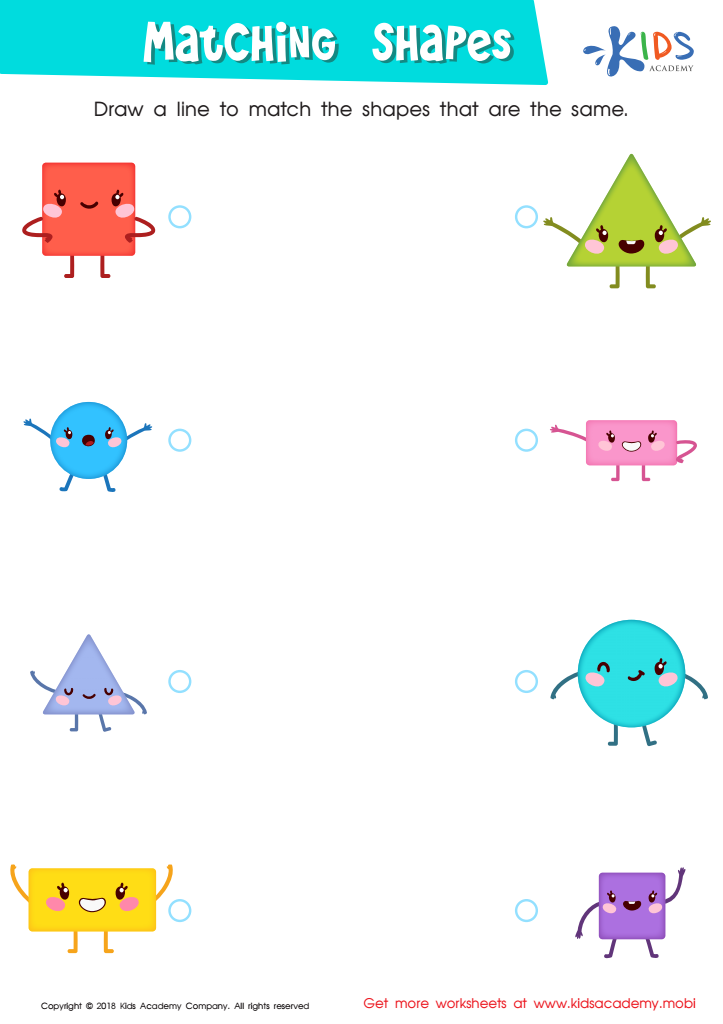
Matching Shapes Worksheet
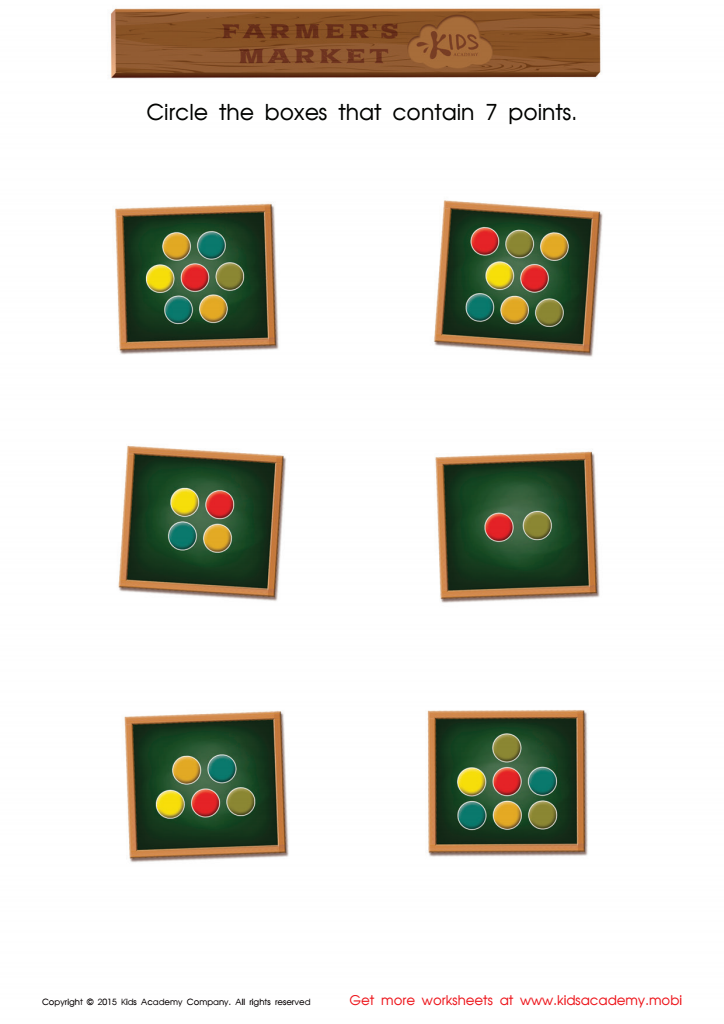
Count and Match Points 7 Math Worksheet
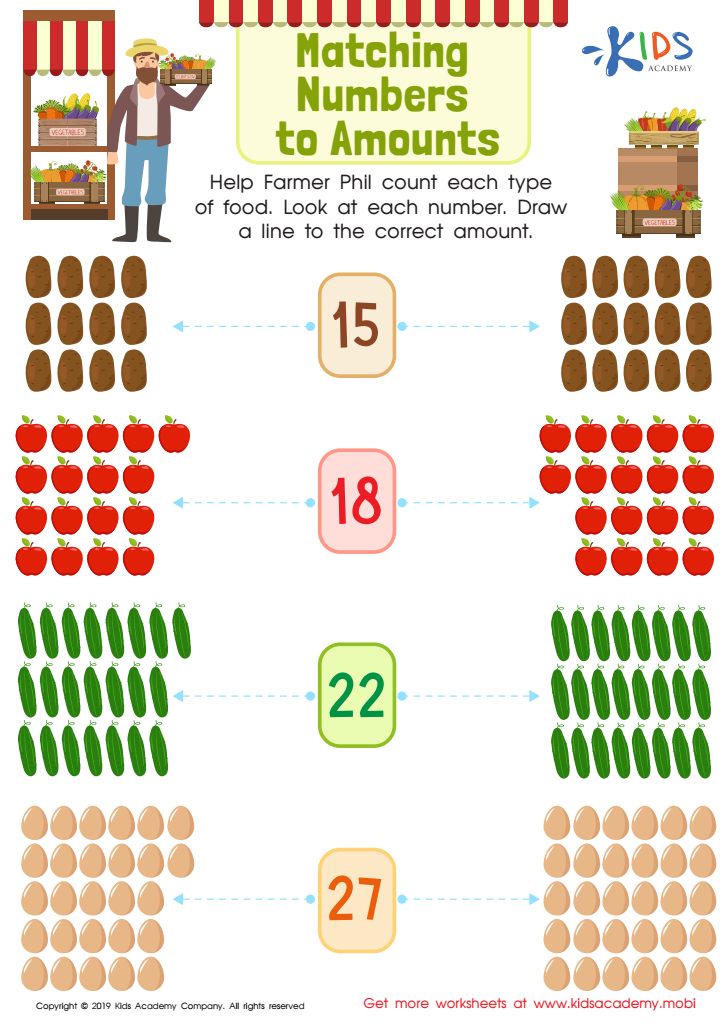
Matching Numbers to Amounts Worksheet







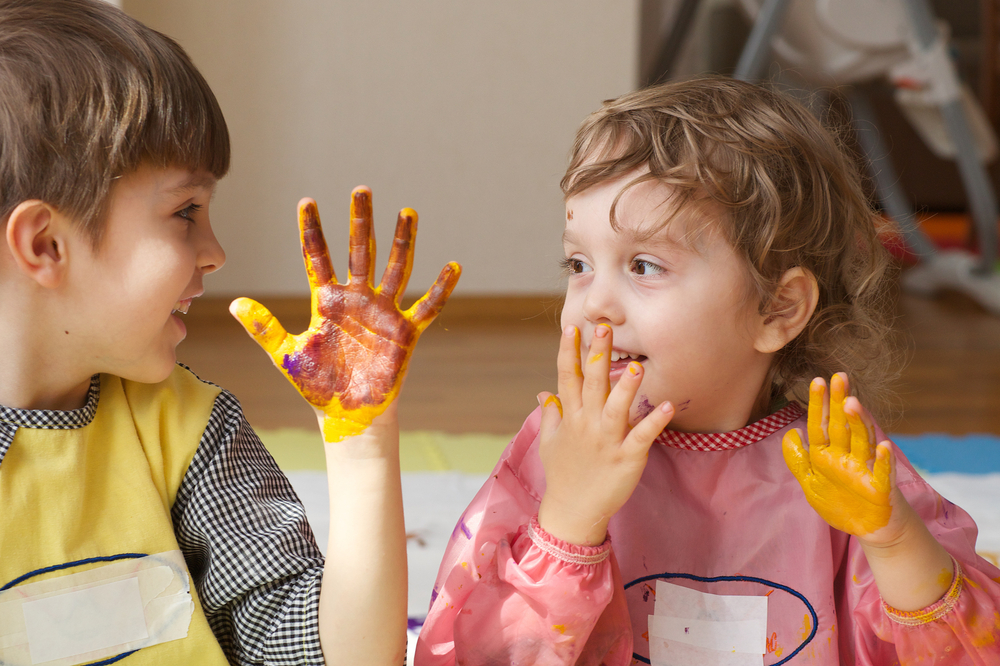
Matching skills in early math are crucial for young children aged 4-5, as they lay the foundation for future complex mathematical thinking and problem-solving abilities. At this developmental stage, children are naturally curious and are forming basic cognitive skills that are pivotal for understanding the world around them. Matching activities—such as pairing similar objects, recognizing patterns, and identifying relationships between numbers and quantities—help develop critical thinking and observation skills.
These activities enable children to make connections between disparate pieces of information—a form of cognitive development known as making associations. For example, when a child learns to match numerals to quantities, they start to grasp the concept of numbers representing actual, countable items. This understanding is crucial before they can move on to more abstract mathematical concepts, such as addition and subtraction.
Moreover, matching exercises enhance children's fine motor skills, concentration, and attention to detail, which are essential not only in mathematics but across all areas of learning. Teachers and parents should care about incorporating matching skills into early math practice because these activities make learning engaging and interactive, thereby promoting a positive attitude toward math. A strong foundation in these basic skills can lead to greater confidence and competence in math as children progress in their education.








