Counting skills Normal Word Problems Worksheets for Ages 4-5
4 filtered results
-
From - To
Introduce your little learner to the exciting world of numbers with our "Counting Skills Word Problems Worksheets" designed for ages 4-5. These engaging worksheets encourage critical thinking and problem-solving as kids practice counting through fun, relatable scenarios. Whether it's counting apples in a basket or toys on a shelf, our colorful and interactive exercises help children develop essential counting skills, preparing them for future math success. Perfect for both classroom and homeschool settings, these worksheets turn learning into an enjoyable adventure with numbers. Explore now and watch your child's confidence in math grow with each completed worksheet!
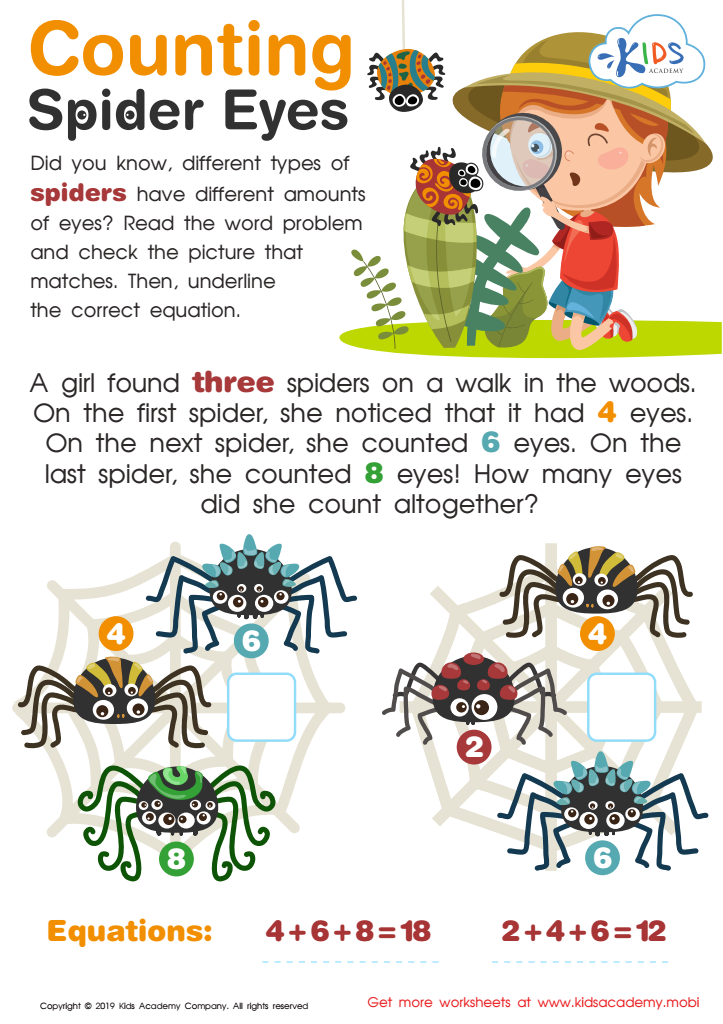
Counting Spider Eyes Worksheet
 Assign to My Students
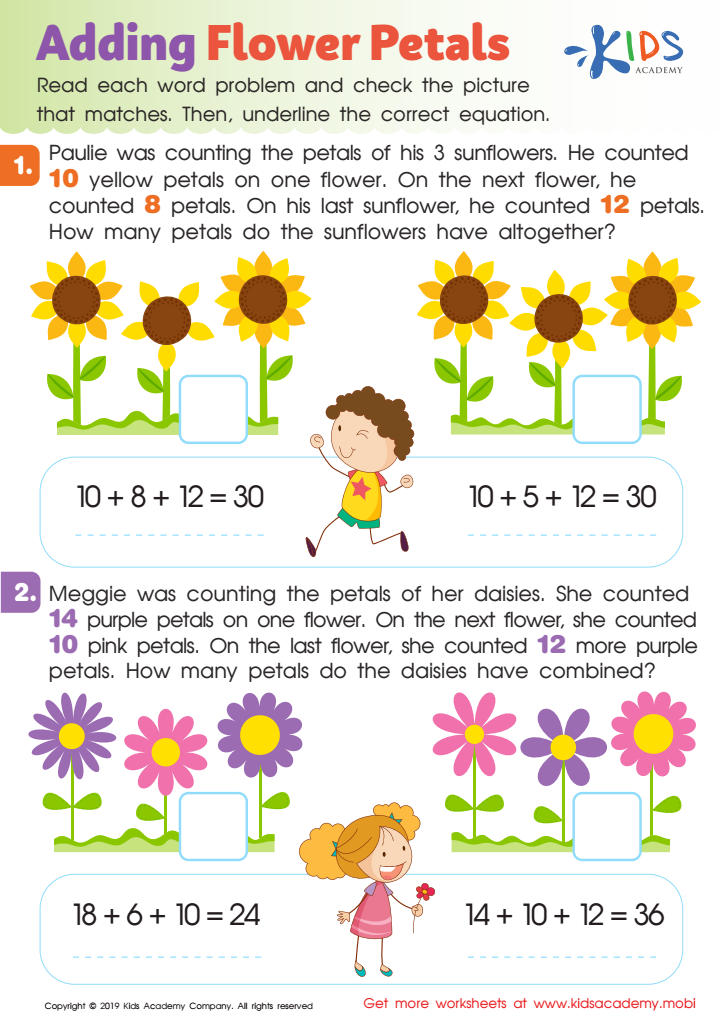
Adding Flower Petals Worksheet
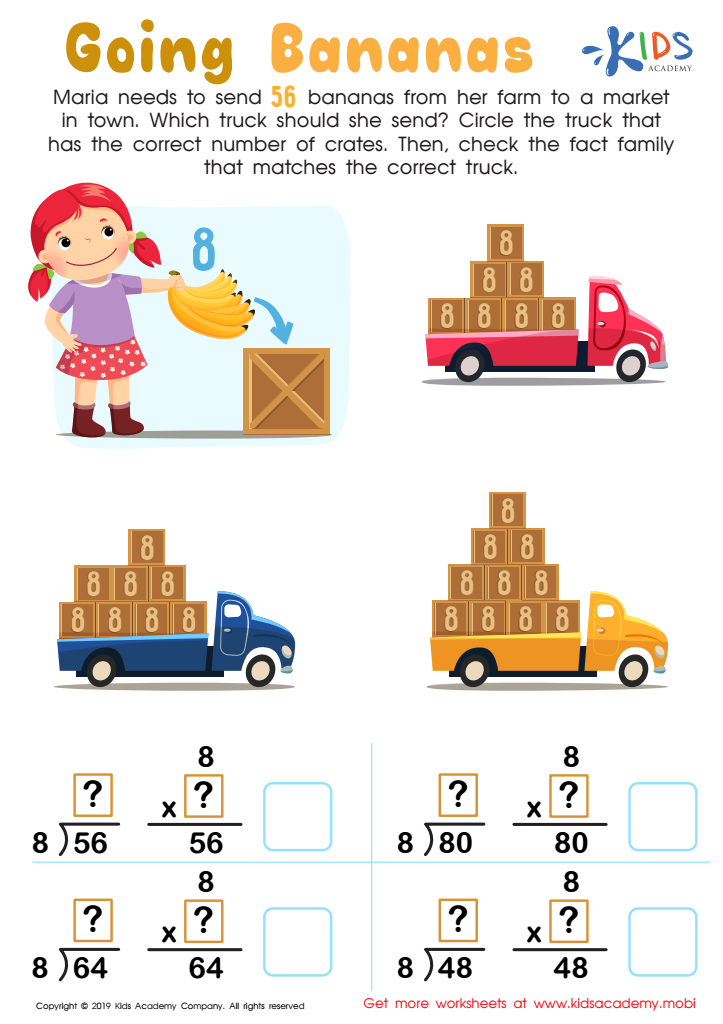
Going Bananas Worksheet
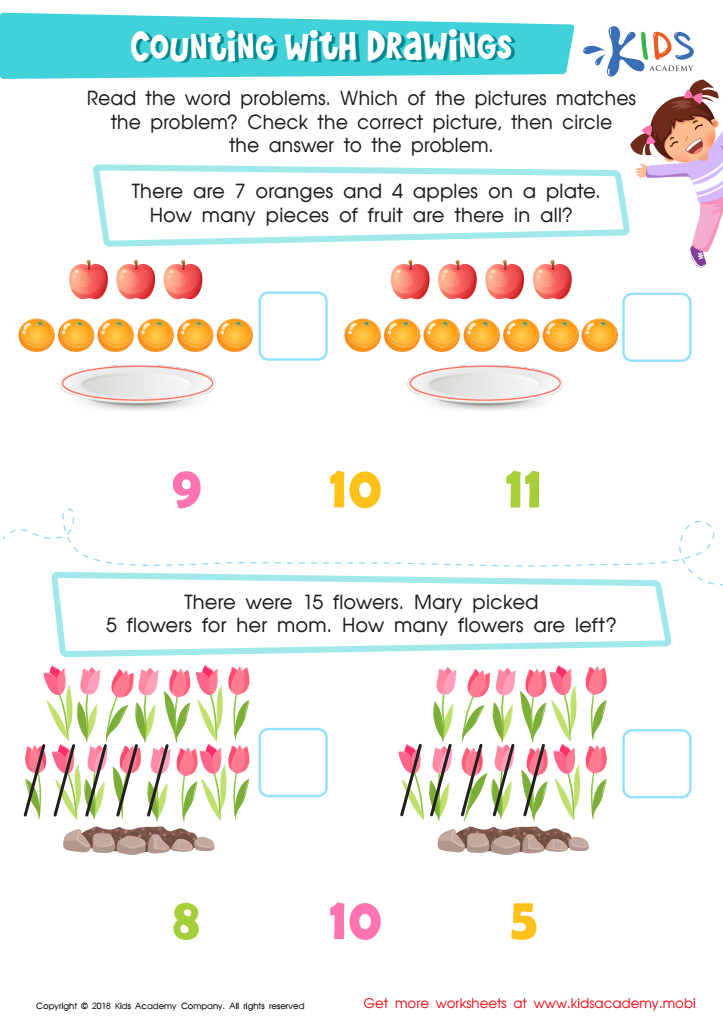
Counting with Drawings:Fruits & Flowers Worksheet






.jpg)

Counting skills are a fundamental aspect of early mathematics education for children aged 4-5, and this foundation is essential for their academic development. Parents and teachers should care deeply about nurturing these skills, as they are the building blocks for more complex mathematical concepts and general problem-solving abilities.
Firstly, counting helps young children understand the basic principles of numbers and their sequences, fostering numerical literacy. With a solid grasp of counting, children can progress to addition, subtraction, and beyond. Secondly, counting skills promote cognitive development; they encourage memory retention, logical sequencing, and pattern recognition. These skills are crucial for various intellectual tasks, both within and beyond mathematics.
Moreover, counting provides a bridge to real-world applications. Children start to associate numbers with quantities, times, and measurements, enhancing their comprehension of everyday situations, such as sharing toys or understanding time. Solving normal word problems encourages critical thinking as children learn to apply their counting skills to practical scenarios, fostering problem-solving and analytical abilities.
Additionally, early success in counting can boost a child’s confidence. When children see their progress and are able to solve problems, they develop a positive attitude towards learning, which is essential for ongoing academic motivation and achievement. Therefore, fostering counting skills through word problems empowers children with crucial competencies that pave the way for their future educational success.








