Cognitive Development Normal Building Vocabulary Worksheets for Ages 4-5
4 filtered results
-
From - To
Discover our engaging "Cognitive Development Normal Building Vocabulary Worksheets" designed for children ages 4-5. These worksheets aim to enhance vocabulary through fun and interactive activities that stimulate young minds. By exploring themes like colors, animals, and everyday objects, children will build essential language skills while boosting their cognitive development. Each worksheet encourages critical thinking and problem-solving, promoting early literacy in an enjoyable way. Perfect for use at home or in the classroom, our worksheets provide a solid foundation for future learning. Explore the joy of language and watch your child's vocabulary blossom with our carefully crafted resources!
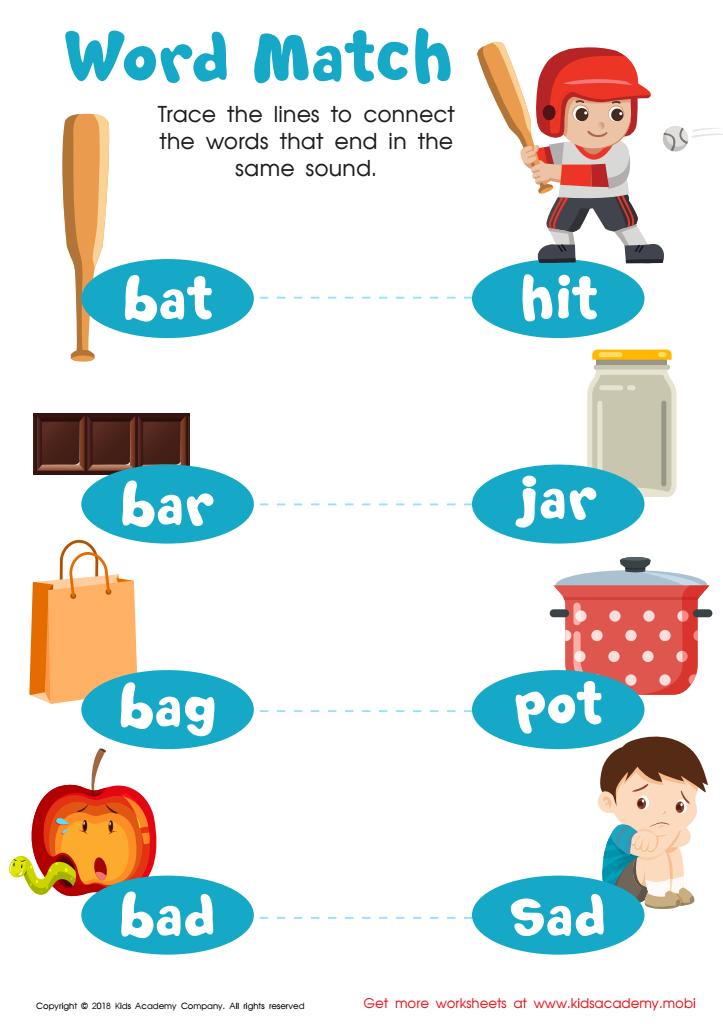
Word Match Reading Worksheet
 Assign to My Students











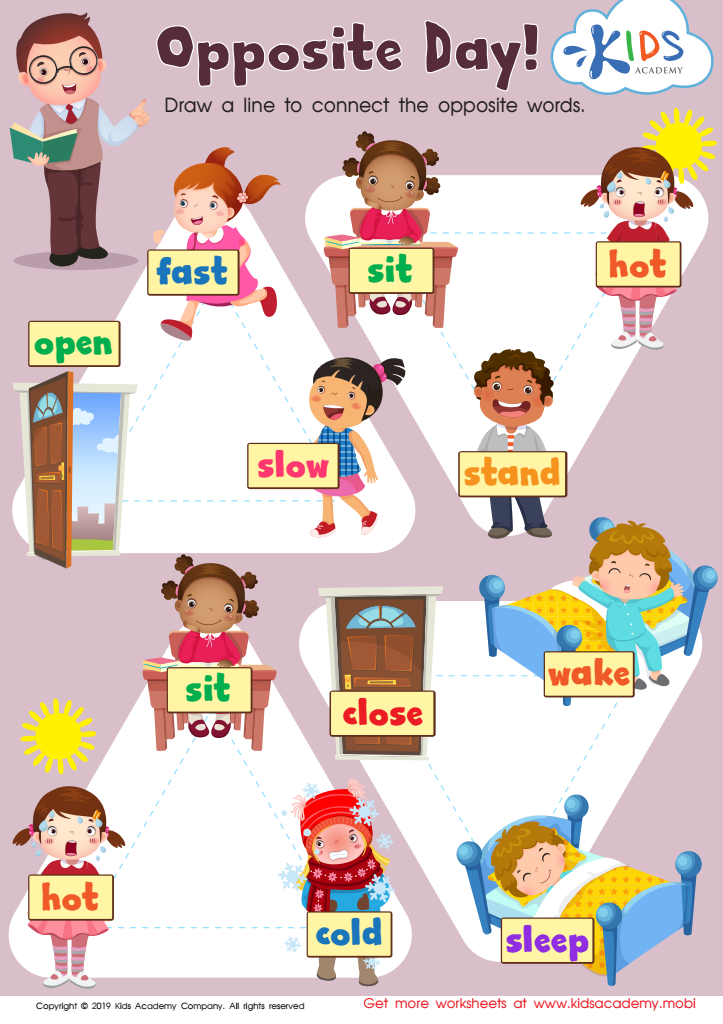
Opposite Day Worksheet
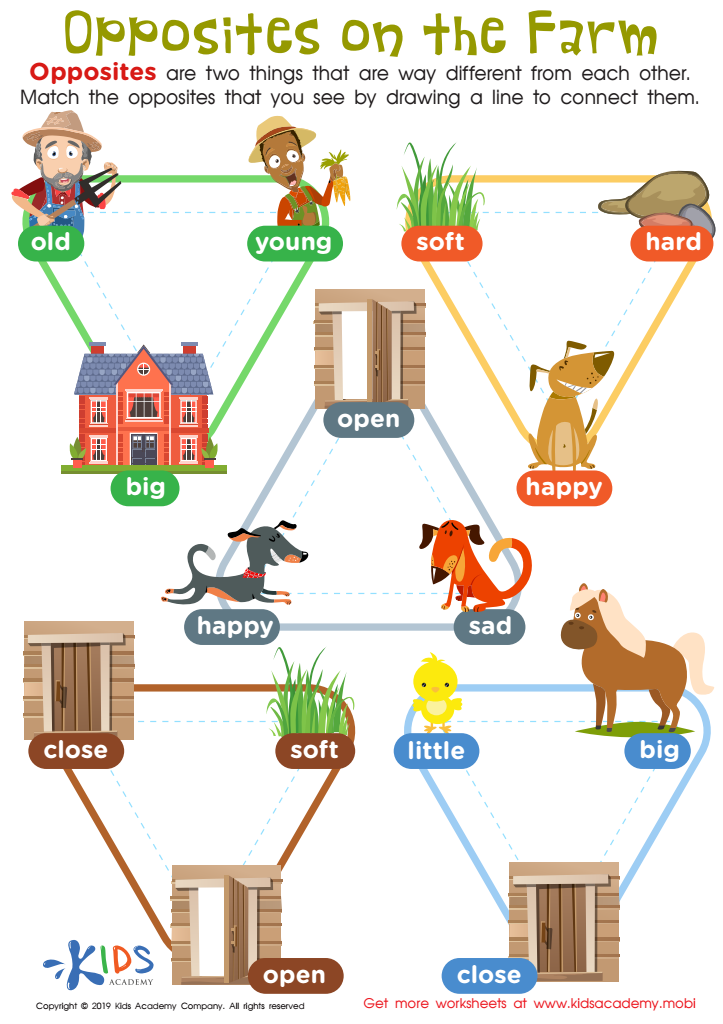
Opposites on the Farm Worksheet
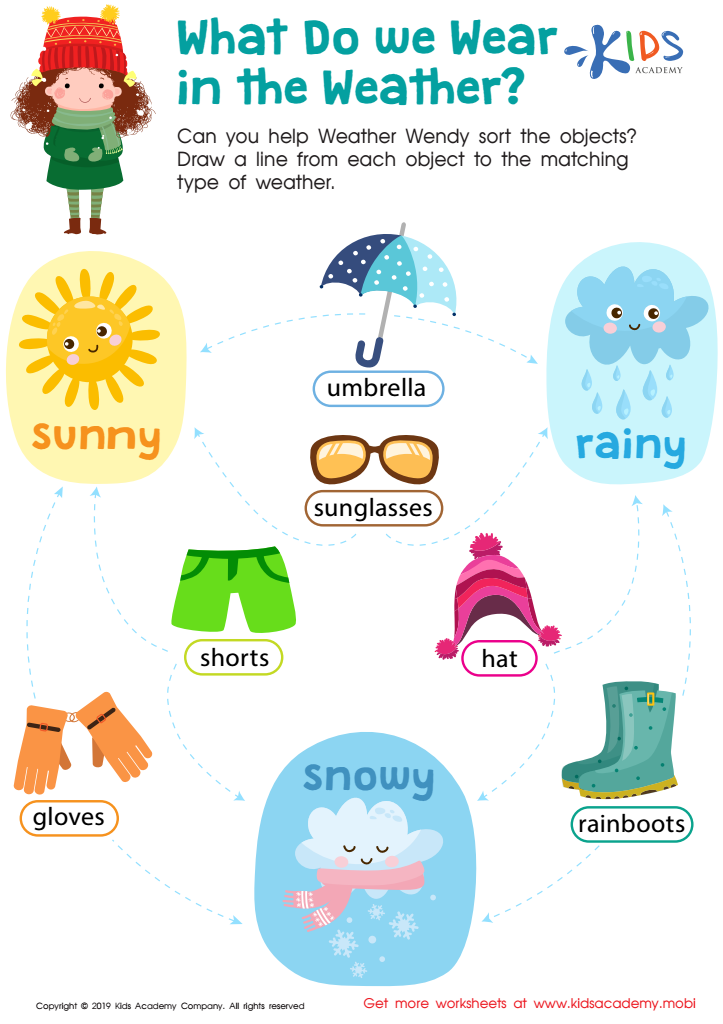
What Do We Wear in the Weather? Worksheet








Cognitive development and vocabulary building in children aged 4-5 are crucial for several reasons. First, this age group experiences rapid brain development, making it an ideal time for parents and teachers to foster language skills. A well-developed vocabulary enhances communication abilities, enabling children to express their thoughts, needs, and feelings effectively. This stage of development is essential for nurturing critical thinking skills, as children learn to categorize, compare, and articulate their ideas.
Moreover, strong vocabulary skills are linked to better reading comprehension later in life. When children have a robust vocabulary, they can recognize words more easily, which boosts their confidence and enjoyment in reading. Additionally, a rich vocabulary contributes to social skills, as children are better able to engage with peers and adults through thoughtful conversation.
Parents and teachers can support cognitive development by incorporating engaging and varied language experiences into daily routines, such as reading books, playing word games, and encouraging storytelling. Such interactions stimulate curiosity and invite children to explore new concepts. Ultimately, prioritizing vocabulary development sets the foundation for ongoing academic success and emotional intelligence, ensuring that children are equipped for a lifetime of learning and social interaction.








