Filters

7 filtered results

Clear all filters
Favorites
With answer key
Interactive

7 filtered results

Difficulty Level

Grade


Unlock your child's potential with our Problem-Solving Skills Normal Reading Worksheets, designed specifically for ages 4-5. These engaging worksheets help young learners develop critical thinking abilities through fun reading exercises. By combining enjoyable stories and relatable scenarios, children will enhance their comprehension skills while learning to tackle problems creatively. Each worksheet encourages children to think independently and apply their knowledge to real-life situations. Perfect for classroom use or at-home learning, our resources support early literacy and foster essential social-emotional skills. Explore our collection today and empower your little ones as they embark on their journey to becoming proficient problem solvers!

Check out this FREE Trial Lesson on Reading for age 4-5!

Compare and Contrast the Experiences of Characters in Familiar Stories

Favorites
With answer key
Interactive
  • 4-5
  • Problem-Solving Skills
  • Reading
  • Normal
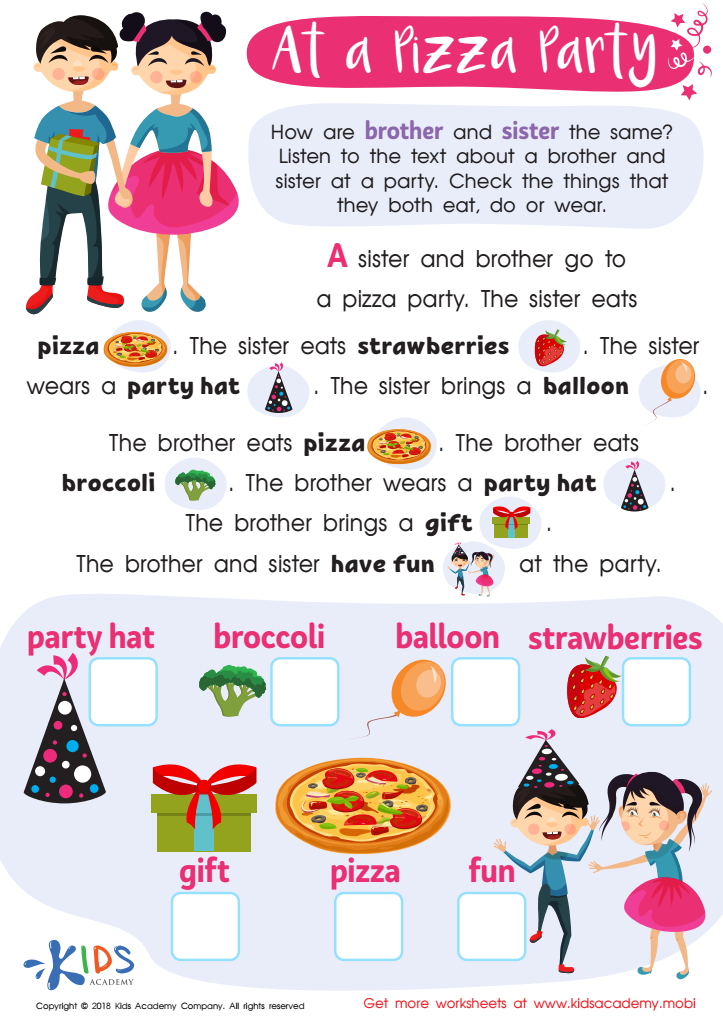
At a Pizza Party Worksheet

At a Pizza Party Worksheet

Parties are the best! Eating, playing, singing, dancing and gift-exchange - what's your child's fave part? In this worksheet, a brother and sister are eager to enjoy their party. Read the text to them and help them check what they do, eat, and wear. 80 words.
At a Pizza Party Worksheet
Worksheet
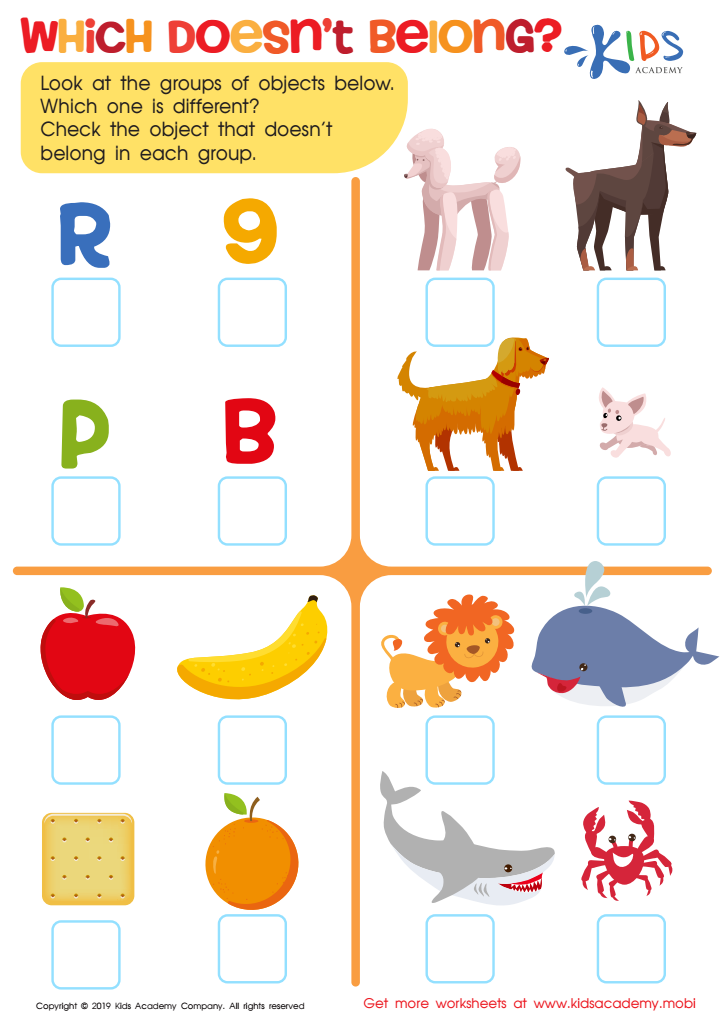
Which Doesn't Belong? Worksheet

Which Doesn't Belong? Worksheet

This engaging worksheet helps preschoolers recognize similar and different attributes of common words, using brightly-colored pictures. They analyze the items in each category and check off what is different. For extra practice, have them explain their reasoning verbally! Sorting and classifying are important skills to learn.
Which Doesn't Belong? Worksheet
Worksheet
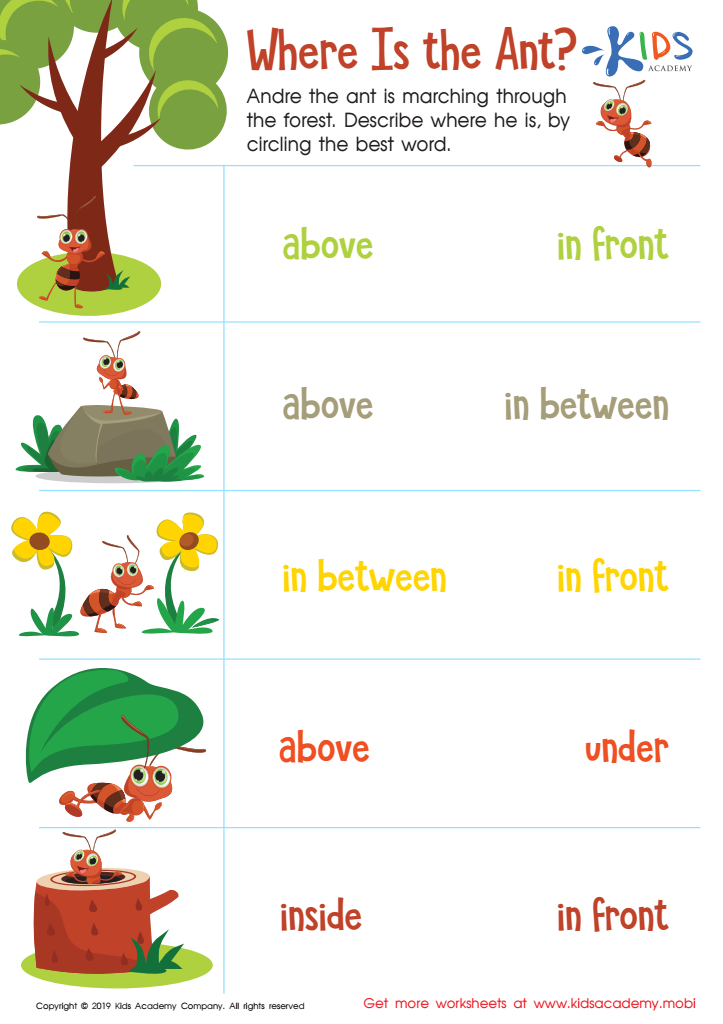
Where Is the Ant? Worksheet

Where Is the Ant? Worksheet

Kids are captivated by ants. Andre is a busy ant, marching through the forest. Help your child circle the best word that best describes what he's doing in each picture. This colorful printout will show them the way.
Where Is the Ant? Worksheet
Worksheet
The Movement Maze Worksheet

The Movement Maze Worksheet

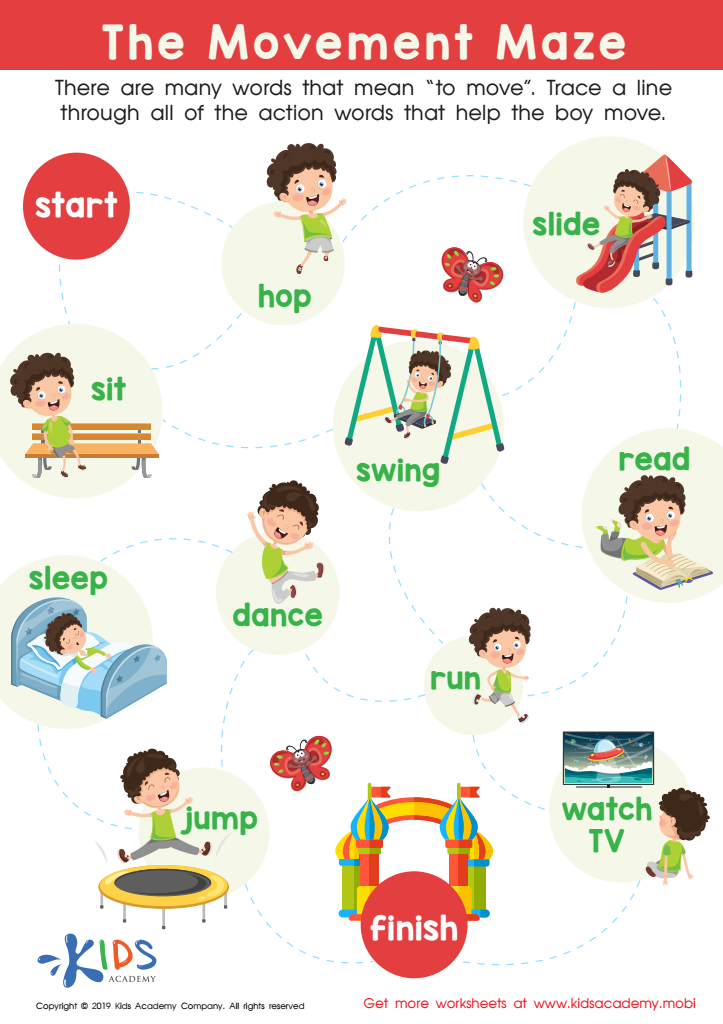
Let your child have fun with this interactive PDF download. Kids will learn movement words with cute pictures, plus practice fine motor skills as they trace. A fun way to reinforce vocabulary. Jump, hop and sit – it's all here!
The Movement Maze Worksheet
Worksheet
“The Princess and the Pea” or “Cinderella” Worksheet

“The Princess and the Pea” or “Cinderella” Worksheet

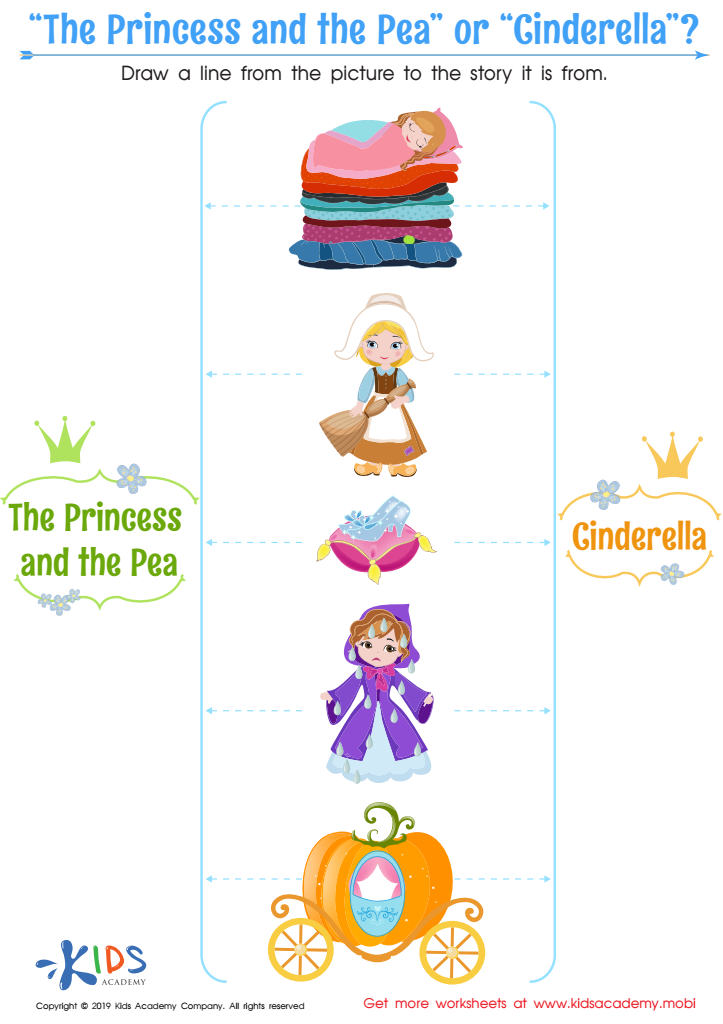
Help your child identify the characters and objects from both the Princess and the Pea and Cinderella. Ask them to draw a line from the pictures to the story it's from on the tracing sheet. Encourage them to tell you the similarities between the two stories. Enjoy the tale with your daughter and watch her be fascinated by these two classic children's stories.
“The Princess and the Pea” or “Cinderella” Worksheet
Worksheet
Towns Worksheet
Towns Worksheet

Towns Worksheet

Towns are generally quiet and safe, making them attractive for young families. Cities have more people, businesses and tall buildings. Roads are busy, and there is often plenty to do and see. Help your kids check which pictures in this worksheet show towns.
Towns Worksheet
Worksheet
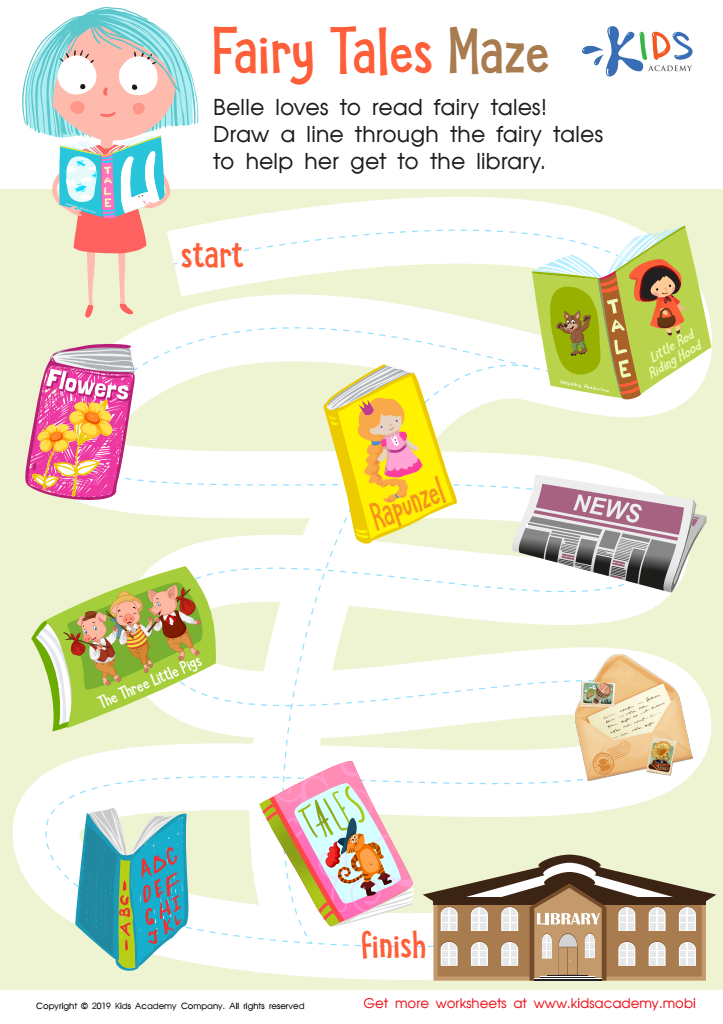
Fairy Tales Maze Worksheet


Fairy Tales Maze Worksheet

Kids love mazes and fairy tales, so this free worksheet is a great way to help teach young readers about familiar topics. They'll join Bella and use the traceable lines to travel through different reading genres, and find their way to the library for a nice reward!
Fairy Tales Maze Worksheet
Worksheet


Problem-solving skills are crucial for children aged 4-5 as they lay the foundation for future learning and development. At this age, children are naturally curious and eager to explore their surroundings. By fostering their problem-solving skills, parents and teachers can help children navigate challenges, build resilience, and develop critical thinking abilities.

Encouraging problem-solving through normal reading activities helps children make sense of the world around them. As they engage with stories, they encounter characters facing obstacles. Discussing these scenarios cultivates empathy and analytical thinking, enabling children to connect ideas and consider different perspectives. These skills are not only vital for academic success but also for social interactions as they learn to negotiate, collaborate, and resolve conflicts.

Moreover, problem-solving experiences during this stage enhance children's creativity. As they find solutions in a safe environment, they become more confident and willing to experiment with new ideas. By prioritizing problem-solving skills in reading activities, parents and teachers are preparing children for future challenges and promoting a love of learning. Ultimately, developing these skills now supports lifelong learning and fosters well-rounded individuals capable of approaching tasks with confidence and innovation.