Story sequencing Normal Reading Worksheets for Ages 4-5
6 filtered results
-
From - To
Unlock your child's potential with our Story Sequencing Reading Worksheets, designed for ages 4-5! These engaging, printable worksheets help young learners develop critical thinking and comprehension skills by arranging events in the correct order. Each activity combines fun illustrations and simple stories, making it an enjoyable experience for preschoolers and kindergarteners. Perfect for early childhood education, our worksheets foster a love for reading while enhancing narrative understanding and cognitive abilities. Explore a world of stories and watch your child thrive academically with our expertly crafted resources. обязательно для каждого раннего учащегося!
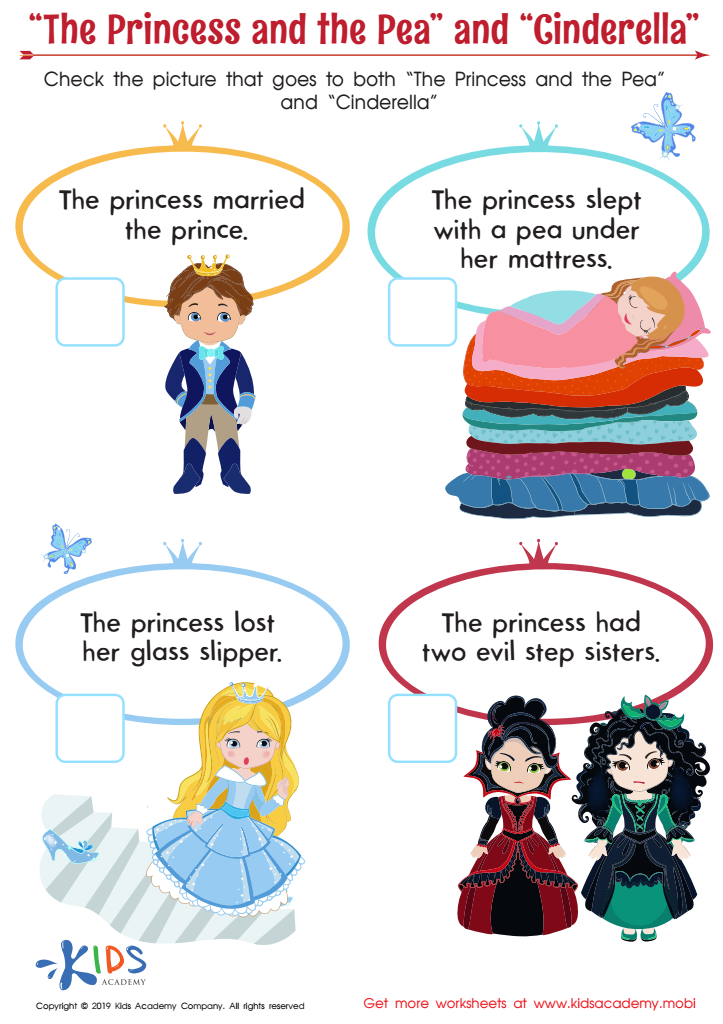
“The Princess and the Pea” and “Cinderella” Worksheet
 Assign to My Students
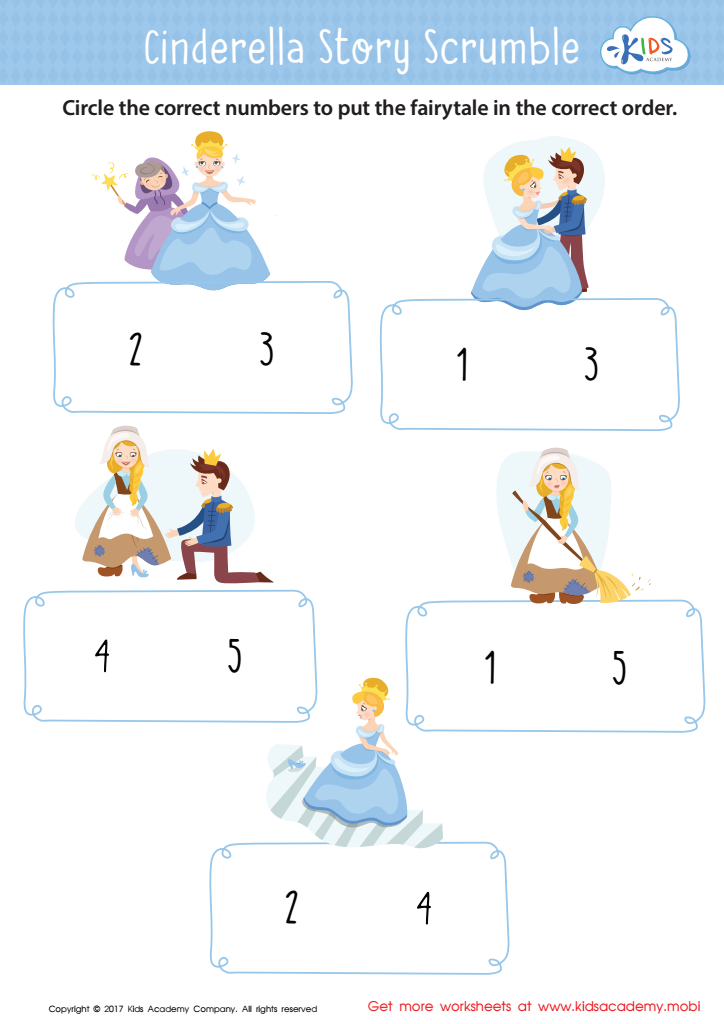
Cinderella Story Sequencing Worksheet
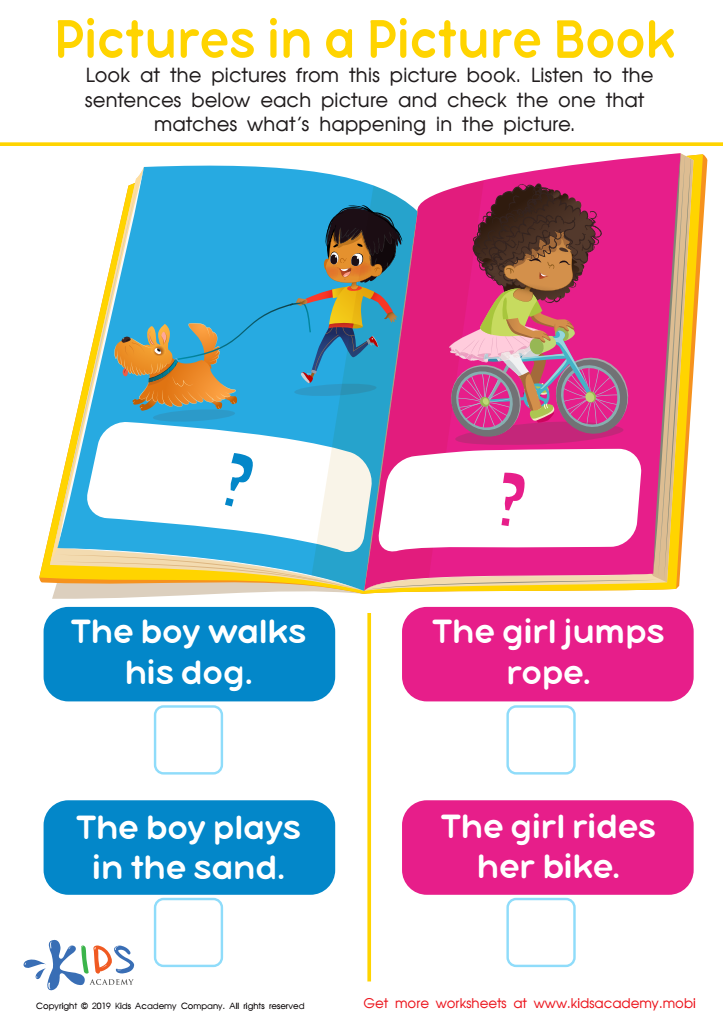
Picture in Books Worksheet
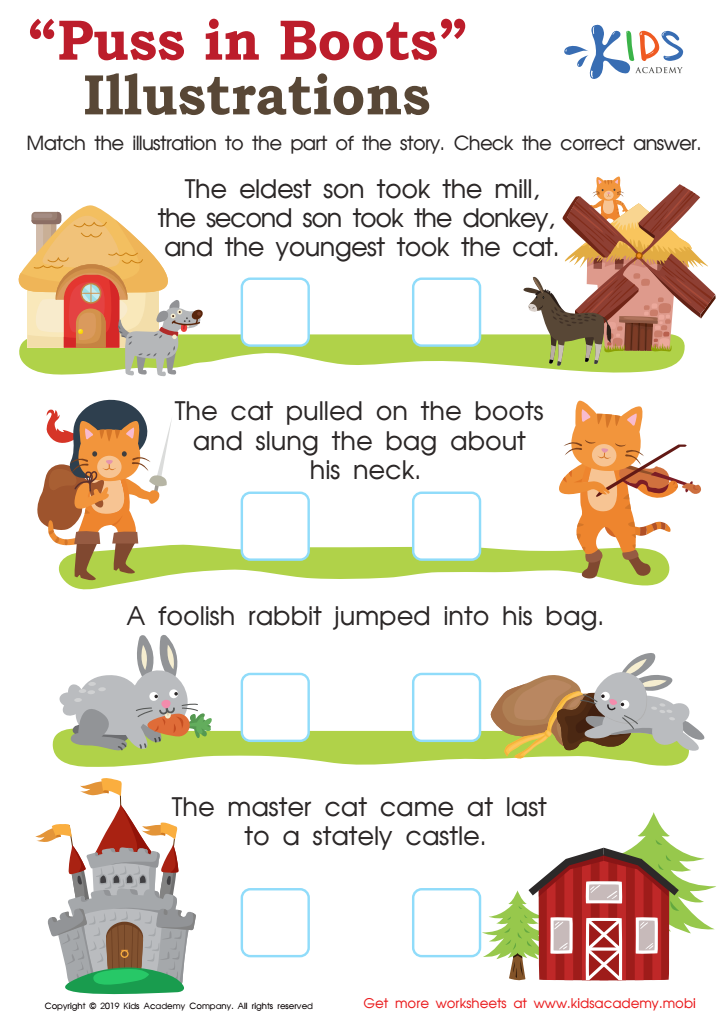
Puss in Boots Illustrations Worksheet
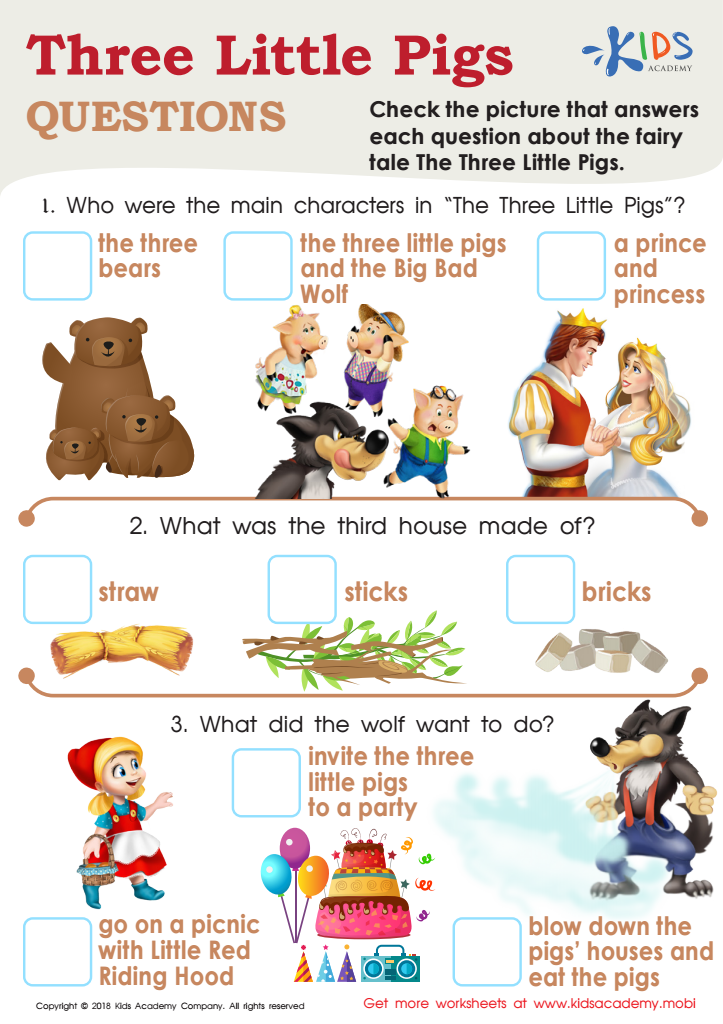
Three Little Pigs Questions Worksheet
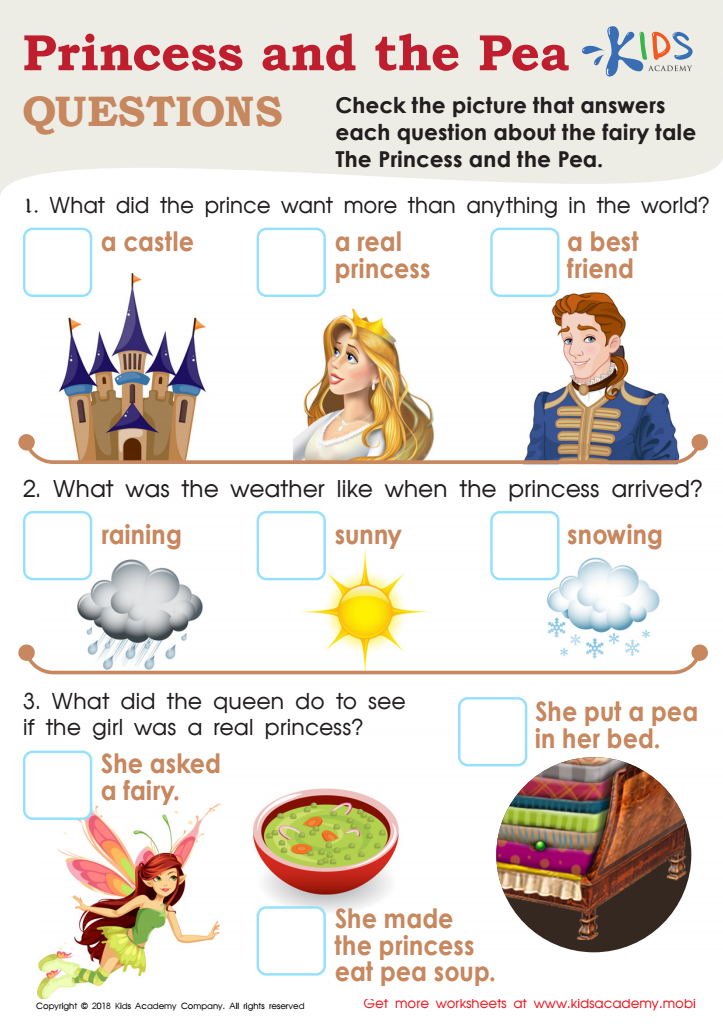
Princess and the Pea Questions Worksheet







Story sequencing is a fundamental skill in early literacy development, and parents and teachers should invest time and energy into fostering it in children aged 4-5. At this age, children’s brains are in a critical period for language acquisition and cognitive development. By learning to sequence stories, young children enhance their comprehension skills, which are essential for successful reading.
When children can identify the beginning, middle, and end of a story, they develop a better understanding of narrative structure. This skill helps them grasp how events are logically connected, boosting their ability to predict and infer outcomes—skills crucial not just in reading but in everyday problem solving.
Moreover, story sequencing supports vocabulary development and language skills. As kids recount stories, they practice using new words and form coherent sentences. Sequencing also encourages active listening and attention to detail, as children need to remember and order events correctly.
In the classroom, structured story sequencing activities can cater to varied learning styles through the integration of visual aids, interactive storytelling, and hands-on exercises like drawing scenes or arranging pictures. Consistently engaging children in these activities also builds their confidence, preparing them for more complex reading and writing tasks in the future. In summary, focusing on story sequencing at this formative age lays a strong foundation for a lifetime of successful literacy and learning.








