Lowercase identification Normal Alphabet Worksheets for Ages 4-6
4 filtered results
-
From - To
Explore our engaging Lowercase Identification Normal Alphabet Worksheets designed specifically for children aged 4-6! These worksheets foster early literacy skills by helping young learners recognize and differentiate between lowercase letters. Each activity is crafted to make learning fun and interactive, featuring colorful illustrations and captivating exercises that promote hands-on practice. As kids complete these worksheets, they enhance their letter identification abilities while developing fine motor skills essential for writing. Perfect for use at home or in the classroom, our worksheets support preschool and kindergarten learning objectives. Download and empower your child’s alphabet knowledge today!
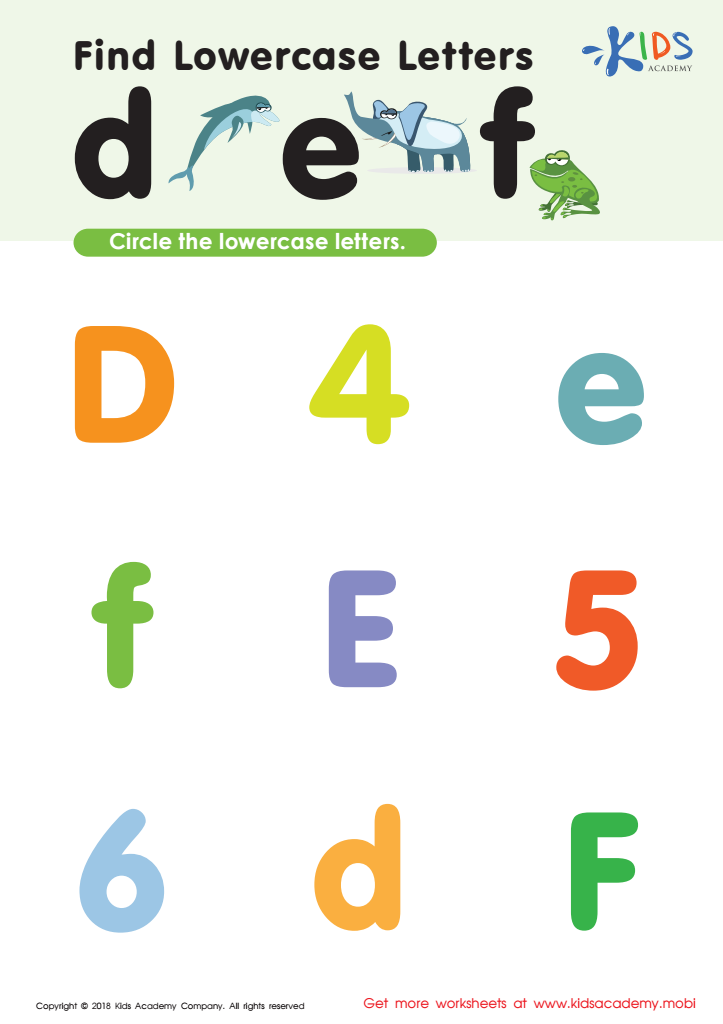
Find Lowercase Letters d e f Worksheet
 Assign to My Students
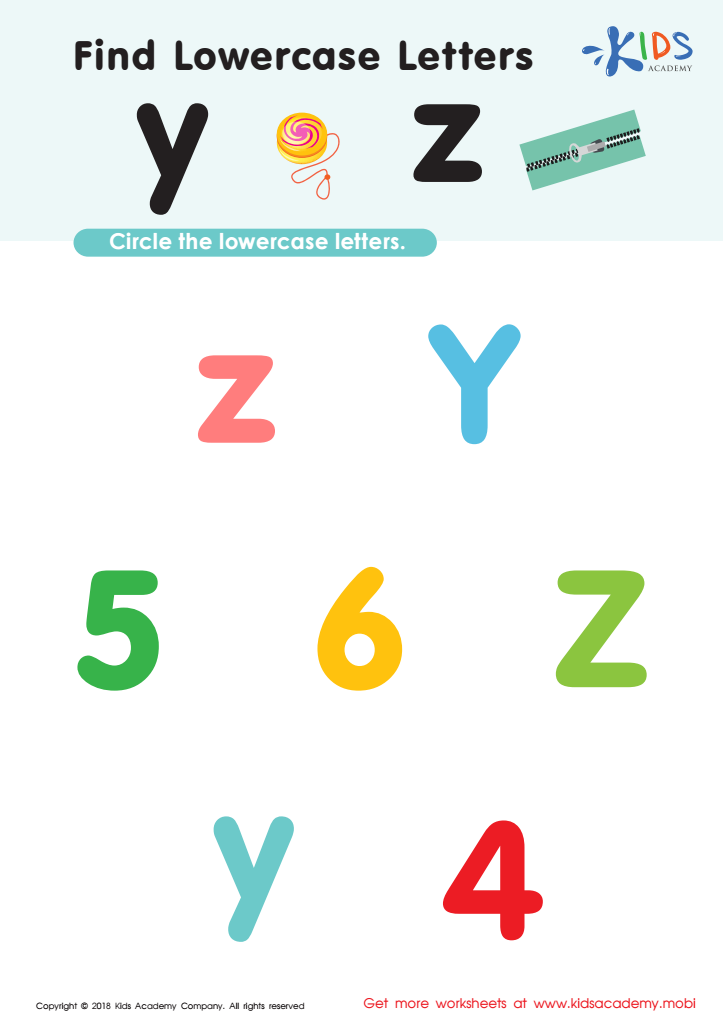
Find Lowercase Letters y z Worksheet
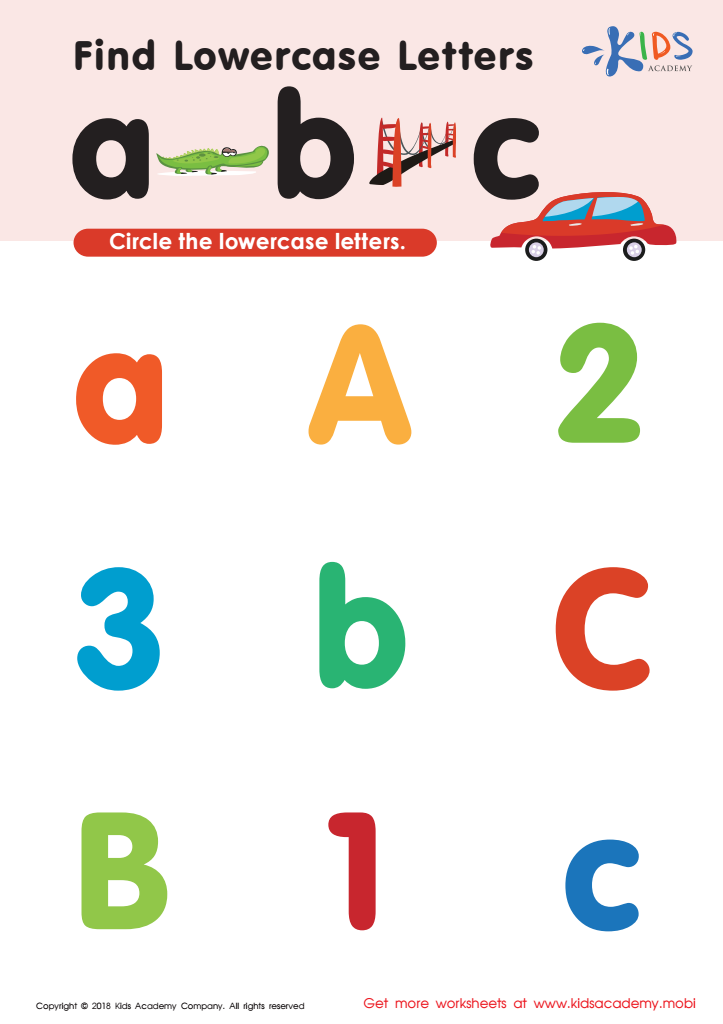
Find lowercase letters a b c Worksheet
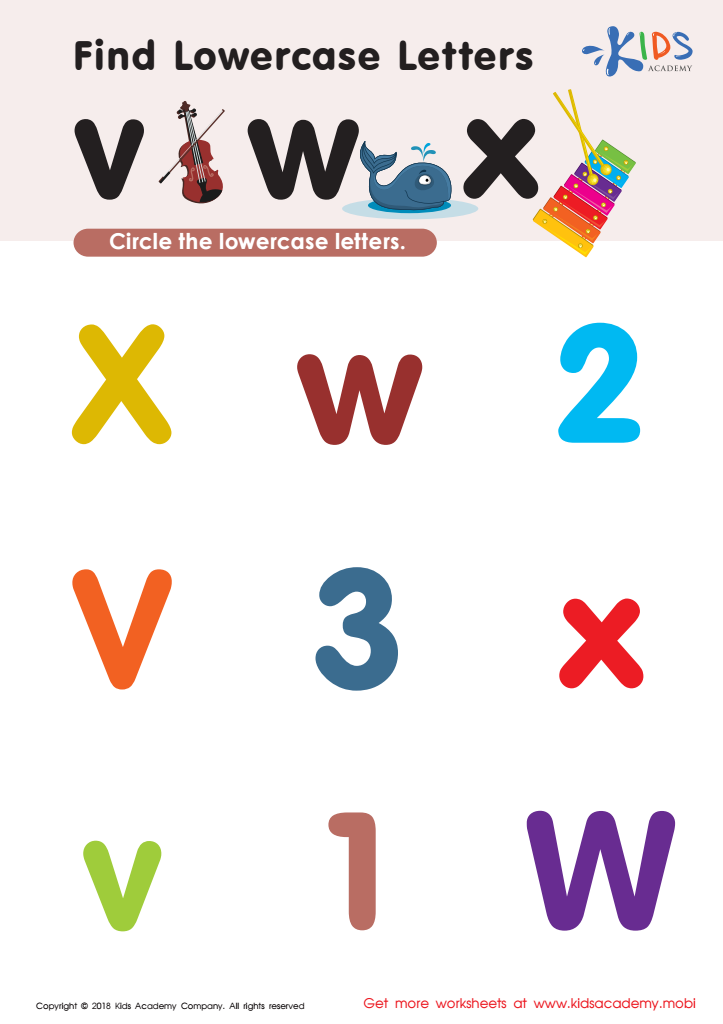
Find Lowercase Letters v w x Worksheet






Lowercase letter identification is a fundamental skill in early literacy development for children aged 4-6. During these formative years, children are rapidly developing their cognitive and language abilities, making this an ideal time to introduce them to lowercase letters. Recognizing lowercase letters is crucial because they make up about 80% of the text children will encounter in their reading and writing tasks.
When parents and teachers emphasize lowercase identification, they equip children with the ability to understand and interact with language more effectively. Most children's books, educational materials, and even digital content predominantly use lowercase letters, so familiarity with them fosters confidence during reading practices. Furthermore, recognizing and writing lowercase letters promotes fine motor skill development, crucial for handwriting.
Additionally, lower case identification lays a foundation for spelling, phonics, and overall language comprehension. As children progress in their literacy skills, proficiency in recognizing these letters aids in their transition to more complex writing and reading tasks. By nurturing their understanding of lowercase letters early on, parents and teachers help set the stage for a love of reading and a successful academic journey. Ultimately, fostering lowercase letter recognition contributes significantly to a child's overall educational development and self-esteem.







