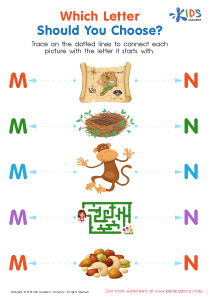
Letter recognition Normal Lowercase/Small Letters Worksheets for Ages 4-6
10 filtered results
-
From - To
Help your child master the basics of reading with our Letter Recognition Normal Lowercase/Small Letters Worksheets for Ages 4-6. Designed for preschool and kindergarten students, these engaging worksheets focus on identifying and writing lowercase letters. Our fun and interactive exercises will assist young learners in recognizing letter shapes, improving fine motor skills, and laying a strong foundation for future literacy success. Created by educational experts, these printable resources offer a variety of activities to keep your child motivated and excited about learning. Visit our website to download and start enhancing your child's letter recognition skills today!
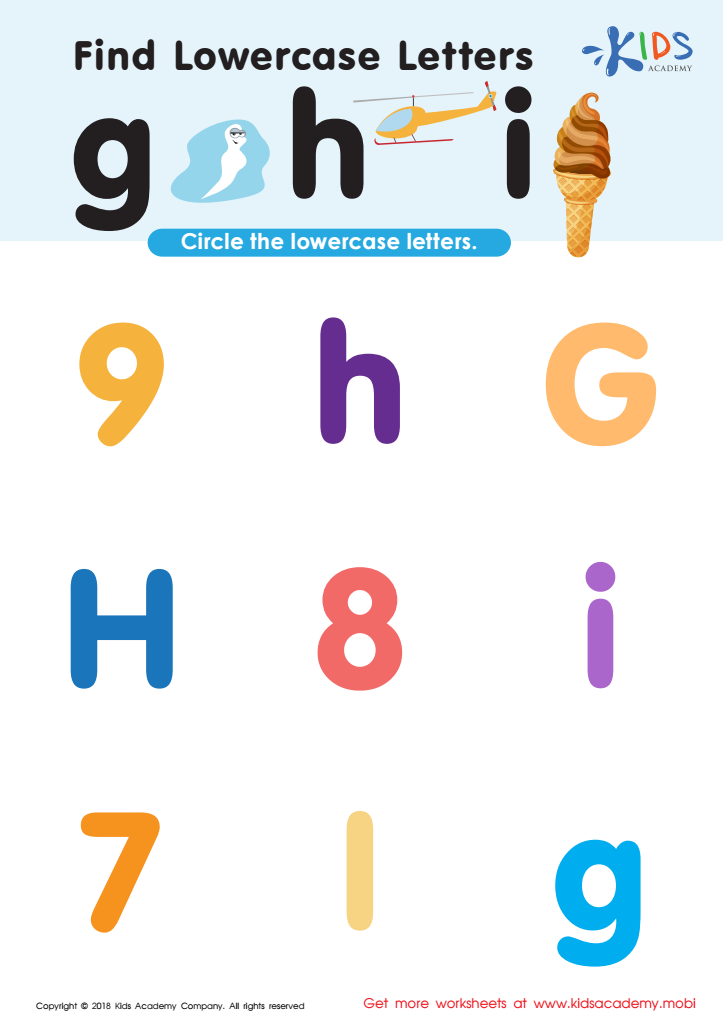
Find Lowercase Letters g h i Worksheet
 Assign to My Students
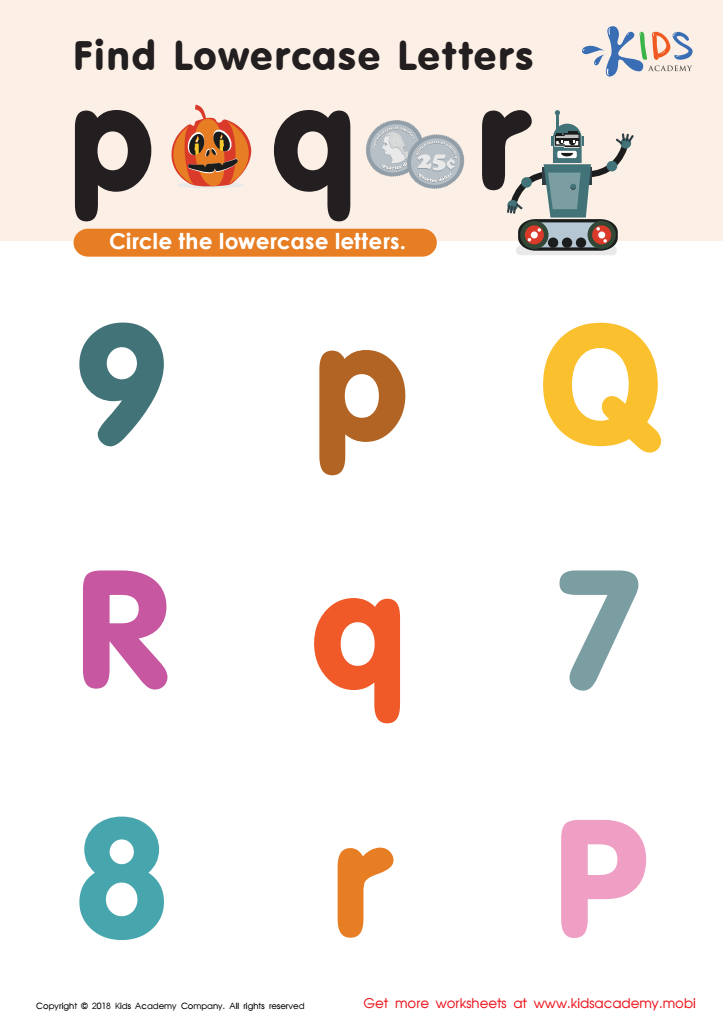
Find lowercase Letters p q r Worksheet
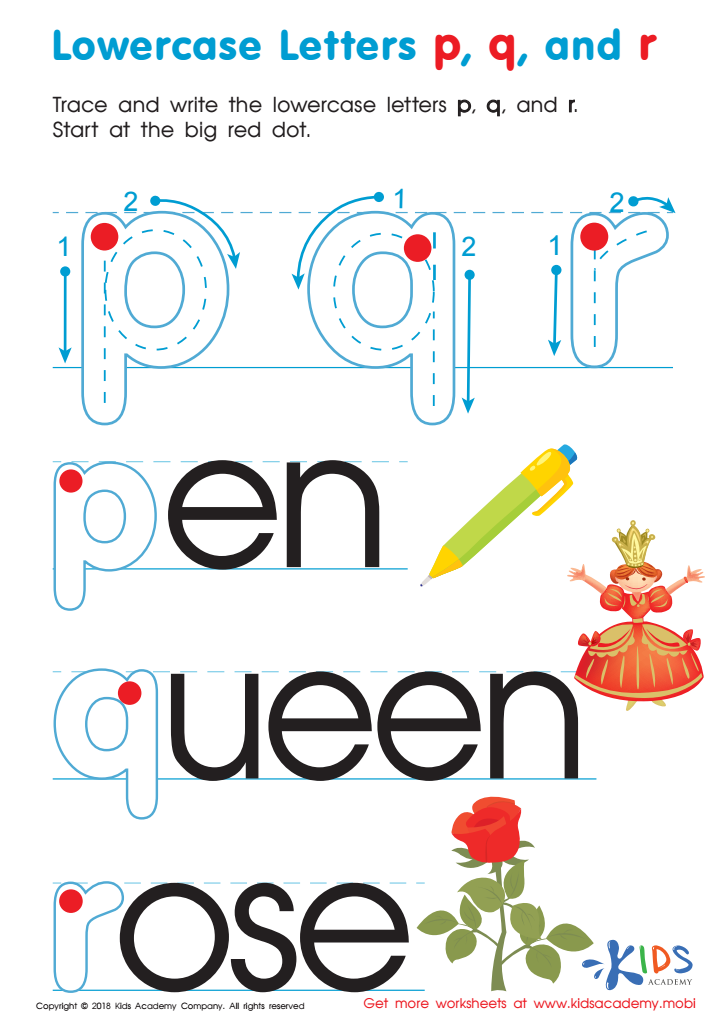
Lowercase Letters p q r Worksheet
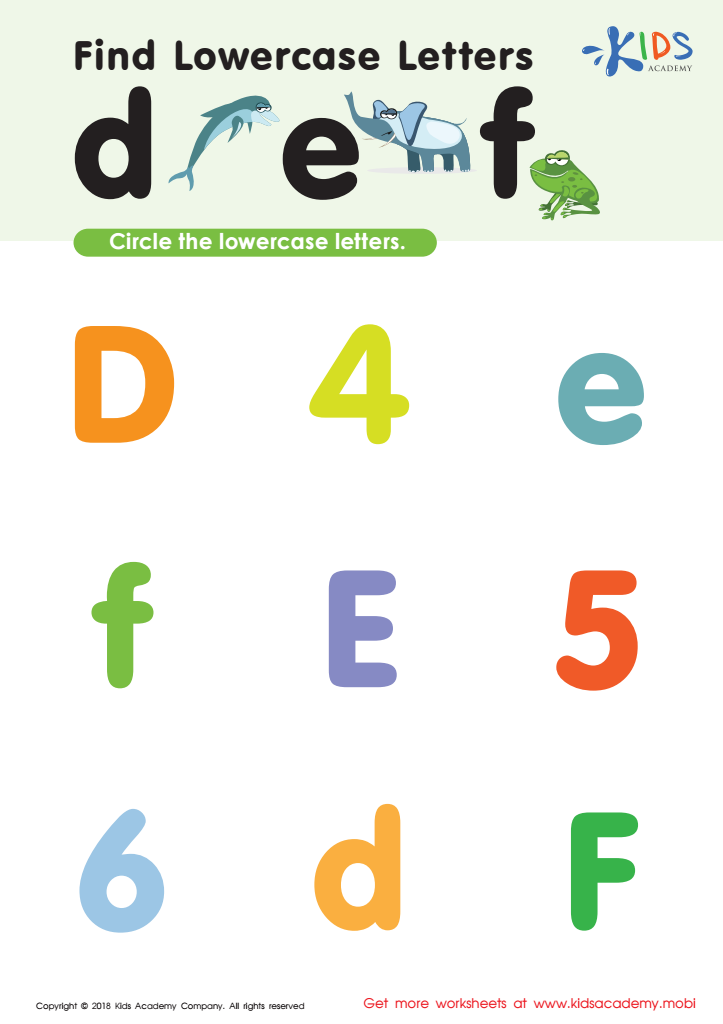
Find Lowercase Letters d e f Worksheet
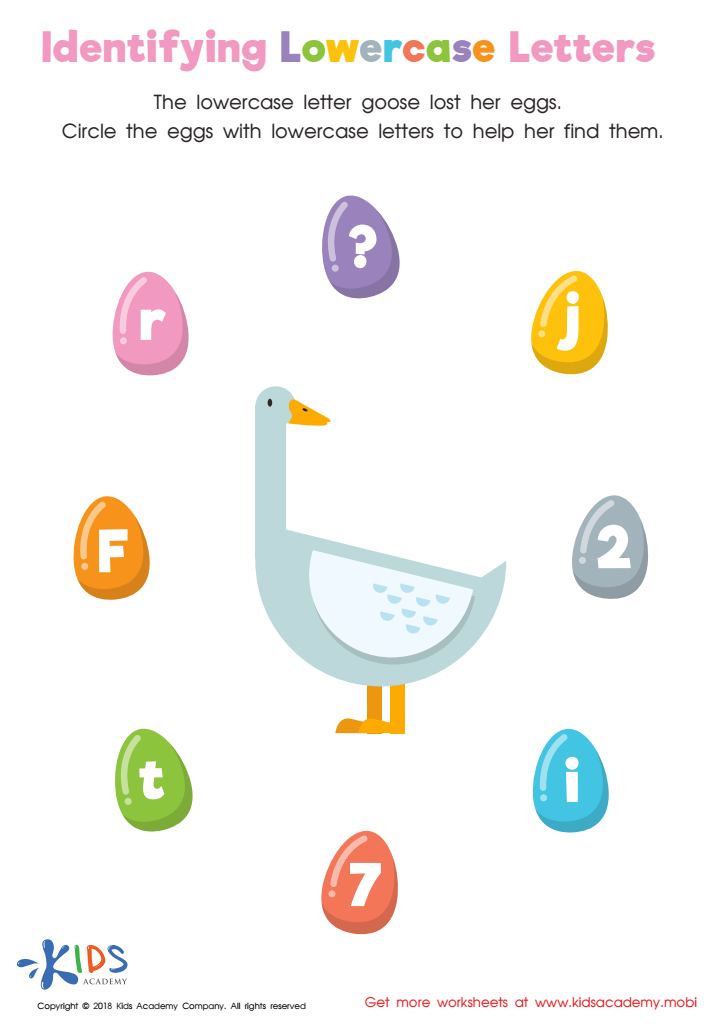
Identifying Lowercase Letters Worksheet
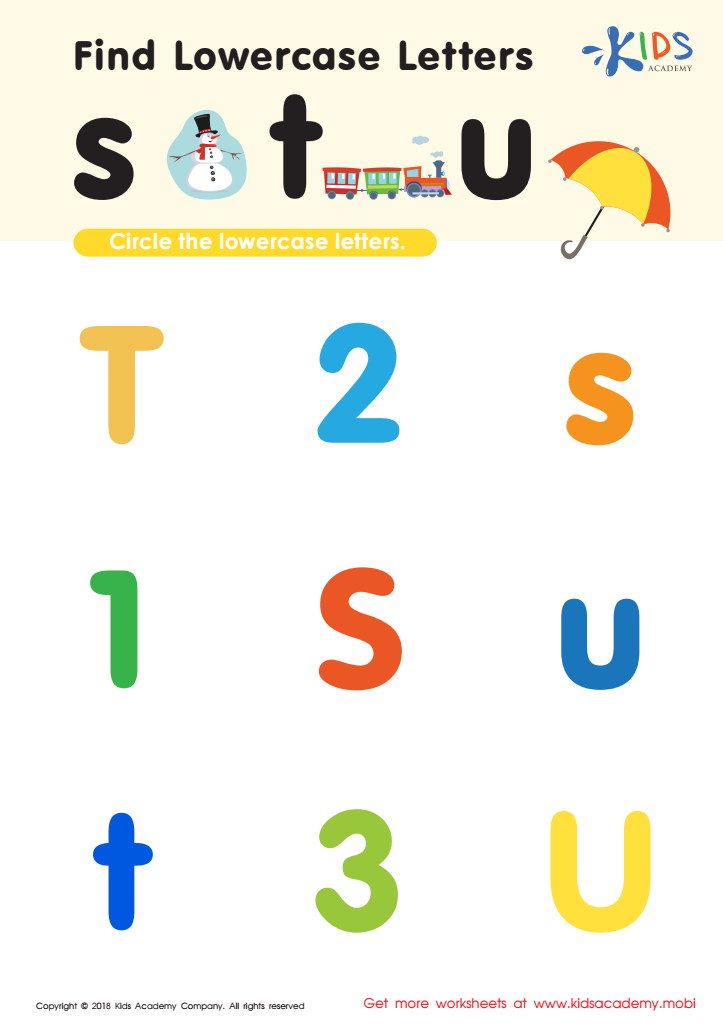
Find lowercase Letters s t u Worksheet
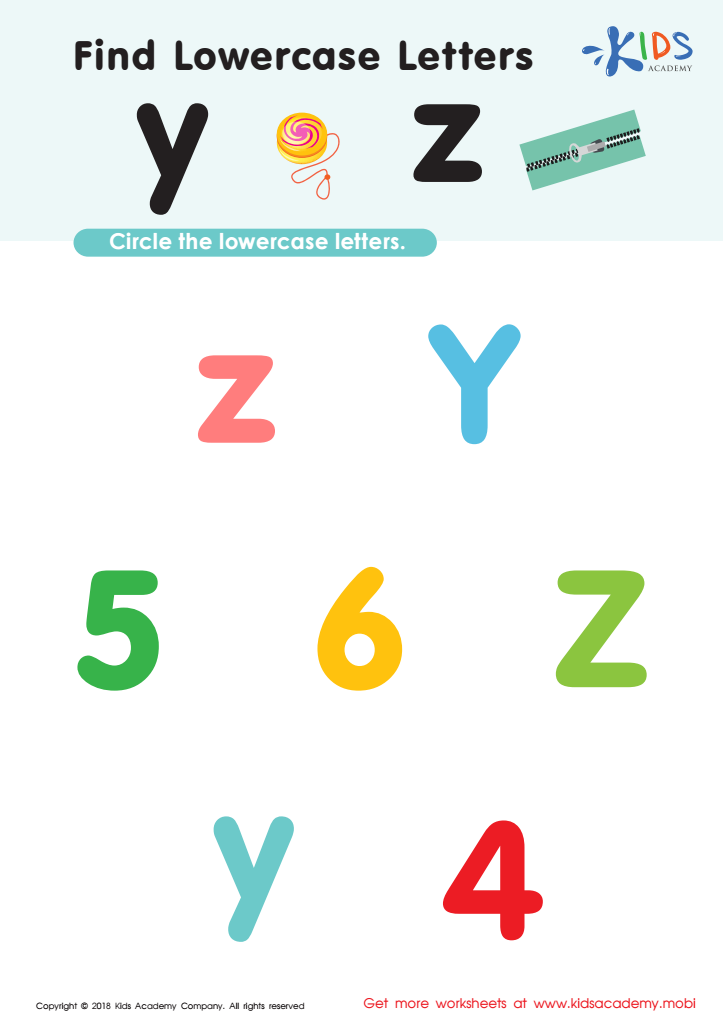
Find Lowercase Letters y z Worksheet
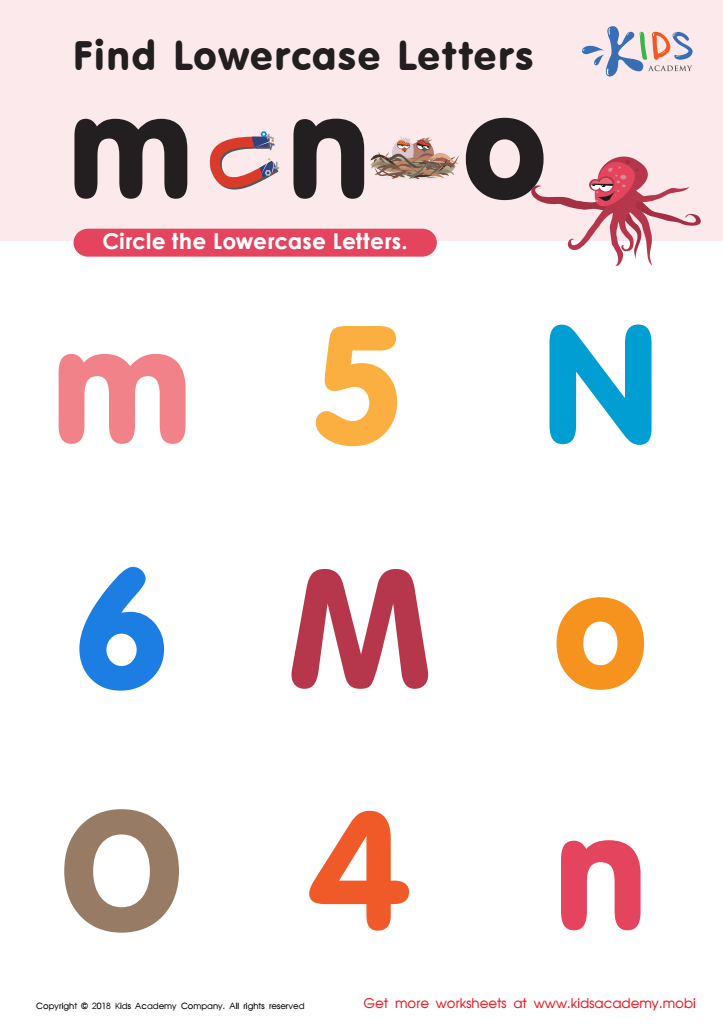
Find Lowercase Letters m n o Worksheet
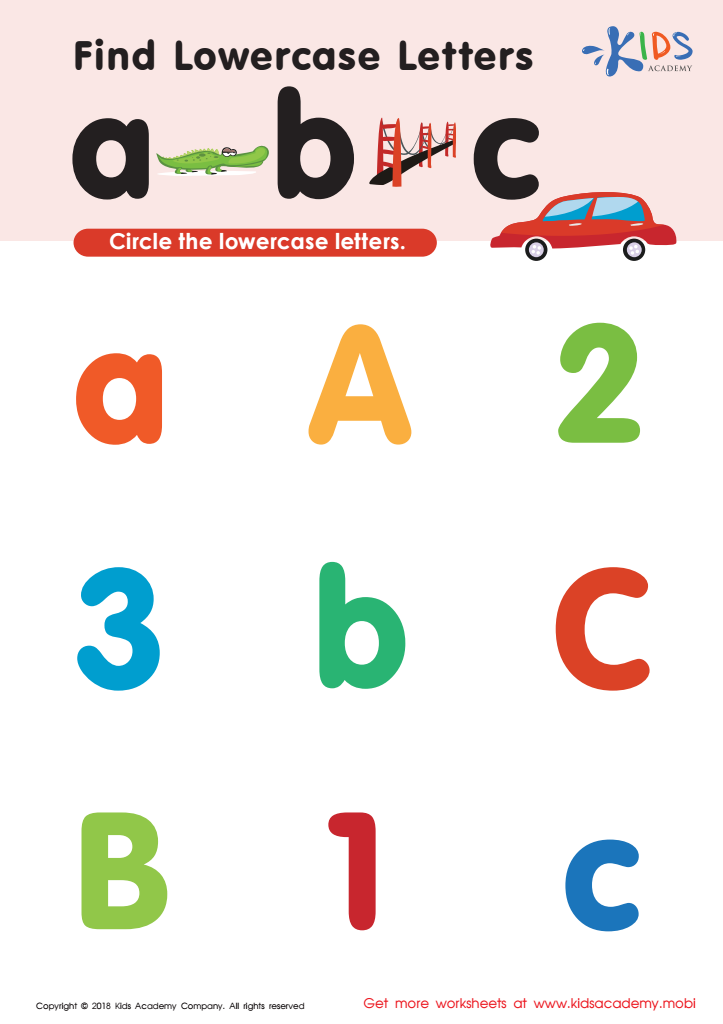
Find lowercase letters a b c Worksheet
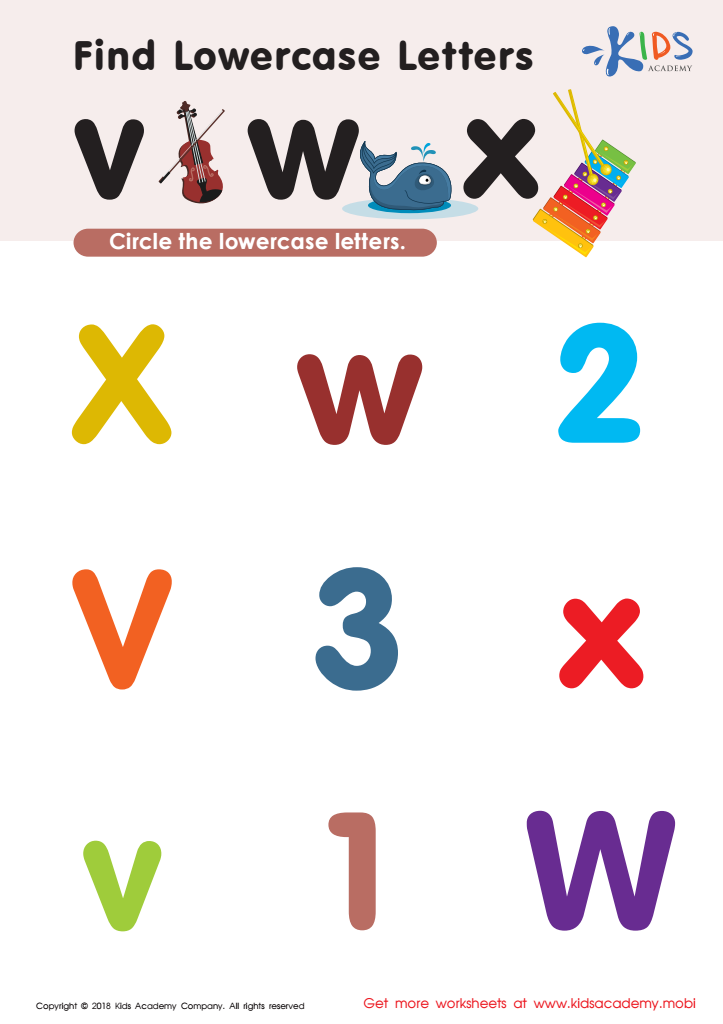
Find Lowercase Letters v w x Worksheet


Parents and teachers should place a high priority on letter recognition, specifically normal lowercase or small letters, for children ages 4-6, as it forms the foundational building block of early literacy. At this stage, young minds are highly receptive and primed for learning. Recognizing lowercase letters accurately is essential because most of the text young readers will encounter in books, signs, and written instructions is in lowercase form. Moreover, children first recognize uppercase letters due to their distinct shapes and less frequent use, cultivating familiarity with lowercase letters that supports fluid reading and writing.
Lowercase recognition is pivotal for developing phonemic awareness, which involves understanding that letters represent specific sounds—a crucial skill for decoding words while reading or spelling them correctly when writing. Mastery in this area enhances children’s confidence, motivating them to engage more actively in literacy activities. Additionally, proficient letter recognition fosters early vocabulary development, aiding language acquisition and comprehension skills vital for later academic success.
Teachers and parents must collaborate in integrating engaging, letter-focused activities to cultivate these skills. By prioritizing lowercase letter recognition, they pave the way for children’s fluid transition into independent, confident readers and writers, opening up lifelong avenues for learning and communication.