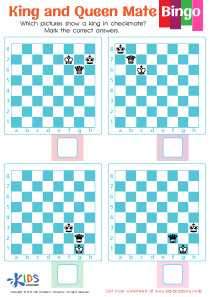
Understanding chess rules Normal Chess Worksheets for Ages 4-6
5 filtered results
-
From - To
Dive into the world of chess with our "Understanding Chess Rules Normal Chess Worksheets" designed specifically for children aged 4-6. These engaging and interactive worksheets provide a fun and effective way for young learners to grasp the fundamental rules of chess. Through colorful illustrations and simple activities, kids will discover piece movements, basic game strategies, and the importance of chess etiquette. These worksheets not only enhance critical thinking and problem-solving skills but also promote patience and sportsmanship. Perfect for home or classroom use, our resources make learning chess enjoyable and accessible for your little ones. Start their chess journey today!
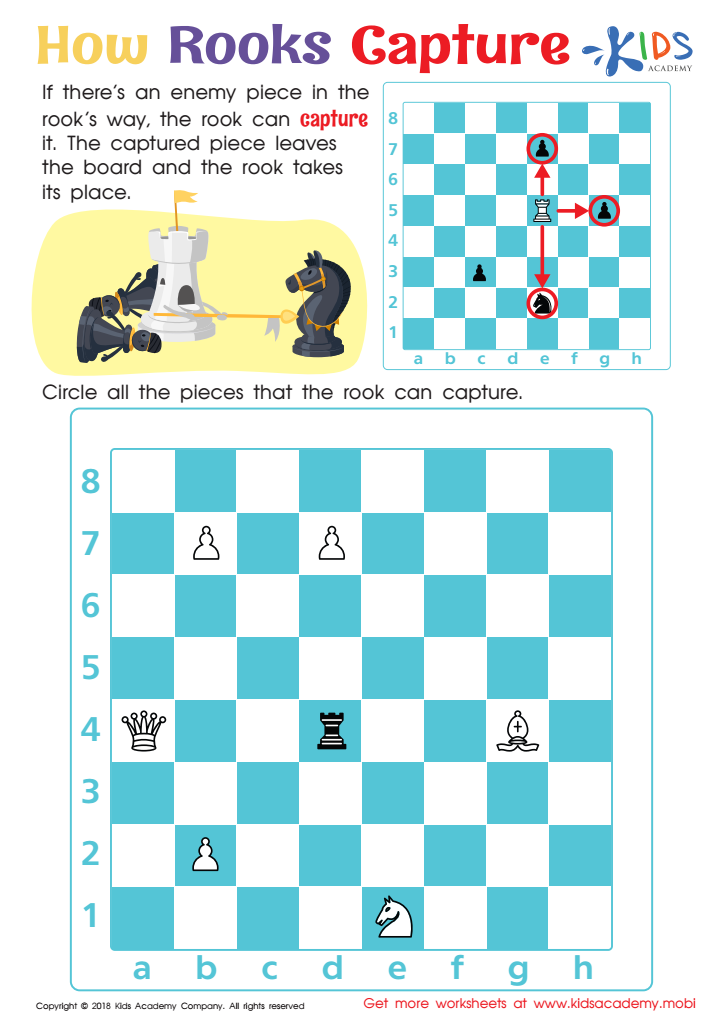
How Rooks Capture Worksheet
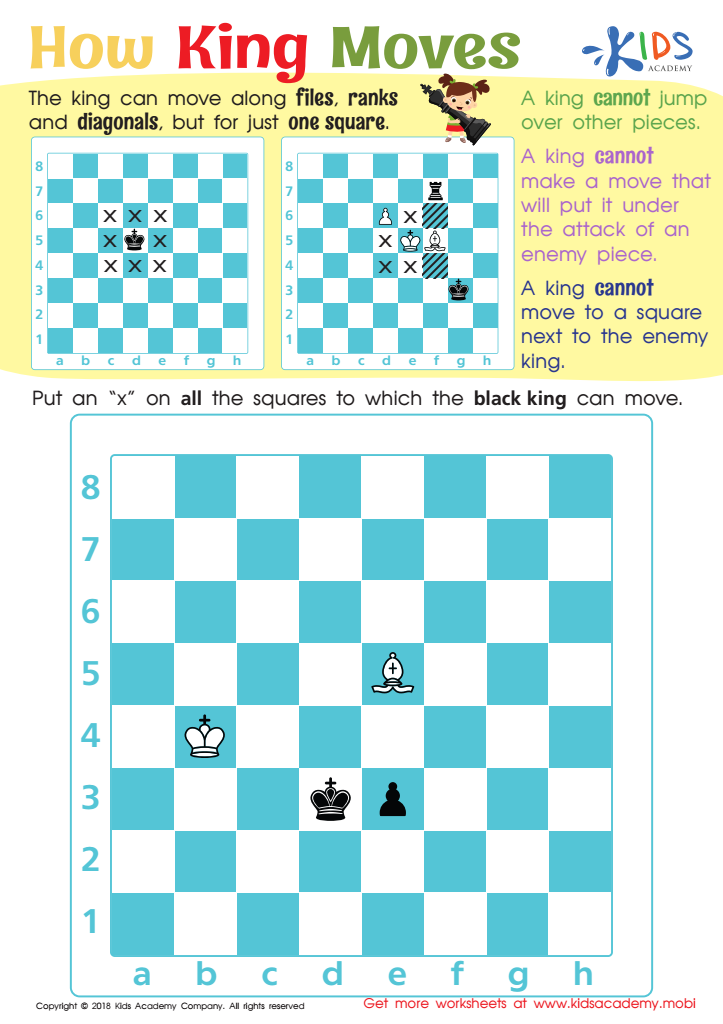
How King Moves Worksheet
 Assign to My Students
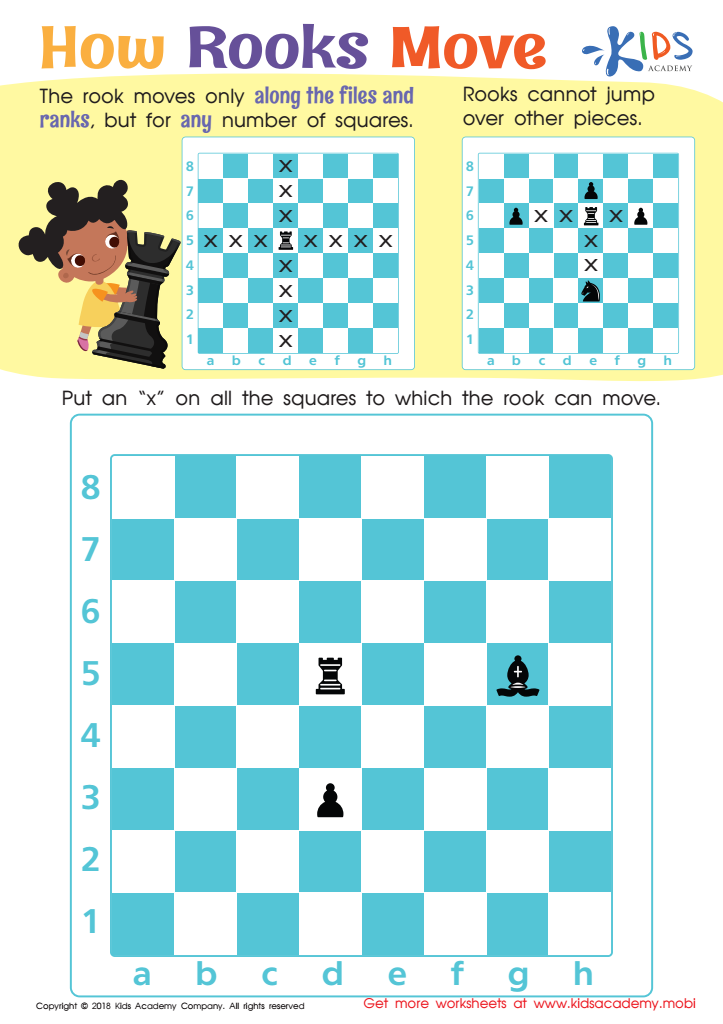
How Rooks Move Worksheet
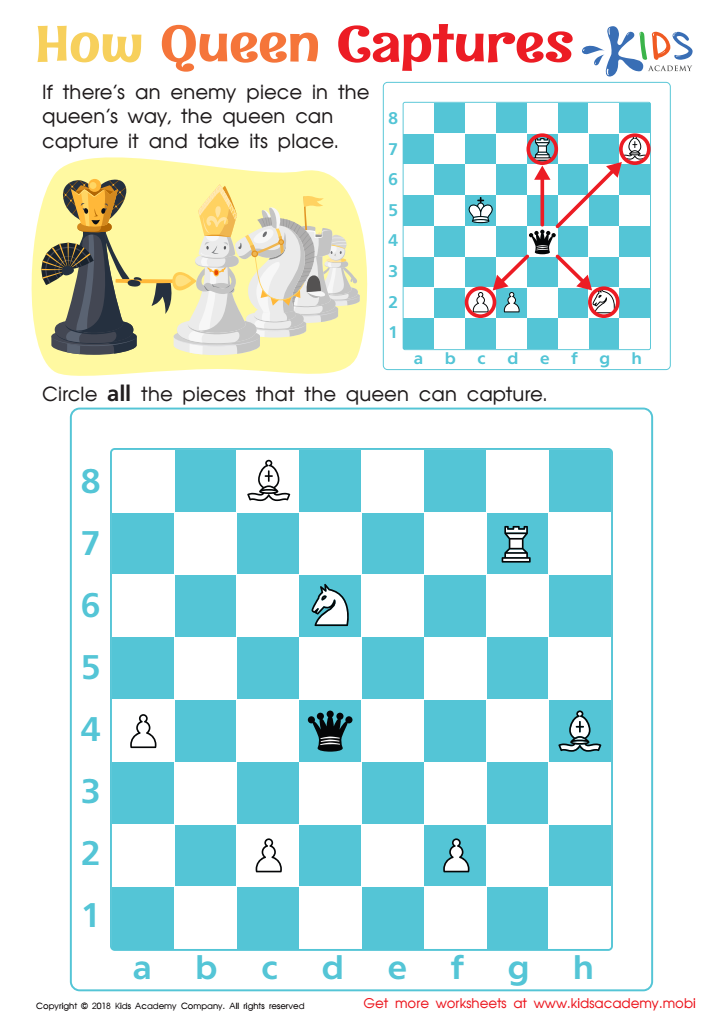
How Queen Captures Worksheet
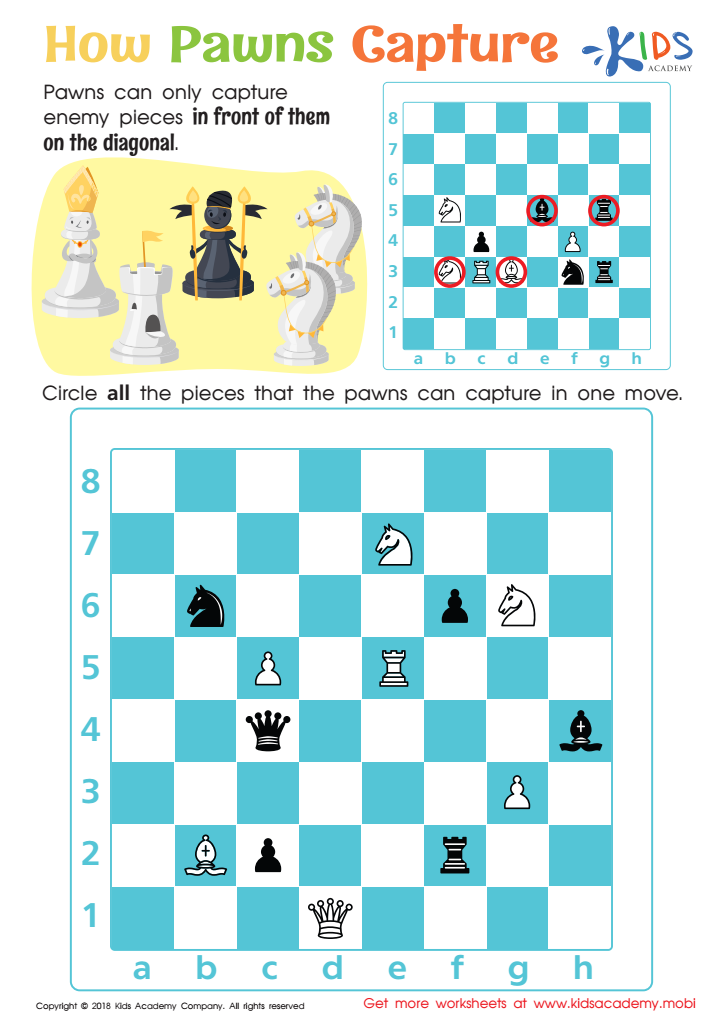
How Pawns Capture Worksheet







Understanding the rules of Normal Chess for ages 4-6 is crucial for both parents and teachers as this game offers numerous developmental benefits. First and foremost, chess promotes critical thinking and problem-solving skills. Learning to navigate the board, recognize patterns, and anticipate an opponent's moves fosters cognitive development in young children.
Additionally, chess encourages patience and perseverance. Kids learn that careful planning and planning ahead are essential to success, which can translate into improved focus in other areas of learning. Social skills also benefit as playing chess teaches children to engage respectfully with opponents, practice good sportsmanship, and develop communication abilities.
Moreover, chess can enhance creativity. The variety of potential moves and strategies requires imaginative thinking, leading to more innovative problem-solving approaches. When taught in an engaging way, chess-age appropriate game structures and rules can ignite a love for learning, making education both effective and enjoyable.
In collaborating with children on understanding normal chess, parents and teachers have the opportunity to instill life skills, boost self-esteem, and create bonding experiences. Overall, investing time in teaching chess can serve as a supportive foundation for a child's academic and social growth.