Basic measurement concepts Normal Worksheets for Ages 4-6
3 filtered results
-
From - To
Introduce young learners to essential measurement concepts with our engaging worksheets designed for ages 4-6. These materials provide a fun and interactive way for children to explore fundamental skills such as comparing lengths, understanding weights, and grasping capacities through hands-on activities. Our carefully crafted worksheets encourage critical thinking and problem-solving while enhancing fine motor skills. Ideal for both classroom settings and home learning, these resources support early math education and promote confidence in young mathematicians. Explore our collection and help your child develop a solid foundation in basic measurement concepts through enjoyable, age-appropriate exercises!
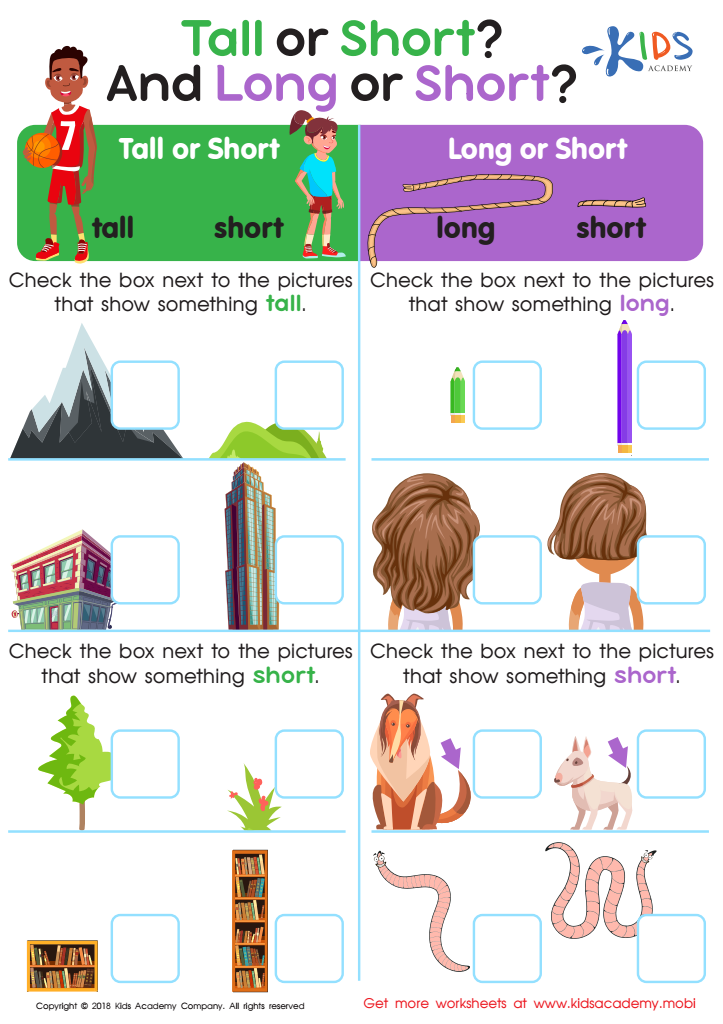
Tall or Short and Long or Short? Worksheet
 Assign to My Students
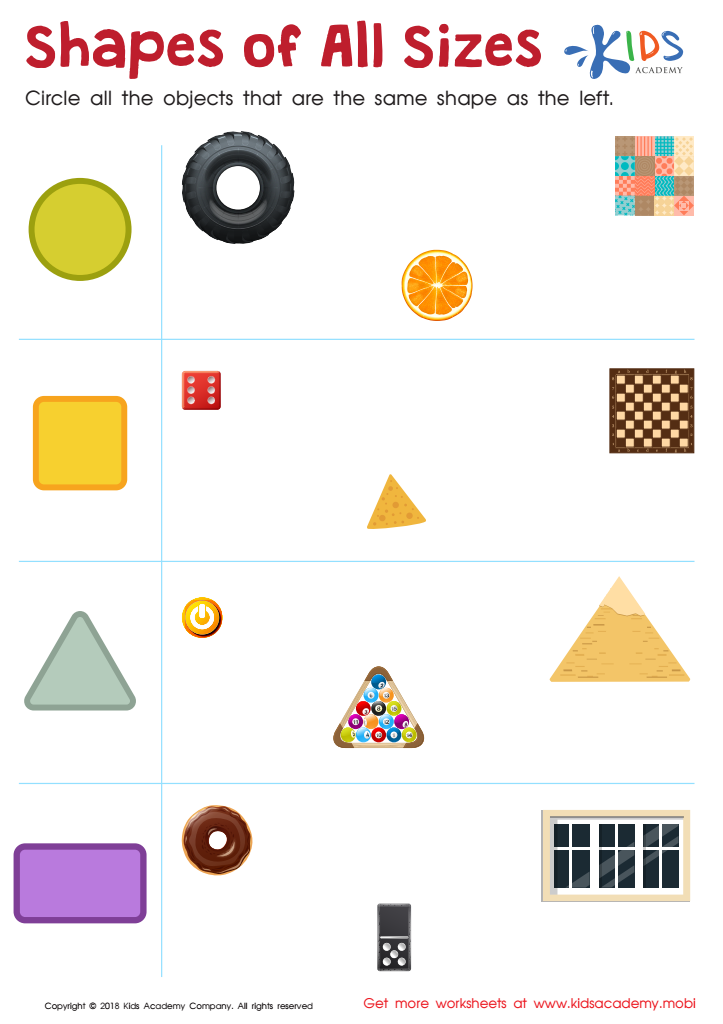
Shapes of All Sizes Worksheet
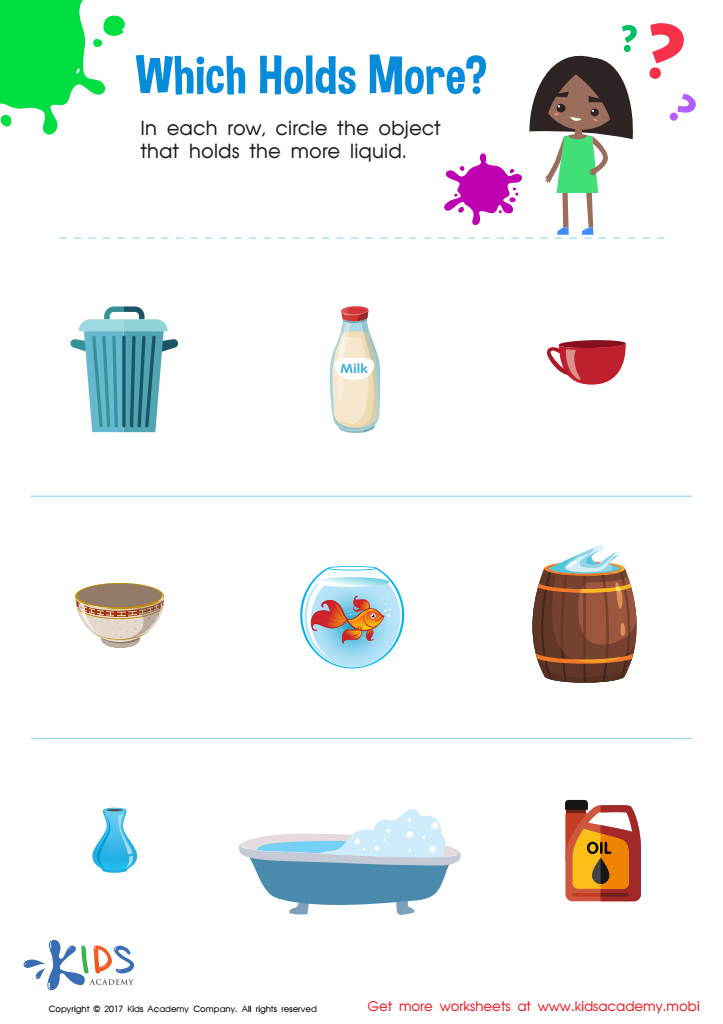
Which Holds More: Capacity Worksheet






Basic measurement concepts are essential for children ages 4-6 as they lay the groundwork for understanding the world around them. At this age, children are naturally curious and eager to explore their environment, making it an ideal time to introduce these concepts. Learning about measurement helps them develop critical thinking skills and enhances their ability to compare, categorize, and make decisions.
Parents and teachers should care about this foundational skill because it integrates various areas of learning, such as math, science, and everyday life. By grasping basic measurement concepts, children learn to estimate lengths, compare weights, and recognize volumes, which opens the door to hands-on experiences. Activities like cooking, building, and gardening not only pique children’s interest but also reinforce their understanding of measurement in practical contexts.
Moreover, early exposure to measurement fosters confidence in math skills and reduces anxiety about the subject as they progress in school. By engaging with measurement concepts together, parents and teachers create shared experiences that enhance bonding and communication. Overall, focusing on these foundational skills enables children to become well-rounded learners, preparing them for future academic challenges and everyday problem-solving.








