Comparing objects Normal Worksheets for Ages 4-6
3 filtered results
-
From - To
Discover our engaging "Comparing Objects Normal Worksheets" designed specifically for children aged 4-6. These printable activities encourage young learners to explore and analyze differences and similarities between various objects, fostering critical thinking and observational skills. Our worksheets feature colorful illustrations and interactive tasks that make learning fun and enjoyable. Each worksheet aligns with early childhood education standards, promoting cognitive development through hands-on comparison exercises. Perfect for home or classroom use, these resources help build foundational math skills while enhancing vocabulary and reasoning. Download our worksheets today and inspire your child's curiosity about the world around them!
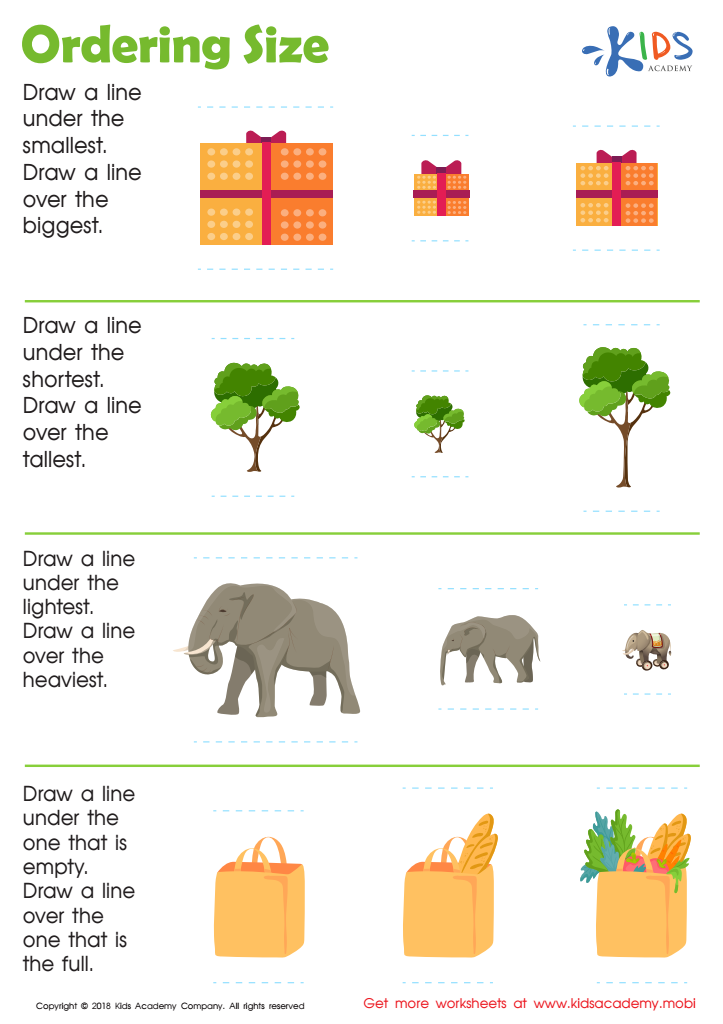
Ordering Size Worksheet
 Assign to My Students
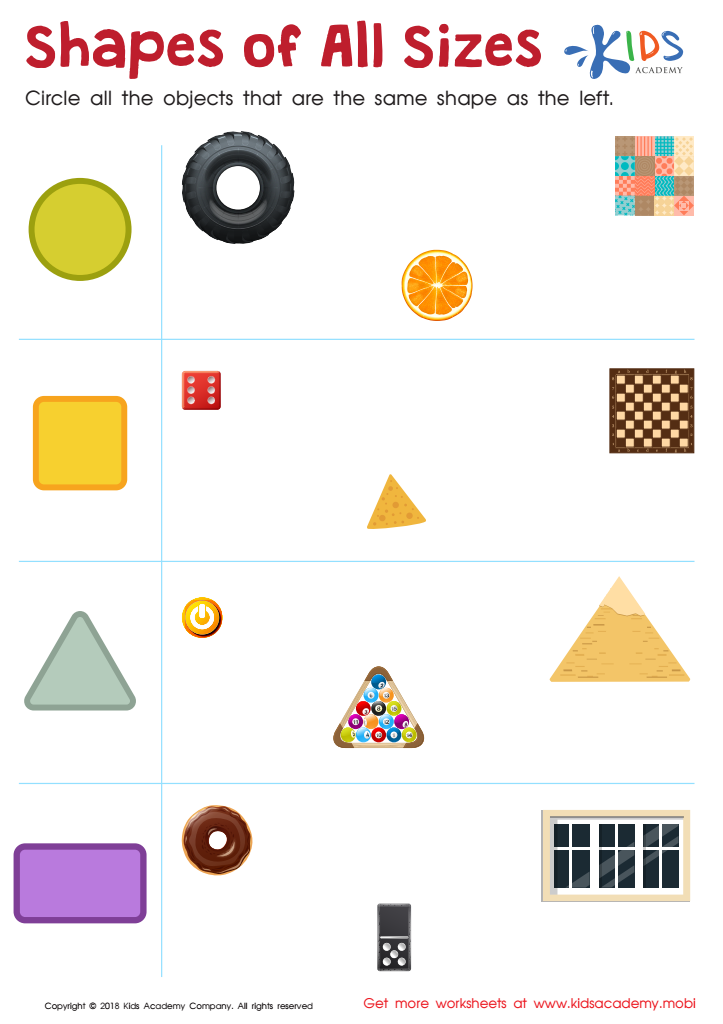
Shapes of All Sizes Worksheet
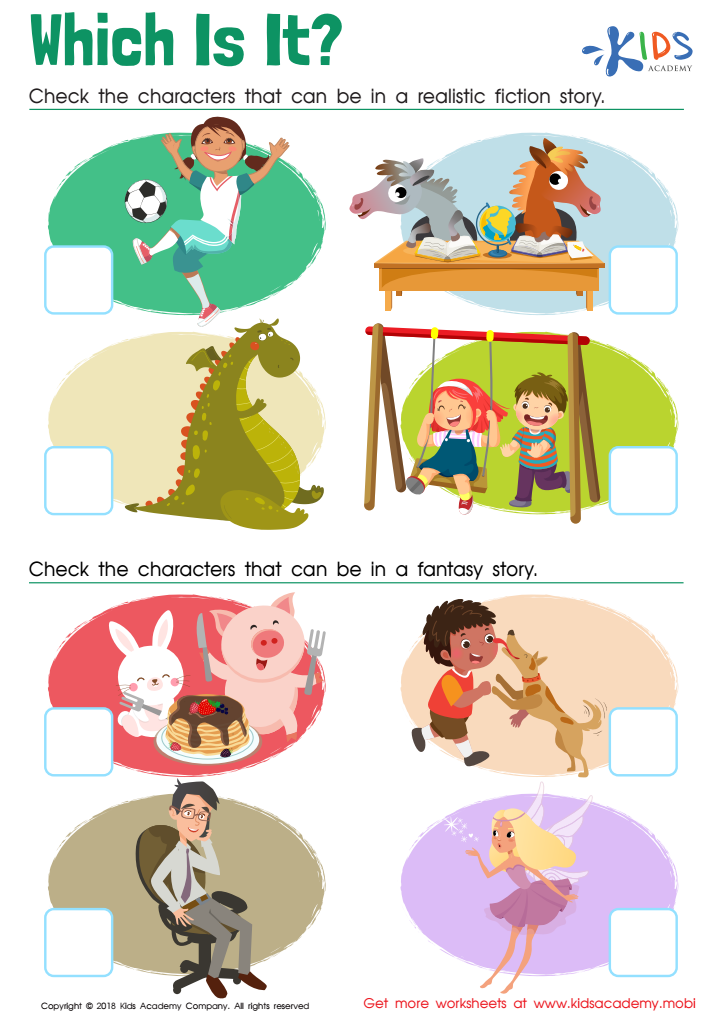
Which Is It? Worksheet







Comparing objects is a fundamental skill that helps children aged 4-6 understand their world better. At this developmental stage, children are naturally curious and eager to make sense of their environment. By comparing objects, they learn to recognize differences and similarities in size, shape, color, and weight, which fosters critical thinking and observation skills.
Parents and teachers should care about this skill because it lays the groundwork for more advanced mathematical concepts. For instance, understanding the concepts of "more," "less," and "equal" can lead to a greater understanding of addition and subtraction later on. Additionally, comparing objects enhances vocabulary as children learn descriptive words, enriching their language skills.
Engaging children in activities that involve comparing objects—such as sorting toys by size, weighing fruit, or contrasting colors in art—can make learning fun and interactive. This hands-on approach promotes cognitive development and helps children become more adept at problem-solving. Moreover, these activities foster social skills, as kids often collaborate to sort or compare, creating opportunities for communication and teamwork. Overall, nurturing comparison skills in young children equips them with essential tools for academic success and everyday life.








