Knowledge application Normal Worksheets for Ages 4-6
3 filtered results
-
From - To
Unlock your child's potential with our "Knowledge Application Normal Worksheets for Ages 4-6" at Kids Academy! Specifically designed for early learners, our worksheets combine fun activities and educational challenges, enhancing understanding of basic concepts and boosting essential skills. Kids will practice applying their knowledge through engaging puzzles, matching games, and problem-solving exercises. Perfect for home or classroom use, these worksheets support cognitive development, encourage critical thinking, and pave the way for lifelong learning. Download today to provide your child with a foundation for academic success through dynamic and interactive educational materials.
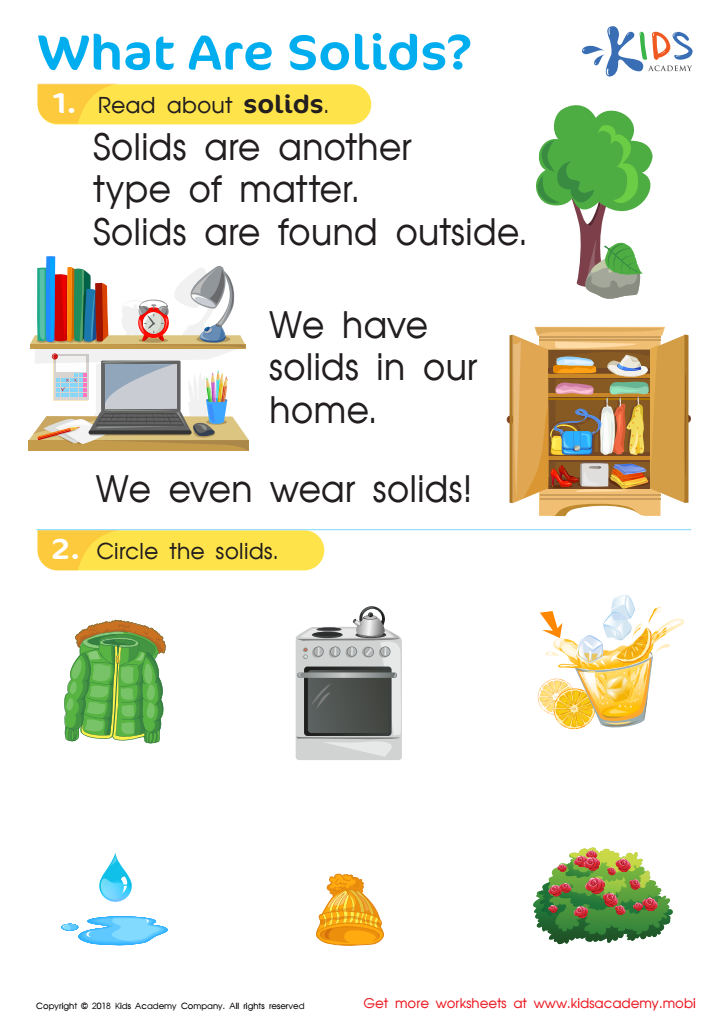
What Are Solids? Worksheet
 Assign to My Students
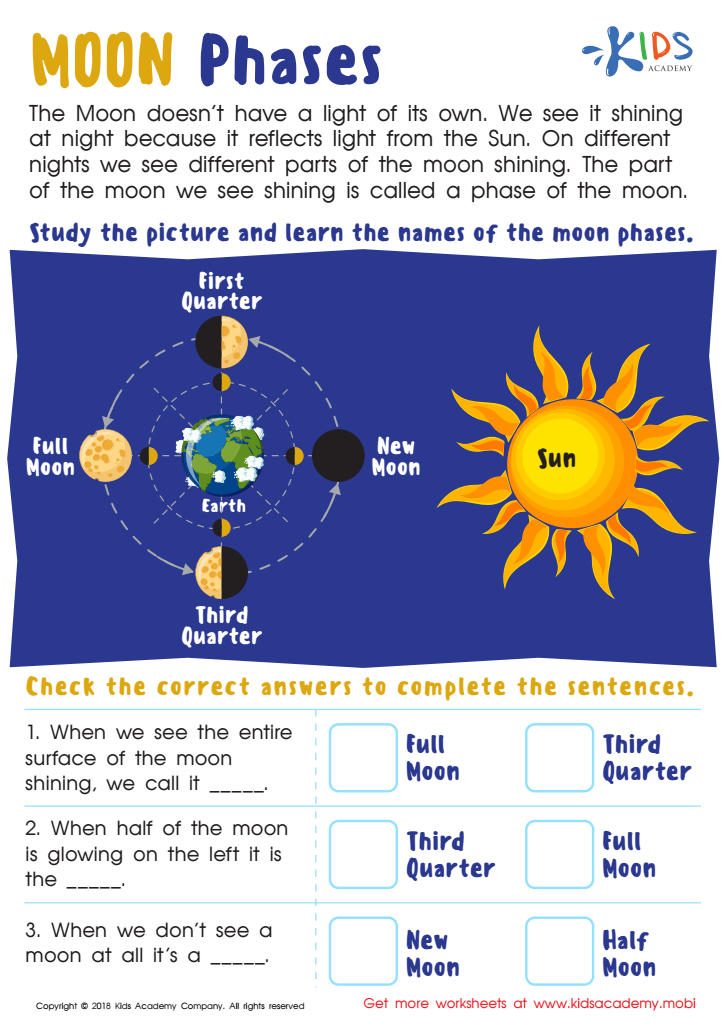
Moon Phases Worksheet
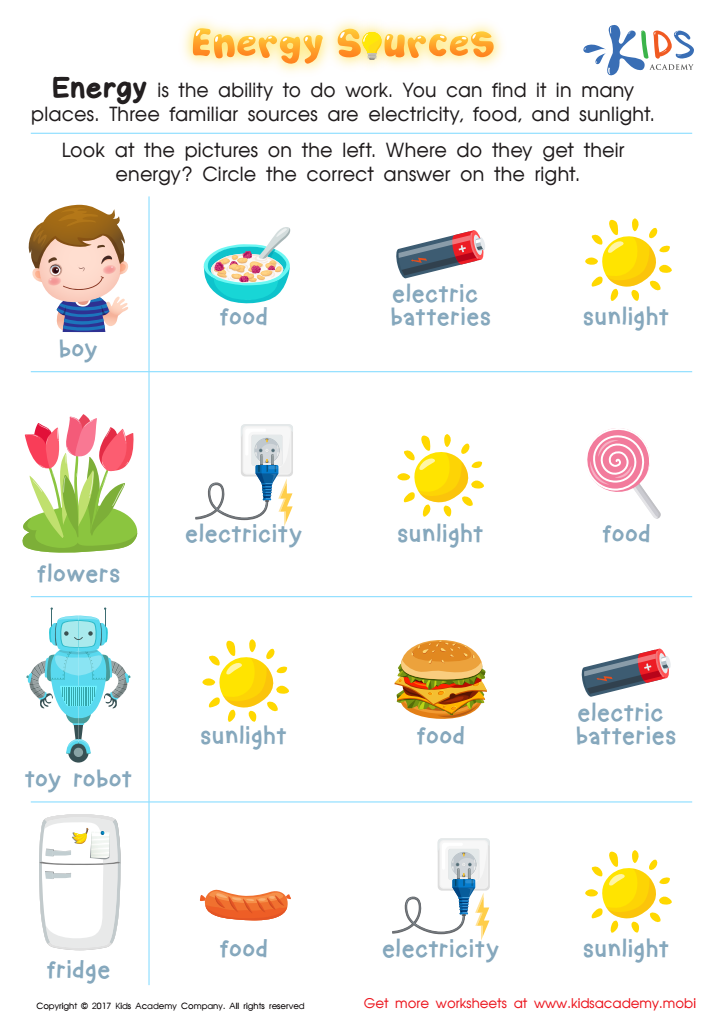
Energy Sources Printable





At ages 4-6, children are in a critical stage of development where they rapidly absorb information and start forming foundational skills that will support their lifelong learning. Knowledge application is particularly important because it moves beyond rote memorization to practical use, making learning more meaningful and engaging for young minds.
When parents and teachers emphasize knowledge application, they help children understand how the concepts they learn in school relate to real-world situations. For instance, applying basic math skills through counting objects during play or incorporating storytelling to build literacy skills enhances cognitive development and problem-solving abilities.
Additionally, fostering an environment that values knowledge application encourages curiosity and inquisitiveness. Children are more likely to be motivated learners when they see the relevance of what they are being taught. It also promotes critical thinking, creativity, and adaptability, which are essential skills in the 21st century.
Moreover, applying knowledge in various contexts helps in reinforcing learning, leading to better retention and mastery. This approach supports a holistic development, blending cognitive skills with social-emotional growth. For parents and teachers, investing time in activities that promote knowledge application ultimately contributes to a more enriching and effective educational experience for young children.








