Phonics comprehension Normal Worksheets for Ages 4-6
3 filtered results
-
From - To
Welcome to our Phonics Comprehension Worksheets for Ages 4-6! Designed to boost early literacy skills, our collection offers engaging and interactive activities that help young learners understand the relationship between sounds and letters. With colorful graphics and fun exercises, these worksheets enhance phonemic awareness and letter recognition, making learning enjoyable. Each worksheet supports the development of essential reading skills, allowing children to practice blending, segmenting, and decoding words effectively. Perfect for classroom use or at-home practice, our phonics comprehension worksheets cater to diverse learning styles, ensuring a solid foundation for future reading success. Download and inspire a love for reading today!
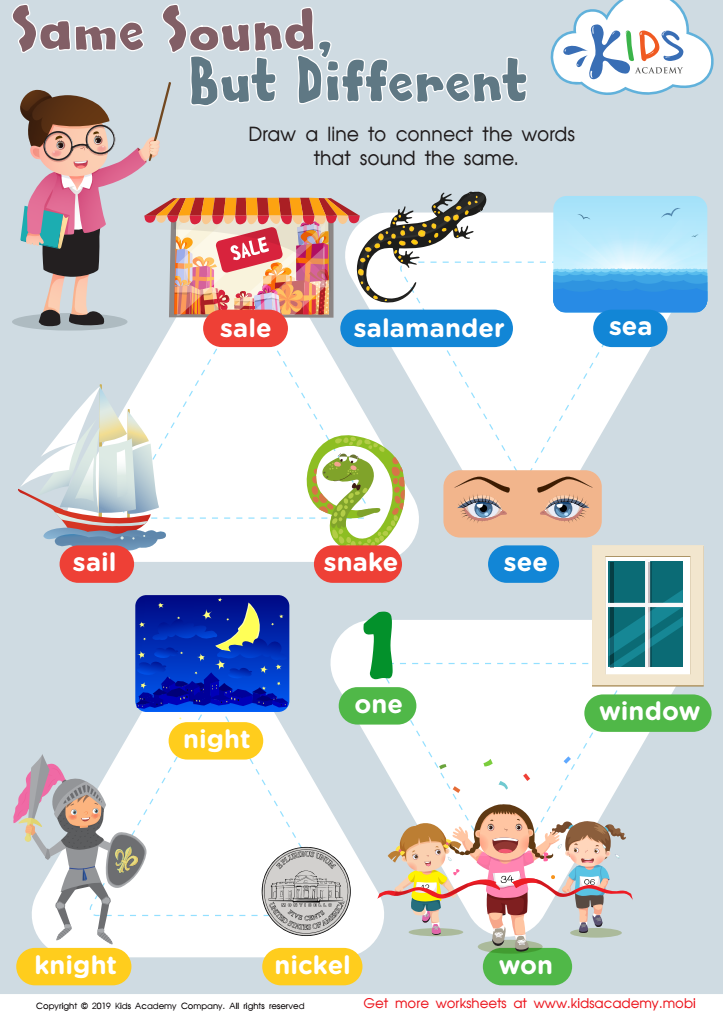
Sound Different Worksheet
 Assign to My Students
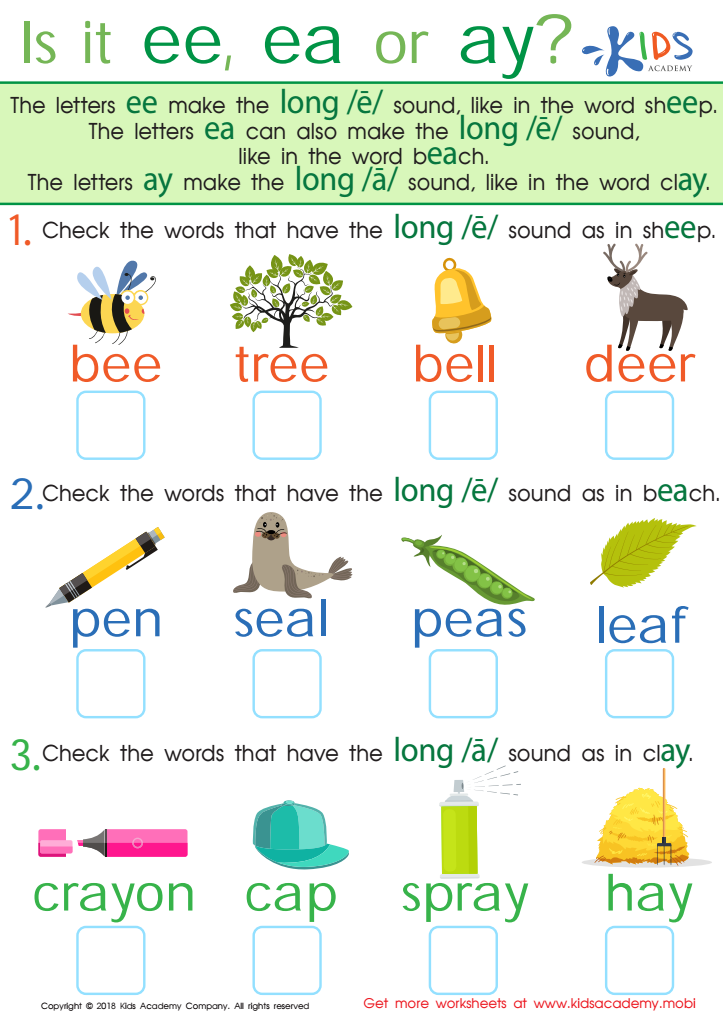
Is It EE, EA, or AY? Worksheet
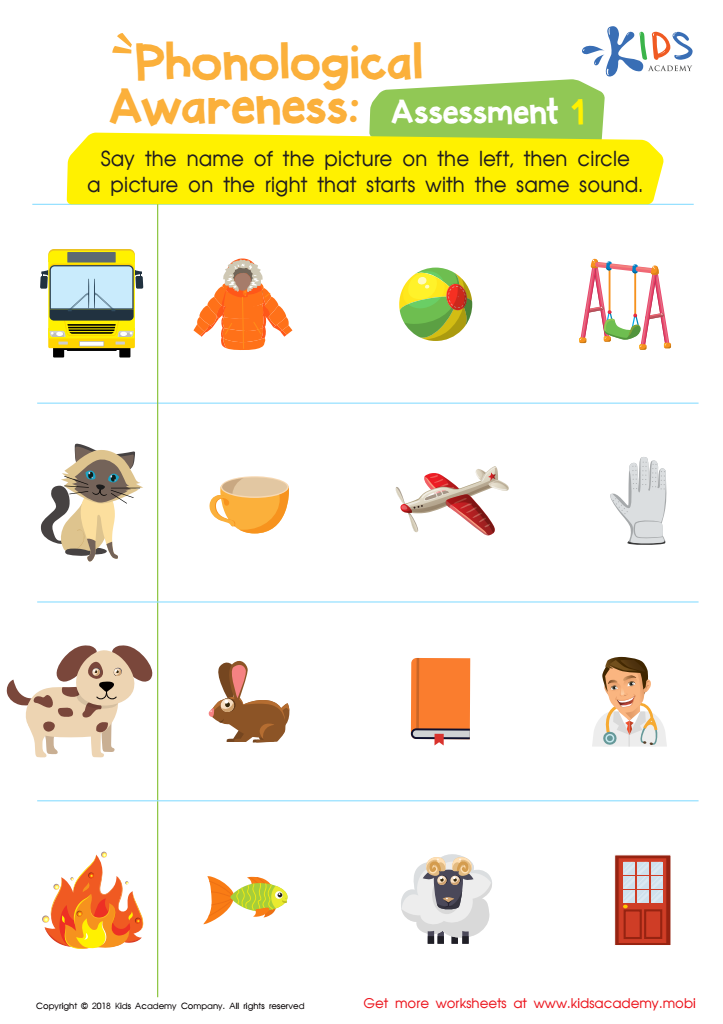
Phonological Awareness: Assessment 1 Worksheet







Parents and teachers should prioritize phonics comprehension for children ages 4-6 because it lays the foundation for reading and language skills essential throughout a child's education. Phonics is the understanding of the relationship between letters and sounds, which is critical for decoding words. At this young age, children are naturally curious and primed for learning.
Strong phonics skills enable early readers to decode unfamiliar words, facilitating greater reading fluency and confidence. This foundational skill not only supports literacy but also enhances vocabulary development and comprehension abilities as children progress in school. As children gradually learn to sound out words, they become active participants in their learning, which fosters a love for reading.
Additionally, phonics instruction can help mitigate the risk of reading difficulties later on. By implementing systematic phonics instruction, educators and parents can provide targeted support that meets each child's unique learning needs. This early intervention is crucial in ensuring that children develop strong reading habits, which not only benefits their academic journey but positively impacts self-esteem and lifelong learning. Investing time and effort into phonics instruction paves the way for future educational success and personal growth.








