Problem-solving abilities Normal Worksheets for Ages 4-6
12 filtered results
-
From - To
Enhance your child's problem-solving skills with our engaging Normal Worksheets for Ages 4-6. Designed specifically for young learners, these worksheets encourage critical thinking through fun activities that ignite curiosity and creativity. Our thoughtfully crafted exercises promote cognitive development by challenging kids to solve puzzles, complete patterns, and engage with age-appropriate real-life scenarios. Each worksheet not only makes learning enjoyable but also helps build the foundational skills needed for future academic success. Perfect for home or school use, our resources are aligned with early childhood learning standards. Start nurturing your child's problem-solving abilities today with our interactive and educational worksheets!
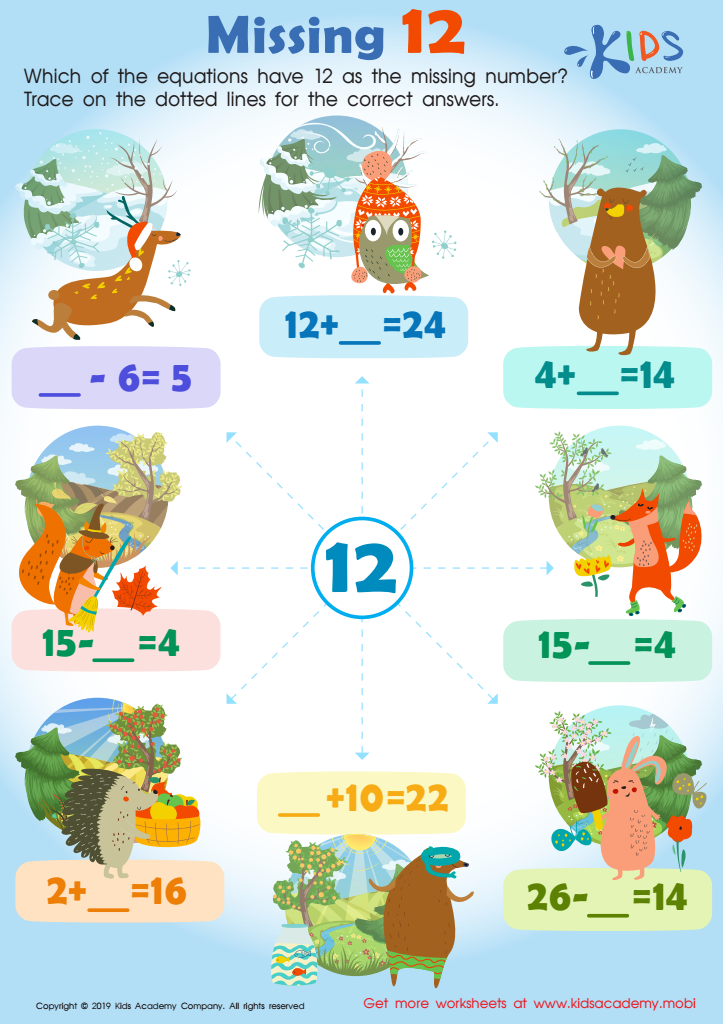
Missing 12 Worksheet
 Assign to My Students
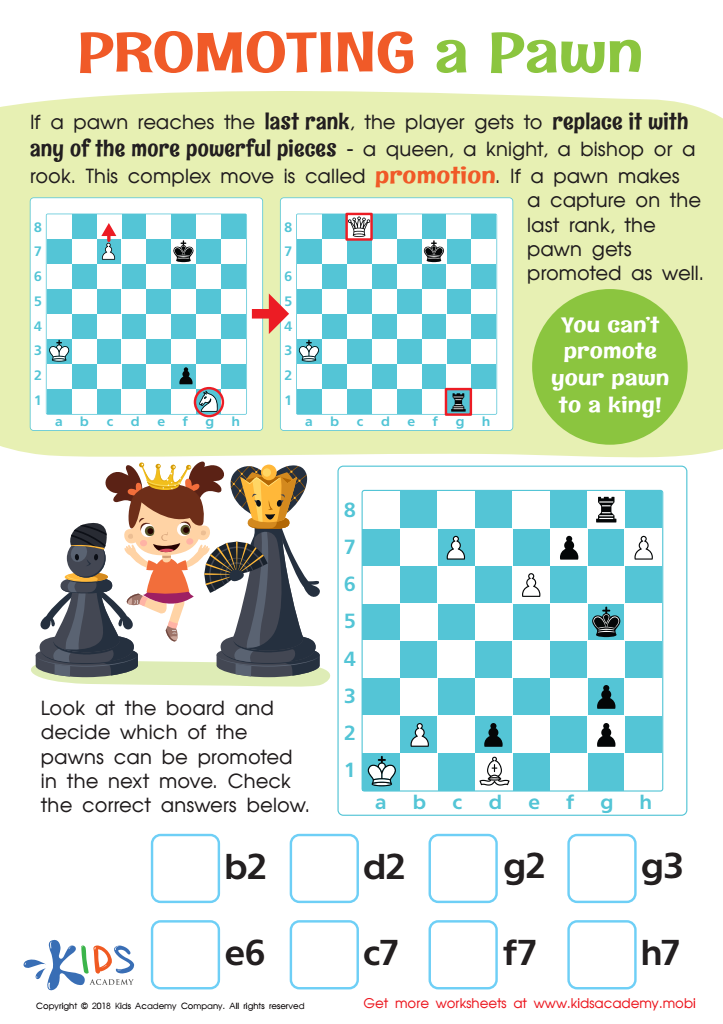
Promoting a Pawn Worksheet
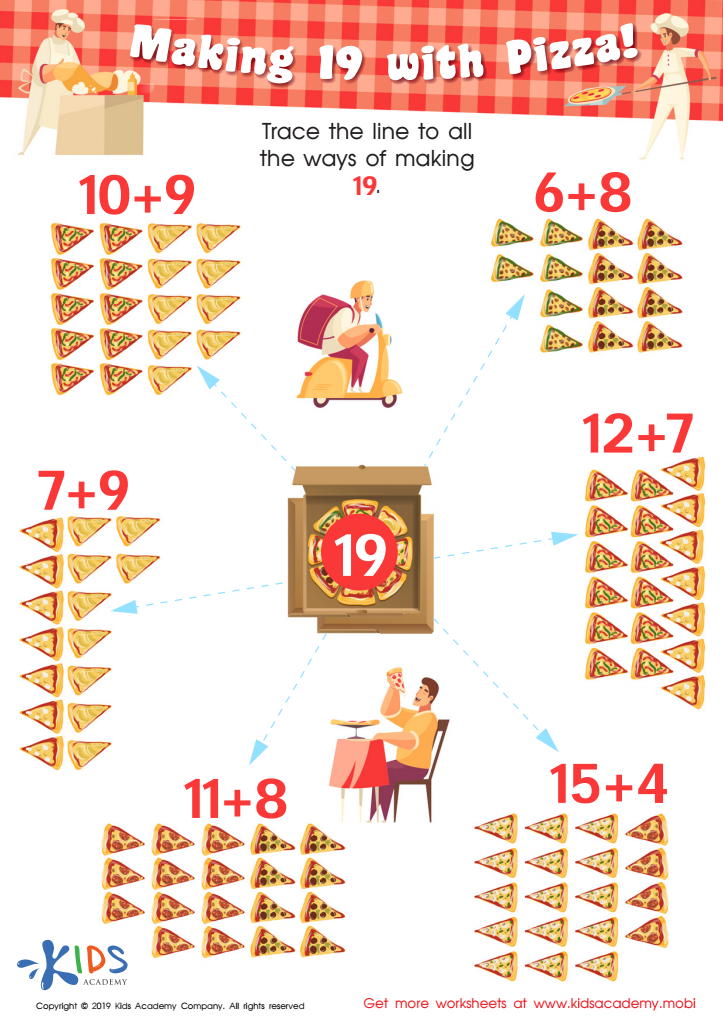
Making 19 with Pizza! Worksheet
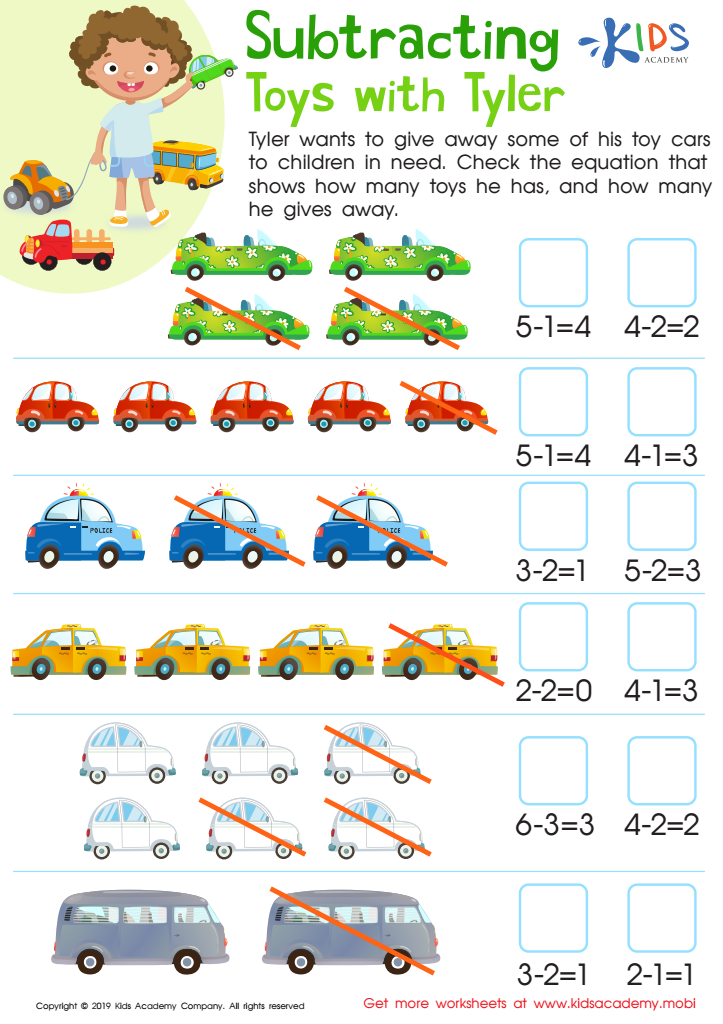
Subtracting Toys with Tyler Worksheet

Adding at the Hospital Worksheet
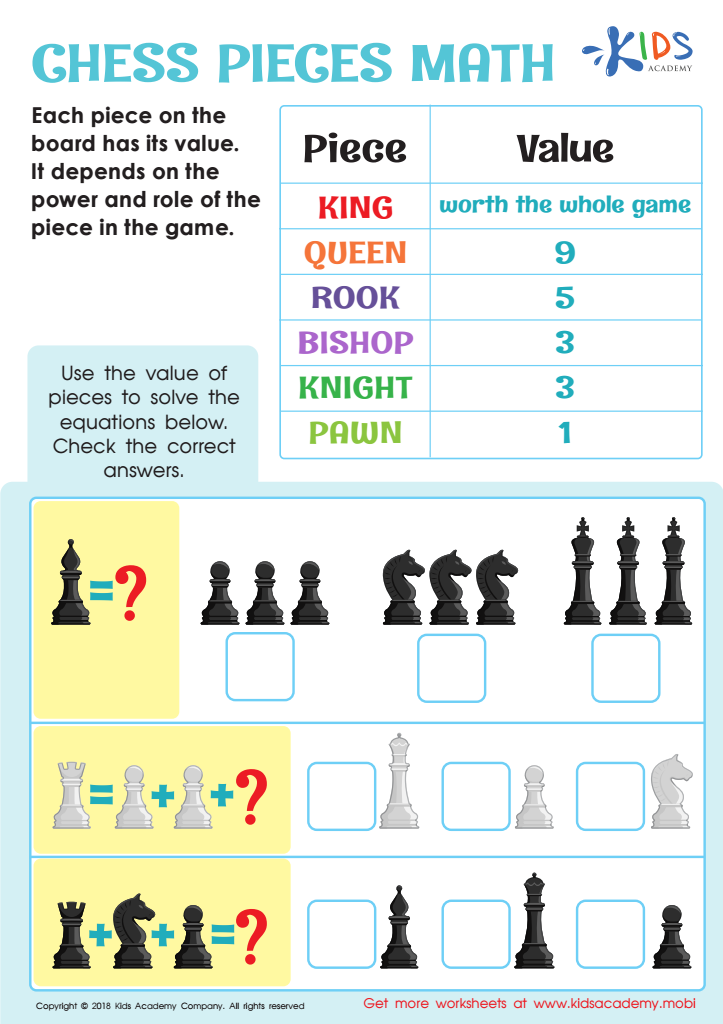
Chess Pieces Math Worksheet
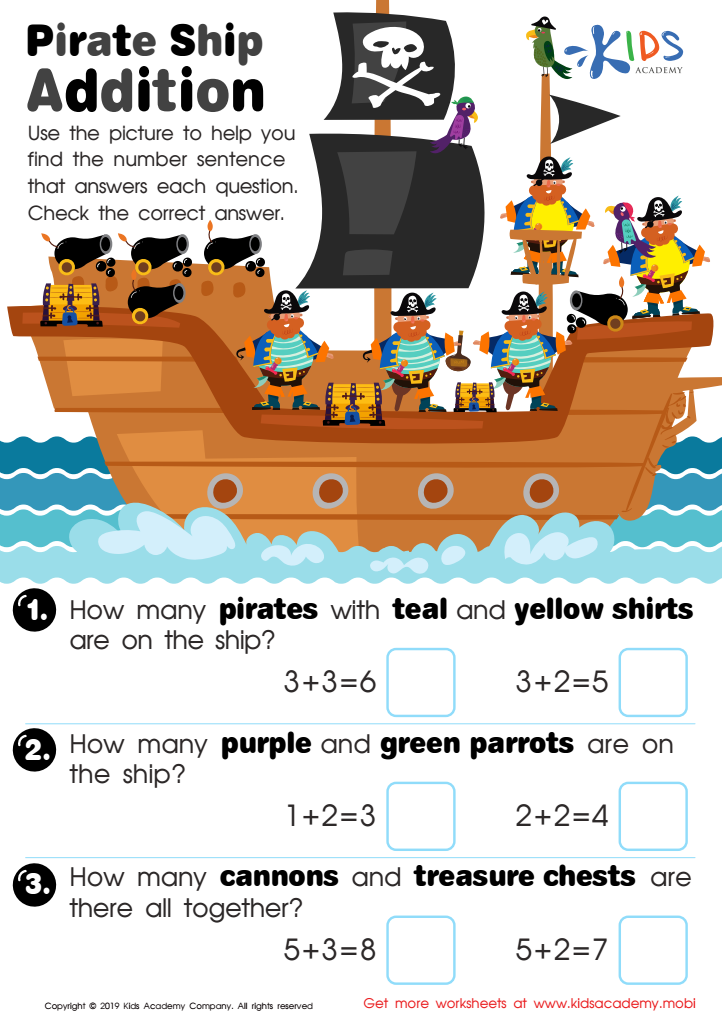
Pirate Ship Addition Worksheet
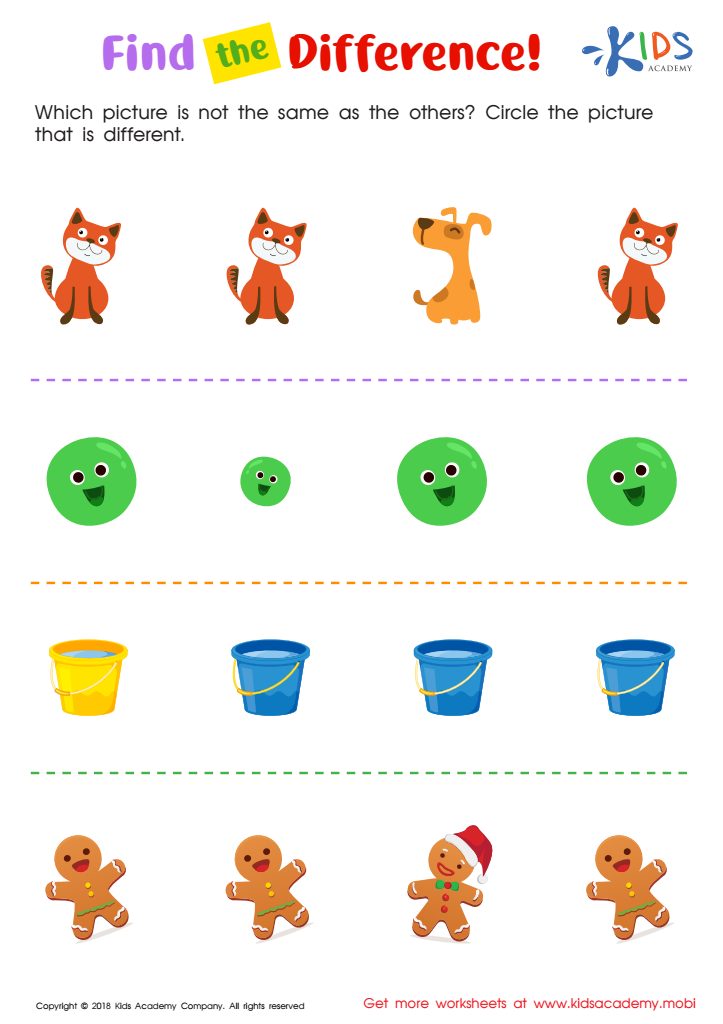
Find the Difference Worksheet
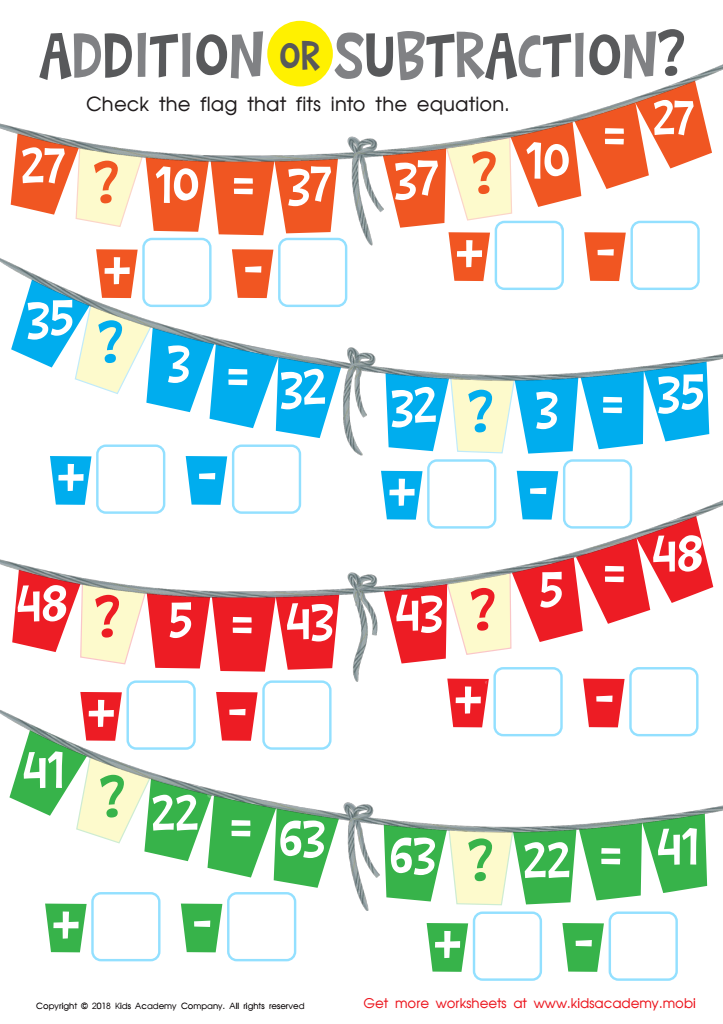
Addition or Subtraction? Worksheet
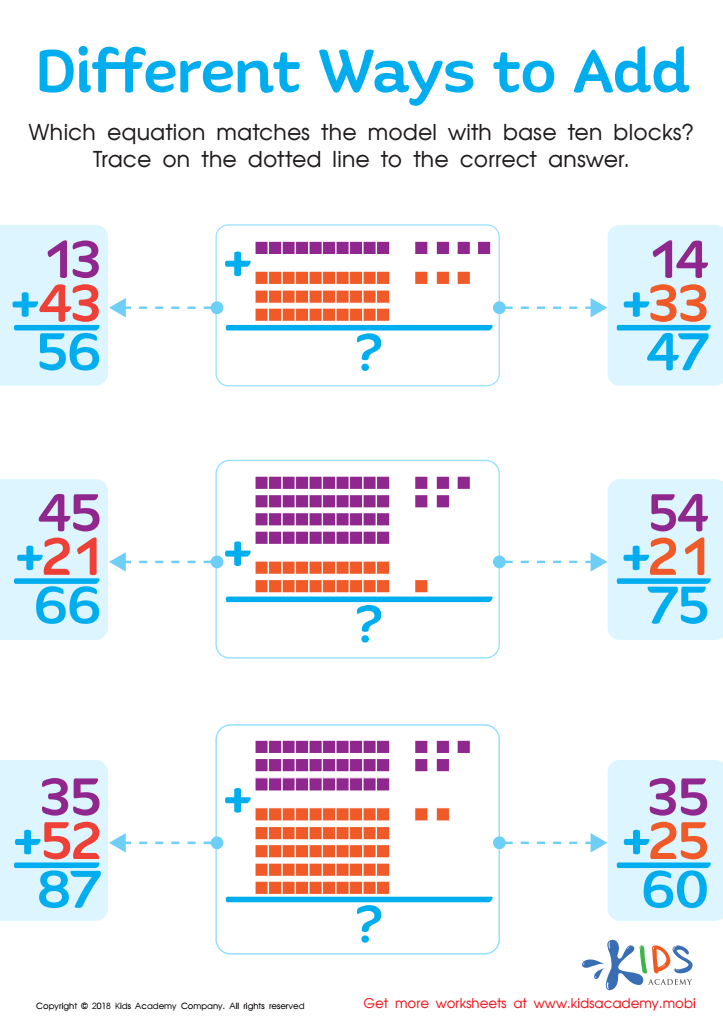
Different Ways to Add Worksheet
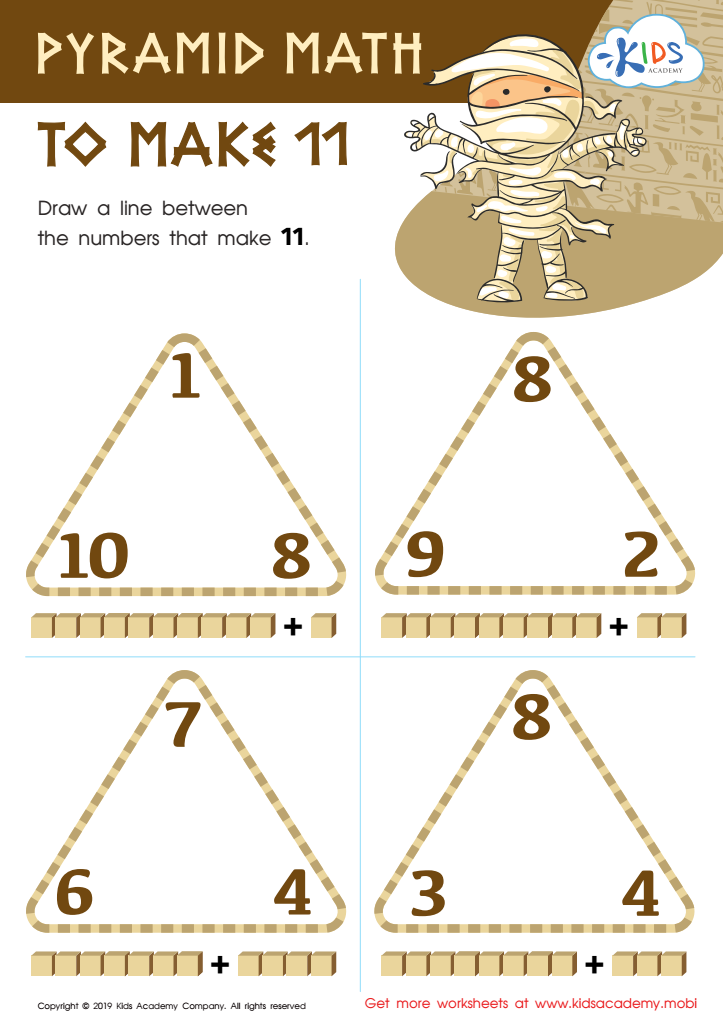
Pyramid Math to Make 11 Worksheet







Parents and teachers should prioritize problem-solving abilities in children aged 4-6 as it lays the foundation for cognitive development and critical thinking skills essential in life. During these formative years, children are naturally curious and eager to explore their environment. Encouraging problem-solving enhances their reasoning skills, allowing them to navigate challenges independently and make sense of the world around them.
Moreover, early problem-solving experiences foster resilience. When children encounter and resolve difficulties, they learn perseverance and adaptability, which are crucial traits as they grow. Supporting their ability to think creatively equips them with skills to tackle future academic pursuits and real-life situations successfully.
Additionally, integrating problem-solving into early education nurtures social skills as children often collaborate with peers to overcome obstacles, promoting teamwork and communication. This experiential learning can improve emotional intelligence, as children learn to manage frustration and celebrate successes together.
In summary, cultivating problem-solving abilities in young children enriches their cognitive, social, and emotional development, preparing them for a lifetime of learning, collaborating, and adapting in an ever-changing world. Parents and educators play a vital role in this process, making it imperative to create environments that encourage inquiry and exploration.








