Sequencing Skills Normal Worksheets for Ages 4-6
6 filtered results
-
From - To
Our "Sequencing Skills Normal Worksheets for Ages 4-6" are designed to support young learners in developing essential sequencing abilities. Through engaging and age-appropriate activities, children practice putting events in logical order, enhancing their comprehension and narrative skills. These worksheets sharpen cognitive skills, prepare kids for reading, and foster critical thinking by encouraging them to predict outcomes and understand sequences. Perfect for use at home or in a classroom setting, our printable worksheets make learning fun and interactive, laying a strong foundation for future academic success. Download now to kickstart your child's sequencing journey!
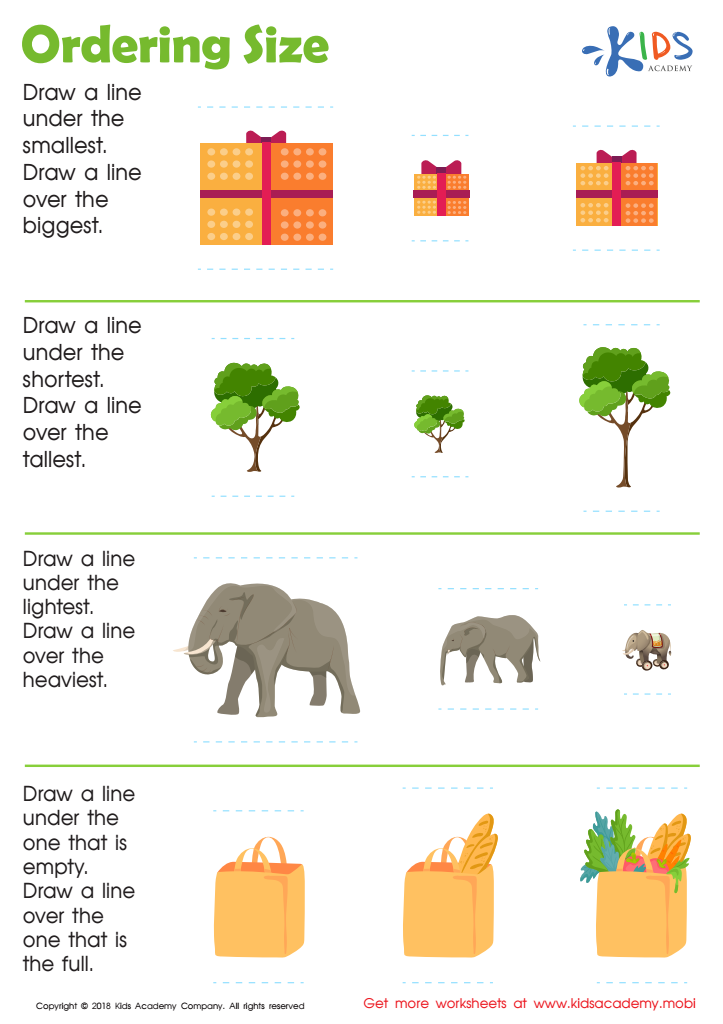
Ordering Size Worksheet
 Assign to My Students
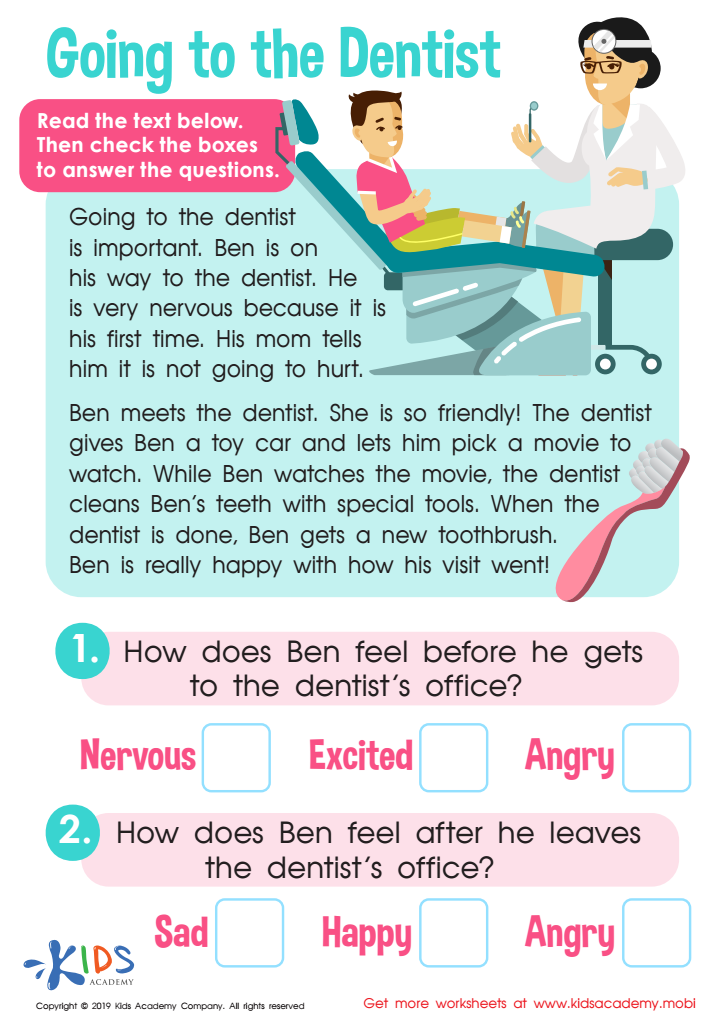
Going to the Dentist Worksheet

Wash Your Hands Worksheet
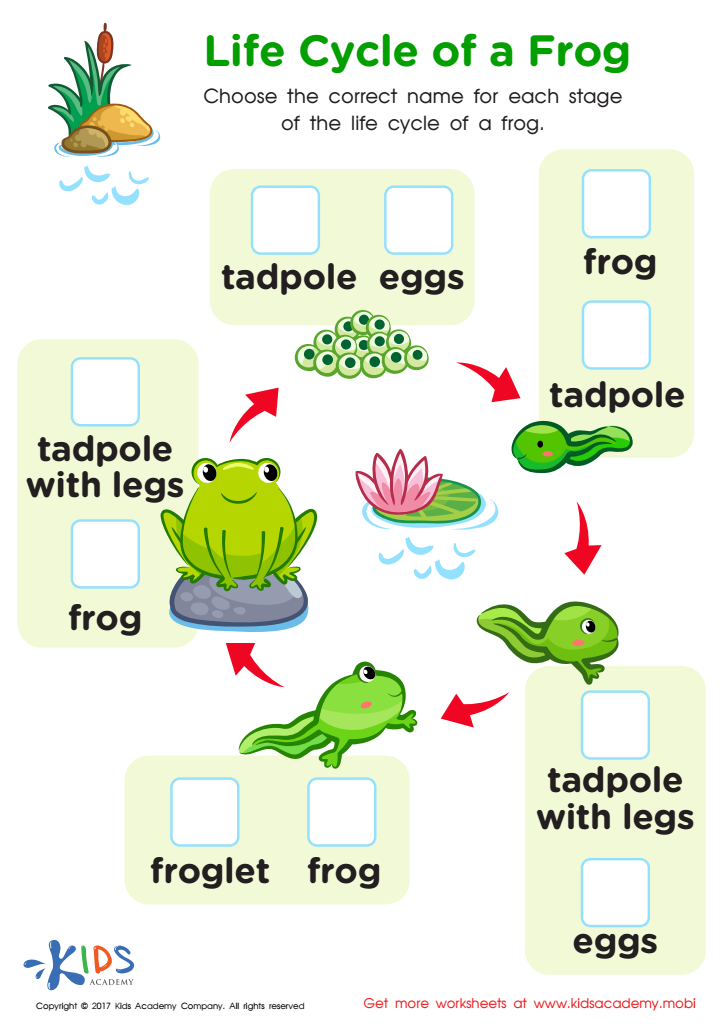
Life Cycle Frog Printable
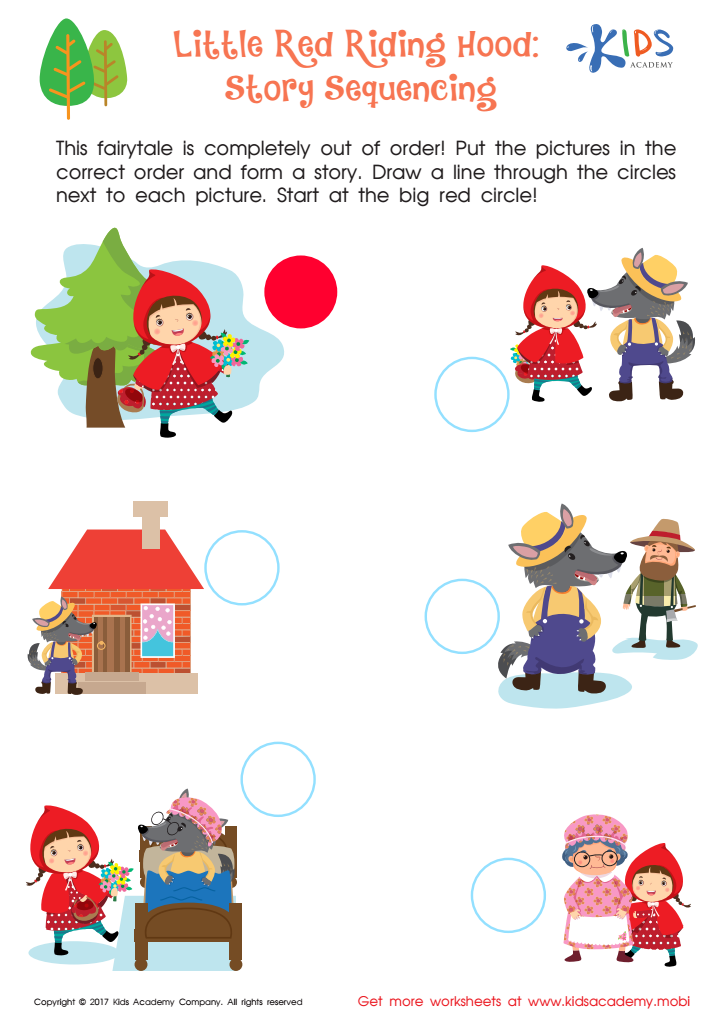
Story Sequencing Printable
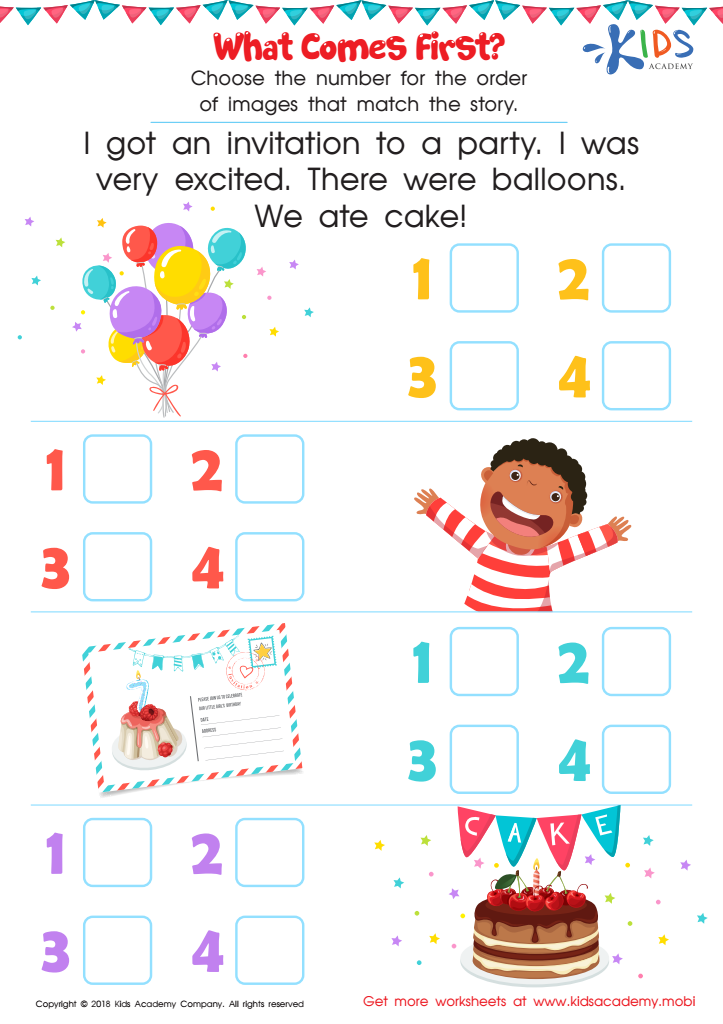
What Comes First Worksheet








Sequencing skills—the ability to understand and arrange events in a logical order—are fundamental for young children aged 4-6. Development of these skills is crucial for several reasons, making it essential for parents and teachers to actively nurture them.
Firstly, sequencing forms the basis for literacy development. As children begin to read and write, they rely on their ability to recognize the order of letters in words and the sequence of events in a story. This helps with comprehension and the ability to construct coherent narratives, both critical components of communication skills.
Secondly, sequencing is integral to cognitive development. It encourages logical thinking and problem-solving. By mastering sequencing, children can understand cause-and-effect relationships which are vital for learning in areas such as math and science. For example, counting in order or understanding the steps in a scientific experiment.
Additionally, social interactions improve through effective sequencing skills. Children better comprehend routines, following instructions, and grasping the concept of time. This understanding helps them transition smoothly between activities, practice patience, and manage daily tasks independently.
In conclusion, supporting the development of sequencing skills in early childhood lays a strong foundation for academic success, cognitive abilities, and social interactions. Parents and teachers should therefore invest time and resources into activities that enhance these skills during this critical developmental stage.








