Subtraction skills Normal Worksheets for Ages 4-6
5 filtered results
-
From - To
Enhance your child's mathematical abilities with our "Subtraction Skills Normal Worksheets for Ages 4-6." Designed to build a strong foundation in early math, these engaging and educational worksheets help young learners master the basics of subtraction. With a variety of fun and interactive exercises, children can practice taking away objects, understanding the concept of fewer, and solving simple subtraction problems within 10. Ideal for preschool to kindergarten-aged kids, these worksheets are a delightful way to foster confidence and proficiency in subtraction skills, ensuring your child is prepared for future math challenges. Visit [Website Name] to download now!
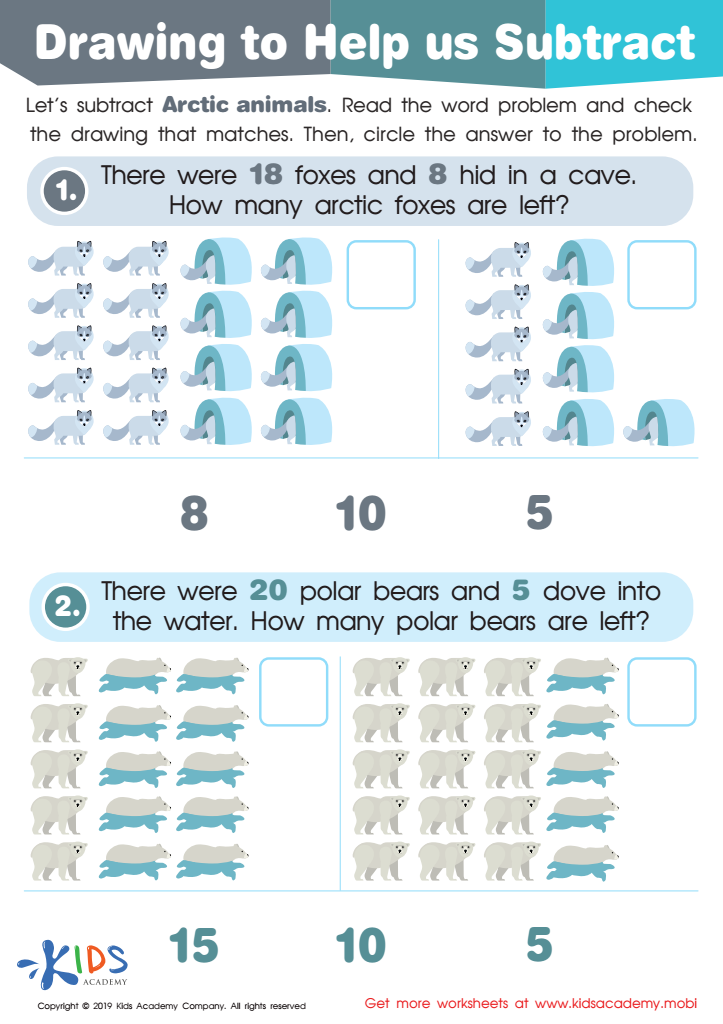
Drawing to Help Us Subtract Worksheet
 Assign to My Students
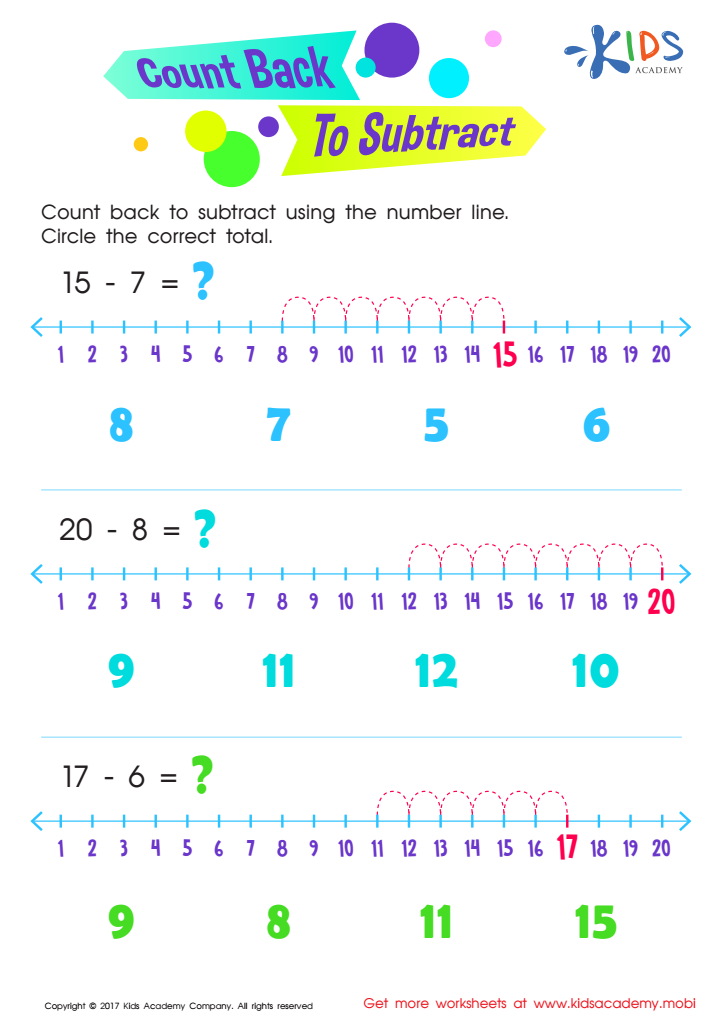
Count Back to Subtract Substraction Worksheet
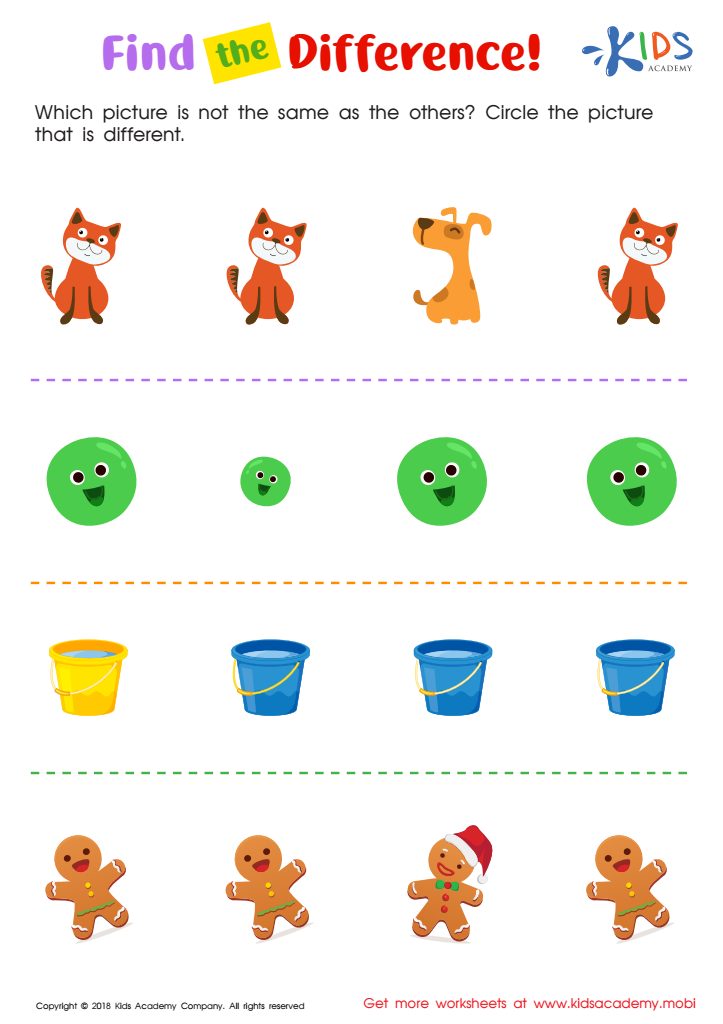
Find the Difference Worksheet
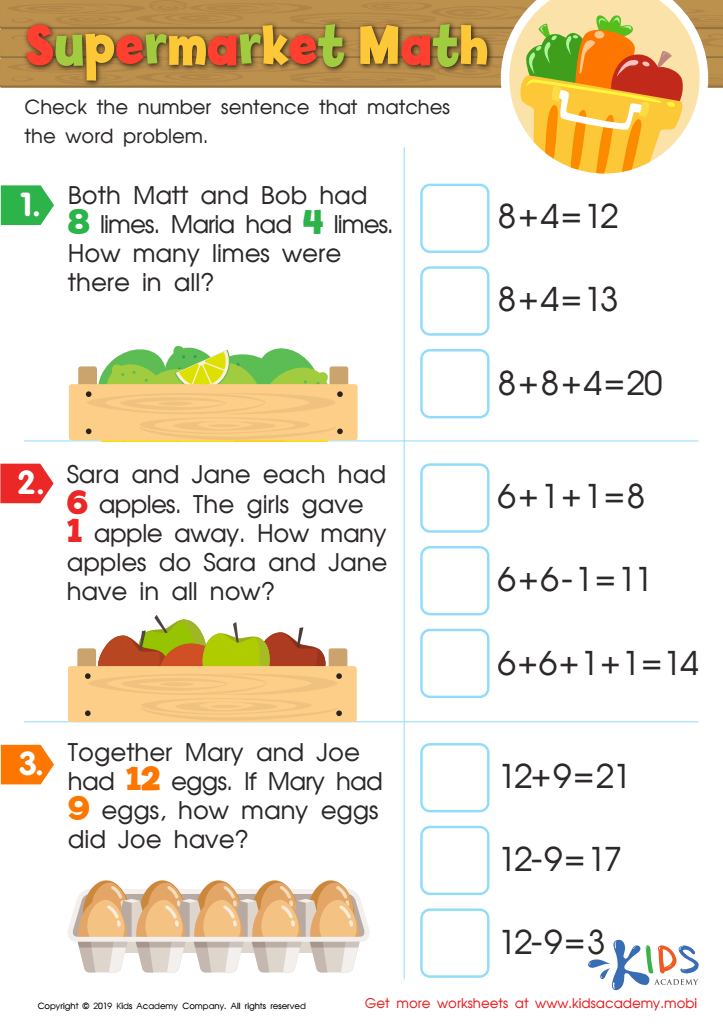
Supermarket Math Worksheet
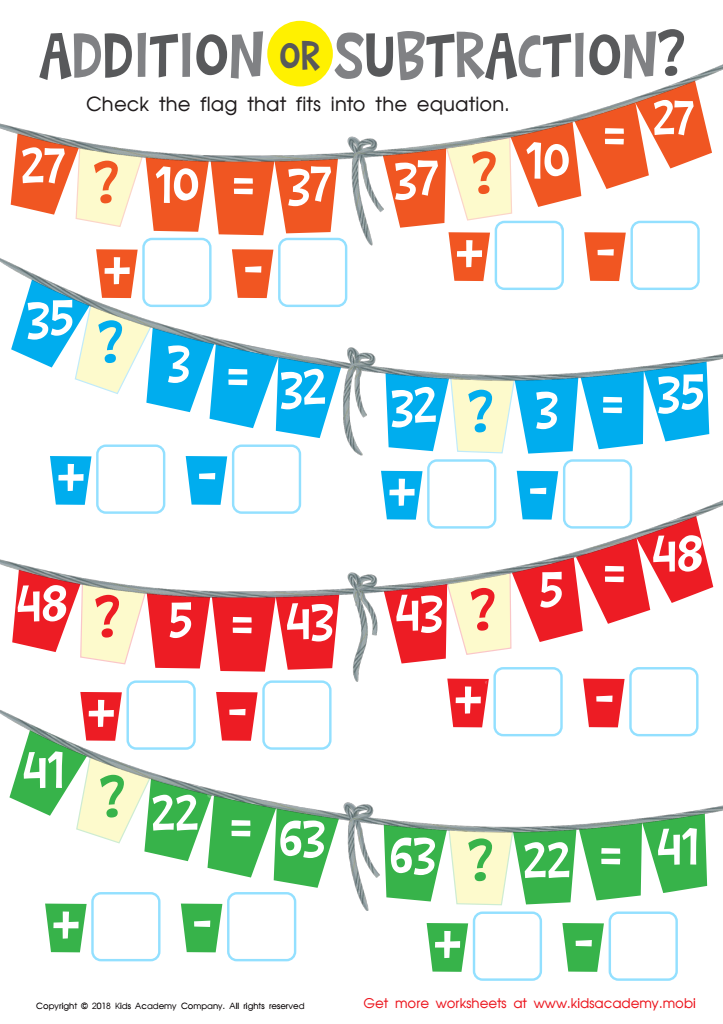
Addition or Subtraction? Worksheet







Parents and teachers should prioritize developing subtraction skills in children aged 4-6 because it's foundational for their mathematical understanding and daily life applications. At this stage, kids are in the early stages of cognitive development and are beginning to grasp basic numerical concepts. Subtraction isn't just about numbers; it represents a critical cognitive skill involving problem-solving, logical thinking, and reasoning.
Building strong subtraction skills early can significantly boost a child's confidence and enthusiasm for learning math as they progress in school. It establishes a strong base for more advanced mathematical operations like multiplication and division. Moreover, subtraction is essential in everyday activities. For instance, a child needs to understand subtraction to handle money, share toys, or determine how many items are left after giving some away.
Exercises in subtraction also enhance cognitive abilities, such as memory, attention, and the ability to follow multi-step instructions. As children encounter subtraction scenarios in increasingly complex forms, their brains develop critical analytical pathways. By fostering these skills at an early age, parents and teachers equip children with the tools they need for academic success and practical problem-solving in life. Encouragingly, hands-on activities, games, and playful learning ensure that developing subtraction skills can be both educational and enjoyable.








