Understanding plant growth Normal Worksheets for Ages 4-6
3 filtered results
-
From - To
Welcome to our "Understanding Plant Growth Normal Worksheets" designed for children ages 4-6! These engaging, printable worksheets introduce young learners to the fascinating world of plants and their life cycles. Through fun activities, kids will explore essential concepts such as photosynthesis, the basic needs of plants, and their growth stages. Our age-appropriate materials combine colorful illustrations with simple texts, making learning both enjoyable and effective. Ideal for homeschooling or classroom use, these worksheets encourage curiosity and help develop foundational scientific skills. Support your child's learning journey with our interactive resources that make understanding plant growth a natural adventure!
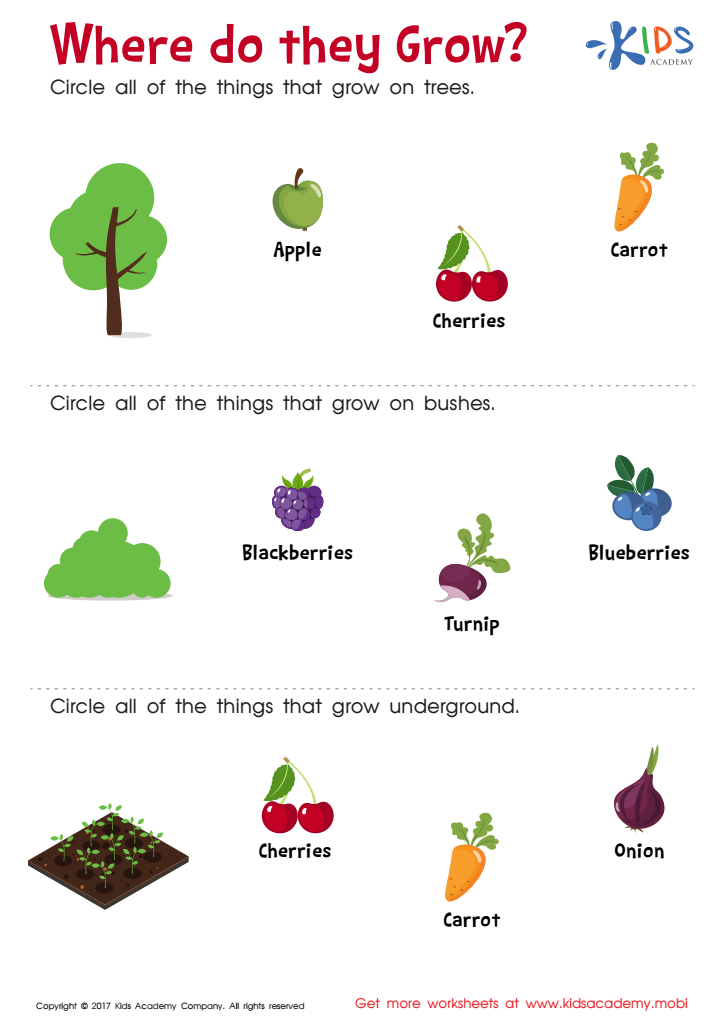
Where Do They Grow Worksheet
 Assign to My Students
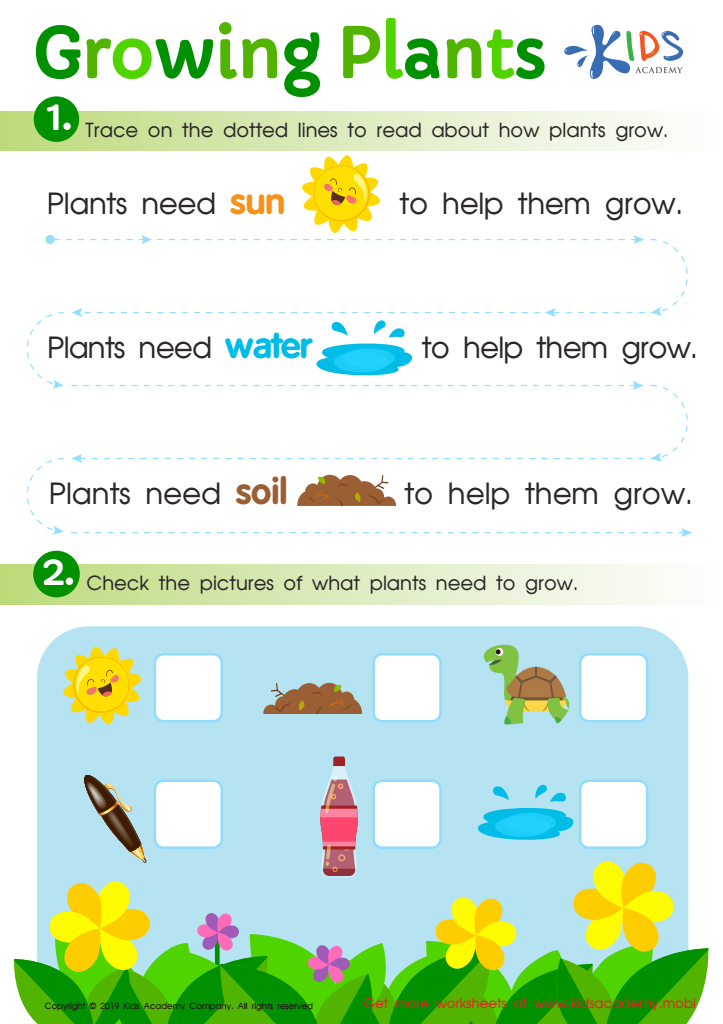
Growing Plants Worksheet
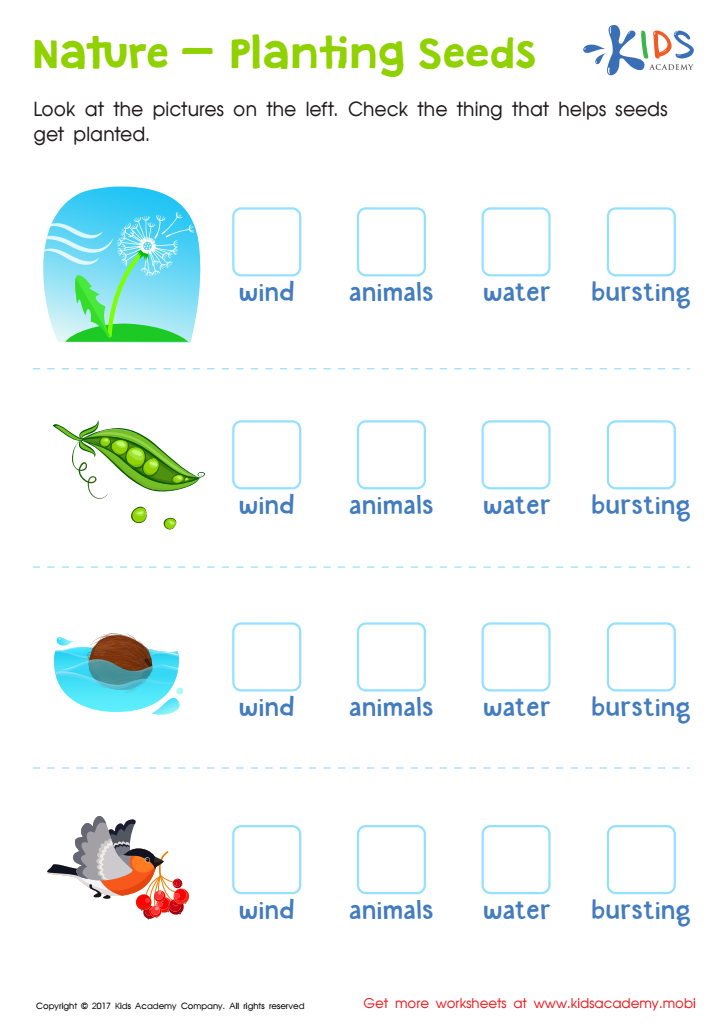
Nature Planting Seeds Worksheet







Understanding plant growth is essential for parents and teachers of children aged 4-6, as it fosters a sense of curiosity and connection to nature. At this developmental stage, children are naturally inquisitive, and introducing them to the concept of plants helps them explore essential life sciences. Engaging with plants allows children to witness firsthand the miracle of growth—seed germination, leaf development, and flowering—which cultivates observational skills and scientific thinking.
Moreover, learning about plant growth integrates important lessons about responsibility and care. By participating in planting and nurturing plants, children develop a sense of duty and the ability to follow through with a task. Additionally, plant growth can be tied to discussions about healthy eating; children can learn where their fruits and vegetables come from, encouraging healthier food choices.
Furthermore, this topic promotes cooperation and teamwork if done in a classroom or group setting, helping to build strong social skills. Ultimately, understanding plant growth lays the groundwork for scientific literacy and environmental stewardship, instilling an appreciation for the natural world that can last a lifetime. Parents and teachers facilitating this learning are helping guide the next generation of curious, knowledgeable, and responsible individuals.








