Understanding prepositions Normal Worksheets for Ages 4-6
5 filtered results
-
From - To
"Understanding Prepositions: Normal Worksheets for Ages 4-6" offers a fun and engaging way for young learners to grasp the basics of prepositions. These interactive worksheets feature colorful illustrations and simple exercises designed to help children between the ages of 4 and 6 understand spatial relationships and how prepositions like 'above', 'below', 'between' are used in sentences. Perfect for both classroom and at-home learning, these worksheets not only enhance language skills but also boost critical thinking and comprehension. Support your child's early language development with our expertly crafted, easy-to-follow resources.
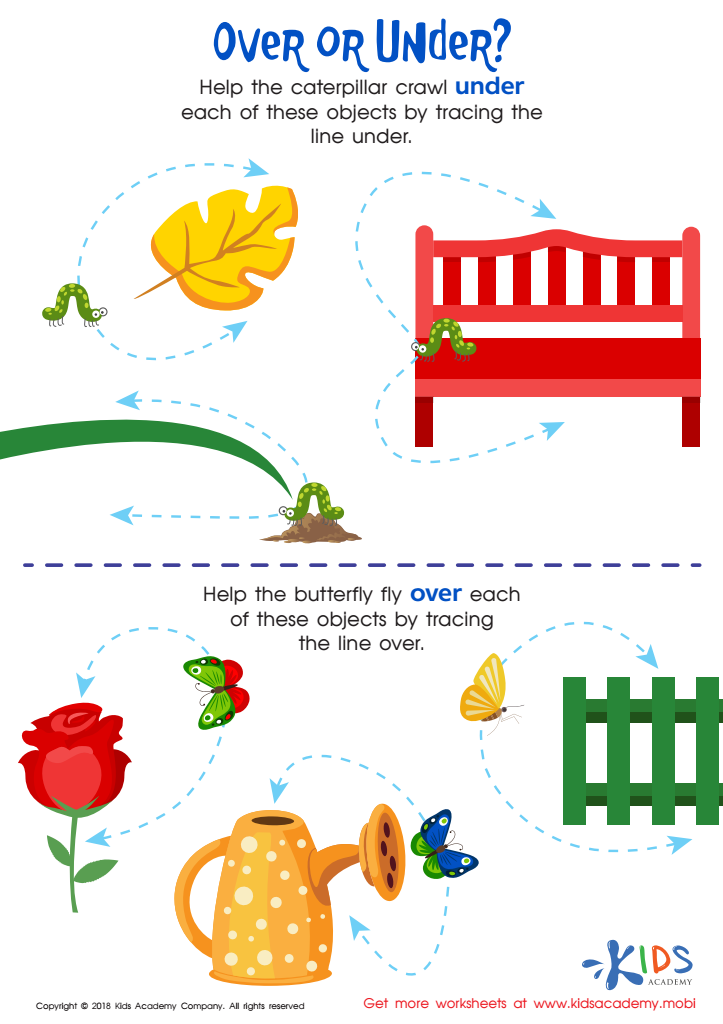
Over or Under? Worksheet
 Assign to My Students
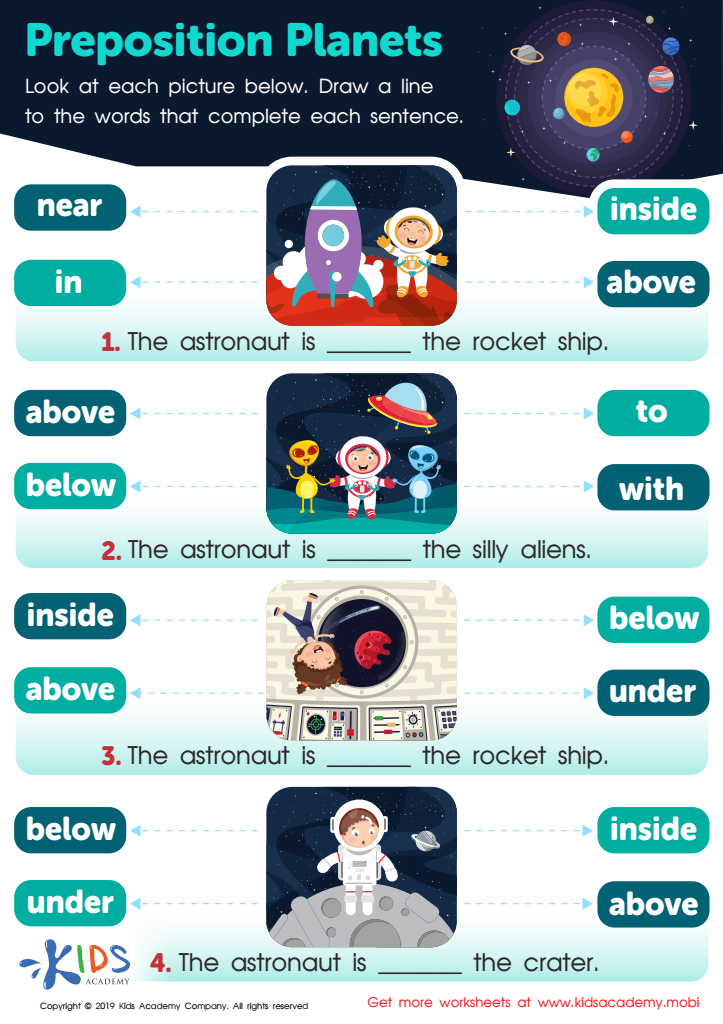
Preposition Planets Worksheet
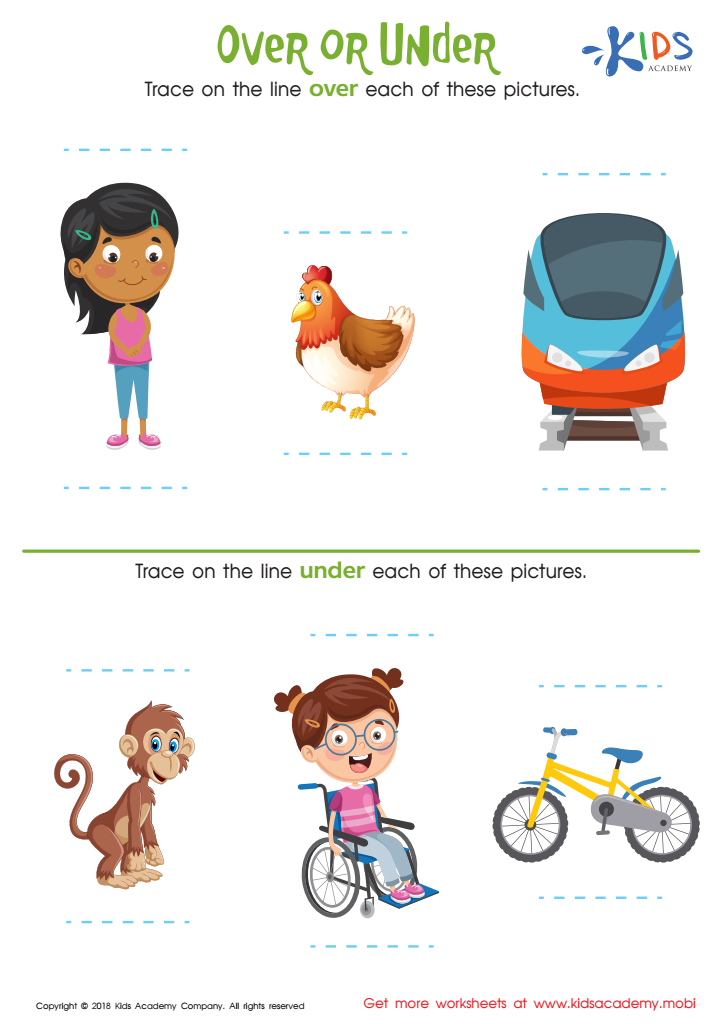
Over or Under Worksheet
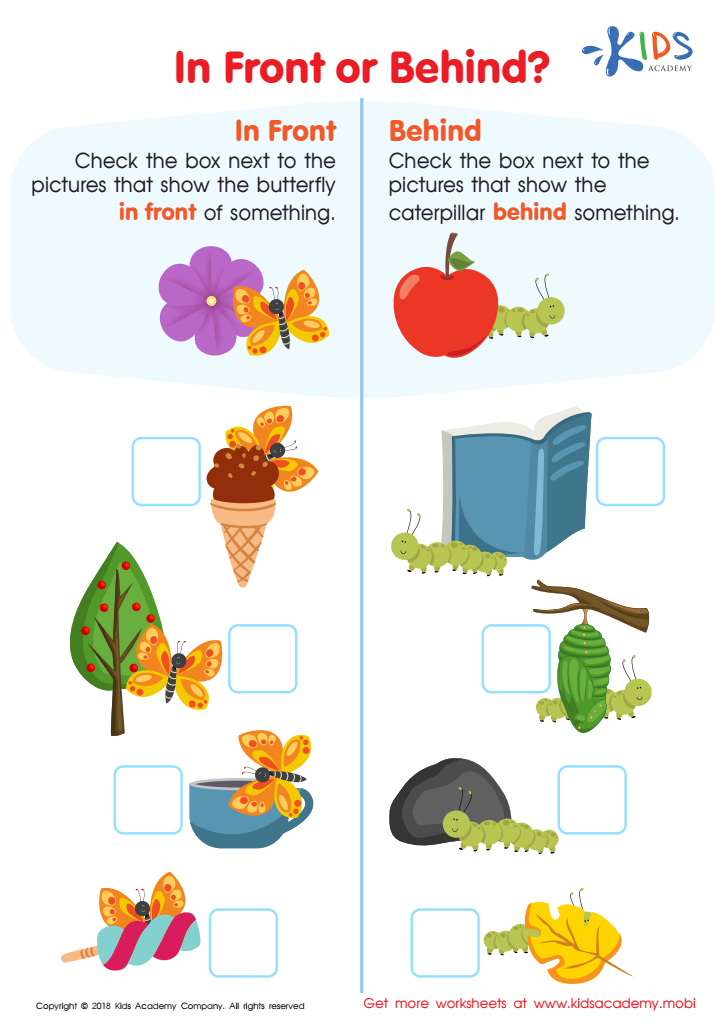
In Front or Behind Worksheet
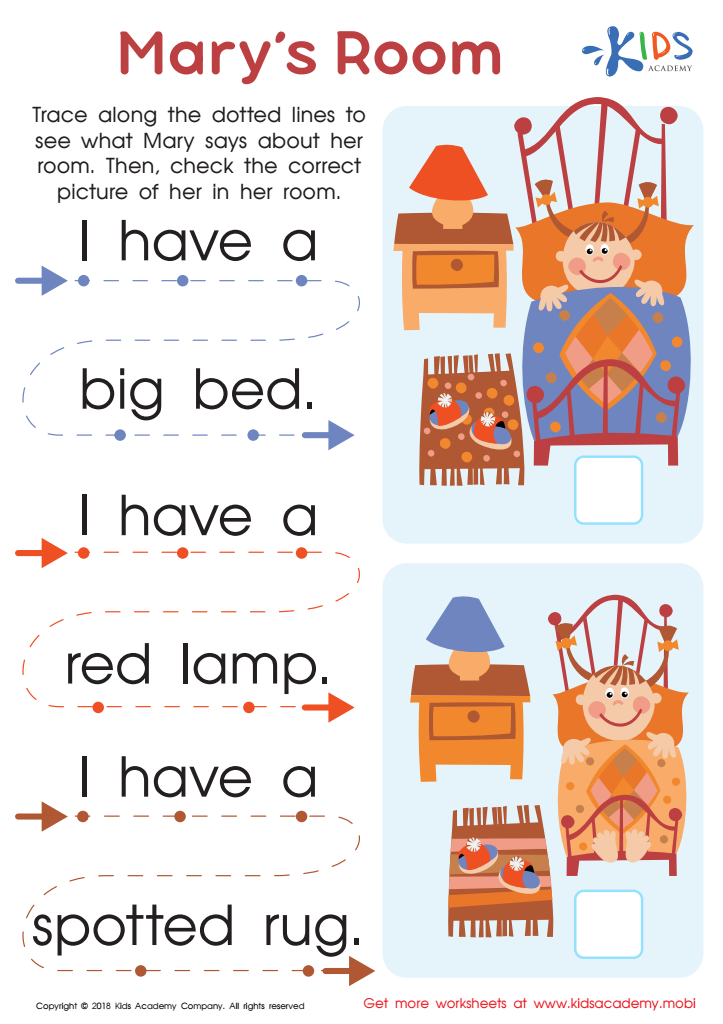
Mary's Room Worksheet






Understanding prepositions is crucial for children ages 4-6 because these small words play a big role in language development and communication skills. Prepositions like "in," "on," "under," and "beside" help kids describe relationships between objects and locations, which is essential for clear communication and following directions.
When children grasp prepositions, they can better understand spatial concepts and navigate their environment. For instance, being able to follow instructions like "put the toy on the table" requires knowledge of what "on" means. This foundational skill is not only important for daily tasks but also directly impacts a child's ability to comprehend and engage in conversations, storytelling, and reading comprehension. Solid understanding of prepositions supports cognitive development by enhancing their ability to think logically about the world around them.
Additionally, prepositions are often used in academic subjects. For example, math problems might involve spatial relationships, and understanding prepositions can make such tasks easier. Therefore, teachers and parents should pay attention to their children’s grasp of prepositions. Through engaging activities and consistent practice, we can ensure that children develop strong language skills that will support their academic growth and social interactions.








