Uppercase identification Normal Worksheets for Ages 4-6
5 filtered results
-
From - To
Discover engaging Uppercase Identification Worksheets designed for children ages 4-6! Crafted to boost early literacy skills, these worksheets focus on helping young learners recognize and identify uppercase letters. Each sheet is thoughtfully structured to combine fun activities with effective education, ensuring kids remain entertained while they learn. Perfect for home or classroom settings, our worksheets encourage practice in tracing, matching, and identifying uppercase letters, laying a strong foundation for future reading and writing success. Improve your child's letter recognition with our easy-to-use, printable worksheets available on Kids Academy. Start the learning adventure today!
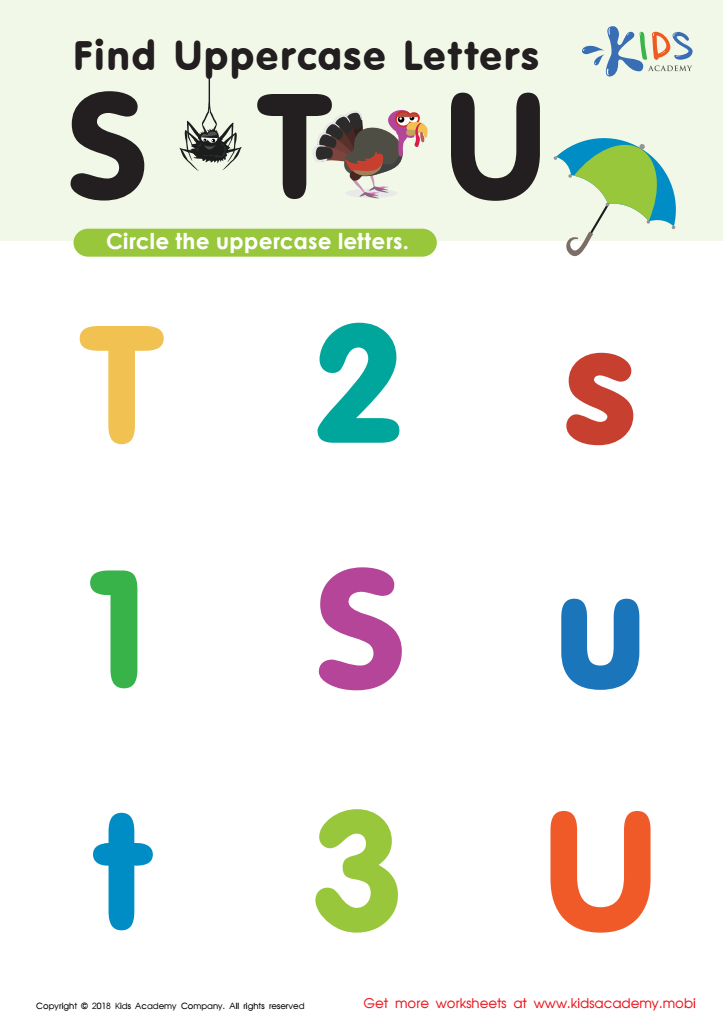
Find Uppercase Letters Worksheet
 Assign to My Students
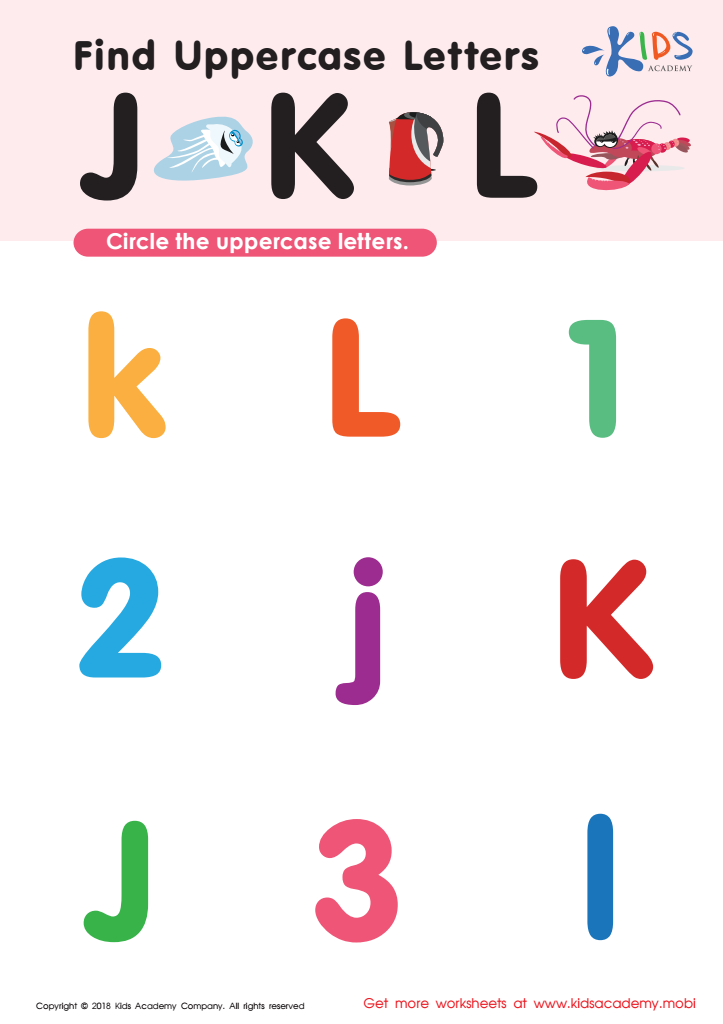
Find Uppercase Letters J, K, and L Worksheet
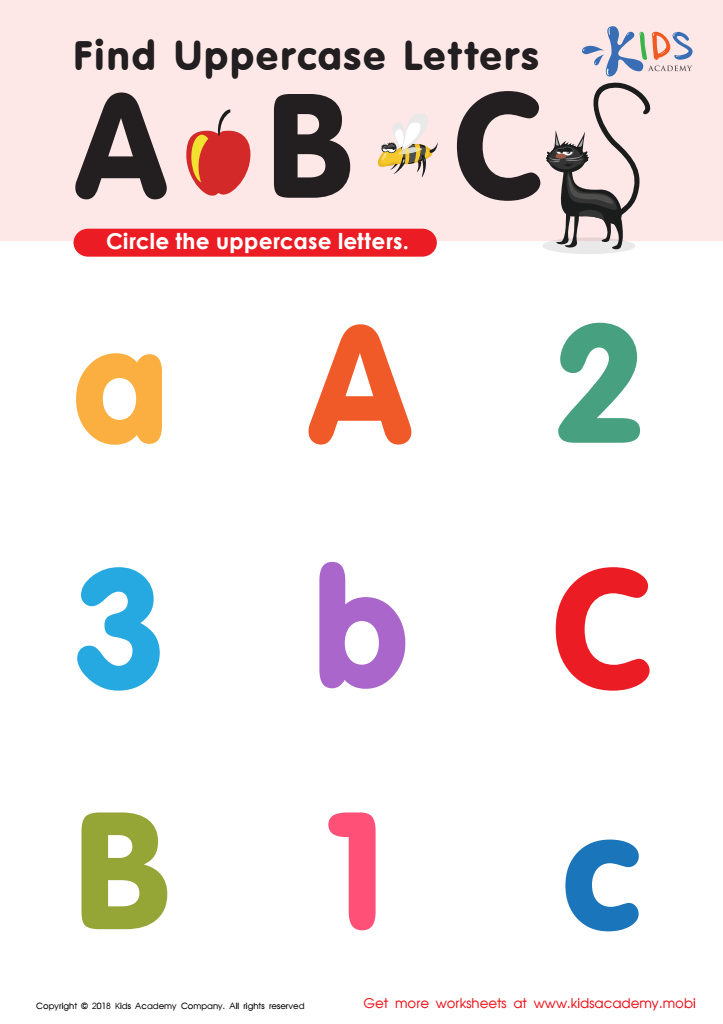
Find Uppercase Letters A, B, and C Worksheet
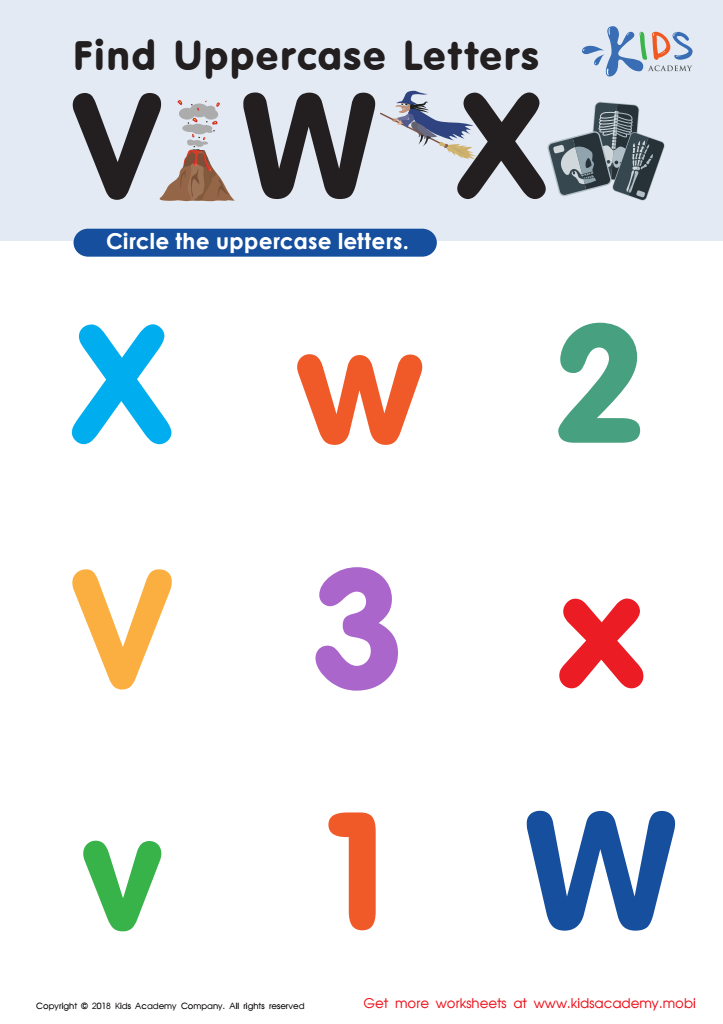
Find Uppercase Letters V, W, X Worksheet
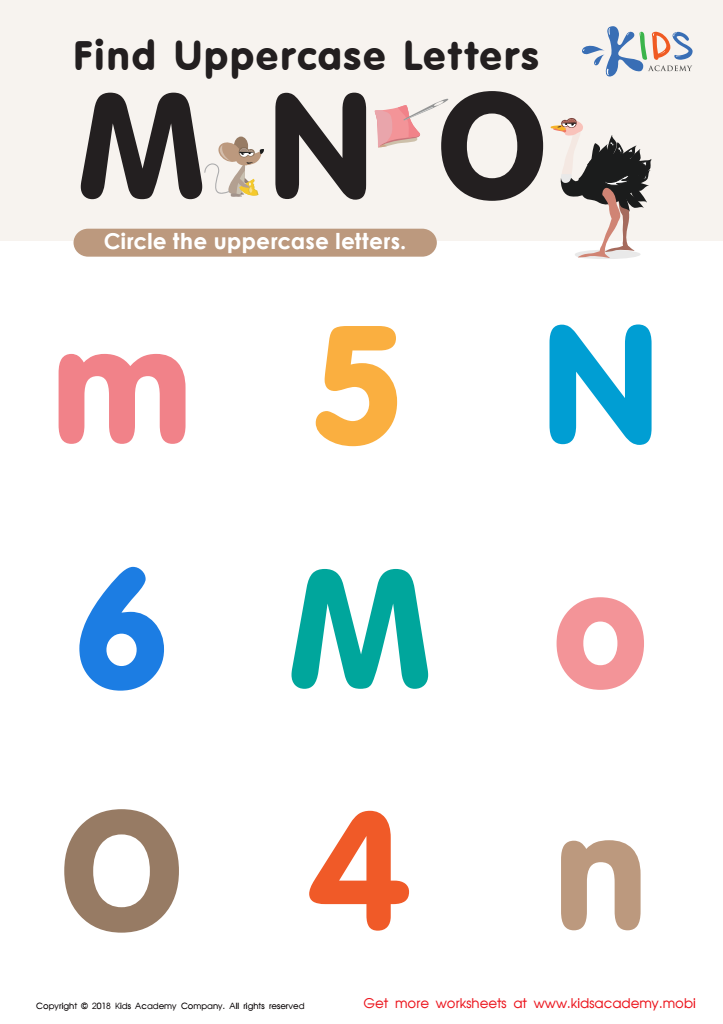
Find Uppercase Letters M, N, and O Worksheet






Parents and teachers should care about uppercase (capital letter) identification for children ages 4-6 because it lays the foundational skills necessary for reading and writing development. During the early childhood years, the brain is highly receptive and adaptable, making it an optimal time for introducing essential literacy concepts. Knowing uppercase letters helps children understand the structure and organization of the English language. For instance, recognizing that sentences start with capital letters and names or specific places are capitalized helps kids grasp basic grammar rules.
Additionally, uppercase letters are often easier for young children to identify and write because of their simple and less confounding straight-line structures compared to lowercase letters that have varying loops and curves.
Uppercase letter recognition is also linked directly to students' ability to sound out words and develop their phonemic awareness. This foundational knowledge propels them towards effective reading skills. Including uppercase identification in early education can foster a sense of confidence and achievement, fueling children's enthusiasm for learning.
Educators and parents focusing on this area will likely see a positive trajectory in their success with the broader facets of literacy which promotes better academic performance, greater communication skills, and a lifelong love of reading. Ensuring children are proficient in these basics can set a strong groundwork for future educational success.








