Visual discrimination skills Normal Worksheets for Ages 4-6
5 filtered results
-
From - To
Explore our engaging Visual Discrimination Skills Worksheets designed specifically for children ages 4 to 6. These printable activities help young learners differentiate between similar shapes, colors, and patterns, enhancing their ability to visually process information. Perfect for preschool and kindergarten classrooms, our worksheets promote critical skills needed for early reading and math success. Each activity invites children to identify differences and similarities, fostering attention to detail and improving concentration. Download our fun, colorful worksheets today to support your child's visual learning journey while keeping them entertained! Empower your little ones with essential skills they will use throughout their educational experience.
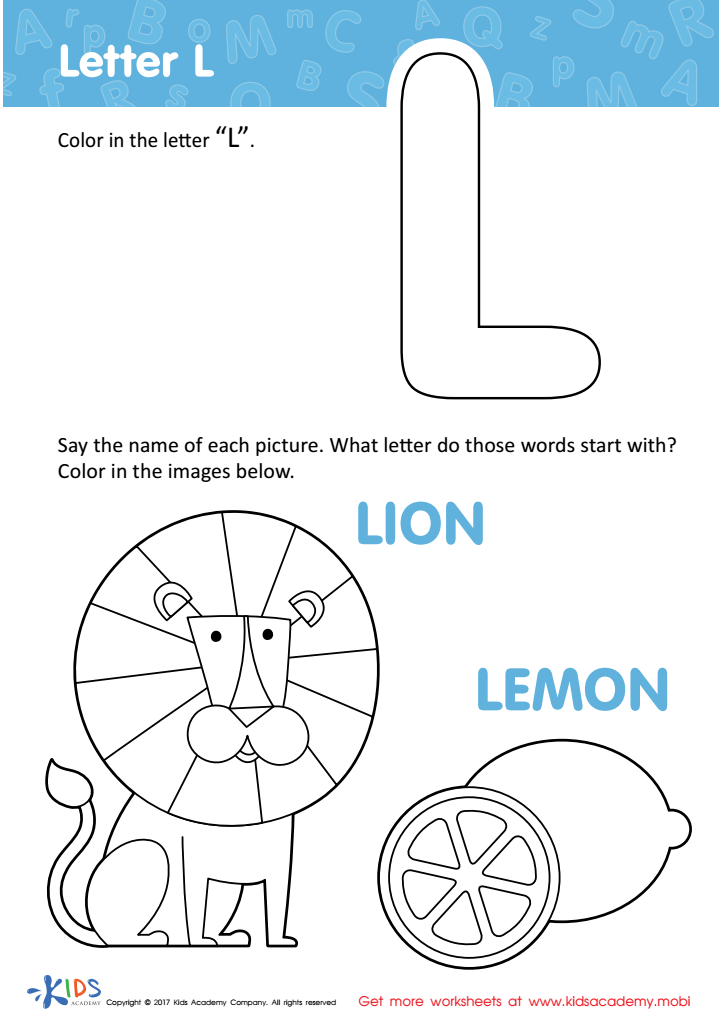
Letter L Coloring Sheet
 Assign to My Students
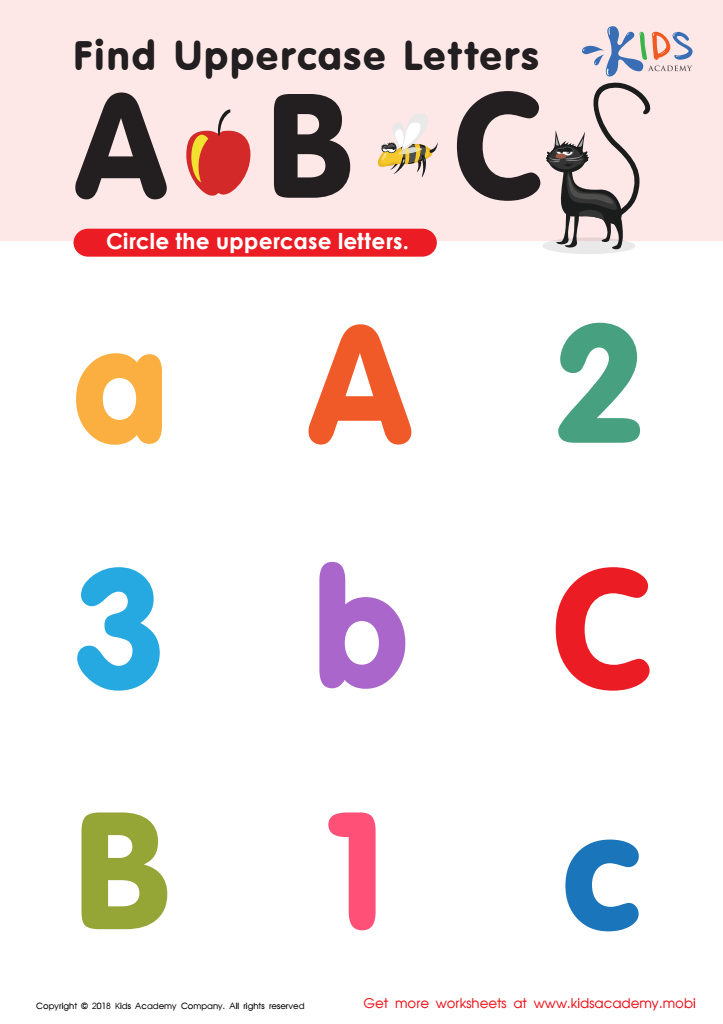
Find Uppercase Letters A, B, and C Worksheet
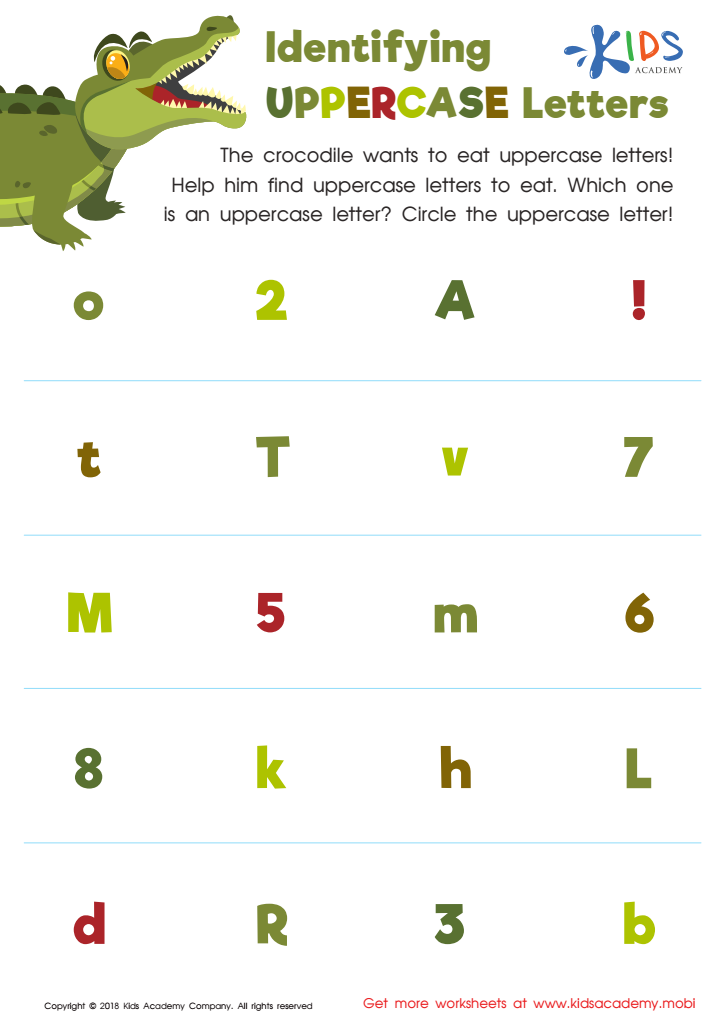
Identifying Uppercase Letters Worksheet
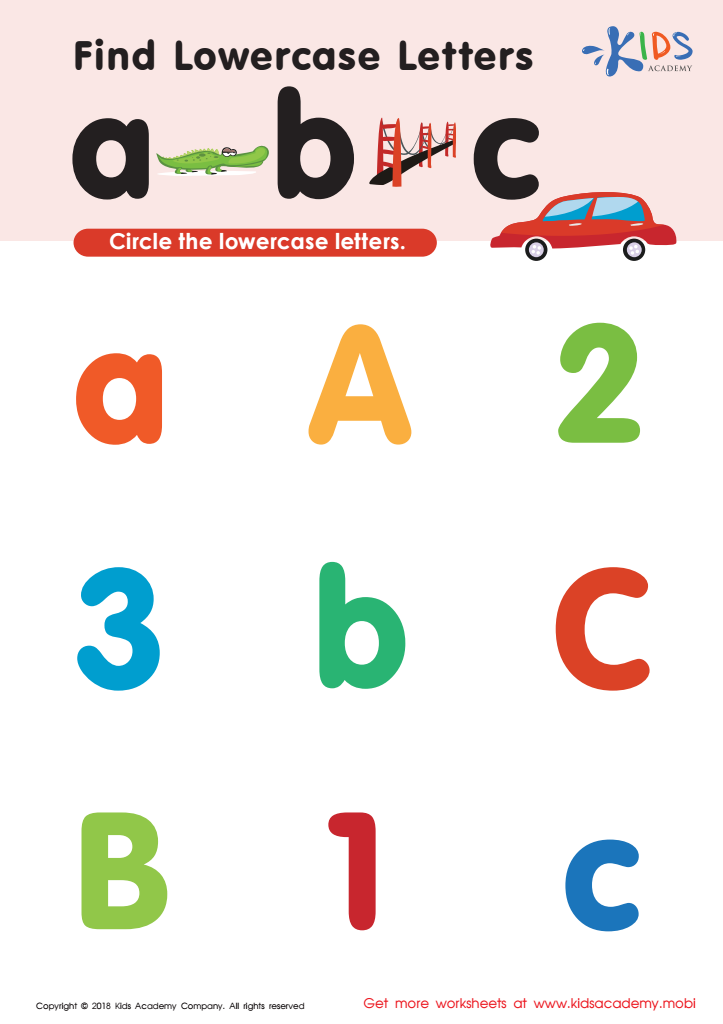
Find lowercase letters a b c Worksheet
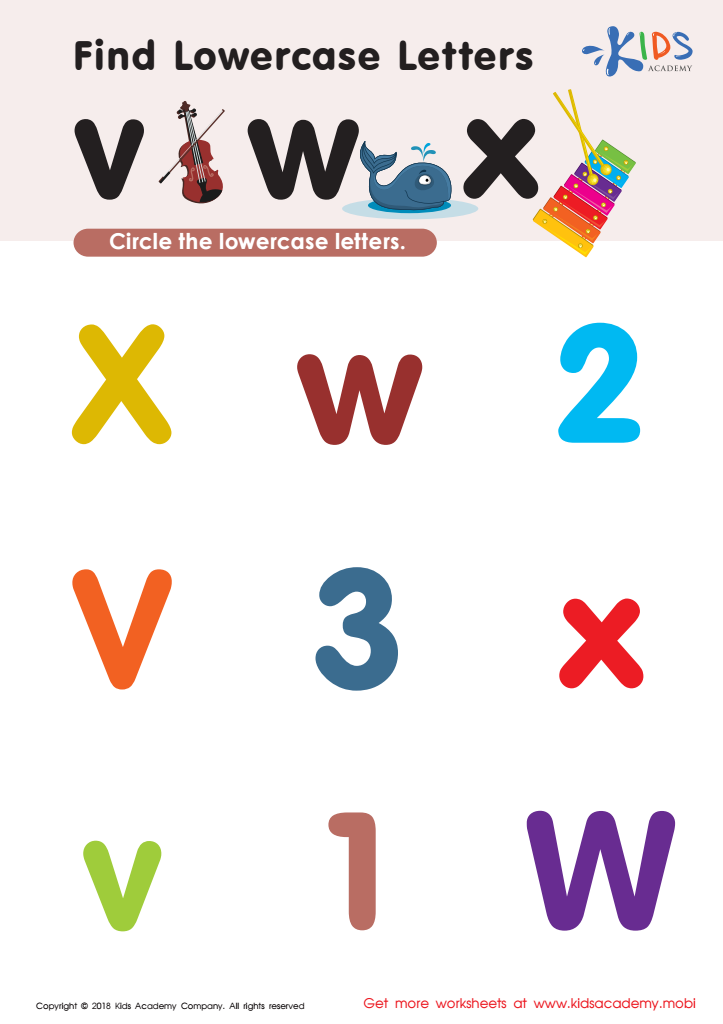
Find Lowercase Letters v w x Worksheet








Visual discrimination skills are crucial for children aged 4-6 as they form the foundation for many essential learning processes. These skills enable young learners to notice differences and similarities in shapes, sizes, colors, and patterns, which are vital for activities such as reading, writing, and mathematics. For instance, the ability to distinguish between letters like 'b' and 'd' can significantly influence a child's reading fluency. Moreover, strong visual discrimination helps children develop critical observational skills that benefit their learning across all subjects.
Parents and teachers play a pivotal role in fostering these skills. By engaging children in activities that involve sorting, matching, and identifying visual details, they can create a rich learning environment. Recognizing and addressing any difficulties with visual discrimination early on can prevent future academic challenges.
Encouraging children to play games and participate in art projects that enhance these skills promotes not only cognitive development but also boosts their confidence and motivation to learn. Ultimately, supporting visual discrimination skills equips children with the tools they need for successful learning experiences and lays the groundwork for later academic success. Therefore, it is essential for both parents and teachers to prioritize these skills in the early education stage.








