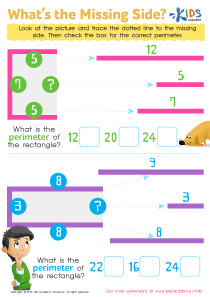
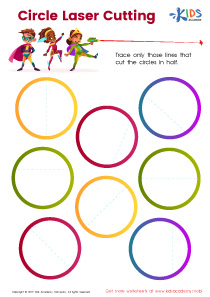
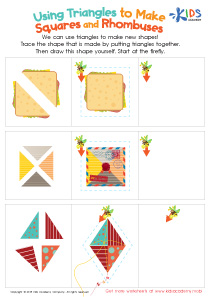
Problem-Solving Skills Normal 2D Shapes Worksheets for Ages 4-6
5 filtered results
-
From - To
Boost your child’s problem-solving abilities with our engaging 2D shapes worksheets designed for ages 4-6. These expertly crafted worksheets help young learners identify and understand basic geometric shapes while enhancing critical thinking and cognitive skills. Through a variety of fun and interactive activities, children will practice recognizing squares, circles, triangles, and more. Perfect for early grade students, our resources provide a playful and educational experience, fostering a love for math and laying a solid foundation for future learning. Download now and watch your child's confidence and proficiency in problem-solving soar.
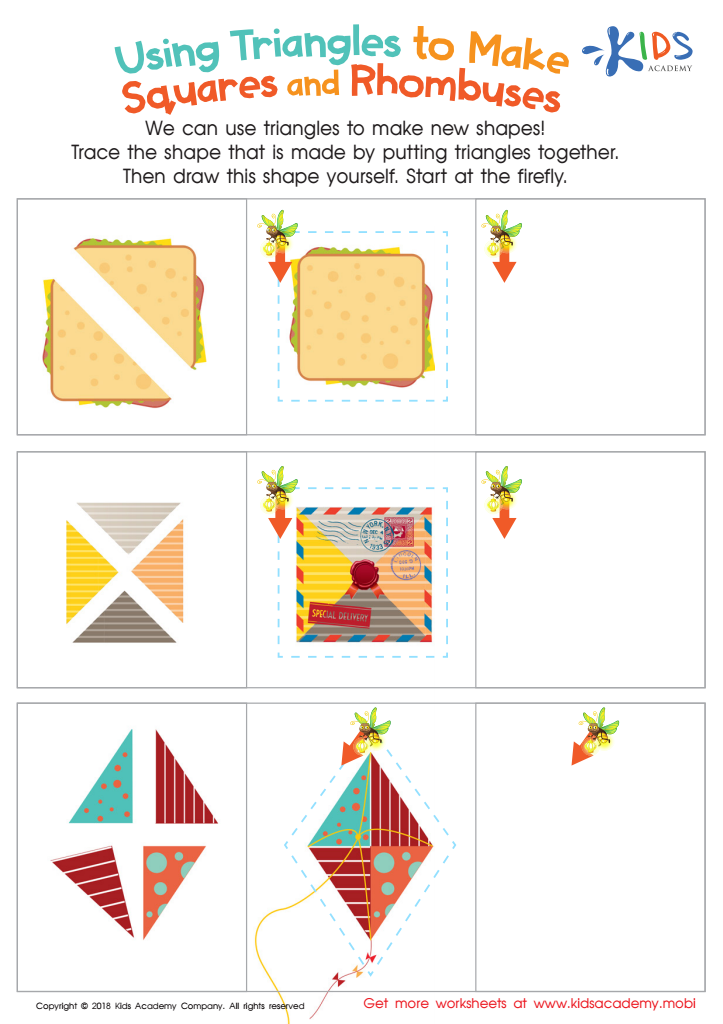
Using Triangles to Make Squares and Rhombuses Worksheet
 Assign to My Students



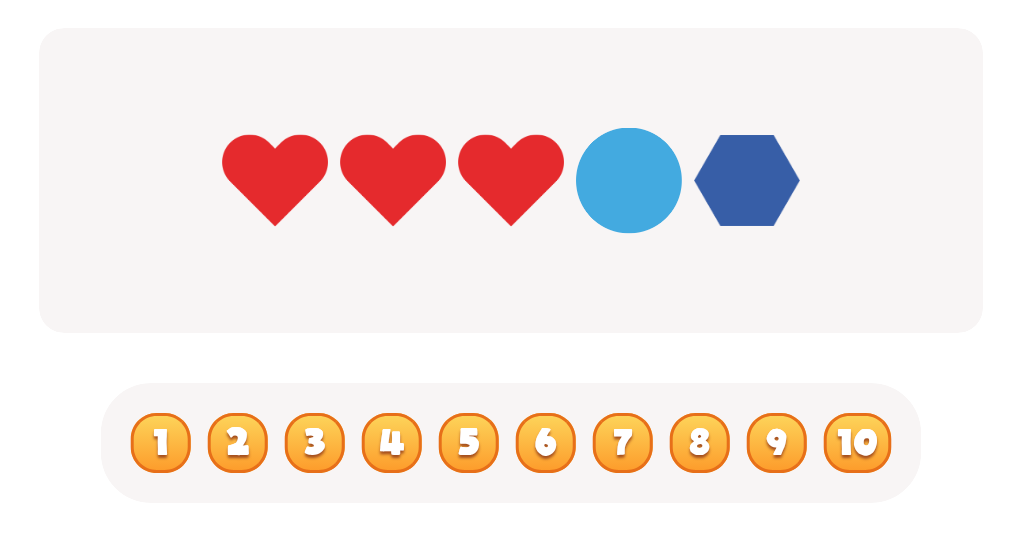
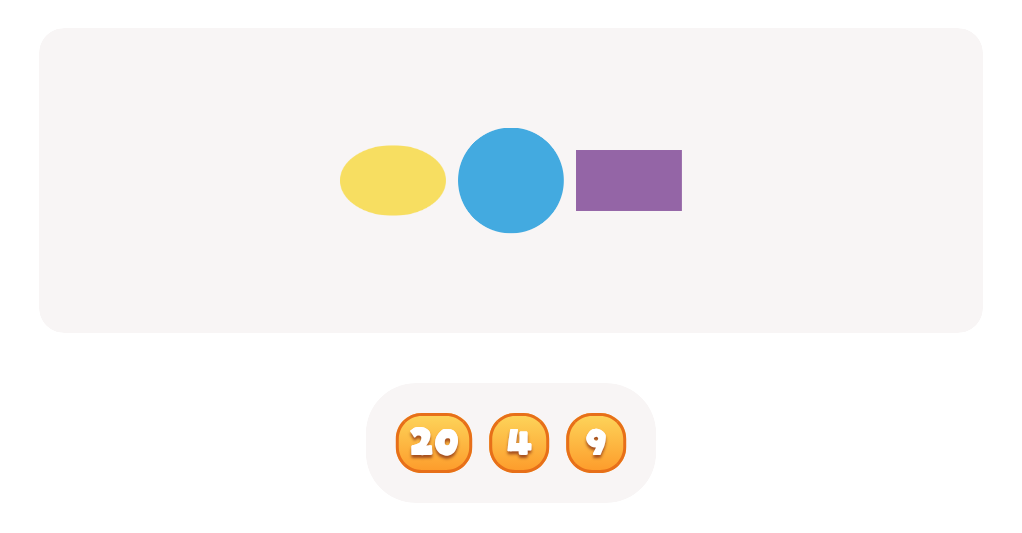
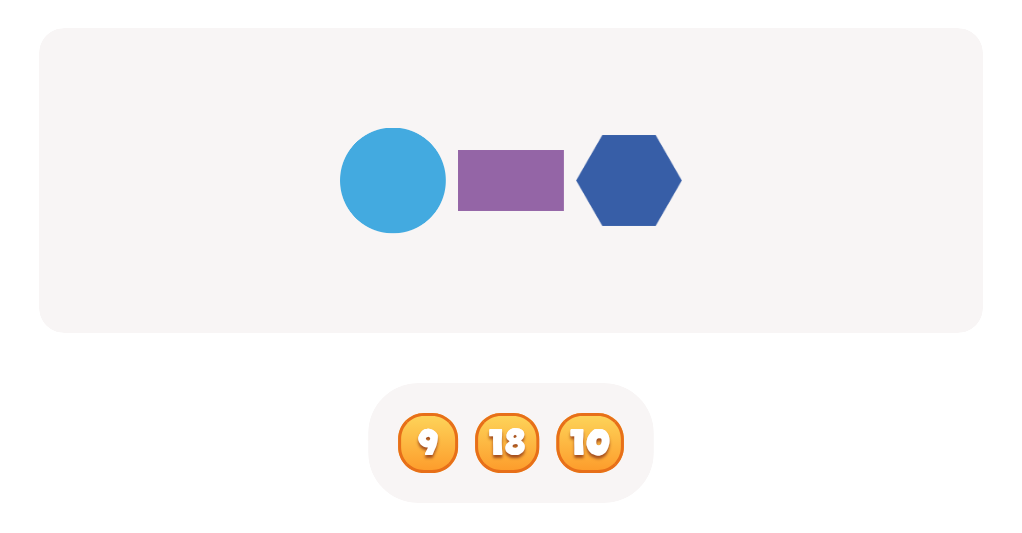
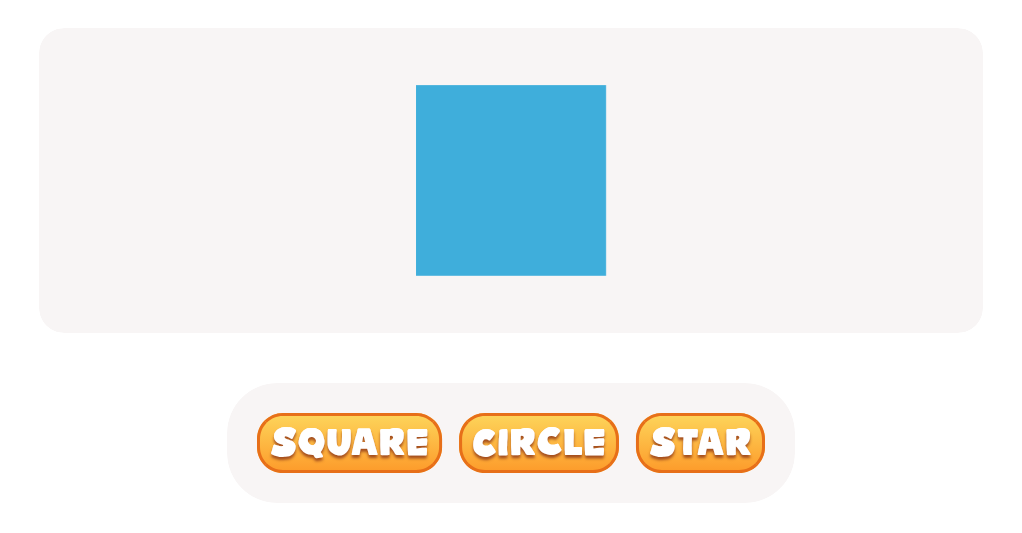
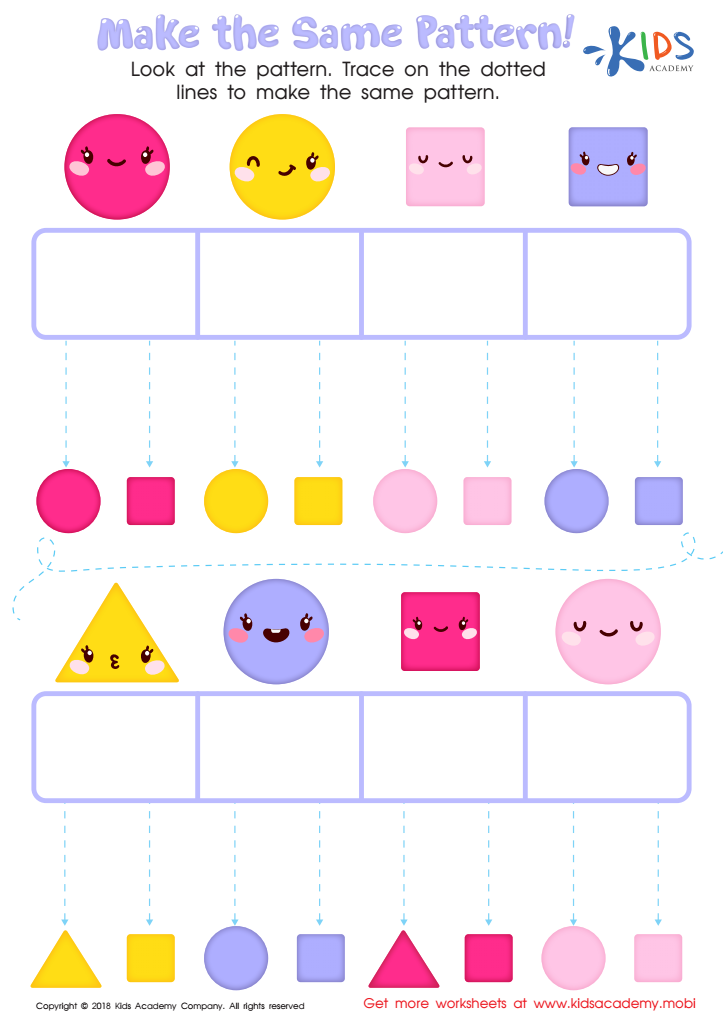
Make the Same Pattern Worksheet
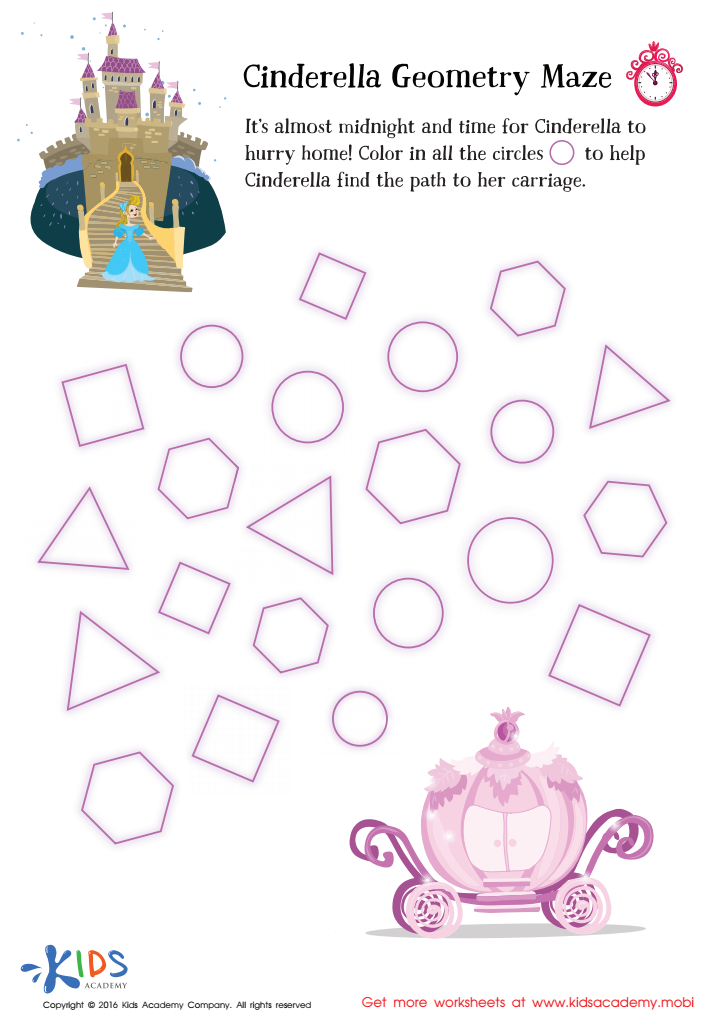
Cinderella Geometry Maze Worksheet
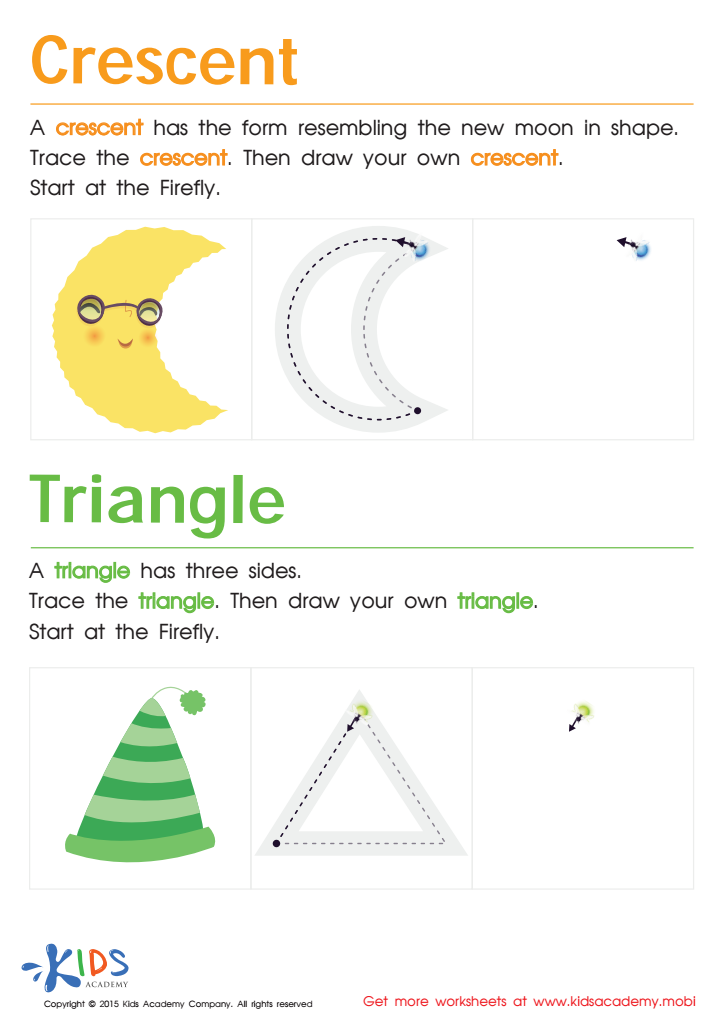
Learning to Draw Crescents And Triangles Worksheet
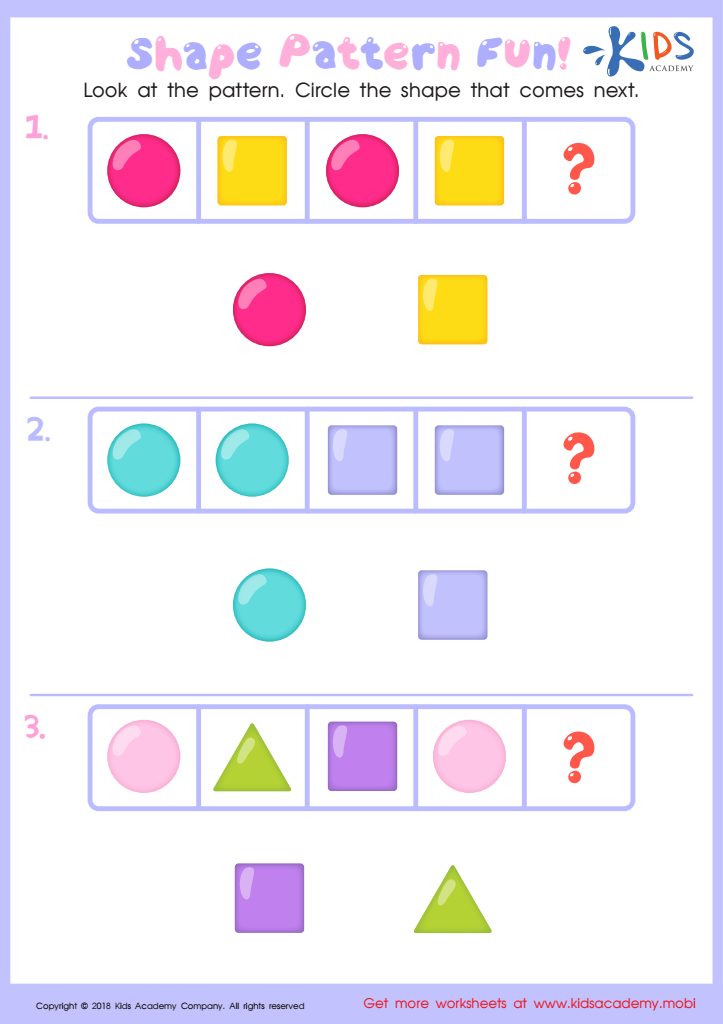
Shape Pattern Fun Worksheet








Developing problem-solving skills through exploration of normal 2D shapes is crucial for young children aged 4-6. At this formative stage, these activities foster foundational cognitive abilities essential for future learning and everyday problem-solving. Engaging with shapes helps children recognize patterns, a key skill in thinking logically and organizing information.
When children manipulate and categorize shapes, they adopt a trial-and-error approach, which nurtures their critical thinking. They start to ask questions, make hypotheses, and learn from mistakes. This mindset is invaluable for tackling more complex problems later on.
Moreover, understanding 2D shapes lays the groundwork for geometry and spatial awareness. Recognizing forms like circles, squares, and triangles supports early math skills, such as identifying shapes in their environment and later, understanding more abstract math concepts.
For parents and teachers, this signifies not just academic growth but an enhancement in children’s confidence and perseverance. When kids solve shape-related puzzles and activities, they experience a sense of achievement that motivates them to take on new challenges.
In essence, fostering problem-solving skills through normal 2D shapes is a multidimensional approach. It prepares children cognitively, socially, and emotionally, equipping them with the tools needed for both academic success and personal development.