Reading comprehension Normal 2D Shapes Worksheets for Ages 4-6
4 filtered results
-
From - To
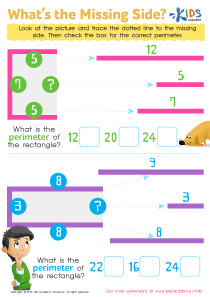
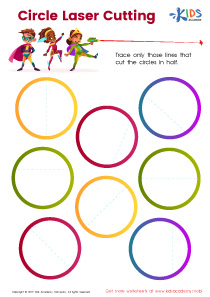
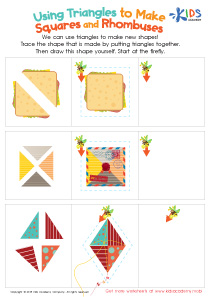
Our "Reading Comprehension Normal 2D Shapes Worksheets" for ages 4-6 are designed to improve early reading skills while introducing basic geometry. These worksheets engage young learners with fun, educational activities focused on recognizing and naming common 2D shapes like circles, squares, and triangles. Through a combination of colorful illustrations and simple stories, children will enhance their vocabulary, critical thinking, and shape recognition. Perfect for both classroom and home use, our worksheets provide a solid foundation in reading comprehension and math for preschool and kindergarten students. Give your child a head start in learning with our interactive and easy-to-follow resources.
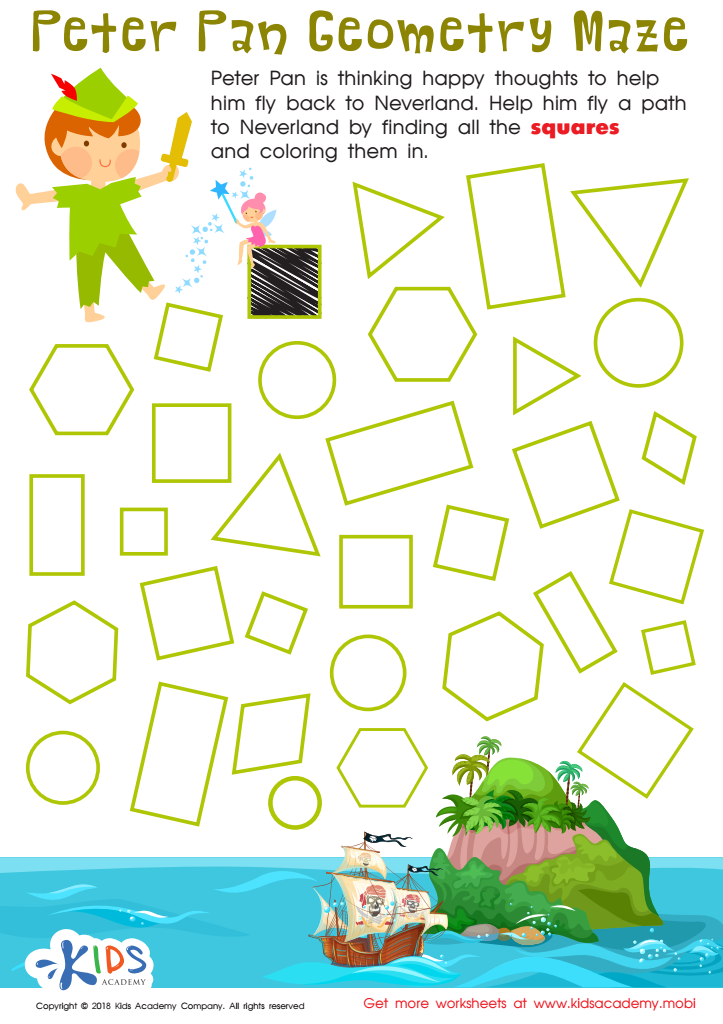
Peter Pan Worksheet
 Assign to My Students


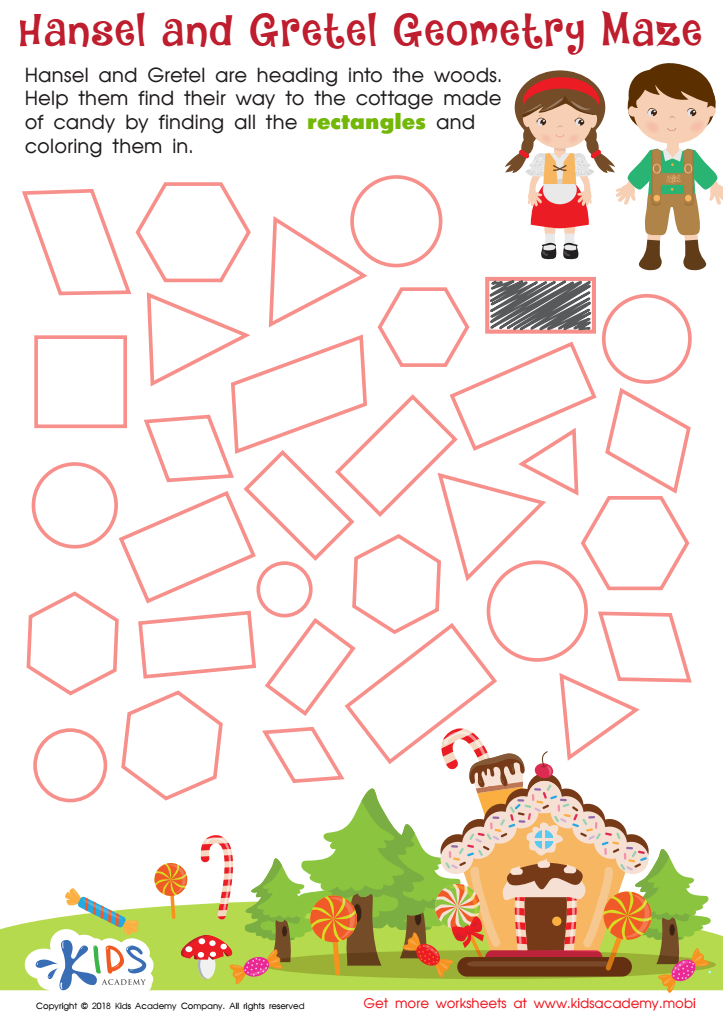
Hansel and Gretel Geometry Maze Worksheet
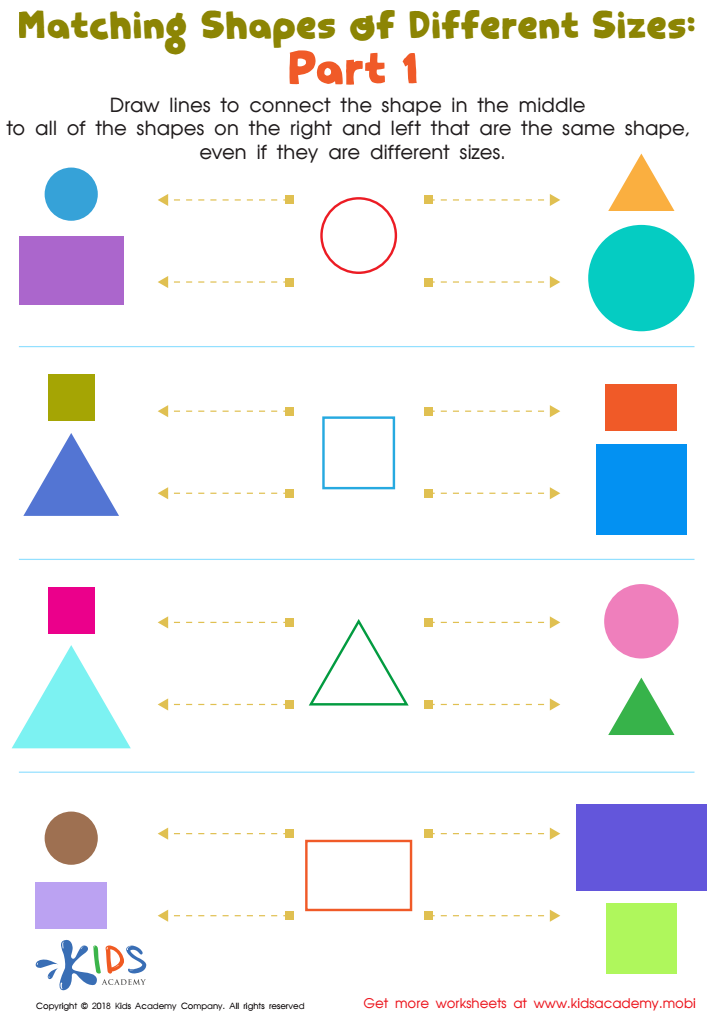
Geometry: part 1 Worksheet
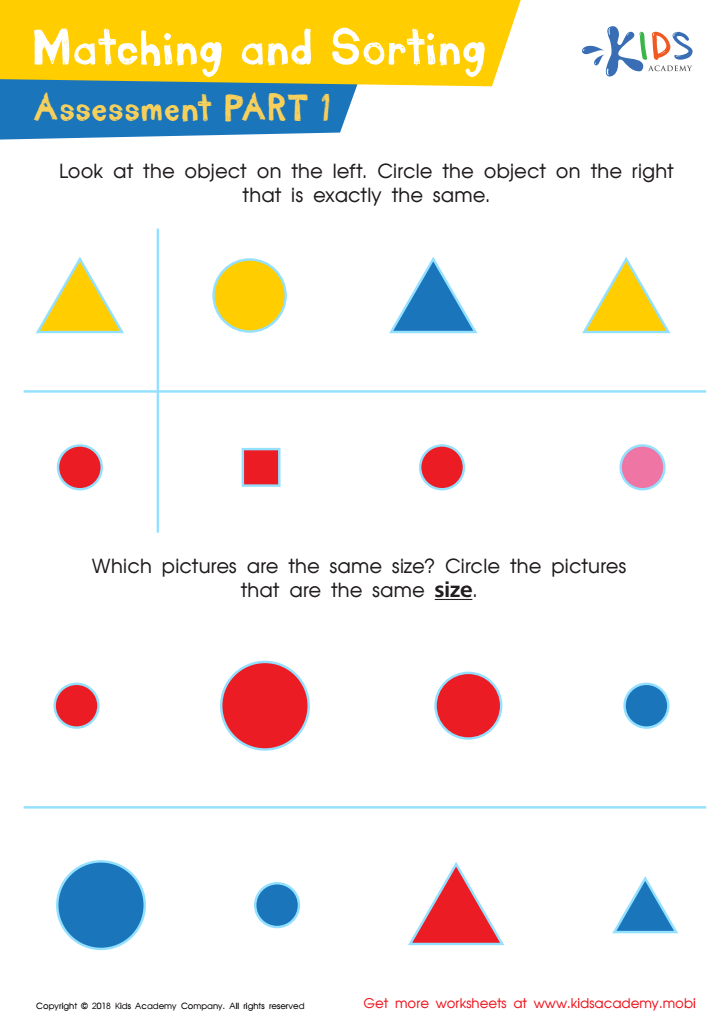
Matching and Sorting for Kindergarten: Assessment 1 Worksheet








Reading comprehension and understanding 2D shapes are fundamental skills for young children (ages 4-6) and deserve the attention of both parents and teachers for several key reasons. First and foremost, reading comprehension is the cornerstone of all future learning. Early mastery of this skill enables children to understand and follow instructions, build vocabulary, and gradually progress to more complex texts. This early development can significantly affect academic performance in later years, fostering a lifelong love for reading and learning.
Simultaneously, familiarity with basic 2D shapes lays the foundation for more advanced mathematical concepts. Recognizing and understanding shapes help children develop spatial awareness, which is crucial for everyday problem-solving tasks. For example, distinguishing between a circle, square, and triangle can lead to better recognition of patterns, enhanced fine motor skills, and improved hand-eye coordination.
Combining reading comprehension with the exploration of 2D shapes can result in holistic cognitive development. Educational activities that include reading shape-related stories or solving shape-oriented puzzles can make learning fun, engaging, and contextually meaningful. Both skills promote critical thinking, and attention to detail, and set a solid foundation for STEM subjects. Therefore, by emphasizing these areas, parents and teachers give children the tools they need for academic success and practical life skills.