Understanding fractions Normal Geometry Worksheets for Ages 4-6
3 filtered results
-
From - To
Discover our "Understanding Fractions Normal Geometry Worksheets" designed specifically for children aged 4-6! These engaging, interactive worksheets introduce young learners to the concept of fractions through fun visuals and relatable examples, making math enjoyable and approachable. Children will explore halves, quarters, and various representations of fractions, reinforcing their understanding of part-whole relationships. Ideal for preschool and kindergarten settings, our carefully crafted activities promote critical thinking and problem-solving skills while aligning with early math standards. Support your child's mathematical journey with these enriching resources that foster a love for learning. Dive into the world of fractions and geometry today!
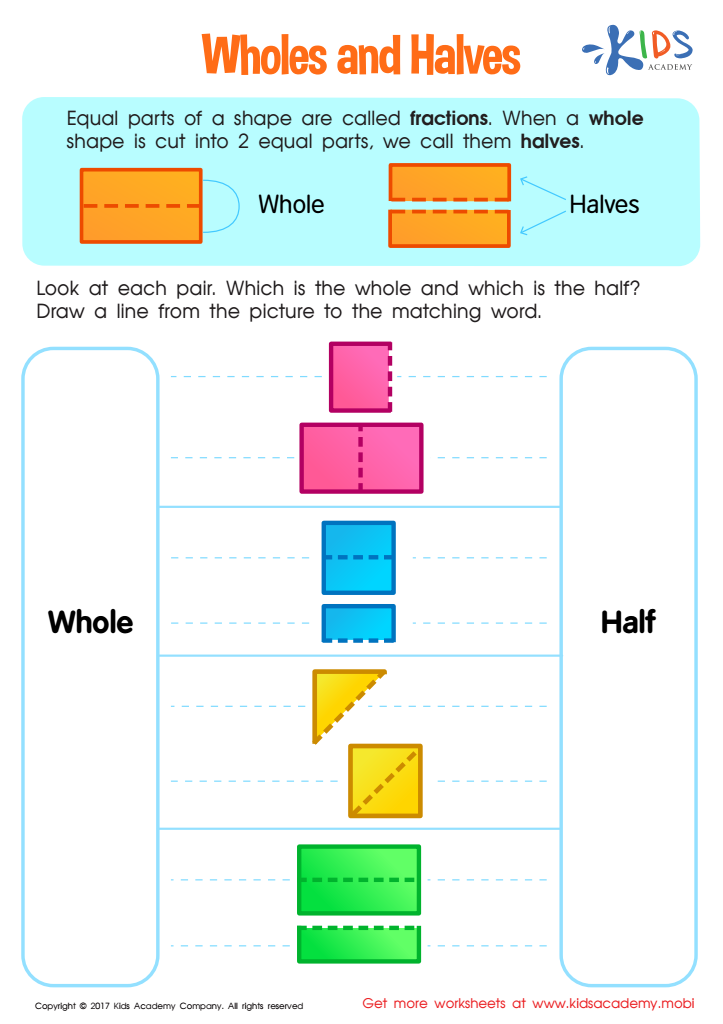
Wholes and Halves Worksheet
 Assign to My Students











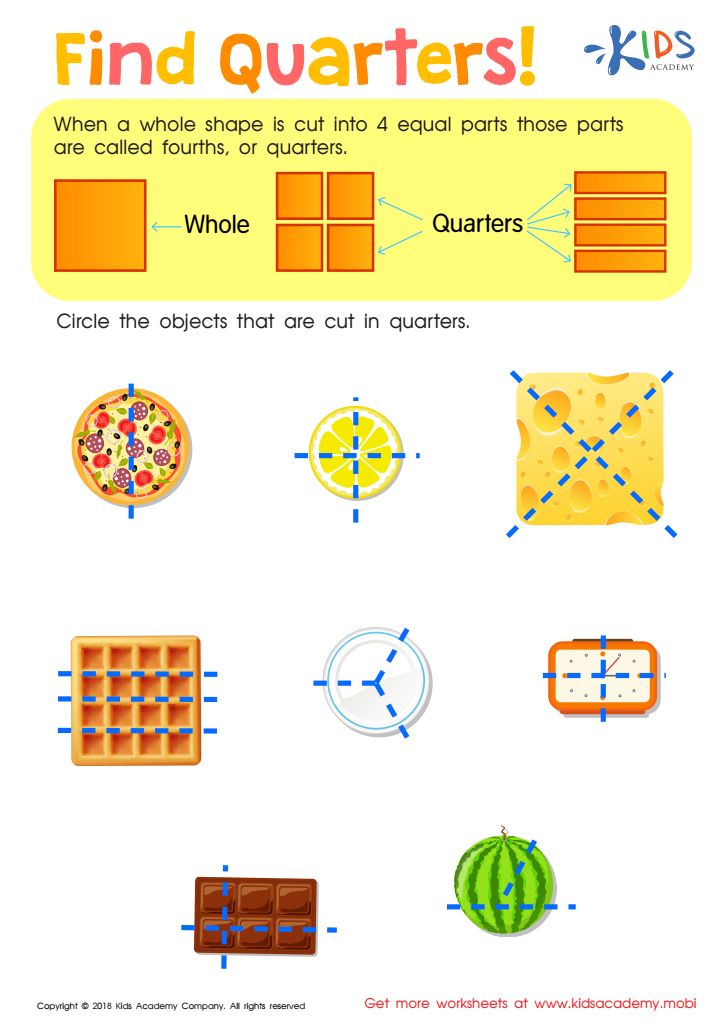
Find Quarters Worksheet
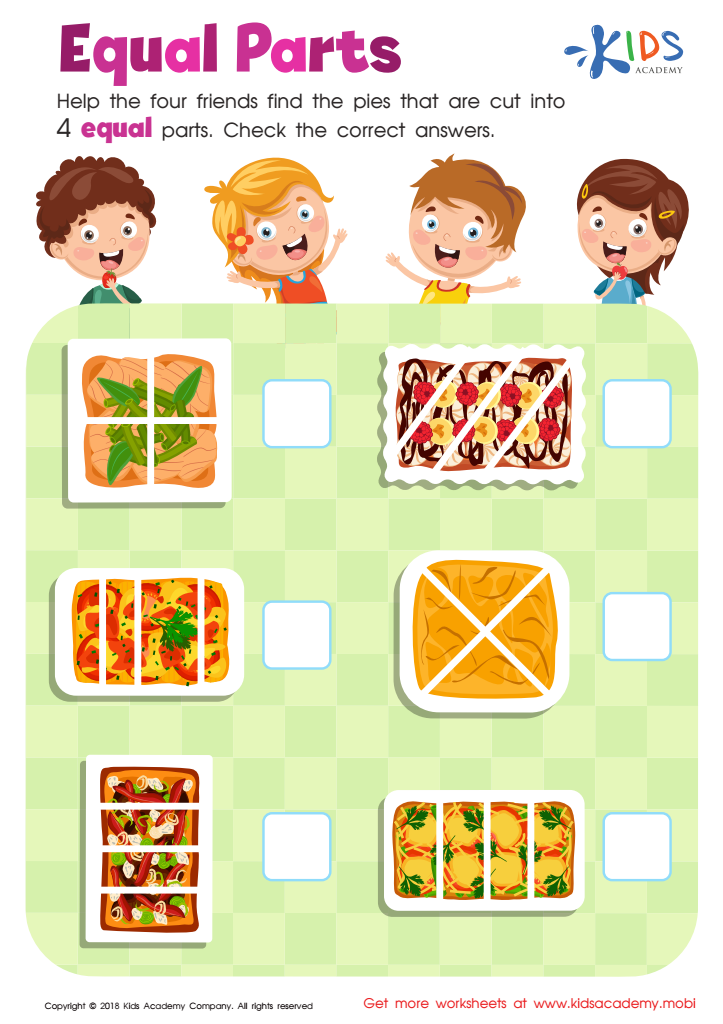
Equal Parts: Food Worksheet








Understanding fractions and basic geometry is crucial for young learners aged 4-6 as it sets the foundation for their mathematical journey. At this age, children are naturally curious and actively developing critical thinking skills, and introducing these concepts can make learning fun and engaging.
Fractions help children grasp the idea of part-whole relationships, which is essential in everyday life. For instance, sharing treats among friends fosters social skills and understanding fairness. Teaching fractions through hands-on activities—like slicing fruit or dividing toys—allows children to visualize these abstract concepts, making them more relatable and easier to understand.
In parallel, normal geometry introduces concepts of shapes, space, and spatial awareness, which are essential in developing problem-solving skills. Recognizing shapes and their properties aids children in understanding their environment and improves fine motor skills through activities like drawing or building with blocks.
Ultimately, teachers and parents who prioritize these foundational concepts help children build confidence in their abilities, enhancing their overall academic performance and preparing them for more complex mathematical thoughts later on. Making these subjects accessible not only encourages a strong mathematical foundation but also fosters a lifelong love for learning.








