Understanding prepositions Normal Geometry Worksheets for Ages 4-6
3 filtered results
-
From - To
Discover engaging "Understanding Prepositions Normal Geometry Worksheets" designed for children aged 4-6. These worksheets provide a fun and interactive way for young learners to grasp fundamental prepositions while exploring basic geometric concepts. With colorful illustrations and relatable scenarios, kids will develop their spatial awareness and vocabulary skills as they identify positions such as 'above,' 'below,' 'next to,' and more. Perfect for at-home learning or classroom activities, these worksheets encourage creativity and critical thinking, making geometry accessible and enjoyable. Help your child build a strong foundation in math and language with our carefully designed resources tailored for early education success!
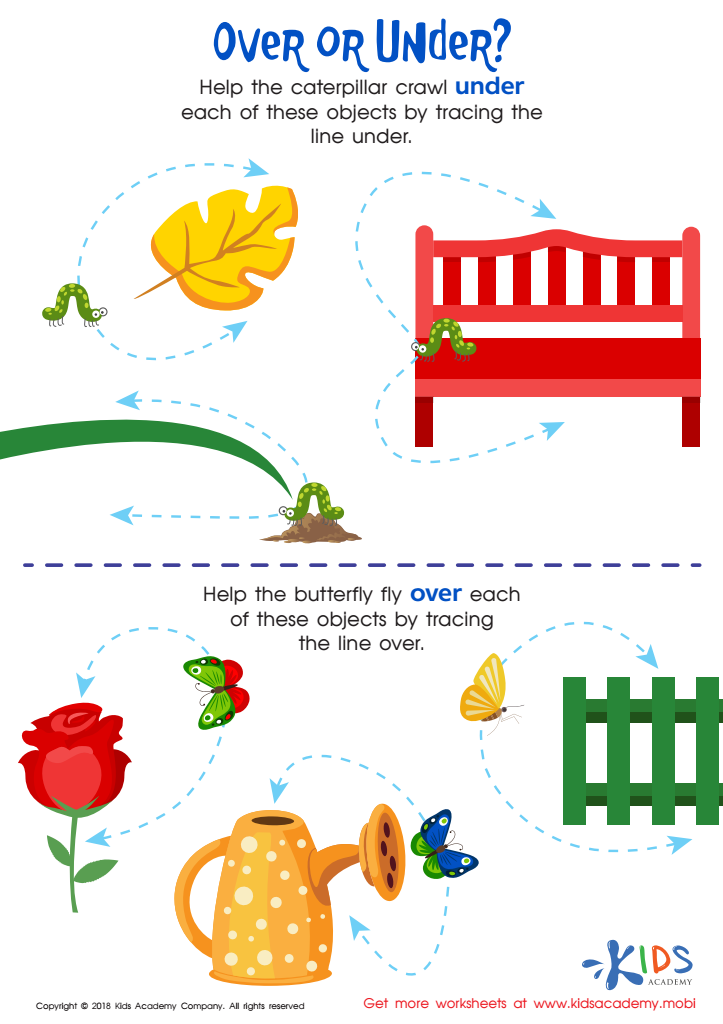
Over or Under? Worksheet
 Assign to My Students











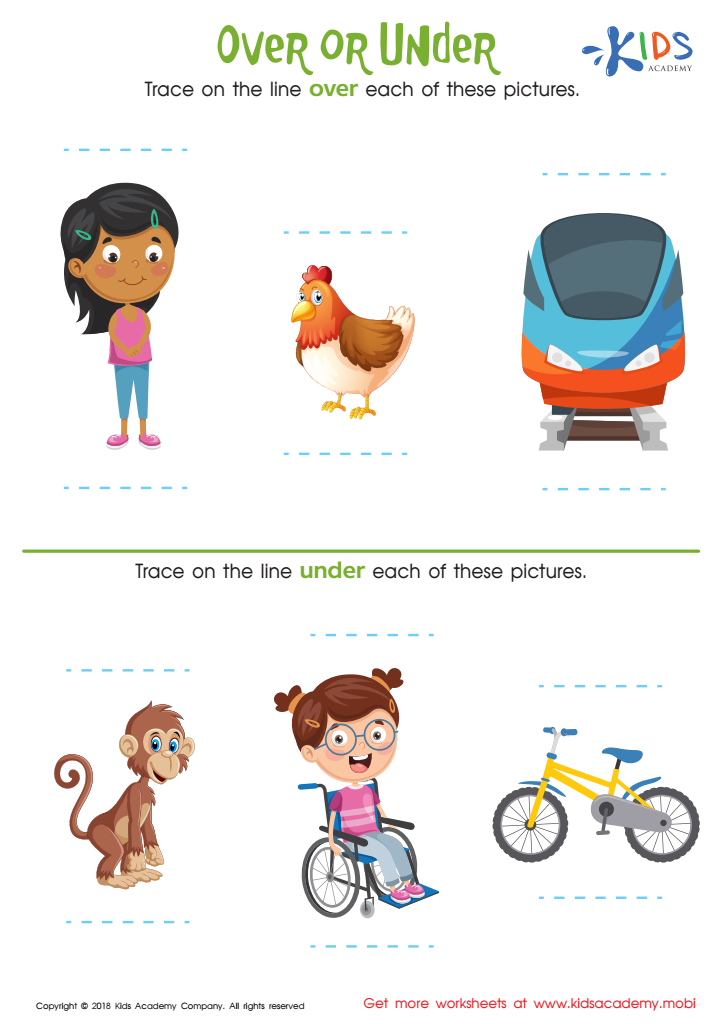
Over or Under Worksheet
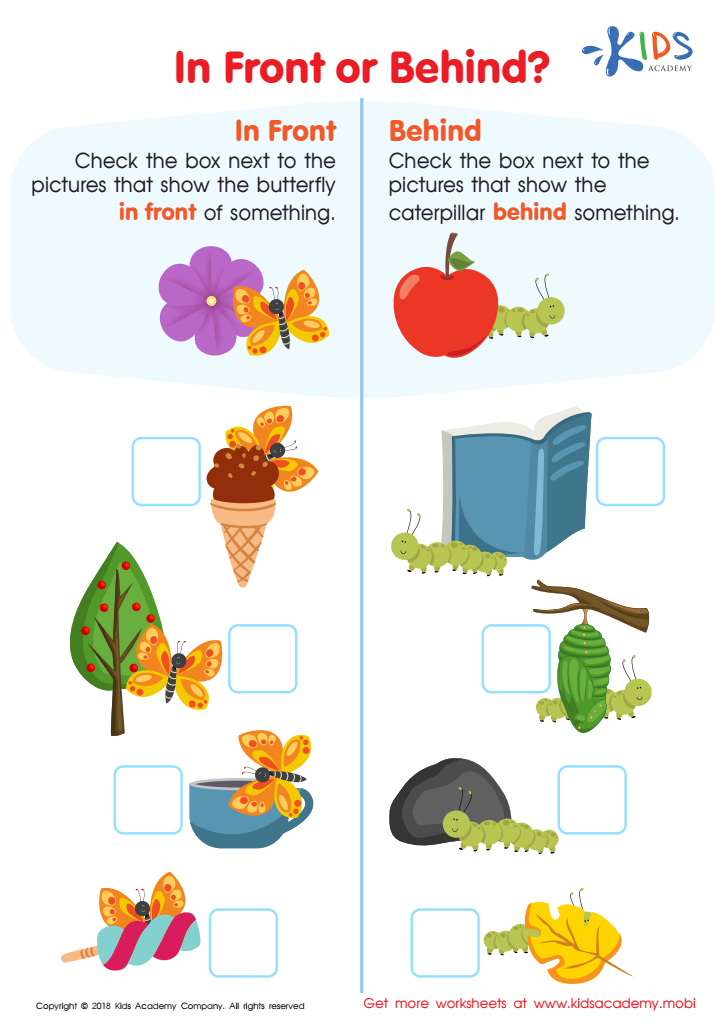
In Front or Behind Worksheet








Understanding prepositions in the context of normal geometry is essential for children aged 4-6, as this knowledge serves as a foundation for both language development and mathematical reasoning. Prepositions such as "in," "on," "under," and "between" help children describe spatial relationships between objects and their surroundings.
When children learn geometrical concepts such as shapes, sizes, and positions, they can better communicate their thoughts and observations. For instance, recognizing that a square is “on” a table or “under” a chair requires an understanding of both geometry and spatial language. This integration fosters critical thinking and enhances problem-solving skills.
Moreover, early exposure to these concepts aids in cognitive development. By grasping prepositions, children engage in interactive learning, facilitating imaginative play while building essential math skills. Teachers who incorporate orientations using games, stories, and hands-on activities can make learning fun and relevant.
Ultimately, understanding prepositions in geometry goes beyond academics; it prepares children for everyday situations. Whether they’re arranging toys or navigating their environment, these skills are crucial for their overall development and lifelong learning. Parents and teachers play a vital role in creating supportive environments that nurture these essential skills, laying the groundwork for future success in both language arts and mathematics.








