Comparison Skills Normal Math Worksheets for Ages 4-6
3 filtered results
-
From - To
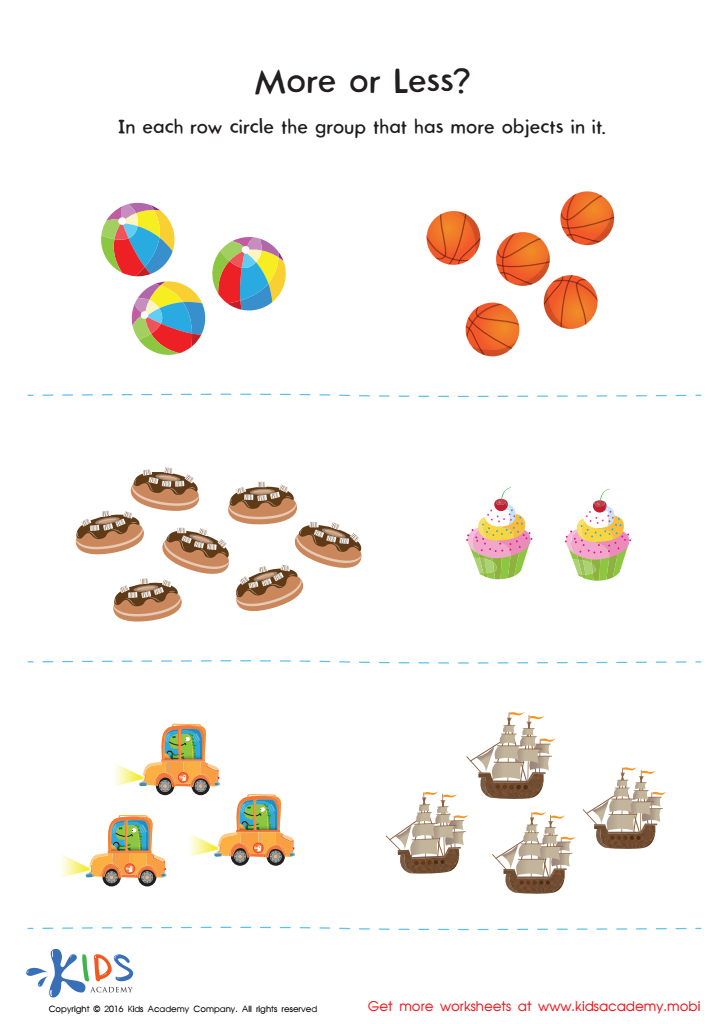
Discover our engaging "Comparison Skills Normal Math Worksheets" designed specifically for children aged 4-6. These worksheets focus on enhancing essential comparison skills, helping young learners distinguish between sizes, quantities, and values through fun, interactive activities. With colorful illustrations and age-appropriate content, children will enjoy hands-on practice that makes learning enjoyable. Our worksheets promote critical thinking and strengthen foundational math concepts, setting the stage for future success. Perfect for classroom use or at-home learning, these resources empower young mathematicians to confidently analyze and compare various objects. Dive into a world of exploration and discovery while mastering important comparison skills!
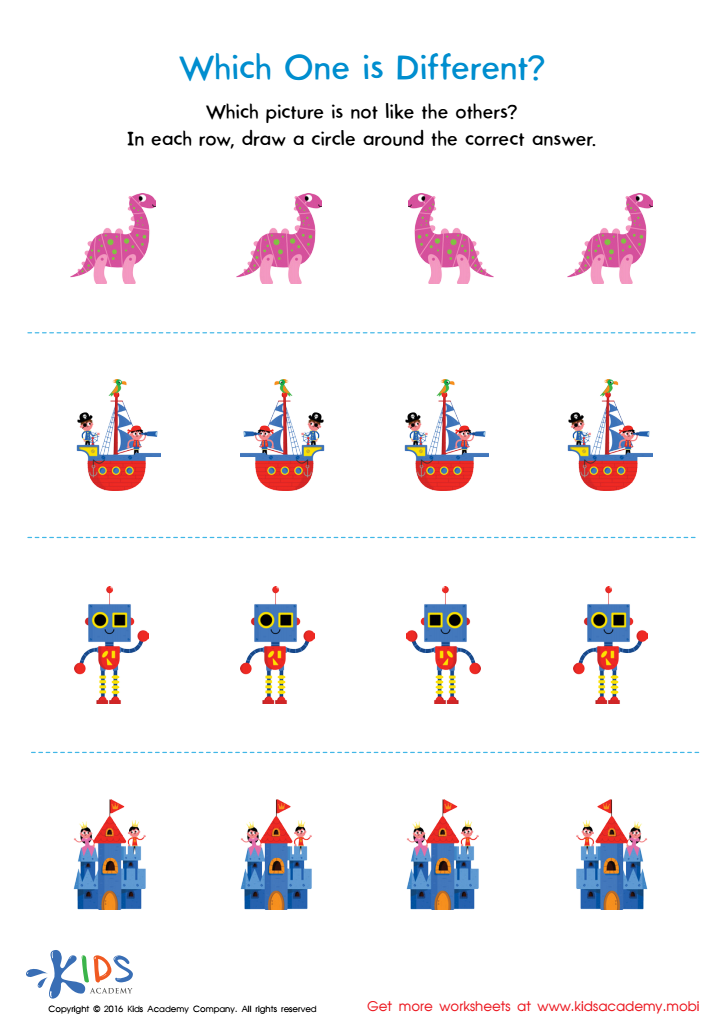
Which One Is Different Worksheet
 Assign to My Students
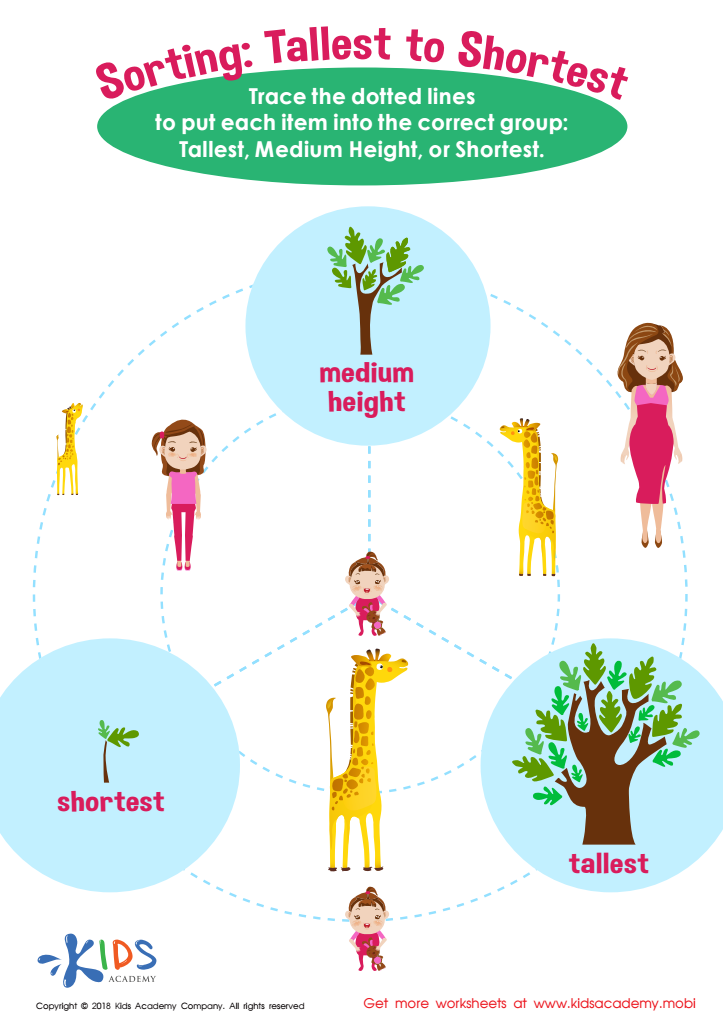
Sorting: Tallest to Shortest Worksheet







Comparison skills in early math are crucial for children aged 4-6 as they lay the foundation for more complex mathematical concepts. At this age, kids begin to differentiate between sizes, quantities, and numerical values, and developing these skills nurtures their ability to think critically and analytically.
Parents and teachers should care about fostering these skills because they are integral to problem-solving. For instance, when children understand concepts like "more than," "less than," or "equal to," they can engage in effective reasoning that helps shape their overall cognitive development. Additionally, comparison activities can be seamlessly integrated into everyday settings, such as sorting toys, measuring ingredients, or comparing fruits, making learning both interactive and fun.
Moreover, these skills enhance children’s confidence in their abilities and prepare them for future academic success. Early familiarity with comparison lays the groundwork for future arithmetic, data analysis, and logical reasoning skills. Parents and teachers can play a significant role in this developmental stage by actively engaging children in games and activities that promote comparison, which strengthens not just math skills but also contributes to language development and social interaction. Overall, nurturing comparison skills is a productive investment in children's lifelong learning journey.








