Handwriting Skills Normal Math Worksheets for Ages 4-6
3 filtered results
-
From - To
Discover our Handwriting Skills Normal Math Worksheets designed specifically for children aged 4-6. These engaging resources focus on developing essential handwriting skills while reinforcing foundational math concepts. Each worksheet features fun, age-appropriate activities that encourage practice of both writing numbers and letters, enhancing fine motor skills, and improving coordination. Ideal for young learners, these worksheets promote active engagement and learning through interactive formats. Perfect for home or classroom use, they provide a seamless blend of handwriting improvement and math practice. Download now to support your child’s educational journey with our thoughtfully crafted materials!
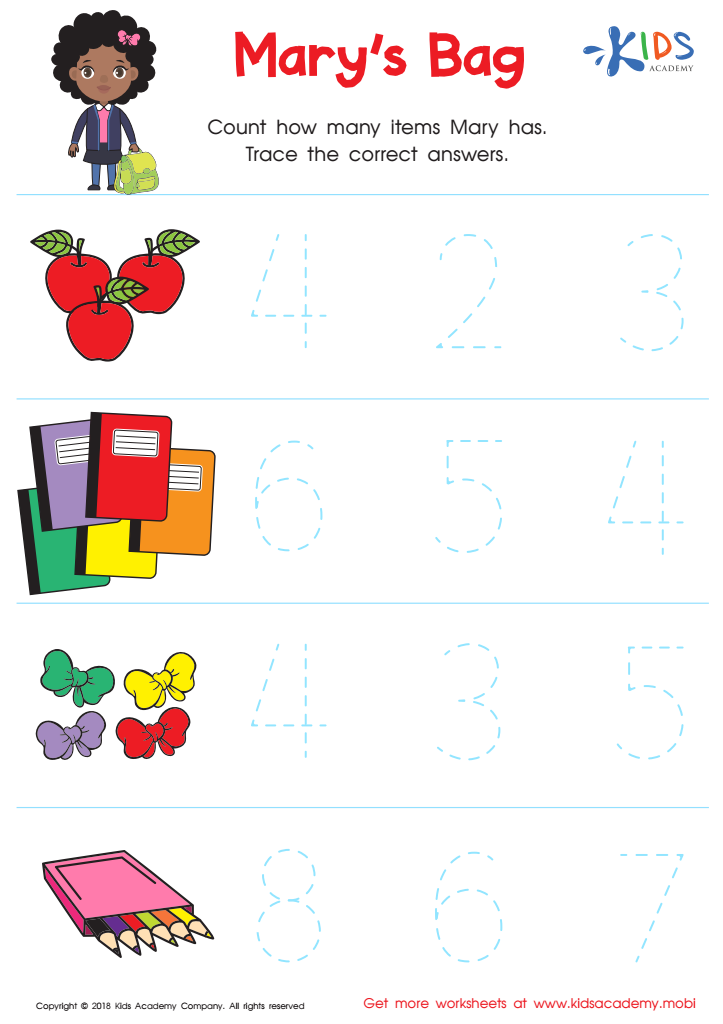
Kindergarten Number Tracing: Mary's Bag Worksheet
 Assign to My Students

Shapes in Real Life: Cone Worksheet

Kindergarten Number Tracing: Medow Flowers Worksheet








Handwriting skills and early math are fundamental components of a child’s development in ages 4-6, and both hold significant importance for parents and teachers. Firstly, handwriting skills aid in the refinement of fine motor skills, which are essential not only for writing but also for everyday tasks and later academic success. Good handwriting fosters self-confidence and boosts a child’s ability to express their thoughts clearly and effectively.
Similarly, a solid foundation in math during these early years sets the stage for critical thinking and problem-solving abilities. Introducing basic math concepts such as counting, sorting, and simple operations enhances cognitive development, allowing children to understand the world around them.
Furthermore, the integration of handwriting and math skills can significantly impact a child’s overall learning experience. Activities blending the two disciplines encourage creativity and engagement, making learning enjoyable.
Consequently, both handwriting and math skills promote crucial cognitive and physical development, preparing children not just for school, but for life. Parents and teachers play a vital role in fostering these skills through supportive practice, ensuring that children build a strong, confident foundation that will benefit them in their educational journey and beyond.








