
Logical Reasoning Normal Math Worksheets for Ages 4-6
11 filtered results
Difficulty Level
Grade
Age
-
From - To
Subject
Activity
Standards
Unlock your child's potential with our engaging Logical Reasoning Normal Math Worksheets, specially designed for children aged 4 to 6. These worksheets cultivate essential skills through fun and interactive activities tailored to young learners. Focusing on logical thinking, pattern recognition, and problem-solving, our printable resources help children develop a strong foundation in math while enhancing their reasoning abilities. Vibrant illustrations and age-appropriate exercises make learning enjoyable and effective. Perfect for home or classroom use, these worksheets empower parents and teachers to nurture critical thinking skills in early childhood education. Start your child’s journey to confidence in math today!
Favorites
With answer key
Interactive
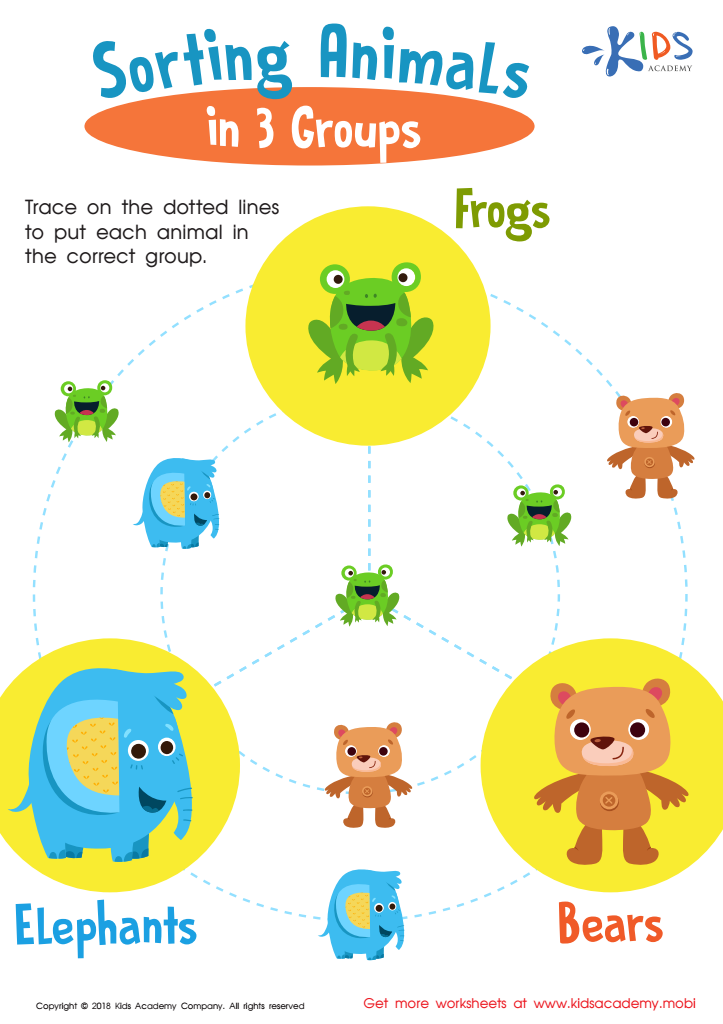
Sorting Animals in 3 Groups Worksheet
Let your kids practice and build skills for future Venn Diagrams with this PDF worksheet. They'll trace lines to match and group animals, and learn the differences and similarities of animals by categorizing with pictures and words. Plus, it's a great way to develop fine motor skills.
 Assign to My Students
Sorting Animals in 3 Groups Worksheet
Worksheet
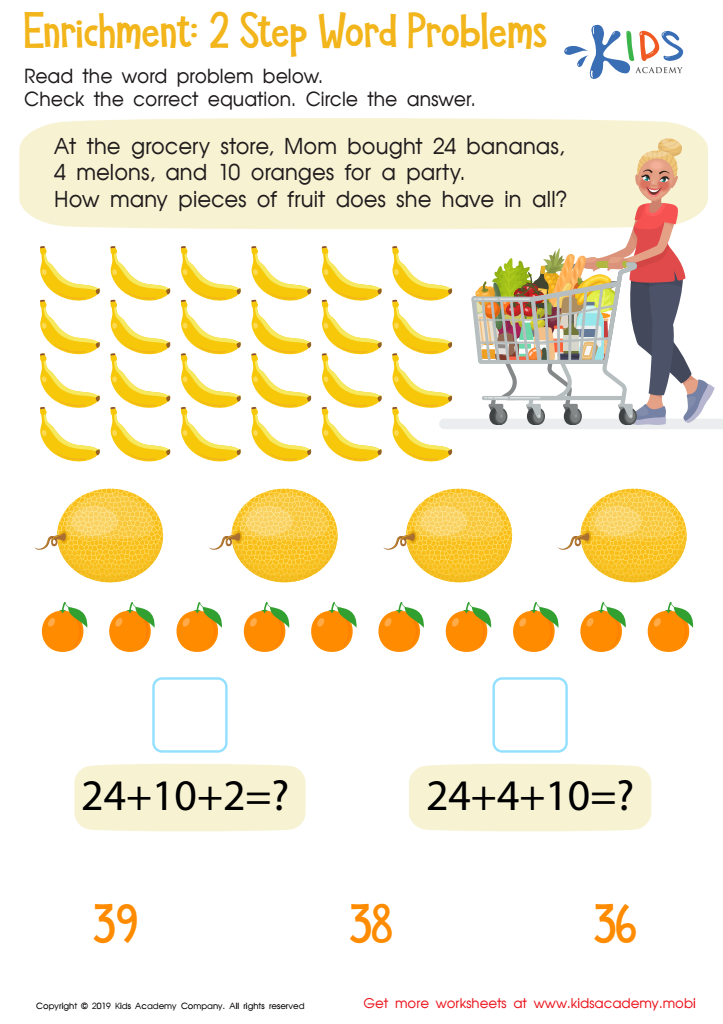
Enrichment -2 Step Word Problems Worksheet
Help your students learn math easier and faster with this colorful worksheet. Read the word problem and then guide them in checking the correct equation and finding the answer. Your students will benefit from the extra help, as they work through new concepts each day.
Enrichment -2 Step Word Problems Worksheet
Worksheet
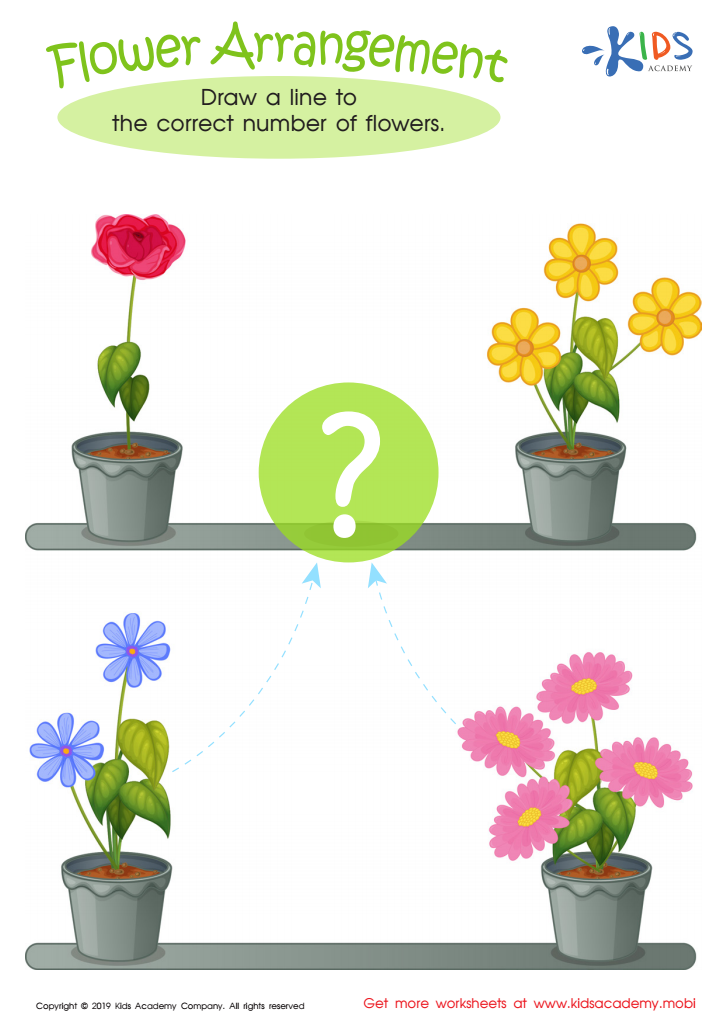
Flower Arrangement Worksheet
Your math whizzes can use flower power to showcase their counting skills with this bright PDF! One-to-one representation in pictures helps children build number sense, which leads to better math and computation efficiencies. This PDF features traceable lines for kids to draw to the correct number of flowers, all while practicing their counting with pretty pictures.
Flower Arrangement Worksheet
Worksheet
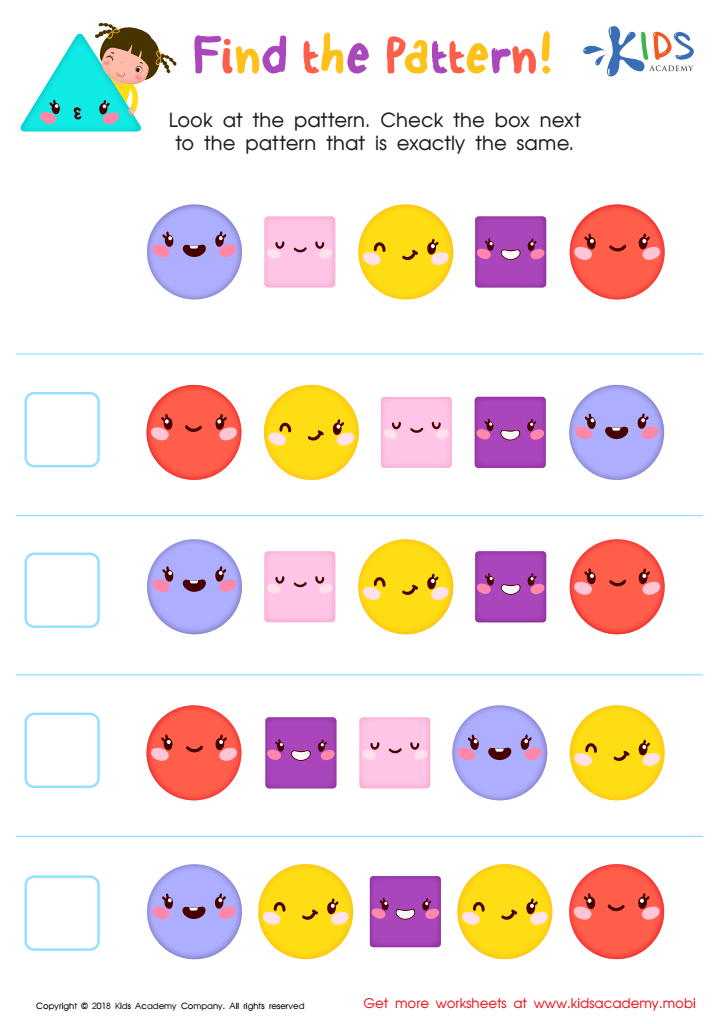
Find the Pattern Worksheet
This colorful pattern worksheet is perfect for testing your kids' pattern recognition. The bright colors will keep them engaged, while they check the box next to the pattern that is the same. Ask your kids to identify the colors used and see how well they can spot similarities!
Find the Pattern Worksheet
Worksheet
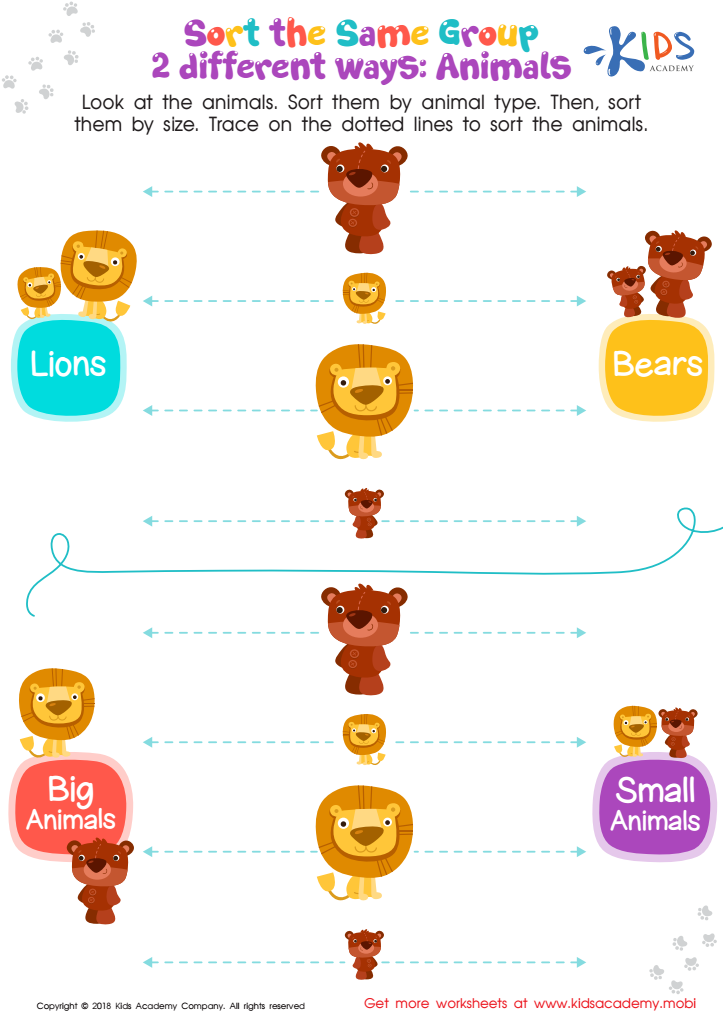
Sort the Same Group 2 Different Ways: Animals Worksheet
Look at the animals with your child. Ask them to name them, then sort them by type (e.g. lions and bears). Next, help them sort by size, tracing the dotted lines. This will teach them sorting skills.
Sort the Same Group 2 Different Ways: Animals Worksheet
Worksheet
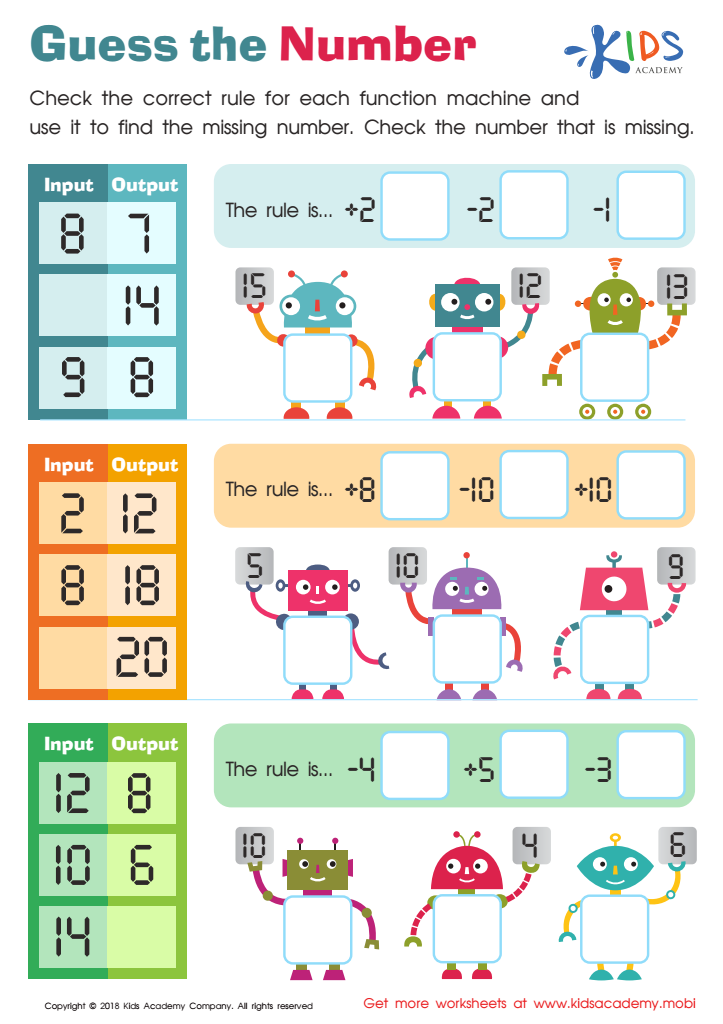
Guess the Number Worksheet
Kids need a solid number sense to succeed in math. This fun, robot-illustrated worksheet will help them identify patterns between numbers. They will examine the function machine, find the rule, and use it to solve for the missing number. It's a great way to learn!
Guess the Number Worksheet
Worksheet
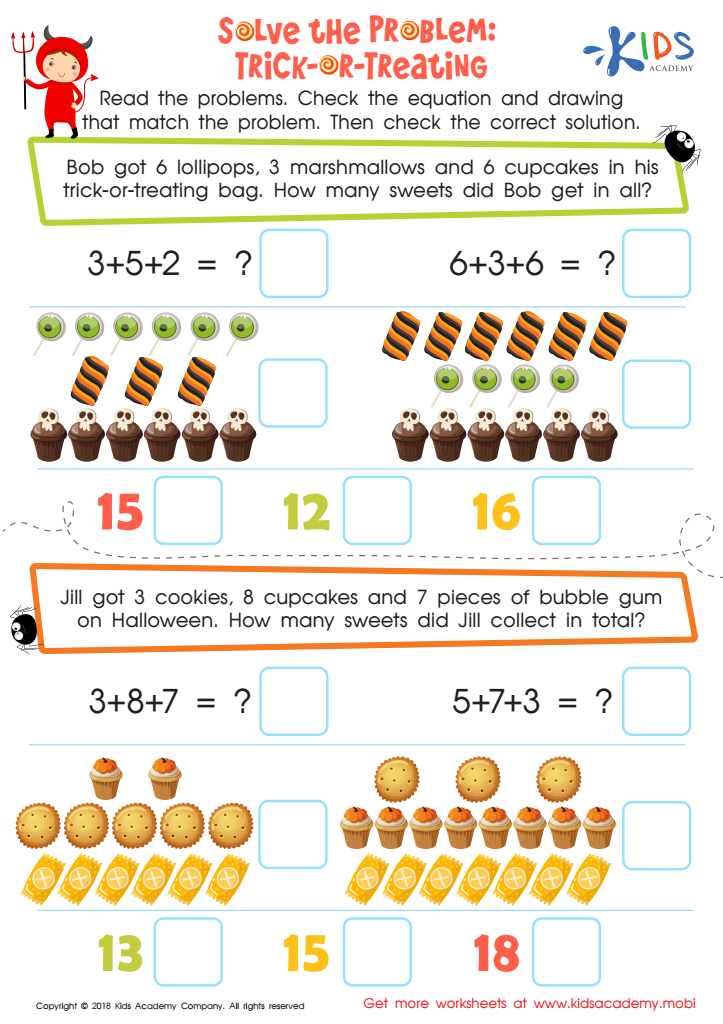
Solve the Problem: Trick–or–treating Worksheet
Kids will love this fun PDF worksheet for trick-or-treating! It's packed with yummy images and math practice. They can read the word problems, count and add numbers, check their answers, and match the addition equations with the pictures. Math made delicious!
Solve the Problem: Trick–or–treating Worksheet
Worksheet
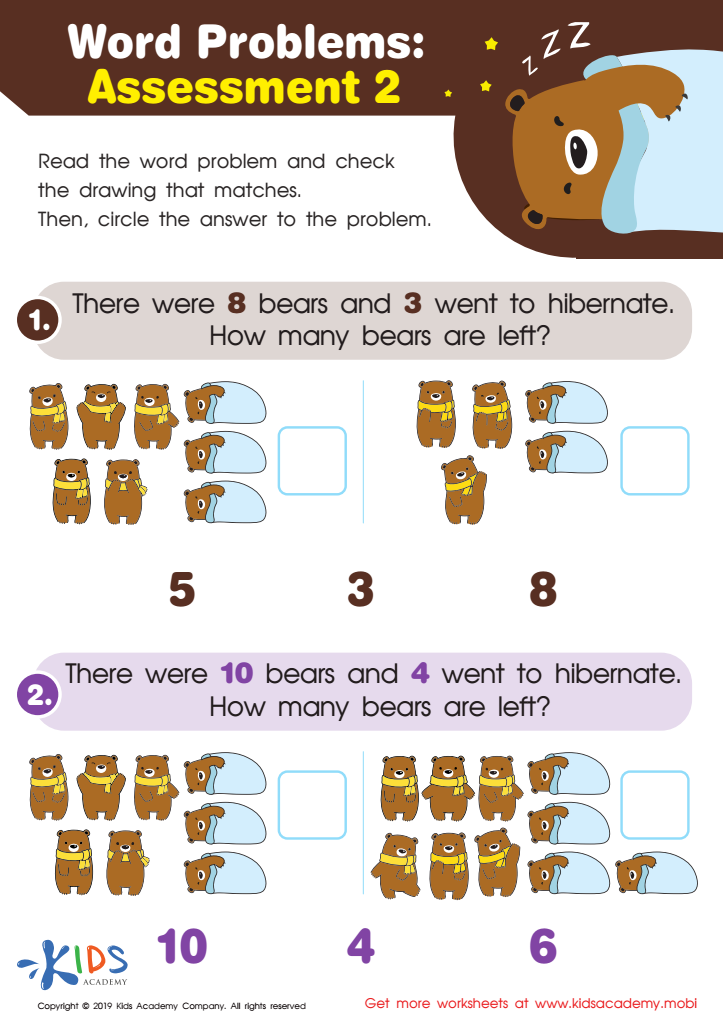
Word Problems: Assessment 2 Worksheet
This bear-themed worksheet is a great way to test subtraction skills. Have your child read the word problems and match the correct drawing with the answer. It's a fun way to quiz them without them even knowing. Enjoy counting cute snoozing bears! (80 words)
Word Problems: Assessment 2 Worksheet
Worksheet
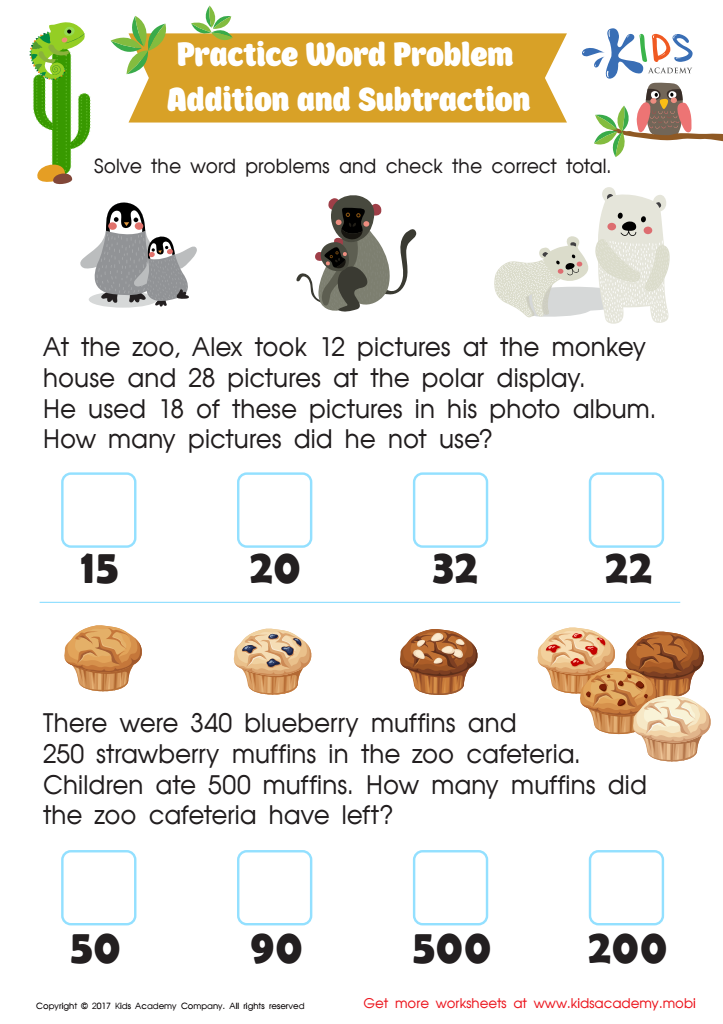
Addition and Subtraction: Word Problems Worksheet
Word problems can be difficult, but they offer another way to understand math. Our 3rd grade worksheet takes your child to the zoo; two intriguing word problems will test their thinking skills and help them find the total.
Addition and Subtraction: Word Problems Worksheet
Worksheet
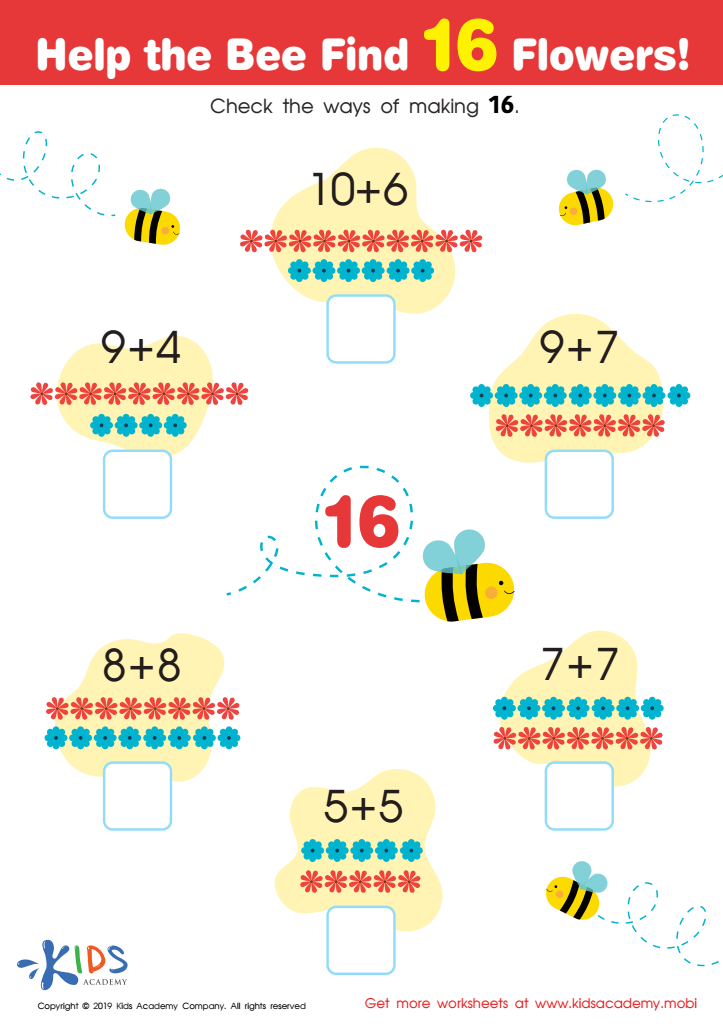
Help the Bee Find 16 Flowers Worksheet
Ask your students to count as high as they can. Show them that different numbers can equal the same figure with examples like 2+2=4 and 3+1=4. Ask for more examples, then help the bees find 16 flowers by checking the ways of making 16.
Help the Bee Find 16 Flowers Worksheet
Worksheet
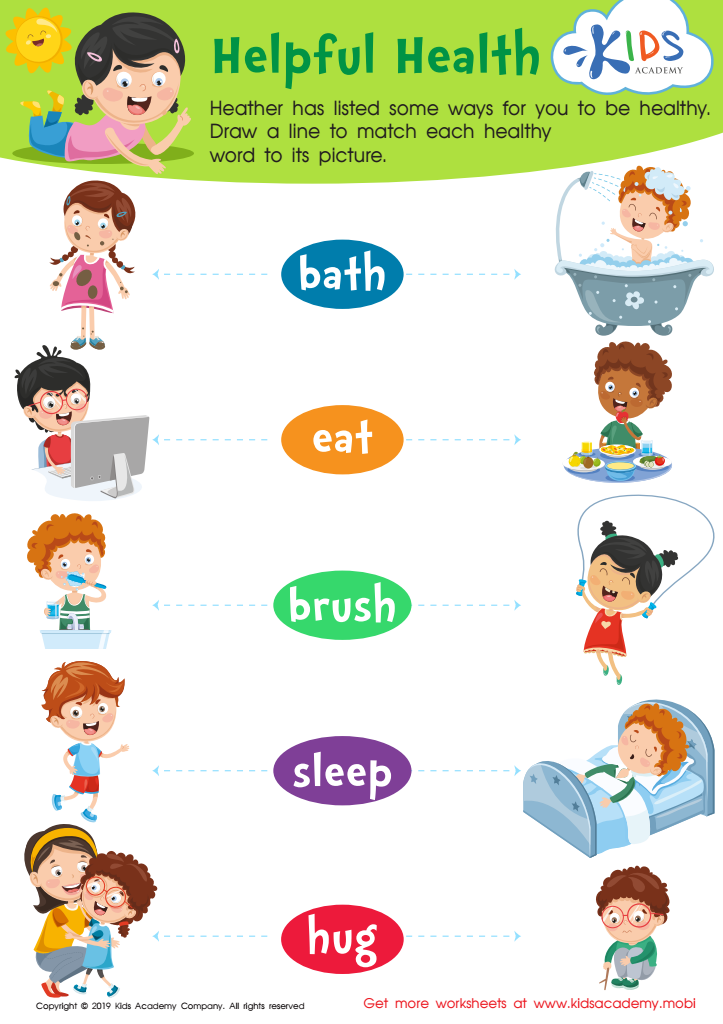
Helpful Health Worksheet
Kids can learn healthy habits with this free worksheet! With their pal Heather, they'll trace lines to connect health words with pictures like brushing teeth, hugging, and getting enough sleep. It's a great way to help young ones understand healthy activities.
Helpful Health Worksheet
Worksheet
Join Kids Academy for Free
Who is primarily going to use this learning content?


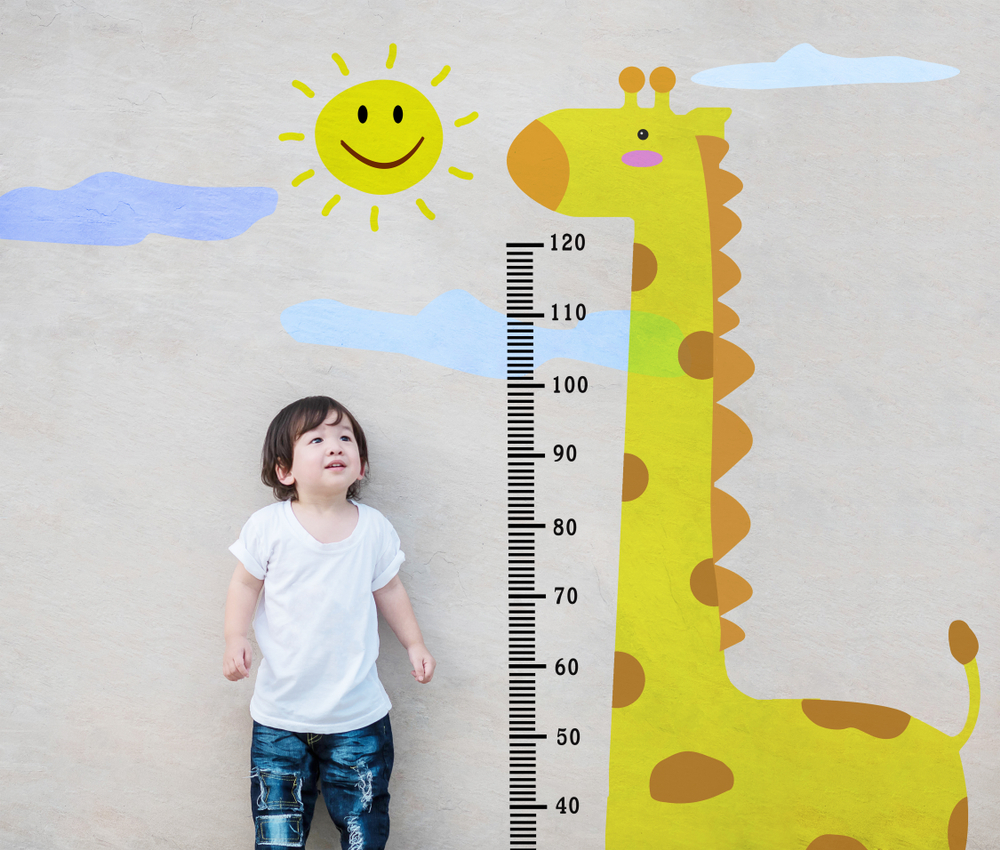

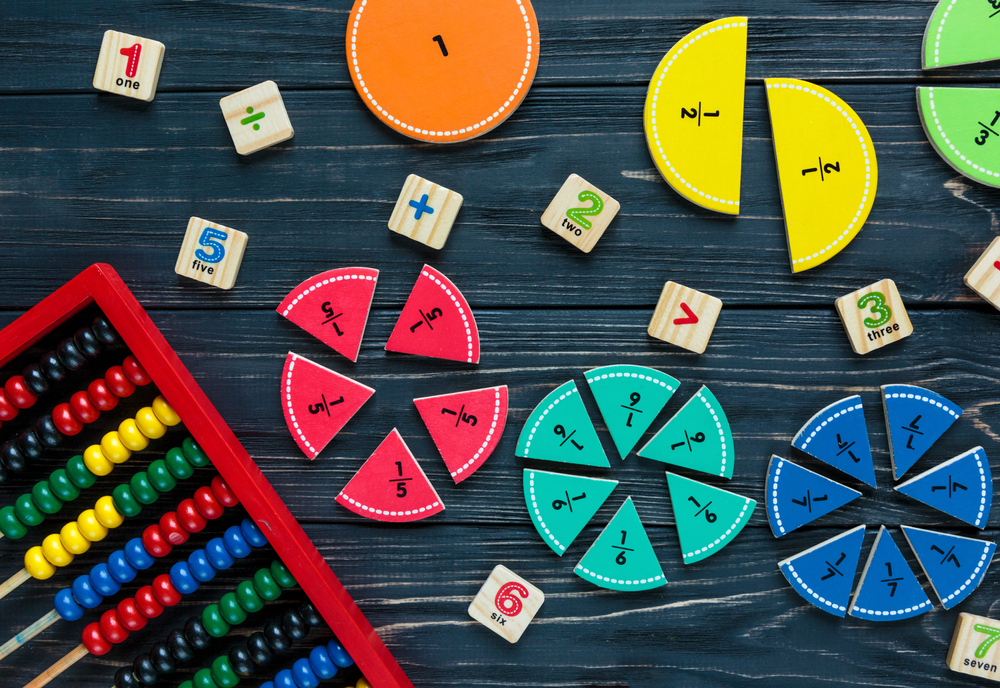



Logical reasoning in early childhood, particularly through math concepts, lays the foundation for critical thinking and problem-solving skills that children will use throughout their lives. For children aged 4-6, this developmental stage is crucial; engaging them in logical reasoning and mathematical thinking helps cultivate their ability to understand patterns, relationships, and number sense.
Parents and teachers should care about incorporating logical reasoning into normal math activities because it not only enhances children's academic performance but also promotes cognitive skills. For instance, activities such as sorting, classifying, and pattern recognition foster analytical thinking. When kids learn to compare, sequence, and predict outcomes, they develop a robust framework for understanding complex concepts later in school.
Moreover, these skills help to boost confidence and independence in young learners. When children grasp math concepts effectively, they are more likely to engage in discussions, ask questions, and explore further, leading to a positive learning environment. It also sets a strong groundwork for later subjects such as science, technology, and engineering, where logical reasoning is essential. In essence, nurturing logical reasoning through math in early education enriches children's overall development and prepares them for future success.








