Understanding Sequences Normal Math Worksheets for Ages 4-6
4 filtered results
-
From - To
Explore our engaging "Understanding Sequences Normal Math Worksheets" designed for children ages 4-6! These worksheets provide a fun and interactive way for young learners to grasp the concept of sequences through colorful illustrations and various activities. With carefully crafted exercises, children will develop critical thinking skills by recognizing patterns and predicting what comes next. Ideal for both classroom use and home practice, our worksheets promote early math literacy, ensuring that your child builds a solid foundation in sequencing. Start nurturing your child's mathematical journey today with our easy-to-use, age-appropriate worksheets that make learning enjoyable!
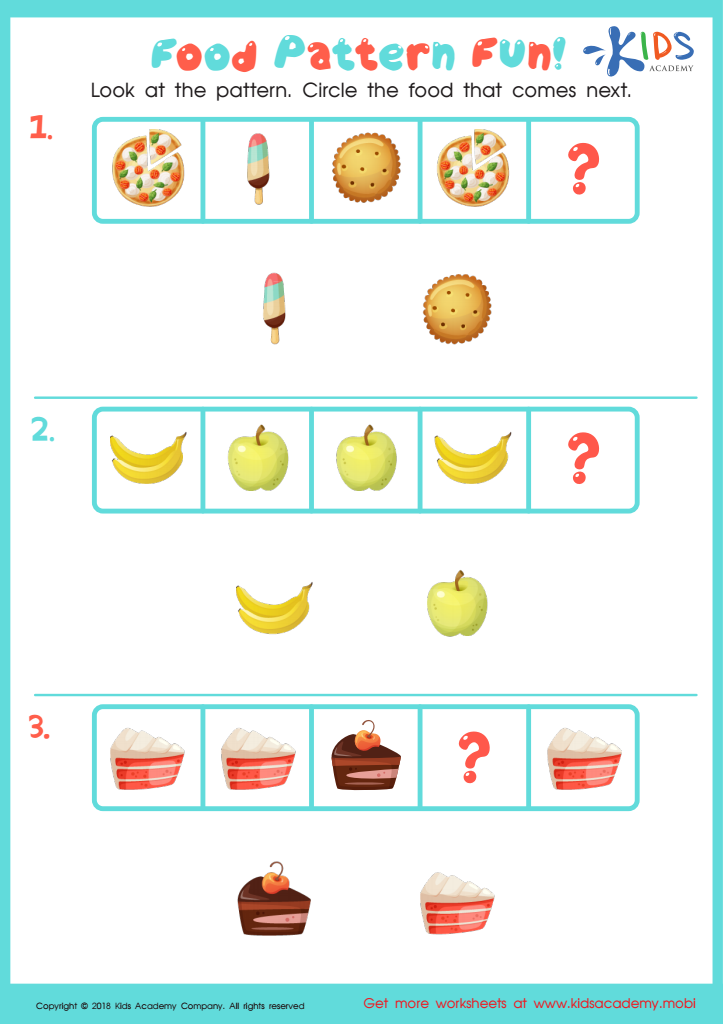
Food Pattern Fun Worksheet
 Assign to My Students
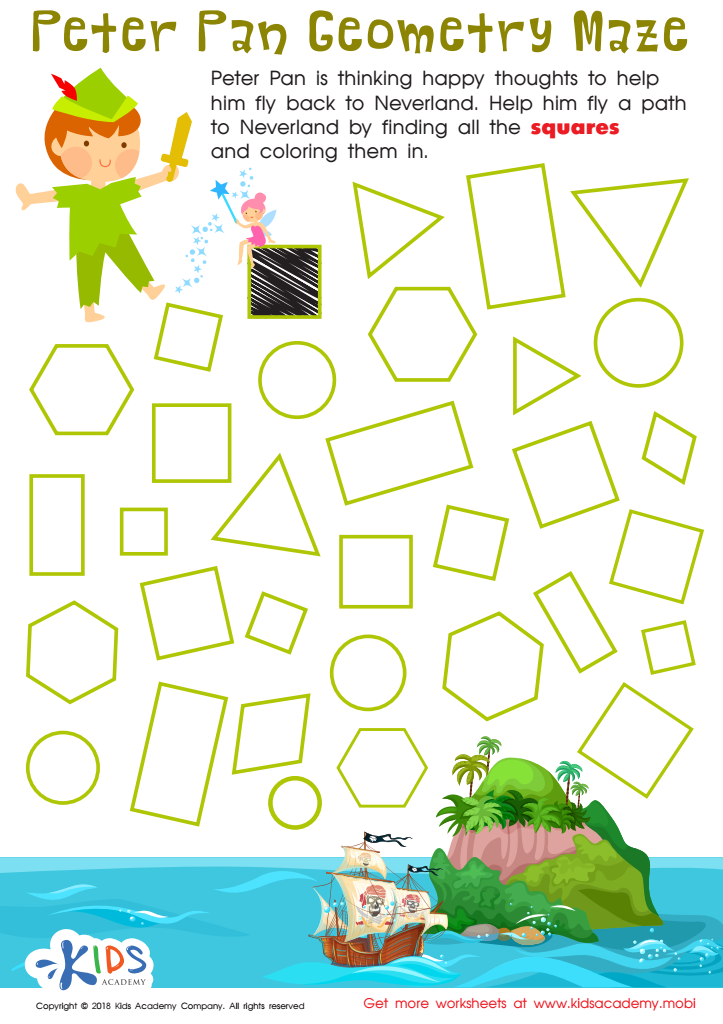
Peter Pan Worksheet
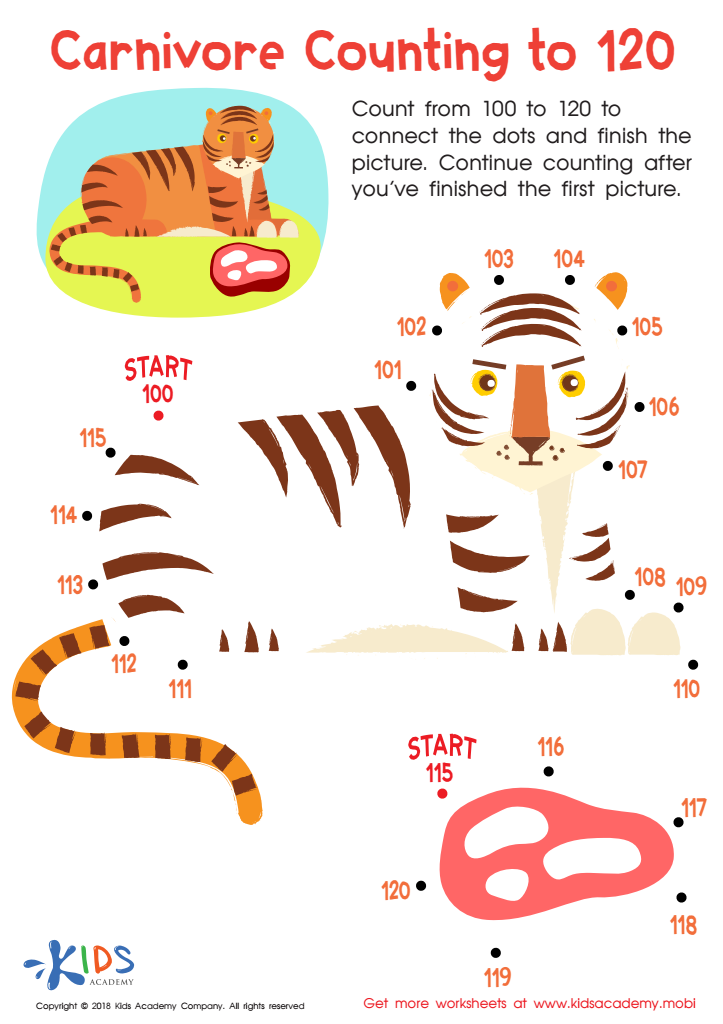
Carnivore Counting to 120 Worksheet
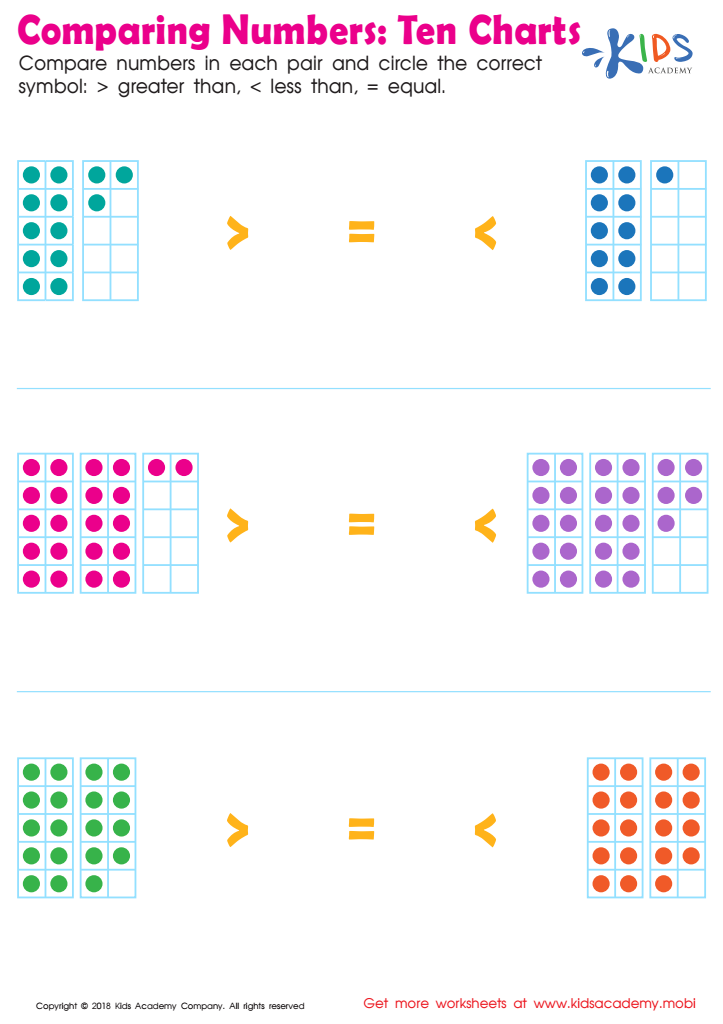
Ten Charts Worksheet








Understanding sequences is a fundamental mathematical concept that lays the groundwork for essential skills in early education and beyond. For children aged 4-6, mastering sequences helps them recognize patterns, an ability that enhances their critical thinking and problem-solving skills. When children learn to identify and create sequences—such as growing patterns of shapes or numbers—they develop not only their math abilities but also their cognitive skills.
Parents and teachers should care about this area of learning because sequences are foundational for future mathematical concepts, such as addition, subtraction, and even basic algebra. Moreover, understanding sequences promotes early literacy skills. It encourages children to recognize order and predict outcomes, which supports comprehension in reading as well.
Furthermore, engaging in sequence-related activities fosters collaborative skills when children work with peers, enhancing social development. By integrating playful activities like sorting games or rhythmic clapping sequences, educators and parents can make this learning process enjoyable, instilling a positive attitude toward math early on.
Ultimately, prioritizing understanding sequences in young learners equips them with essential tools for academic success and lifelong learning. It nurtures both their innate curiosity and their ability to make sense of the world around them through pattern recognition.








