
Animal identification Normal Reading Worksheets for Ages 4-6
3 filtered results
Difficulty Level
Grade
Age
-
From - To
Subject
Activity
Standards
Explore our engaging Animal Identification Reading Worksheets designed for children ages 4-6. These fun-filled, educational worksheets help young learners recognize and name various animals while boosting their reading skills. Each vibrant, kid-friendly illustration entices children to practice identifying animals and sounding out their names. Perfect for early readers, these activities blend learning with play, promoting literacy and curiosity about the animal world. Ideal for both classroom and home use, our worksheets provide an excellent resource for parents and educators striving to build foundational reading skills. Give your child a head start in learning with our captivating Animal Identification Reading Worksheets!
Favorites
With answer key
Interactive
Skunks Worksheet
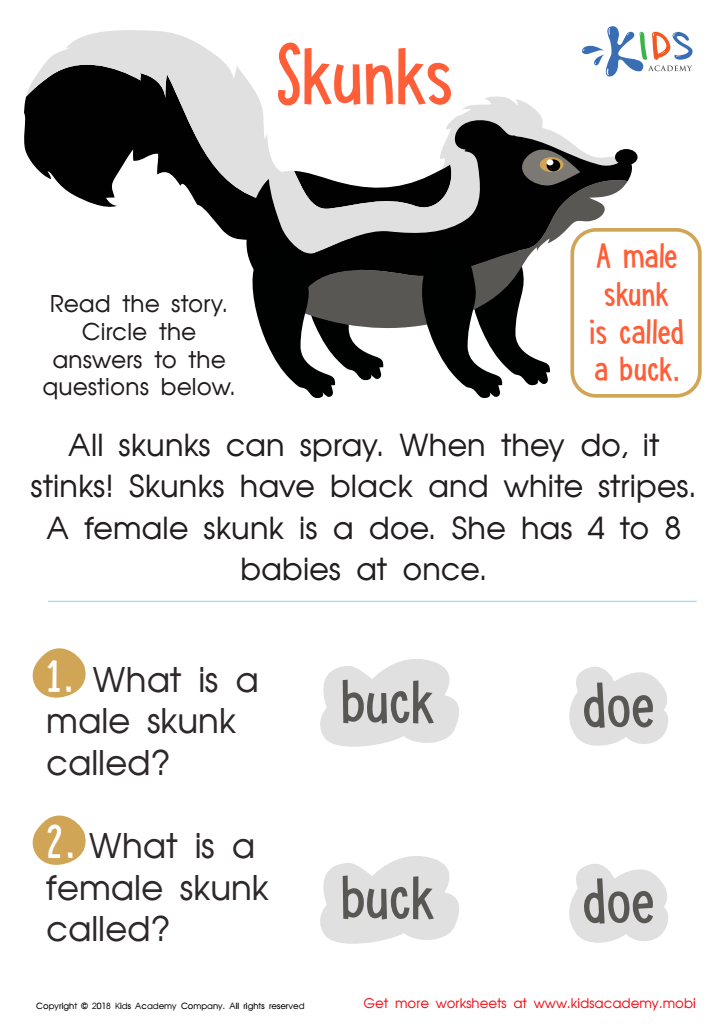
Kids can learn fascinating information about a beloved and smelly animal with this fun worksheet. They'll read articles, texts, and look at an accompanying picture while reading. Captions and sidebars can give extra details. Finally, answer the given questions by selecting the correct response. Reading is a fun and informative way to gain knowledge!
 Assign to My Students
Skunks Worksheet
Worksheet
What Am I? Worksheet
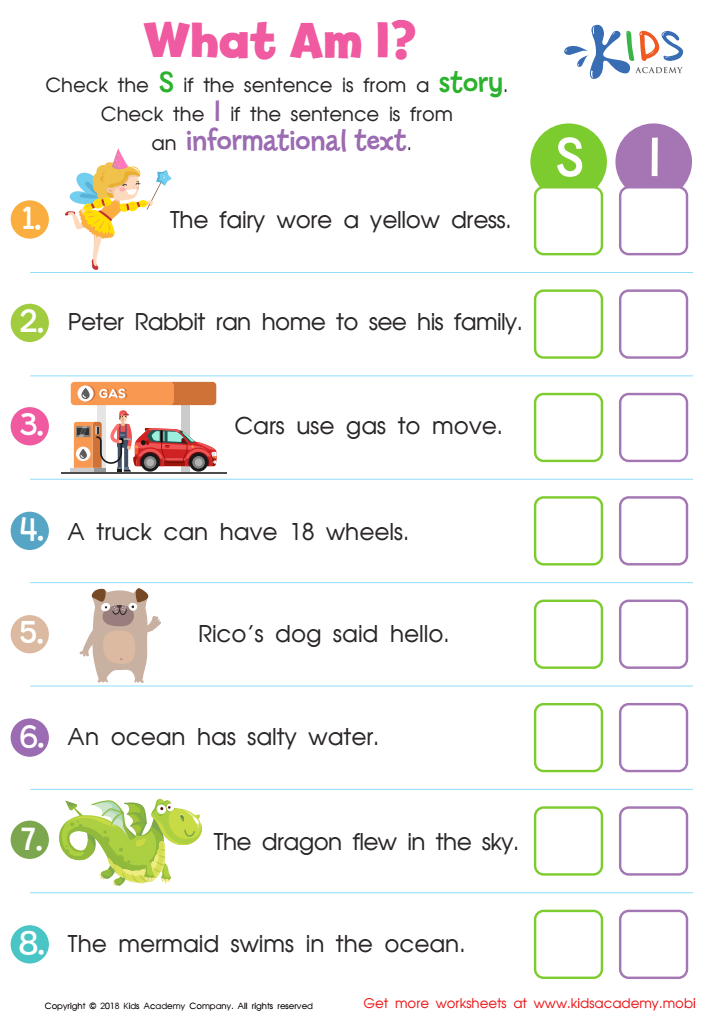
This worksheet assesses students' ability to differentiate between stories and texts they read for facts. Students learn to distinguish between reading for pleasure and reading for information. It includes statements from both a story and an informational text, and students must decide what type of text it is.
What Am I? Worksheet
Worksheet
Dogs and Wolves Worksheet
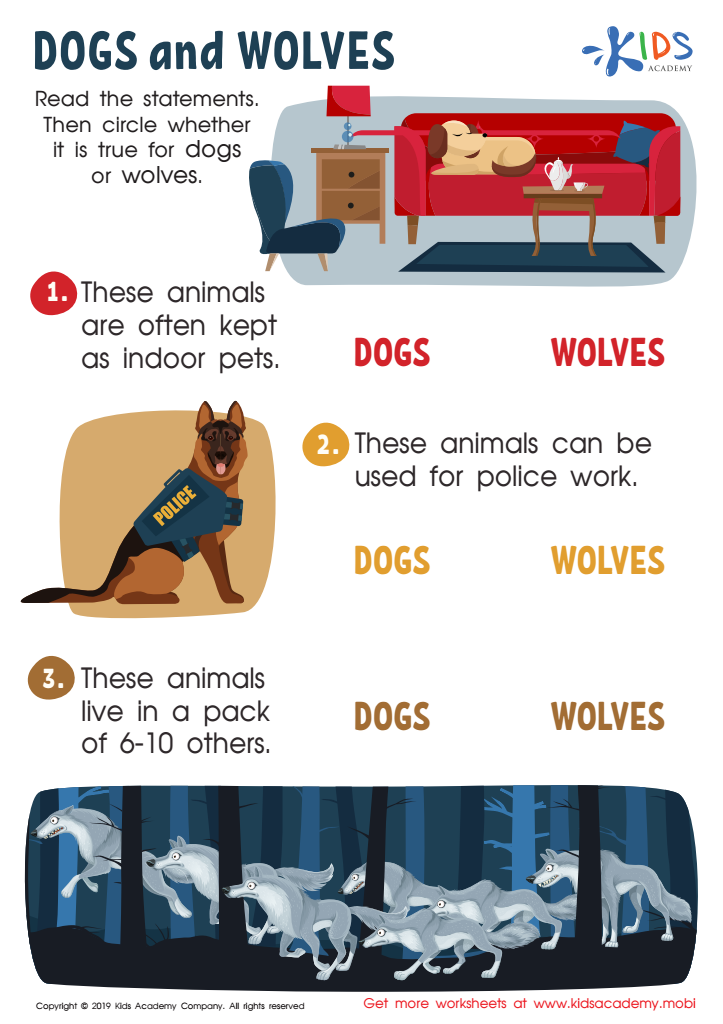
Kids love dogs and wolves, so engaging them with text about them is key. This free, downloadable worksheet allows kids to read statements about dogs and wolves and use picture clues and prior knowledge to decide if the statements are true or false, strengthening their reading comprehension.
Dogs and Wolves Worksheet
Worksheet
Join Kids Academy for Free
Who is primarily going to use this learning content?








Animal identification during normal reading for children aged 4-6 is crucial for several reasons. Firstly, it plays a significant role in cognitive development. As children identify and learn the names and characteristics of different animals, they enhance their memory, attention to detail, and categorization skills, which are fundamental in early learning.
Secondly, it boosts language development. Encountering animal names and descriptions enhances vocabulary and comprehension abilities. Conversations about animals encourage children to use new words, ask questions, and build language fluency.
Additionally, it's essential for nurturing empathy and environmental awareness from a young age. When children learn about diverse animals, their habitats, and behaviors, they start appreciating the natural world and develop a sense of responsibility toward conserving it.
Moreover, joyful and engaging activities revolving around animals can foster a love for reading. Stories and books that include animals capture children's interest, making the reading experience enjoyable, which is critical in forming positive reading habits early on.
Lastly, animal identification broadens children's general knowledge and curiosity about the world, laying a foundation for scientific thinking. Parents and teachers should care about this aspect as it supports holistic early childhood education, marrying language skills with curiosity, compassion, and environmental consciousness.








