Logical thinking Normal Reading Worksheets for Ages 4-6
4 filtered results
-
From - To
Unlock your child's potential with our "Logical Thinking Normal Reading Worksheets for Ages 4-6." Our expertly designed activities blend fun and learning, aiming to cultivate critical thinking and reading skills in young minds. Your kids will embark on exciting adventures, solve puzzles, and explore stories crafted to engage and challenge them. These worksheets foster comprehension, enhance vocabulary, and improve cognitive functions, setting a strong foundation for future academic success. Give your child a head start with materials that make learning logical thinking both entertaining and rewarding! Perfect for home or classroom usage, our resources support early educational growth.
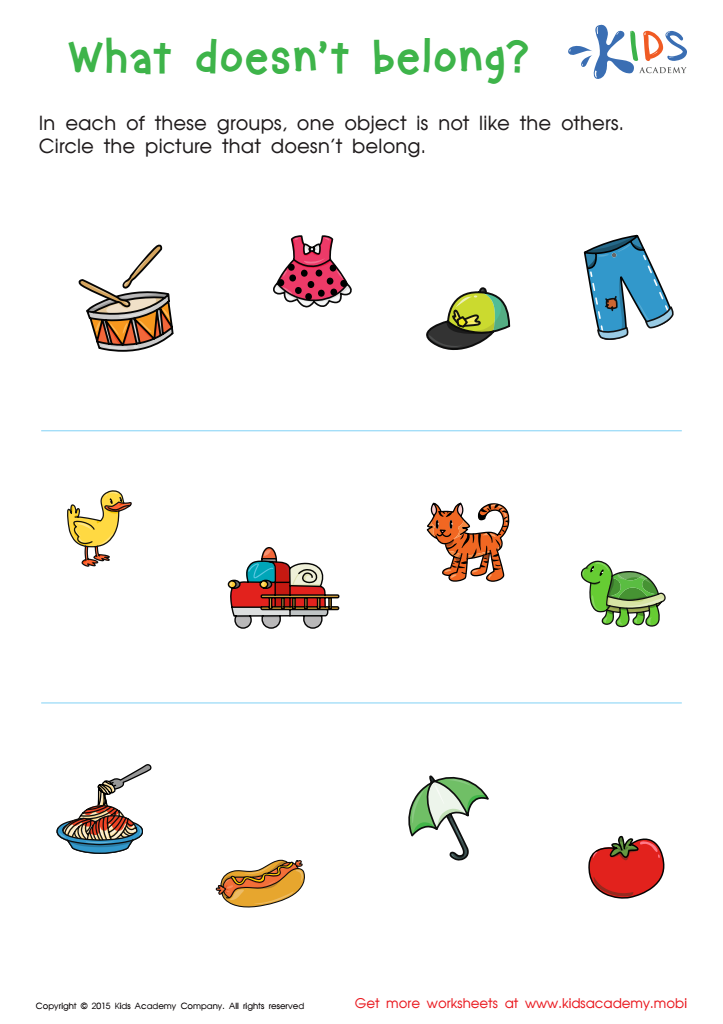
First Words: What Doesn't Belong Worksheet
 Assign to My Students
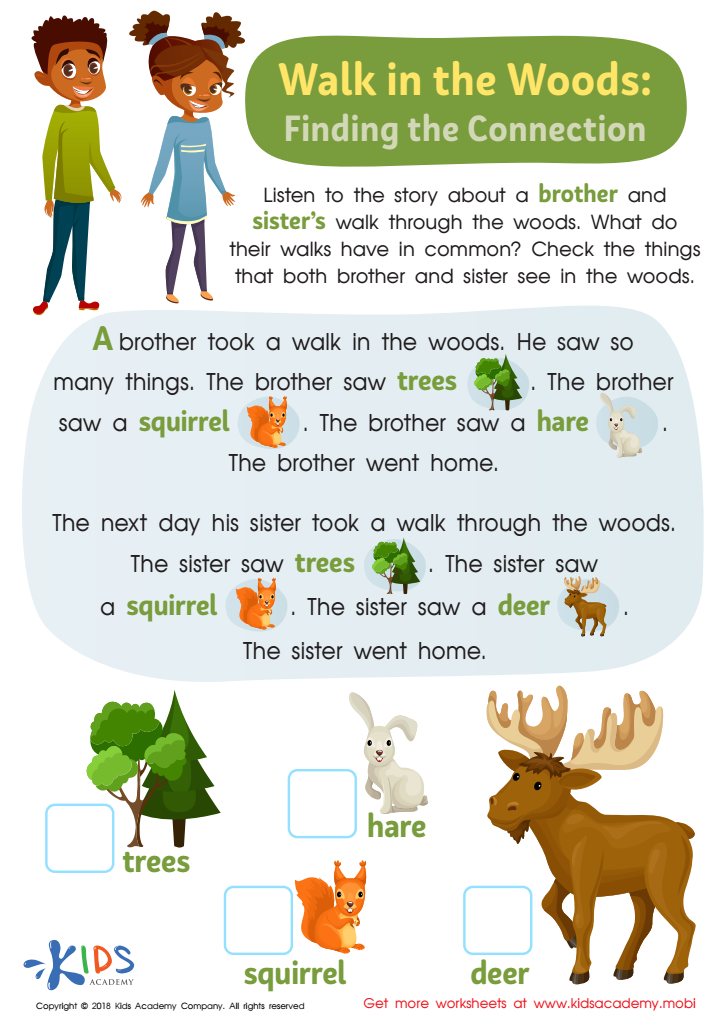
Walk In the Woods: Finding Connections Worksheet
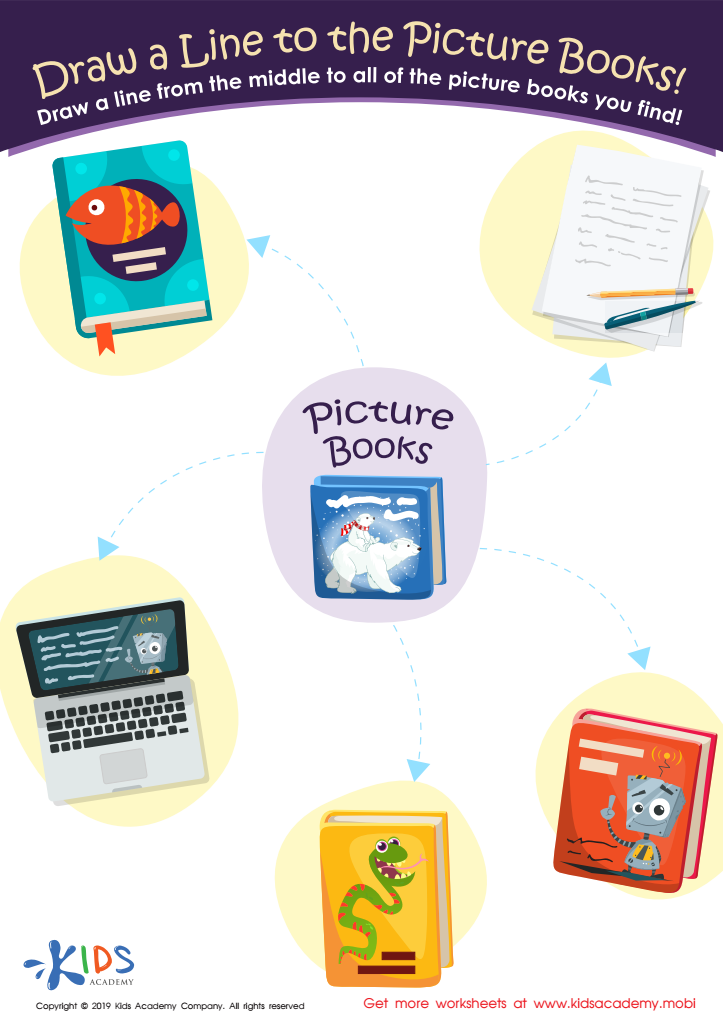
Draw a Line to the Picture Books Worksheet
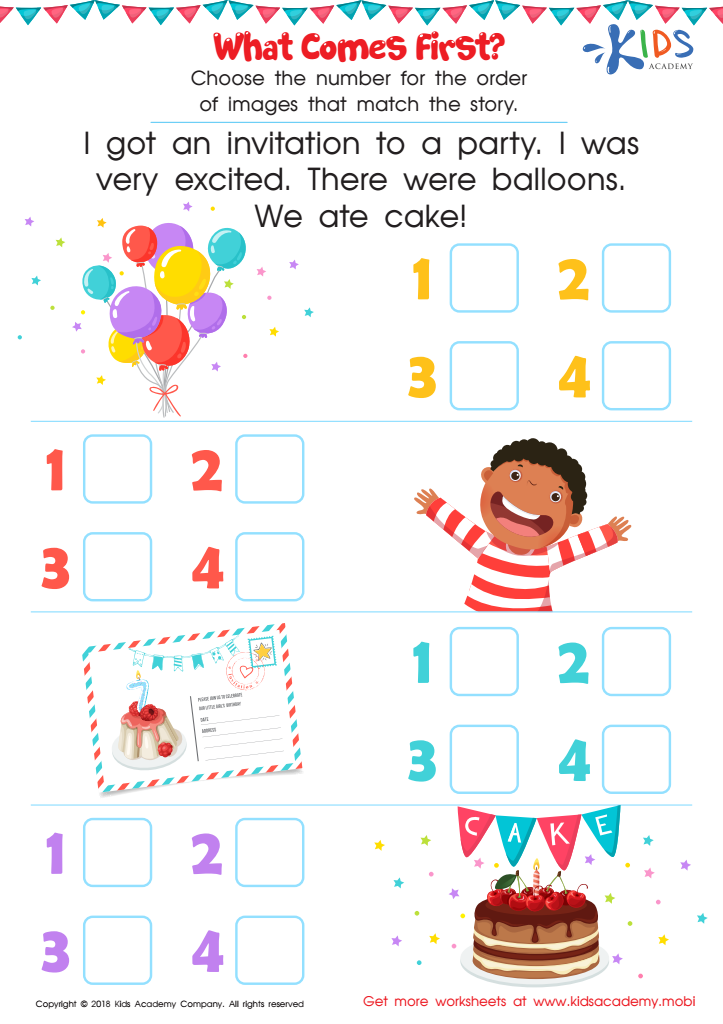
What Comes First Worksheet








Logical thinking and normal reading development are foundational skills that significantly impact a child's overall academic success and cognitive growth. For children aged 4-6, these skills establish the groundwork for more complex learning and problem-solving abilities essential throughout their academic journey and beyond.
Logical thinking at this age involves recognizing patterns, understanding cause-and-effect relationships, and developing problem-solving abilities. These skills boost a child's capacity to make connections between different concepts, fostering critical thinking and independent learning. As children learn to approach problems methodically and think logically, they build resilience and confidence in facing new challenges.
Simultaneously, normal reading development is crucial. Early reading skills, including phonemic awareness, vocabulary development, and comprehension, are predictive of future literacy and academic success. Reading not only enhances language skills but also ignites imagination, improves concentration, and fosters a lifelong love for learning. For 4-6-year-olds, the act of reading and being read to helps with social-emotional development by expanding their understanding of the world and different perspectives.
Parents and teachers play a pivotal role in supporting these skills through engaging activities, stimulating environments, and positive reinforcement. Investing time in nurturing logical thinking and reading skills during these formative years can lead to far-reaching benefits, contributing to well-rounded, intelligent, and capable individuals.








