Science vocabulary expansion Normal Science Worksheets for Ages 4-6
3 filtered results
-
From - To
Enhance your child's science vocabulary with our engaging Normal Science Worksheets, designed specifically for ages 4-6. These worksheets combine fun activities with essential science concepts, encouraging young learners to explore the world around them. Each activity is crafted to expand vocabulary, making learning enjoyable and interactive. From identifying simple scientific terms to discovering the wonders of nature, children will build a strong foundation in language and comprehension. Perfect for classrooms or at-home learning, our worksheets foster curiosity and creativity while reinforcing critical thinking skills. Download our Science Vocabulary Expansion worksheets today and ignite your child's passion for science!
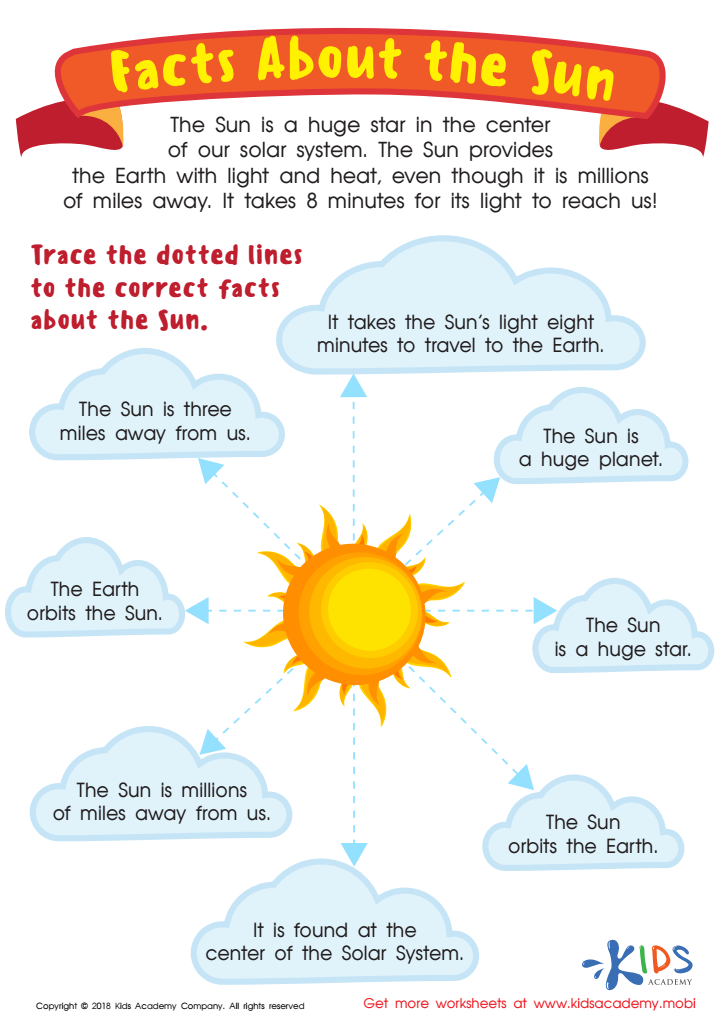
Facts About the Sun Worksheet
 Assign to My Students
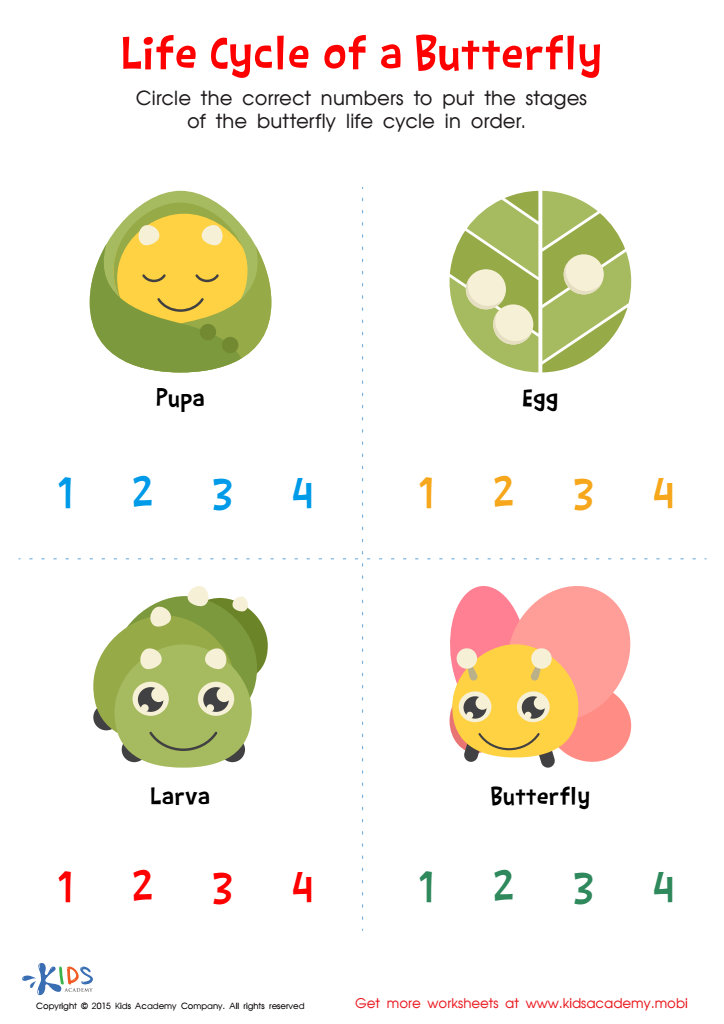
Life Cycle of Butterfly Printable
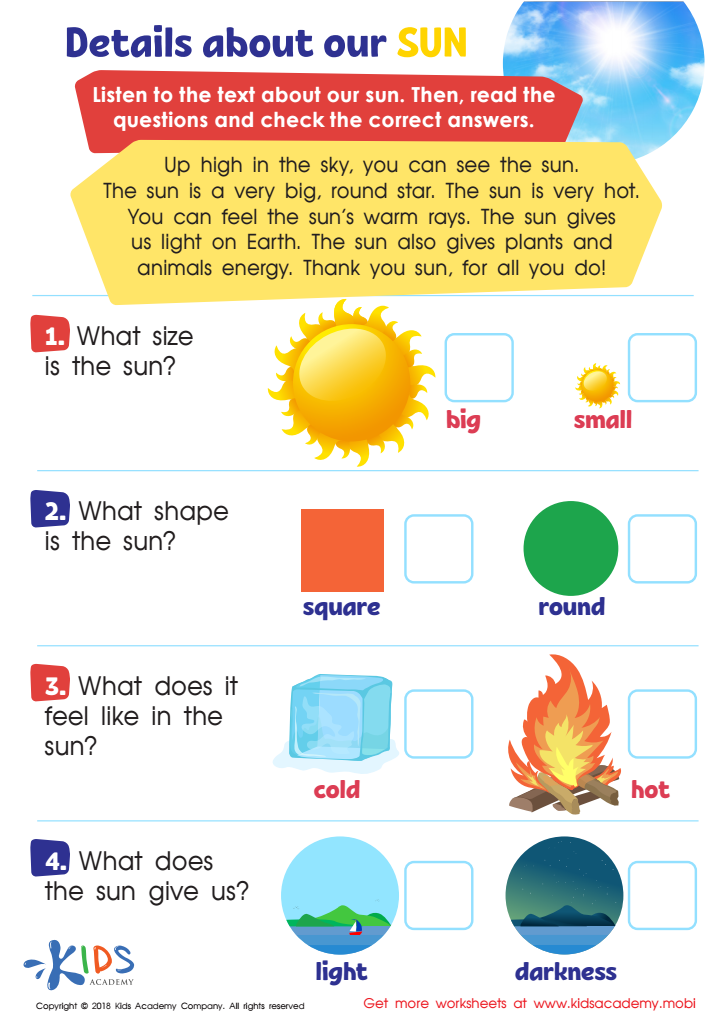
Details About Our Sun Worksheet








Parents and teachers should prioritize the expansion of science vocabulary for children aged 4-6 because it lays a crucial foundation for critical thinking and cognitive development. At this age, curiosity is at its peak, and introducing children to scientific terms helps them articulate their observations and understand the world around them. Familiarity with science vocabulary fosters effective communication, enabling young learners to express ideas, ask questions, and engage in discussions.
Moreover, early exposure to science vocabulary helps build a strong conceptual framework. When children comprehend key terms, they are better equipped to grasp complex scientific concepts later in life. This foundation also cultivates a positive attitude toward science, encouraging lifelong learning and exploration.
Additionally, a rich vocabulary can enhance reading and literacy skills. Engaging with science-related texts creates opportunities for vocabulary enrichment, comprehension, and critical inquiry.
Importantly, this vocabulary expansion can help close achievement gaps, promoting equity in science education. By nurturing scientific literacy from a young age, we empower children to become informed thinkers and problem solvers, equipping them to tackle future challenges and participate meaningfully in their communities. Encouraging science vocabulary expansion sets children on a path to success in both academia and everyday life.







