Word Recognition Normal Consonant Digraphs Worksheets for Ages 4-7
5 filtered results
-
From - To
Boost your child's reading skills with our engaging Word Recognition Normal Consonant Digraphs Worksheets for ages 4-7! Designed to enhance early literacy, these worksheets introduce young learners to consonant digraphs—two letters that create one sound. With fun exercises and colorful illustrations, children will practice recognizing and reading words that contain these digraphs. Perfect for preschool and kindergarten classrooms or home learning, our resources promote phonemic awareness and improve vocabulary. Empower your little ones on their reading journey and help them gain confidence in their abilities with our interactive worksheets. Experience the joy of learning through playful and educational activities today!
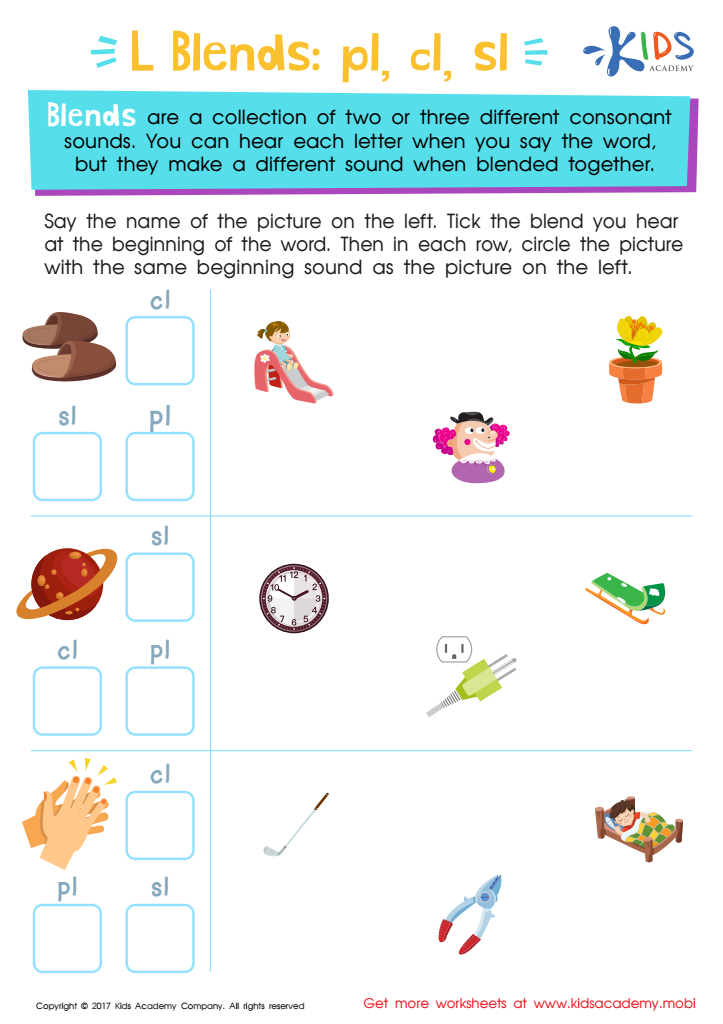
L Blends: "Pl", "Cl" and "Sl" Printable
 Assign to My Students
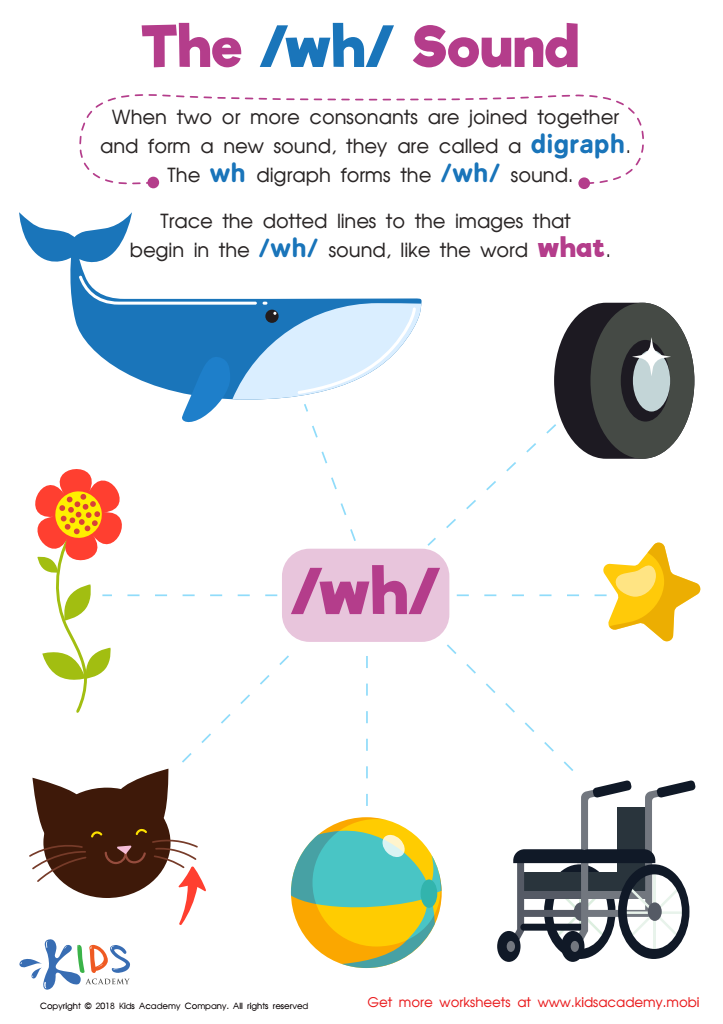
The /wh/ Sound Worksheet
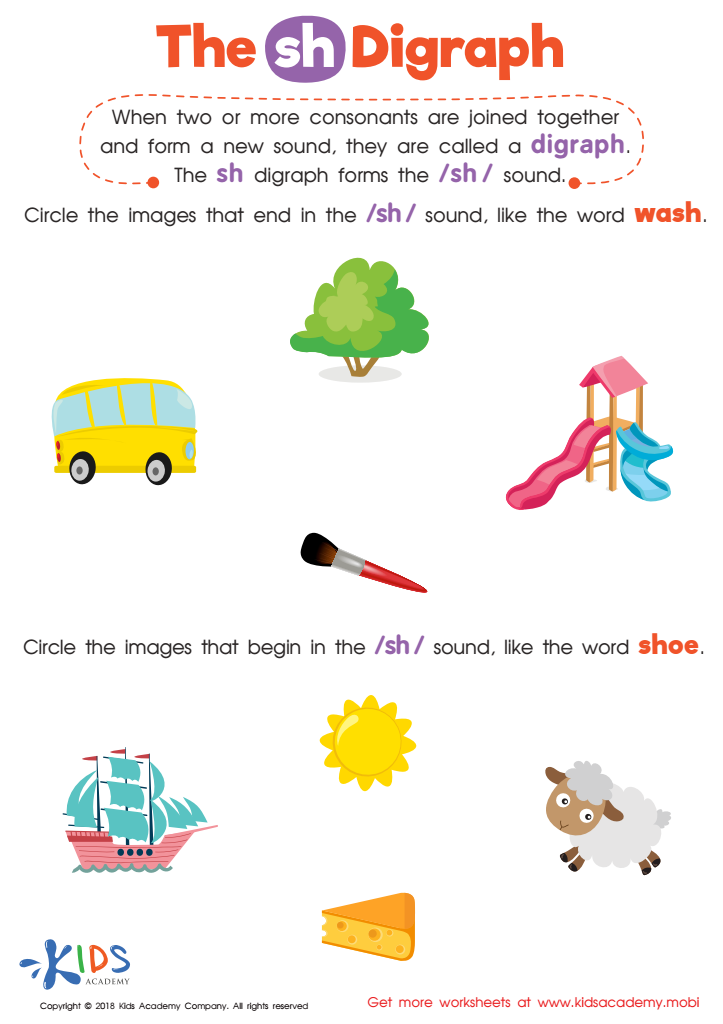
The SH Digraph Worksheet
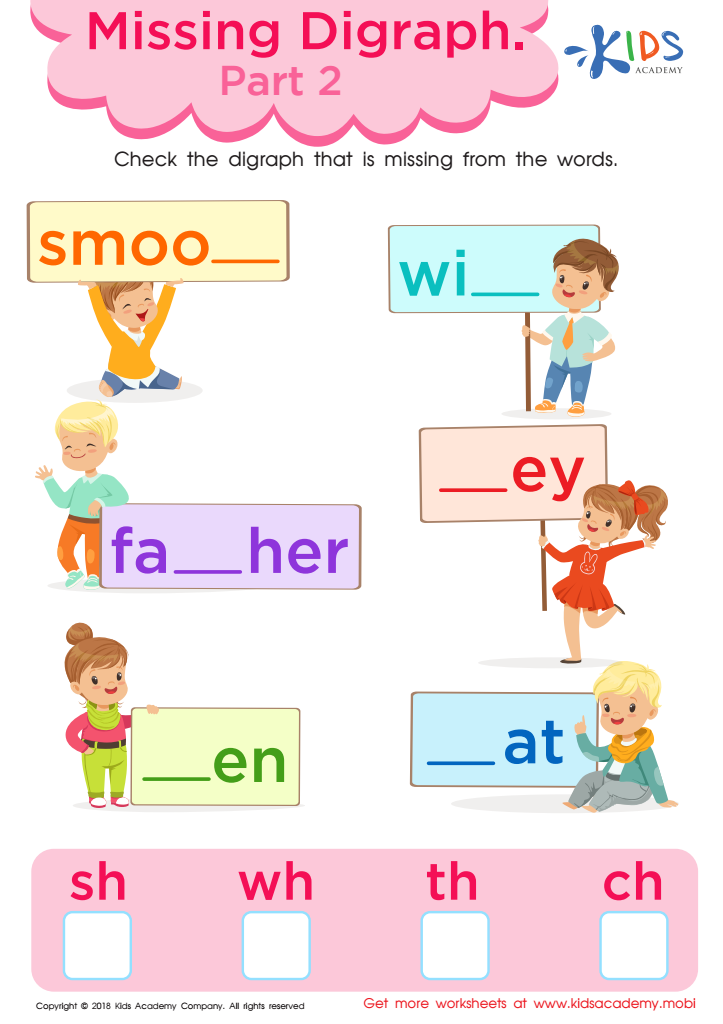
Missing Digraph: Part 2 Worksheet
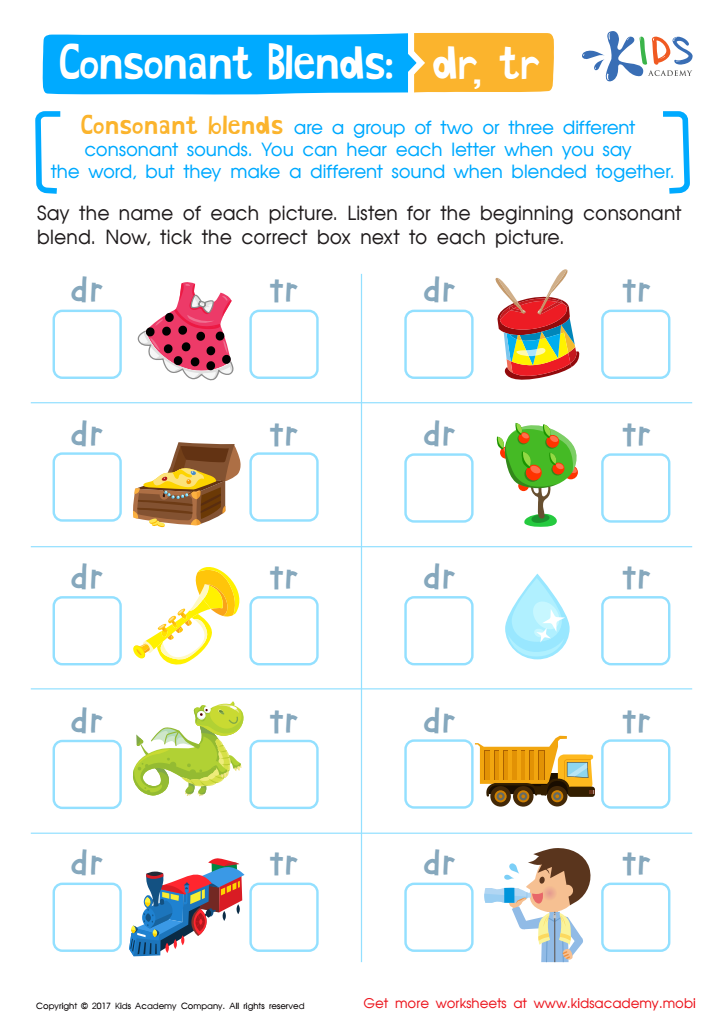
Consonant Blends: "Dr" and "Tr" Printable


Word recognition, specifically concerning normal consonant digraphs, is a critical aspect of literacy development for children aged 4-7. Consonant digraphs, such as "sh" in "shoe" or "ch" in "chair," represent two letters that combine to create a single sound. Understanding these digraphs is essential for young learners as it lays the groundwork for effective reading and writing skills.
Parents and teachers should care about this aspect of literacy because successful recognition of words and sounds boosts children's confidence and motivation to read. Early mastery of digraphs supports phonemic awareness, enabling children to decode unfamiliar words more easily, which is crucial as texts become more complex.
Furthermore, early engagement with digraphs enriches vocabulary and comprehension skills, which are foundational for lifelong learning. By focusing on this element of literacy, educators and caregivers can create a supportive environment that nurtures a child's linguistic development, allowing them to participate fully in reading activities.
Ultimately, promoting awareness and understanding of normal consonant digraphs fosters essential language skills, setting the stage for academic success and a love for reading that can last a lifetime.