Normal Ending Sounds Worksheets for Ages 4-7
4 filtered results
-
From - To
Enhance your child's phonemic awareness with our engaging Normal Ending Sounds Worksheets, specially designed for children ages 4-7. These interactive resources support young learners in identifying and practicing ending sounds through fun-filled activities that captivate their attention. Each worksheet features colorful illustrations and easy-to-follow instructions, making learning enjoyable and effective. Your little ones will strengthen their vocabulary, improve pronunciation, and boost reading skills by identifying sounds in words. Tailored to meet the needs of early learners, these worksheets are an invaluable tool for parents and educators alike. Download now and watch your child's confidence soar as they explore the world of sounds!
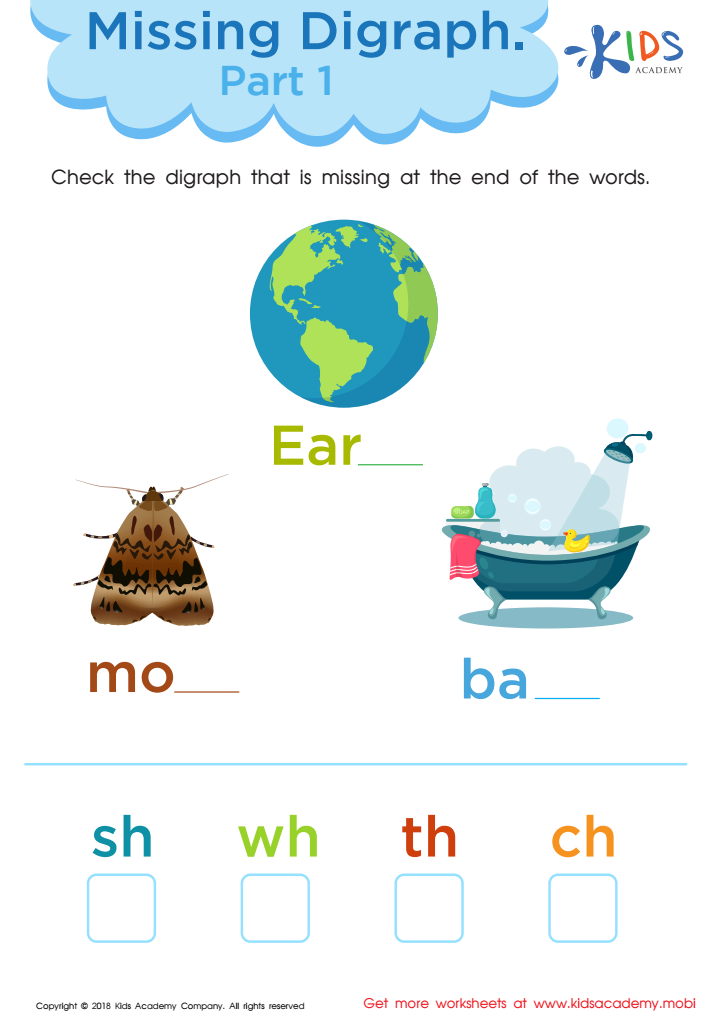
Missing Digraph: Part 1 Worksheet
 Assign to My Students
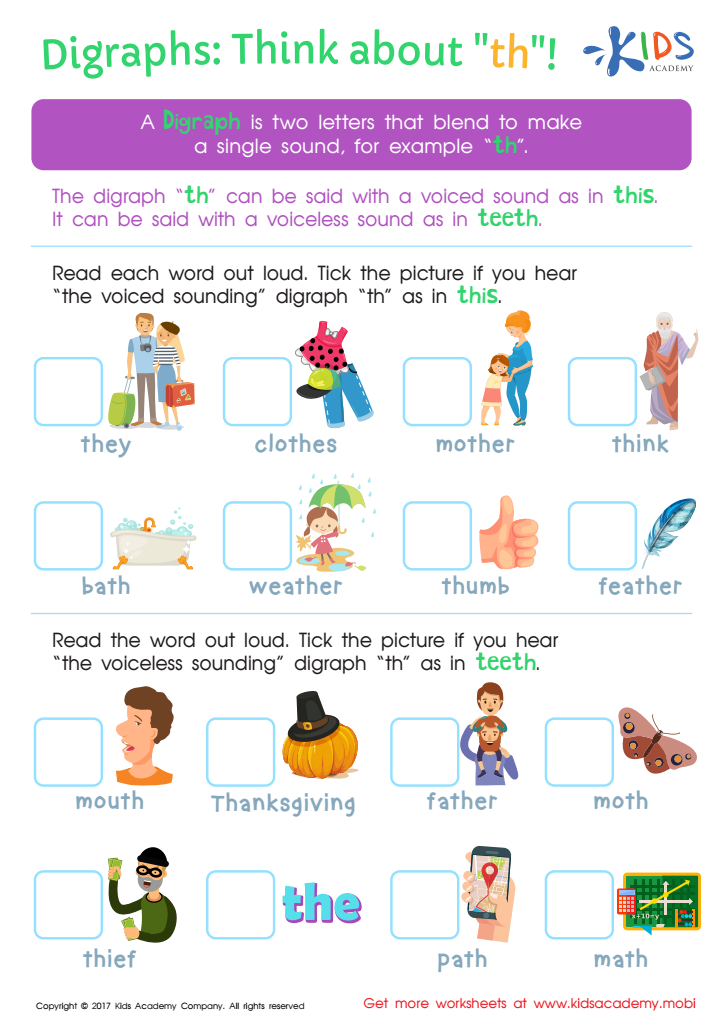
Digraphs: Think About "th" Worksheet
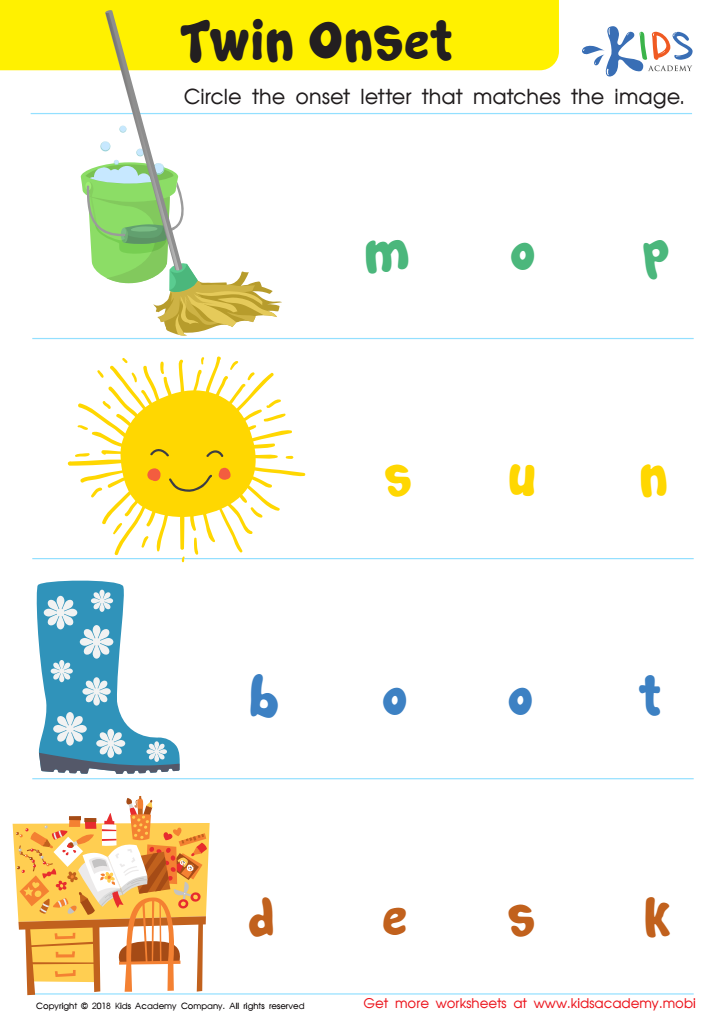
Twin Onset Worksheet
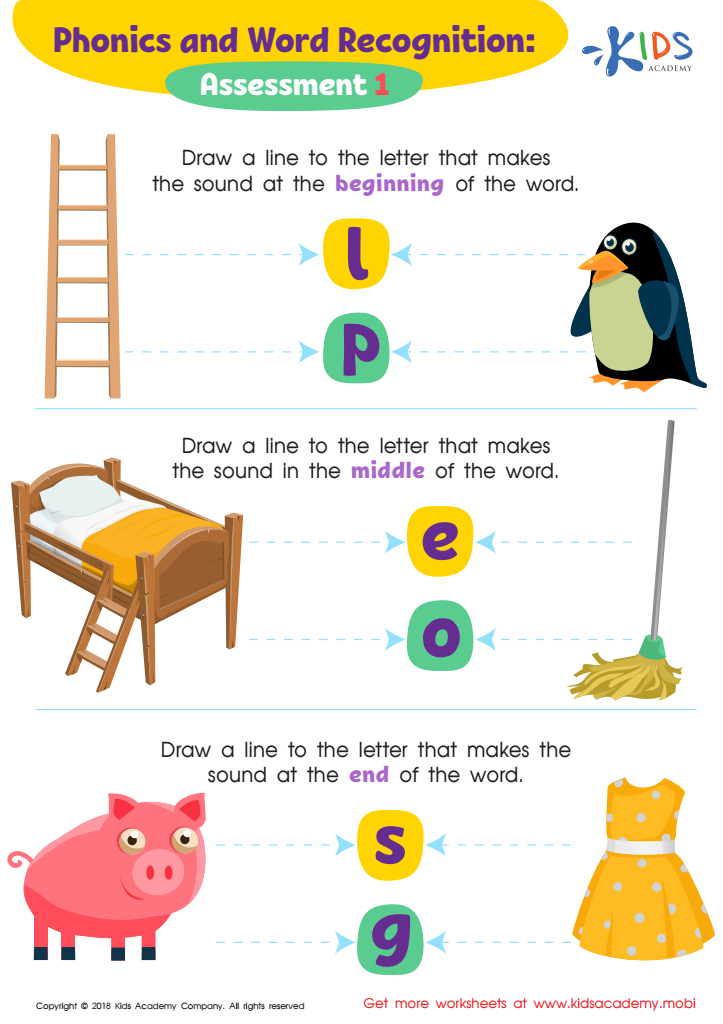
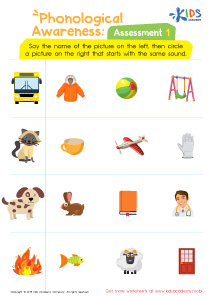
Phonics and Word Recognition: Assessment 1 ELA Worksheet






Understanding normal ending sounds is crucial for children's language development, especially for ages 4-7. This stage of learning lays the foundation for literacy skills that are essential for reading and writing. When parents and teachers focus on ending sounds, they help children recognize patterns in words, which enhances their phonemic awareness—the ability to hear, identify, and manipulate sounds in spoken language.
Ending sounds contribute significantly to children's vocabulary acquisition and reading proficiency. For instance, recognizing that many words share similar ending sounds aids in decoding unfamiliar words, making it easier for children to read independently. Additionally, mastering these sounds helps with spelling, as children learn the connection between pronunciation and written language.
Furthermore, engaging in activities that highlight ending sounds can make learning fun and interactive, fostering a love for language and learning in young children. It cultivates listening skills and encourages children to pay attention to word structures, leading to improved language skills across the board. Therefore, parents and educators should prioritize ending sounds as part of their literacy instruction to ensure children build strong foundational skills for their future academic success.