Phonics understanding Normal Alphabet Worksheets for Ages 4-7
3 filtered results
-
From - To
Explore our phonics understanding normal alphabet worksheets designed specifically for children aged 4 to 7. These interactive and engaging worksheets provide essential practice for developing literacy skills by connecting sounds with letters. Kids can enhance their phonemic awareness through fun activities that encourage sound recognition, blending, and segmentation. Perfect for home or classroom use, our resources support early learning by making phonics exciting. Encourage confident readers and writers with these comprehensive, kid-friendly worksheets that cater to various learning styles. Get started on this essential literacy journey today and empower your child with foundational skills for reading success!
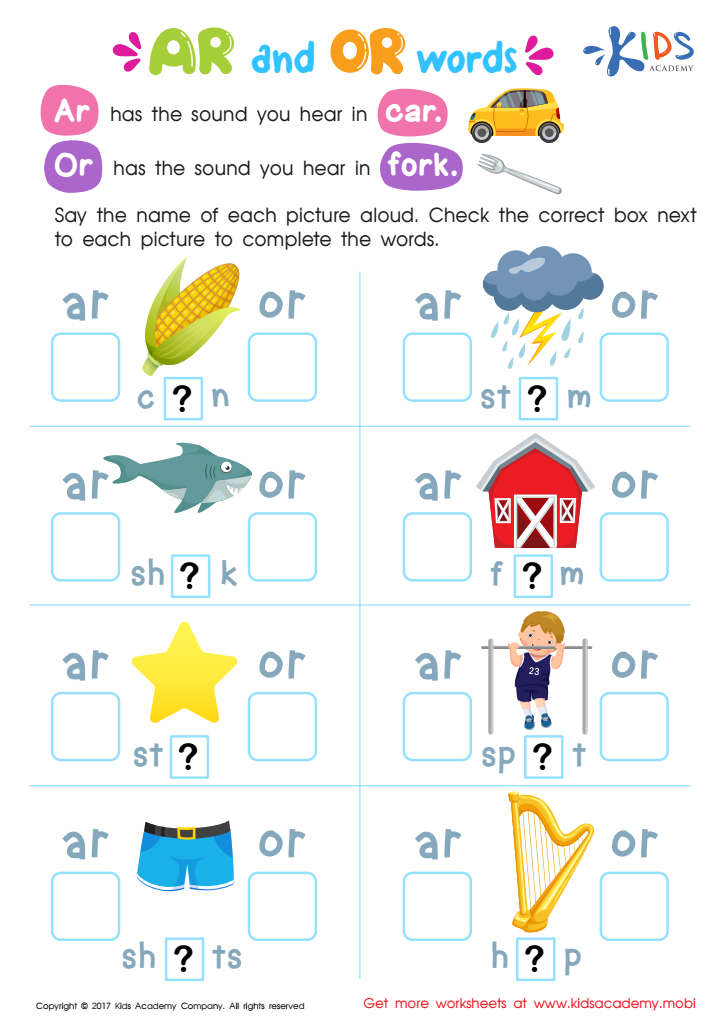
Ar and Or Words Phonics Worksheet
 Assign to My Students
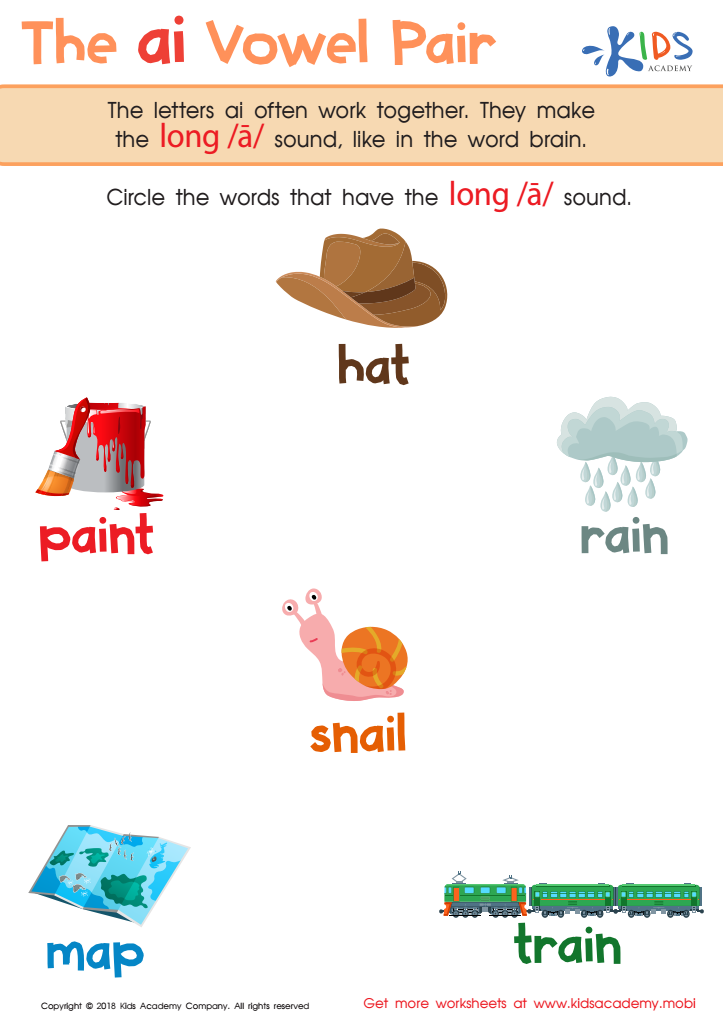
The AI Vowel Pair Worksheet
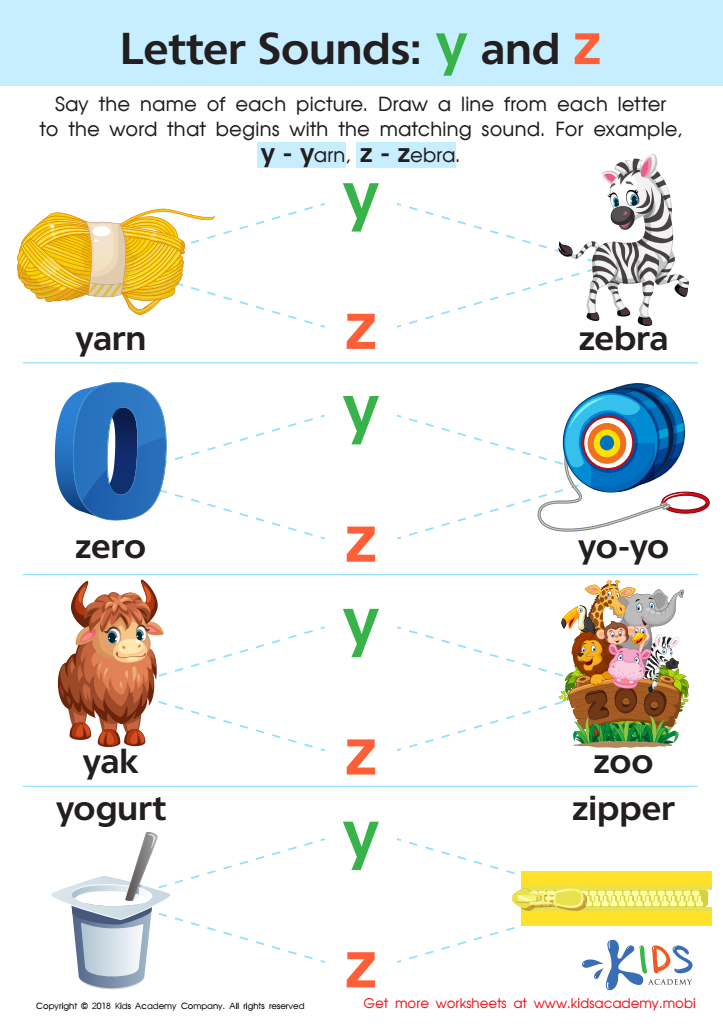
Letter Y and Z Sounds Worksheet







Understanding phonics is crucial for children aged 4-7 as it lays the foundation for reading and literacy development. Phonics teaches the relationship between sounds and their corresponding letters, enabling children to decode words independently. Fluent readers possess strong phonemic awareness, which is essential for successful reading comprehension.
Parents and teachers should prioritize phonics because it fosters confidence in emerging readers. When children can sound out words, they experience a sense of achievement, motivating them to explore books further. Early literacy skills acquired through phonics also support broader communication skills, equipping children to express themselves effectively.
Furthermore, a strong phonics understanding correlates with academic success. Research has shown that students with a solid grasp of phonics perform better in reading assessments and achieve higher overall academic performance. This is particularly important in an increasingly literacy-driven world.
In addition, early intervention through phonics instruction can help address learning difficulties before they become significant challenges. Parents and teachers play a critical role in reinforcing phonics at home and in the classroom, ensuring kids develop the necessary skills for lifelong literacy and learning. Thus, investing time in phonics understanding is essential for nurturing competent and confident young readers.







