Normal Phonics Worksheets for Ages 4-7 - Page 8
171 filtered results
-
From - To
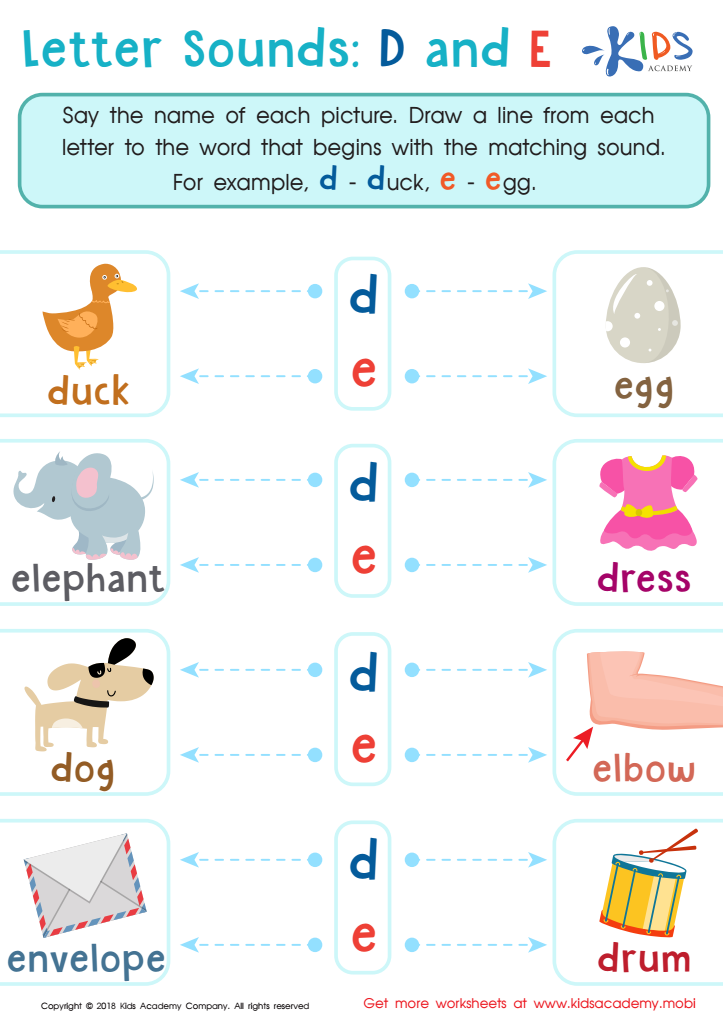
Letter D and E Sounds Worksheet
 Assign to My Students
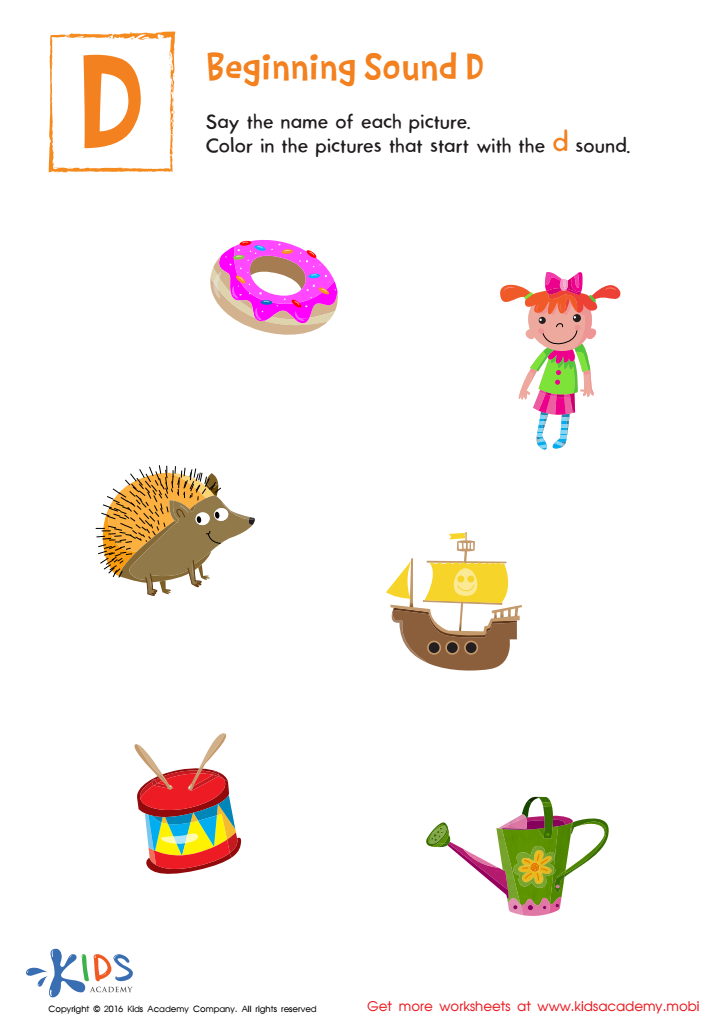
Beginning Sound D Worksheet
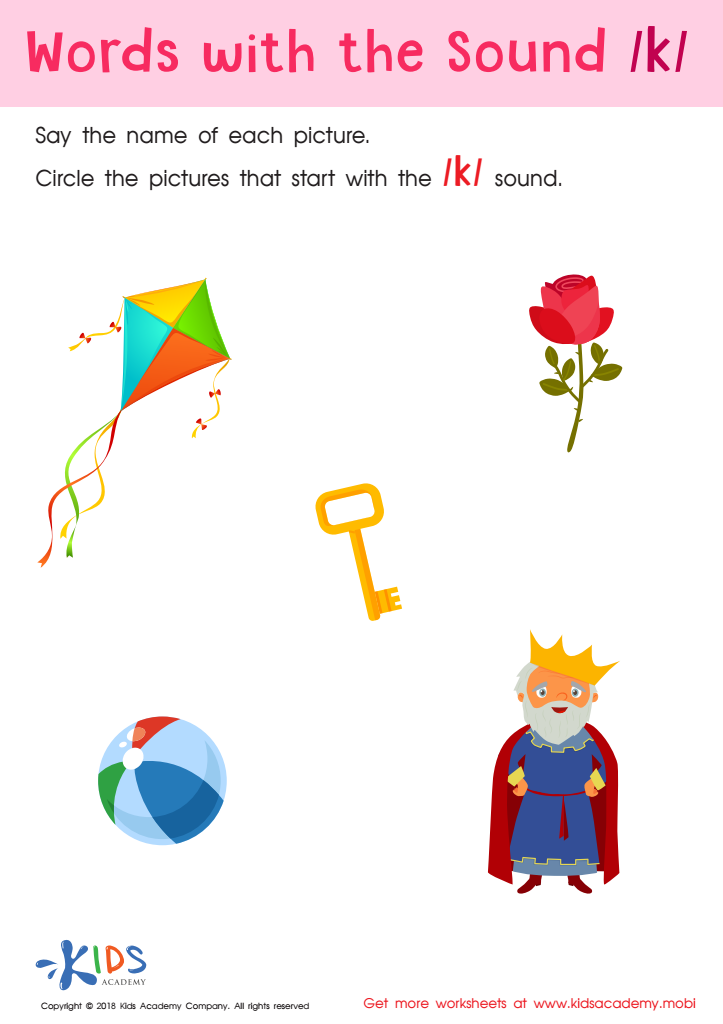
Words with sound k Reading Worksheet








Parents and teachers should prioritize Normal Phonics for children aged 4-7 because it lays the foundational skills for reading and writing, critical components of literacy. At this early stage, children are naturally curious and eager to learn about sounds and letters, making it an ideal time to introduce phonics.
Normal Phonics equips children with the ability to decode words, helping them recognize the relationship between letters and sounds. By mastering these skills, children gain confidence as readers, allowing them to engage with texts independently. This confidence not only promotes a love for reading but also enhances overall academic performance.
Additionally, effective phonics instruction can be particularly beneficial for struggling readers by providing systematic strategies that support their learning process. Early exposure to phonics also supports essential language development, enriching vocabulary and comprehension skills, which are crucial as children transition to more advanced literacy tasks.
In a world filled with printed material, understanding phonics empowers children to navigate and interpret their environment. Ultimately, investing time and resources into phonics education ensures that children are well-prepared for future learning and success, shaping them into skilled and confident communicators.







