Spelling practice Normal Phonics Worksheets for Ages 4-7 - Page 2
44 filtered results
-
From - To
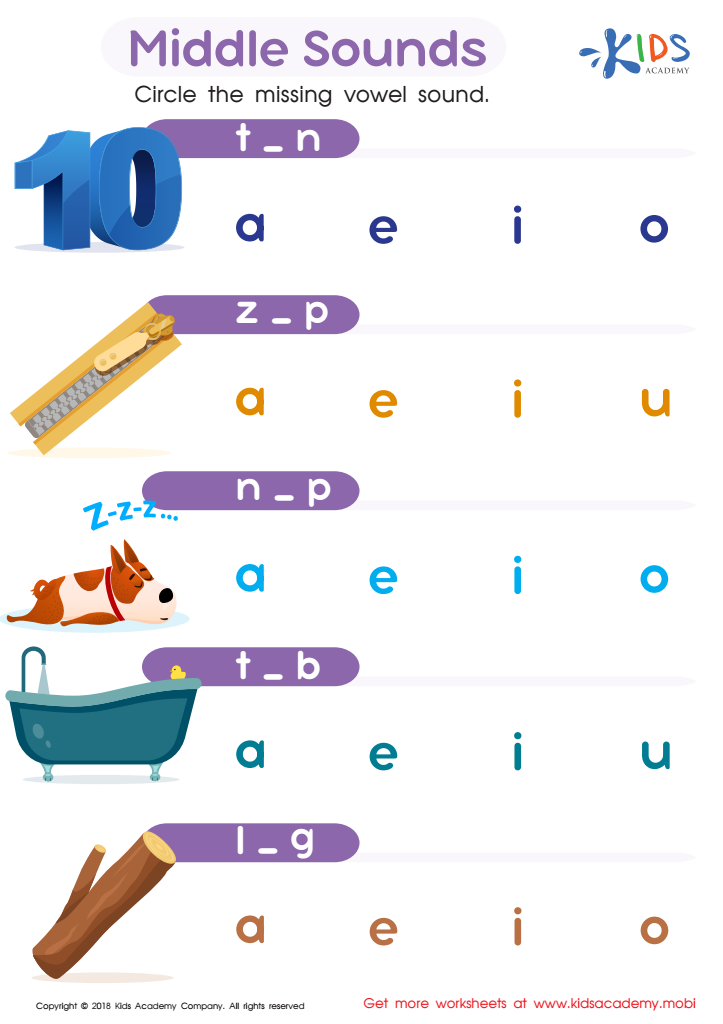
Middle Sounds Worksheet
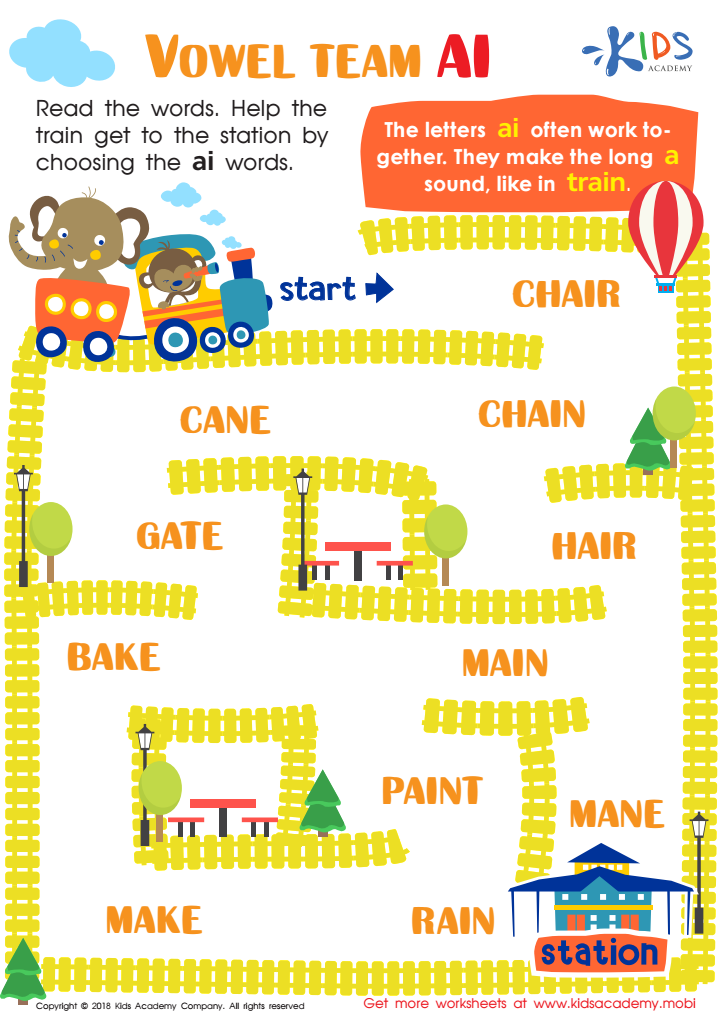
Vowel team ai Worksheet
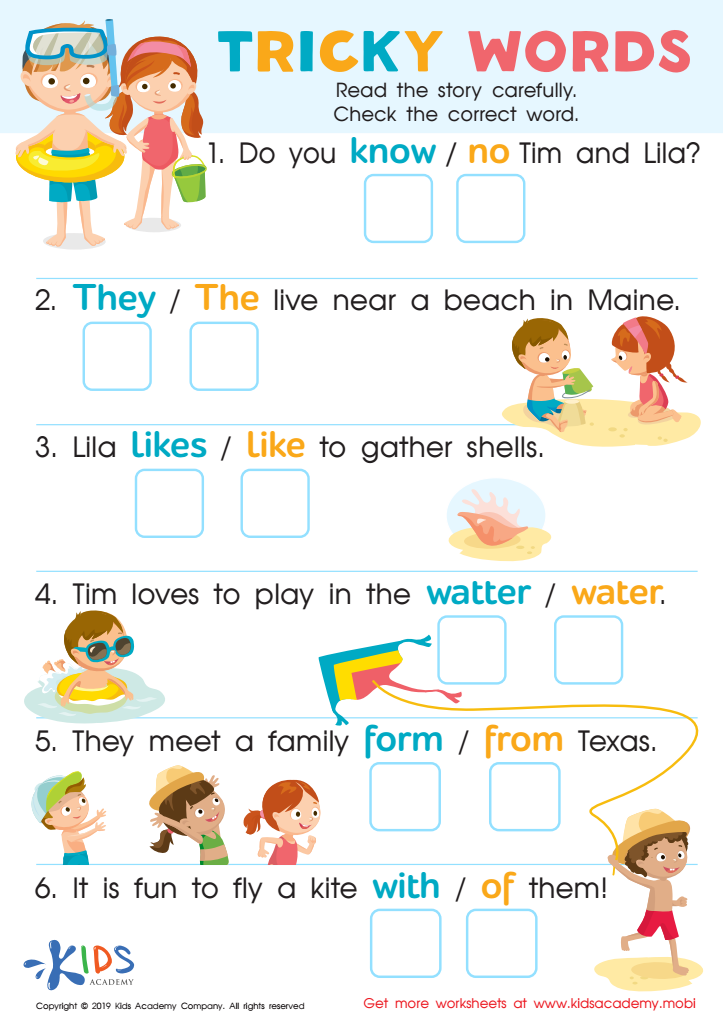
Tricky Words Worksheet
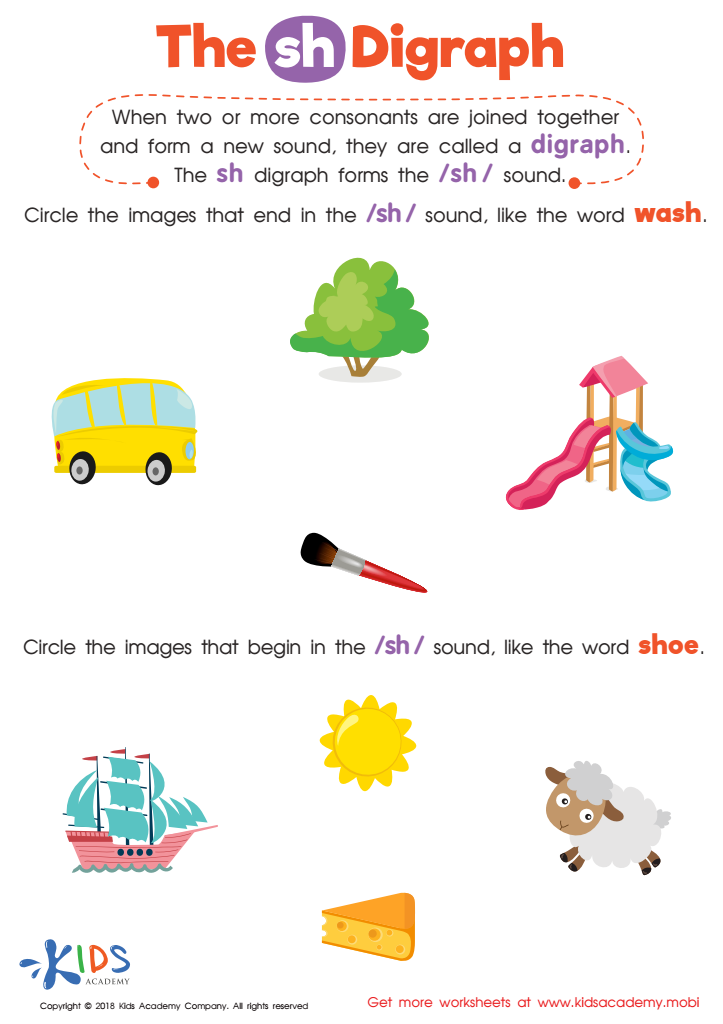
The SH Digraph Worksheet
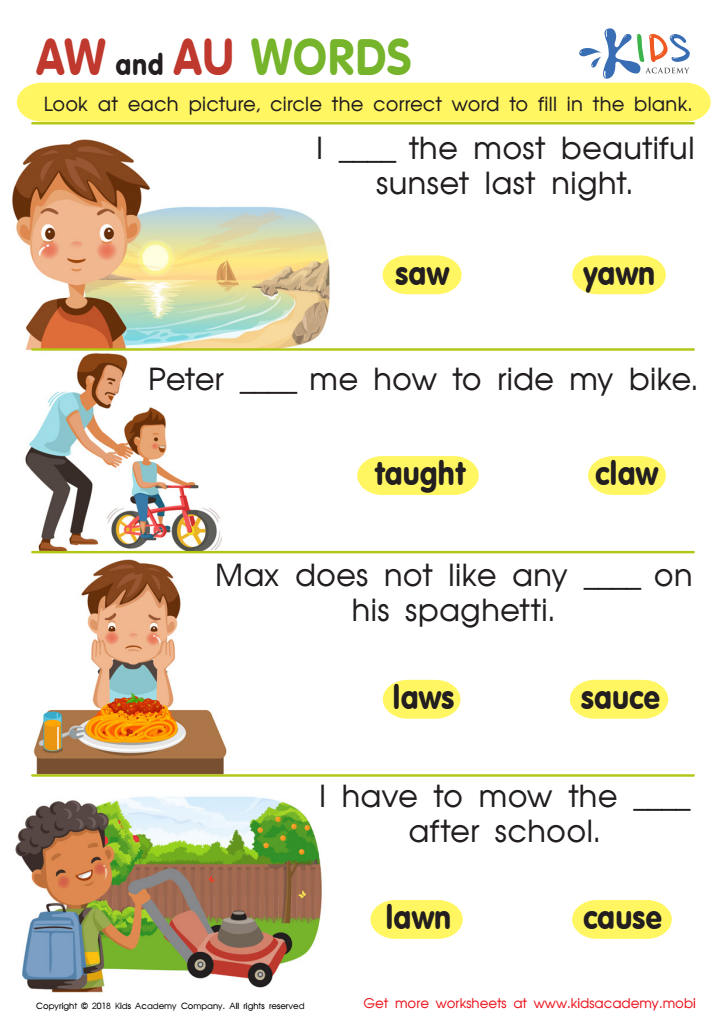
Reading: AW and AU Words Worksheet
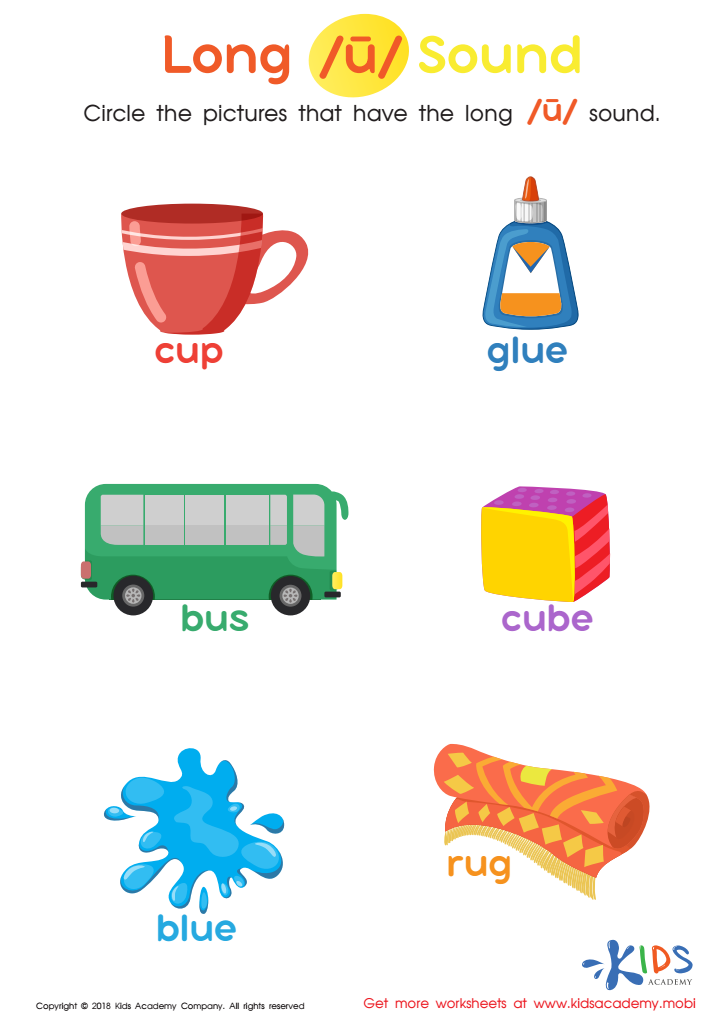
Long «u» Sound Worksheet
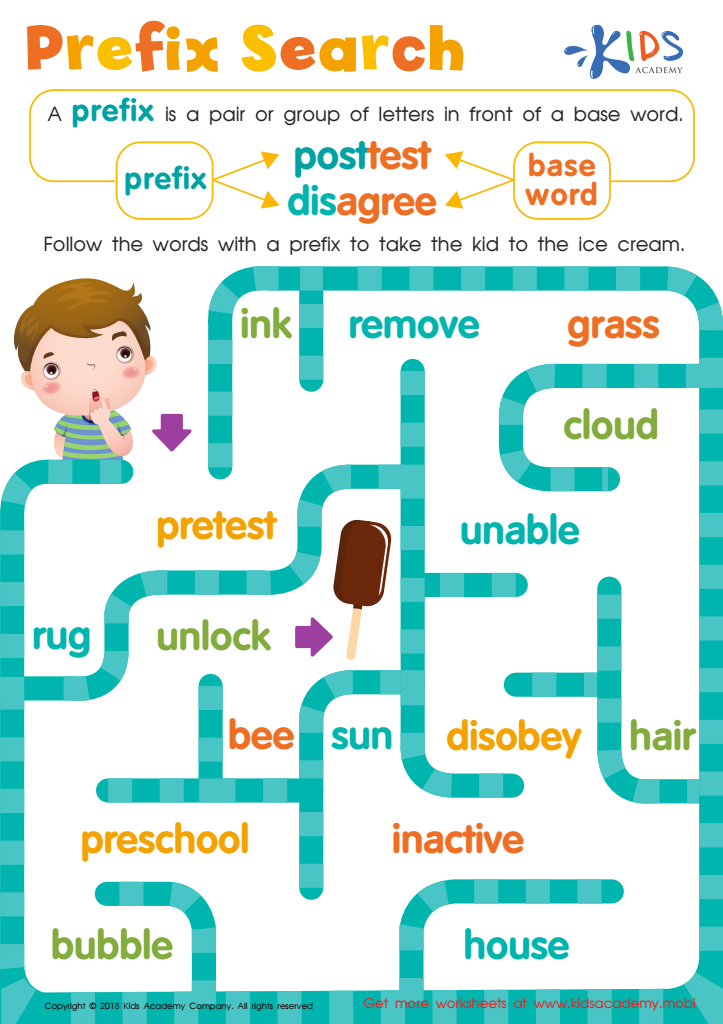
Reading: Prefix Search Worksheet
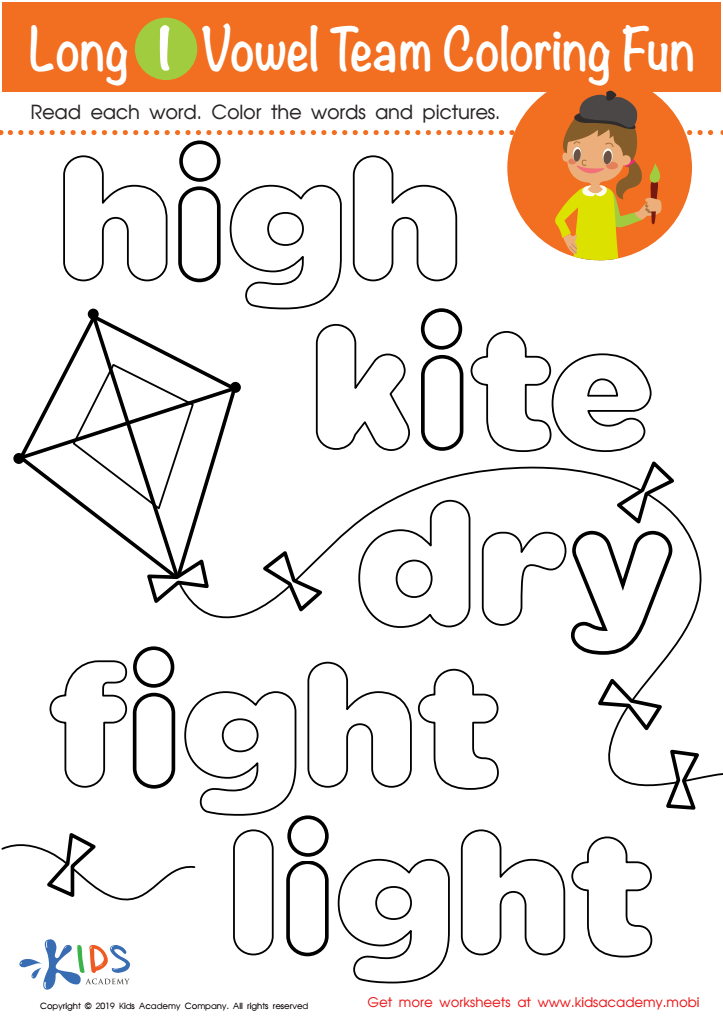
Long I Vowel Team Coloring Worksheet
 Assign to My Students
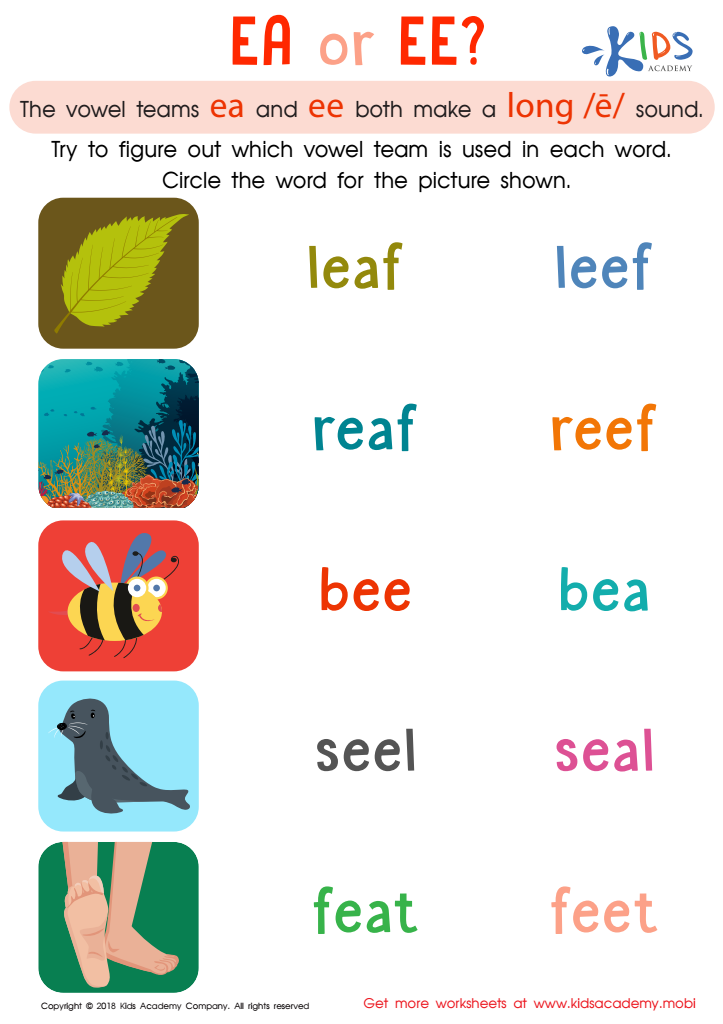
Reading: EA and EE Worksheet
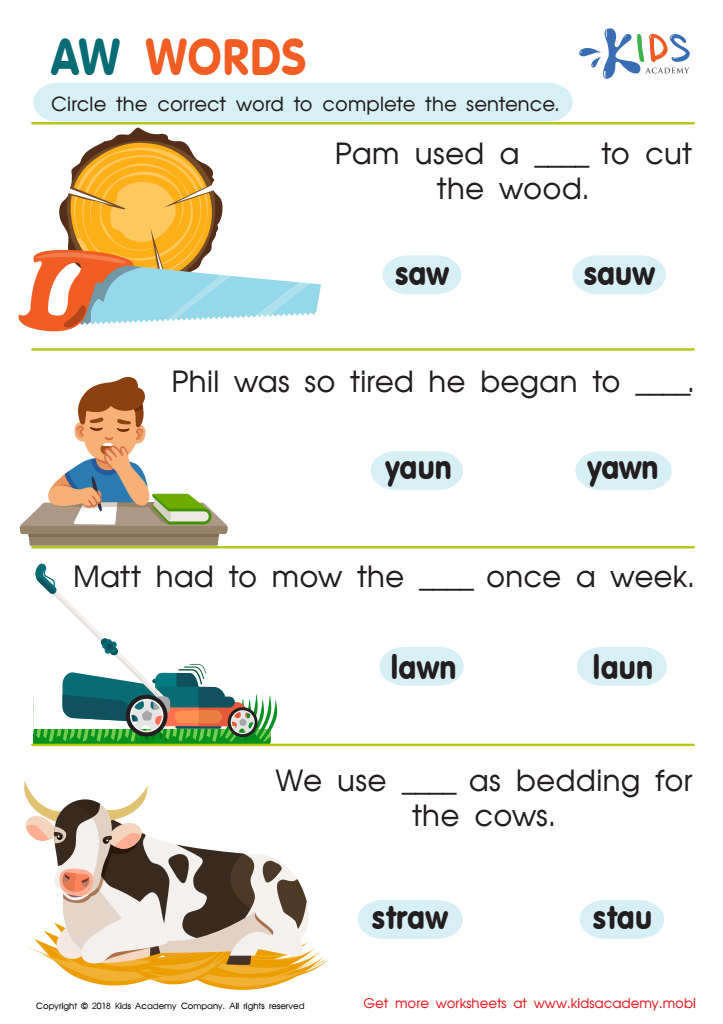
Reading: AW Words Worksheet
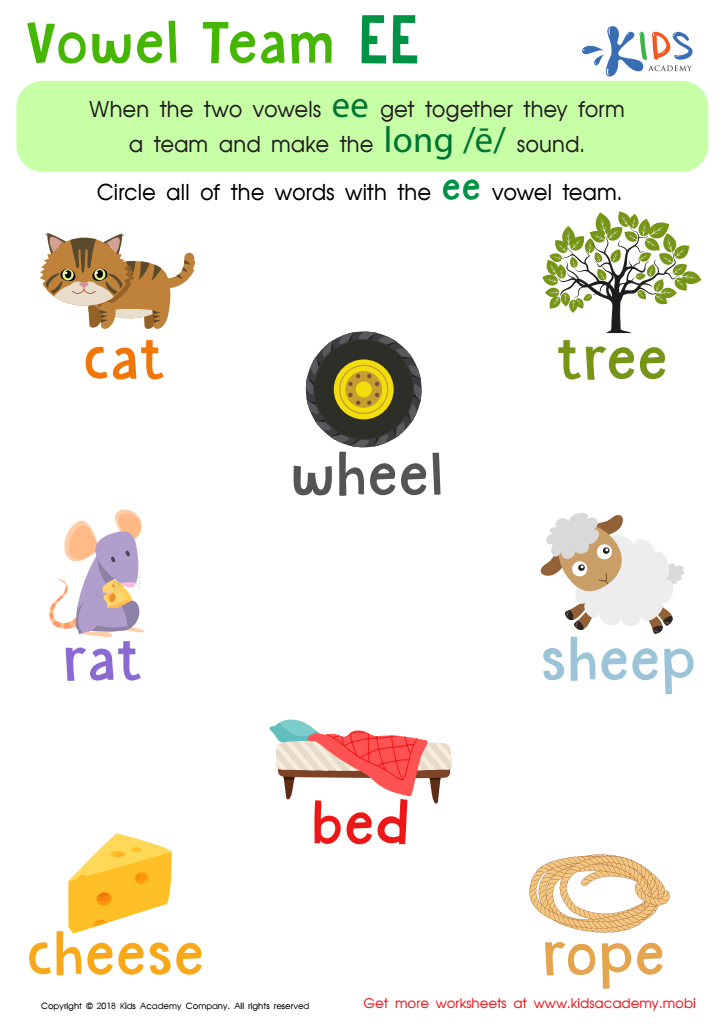
Reading: Vowel Team EE Worksheet
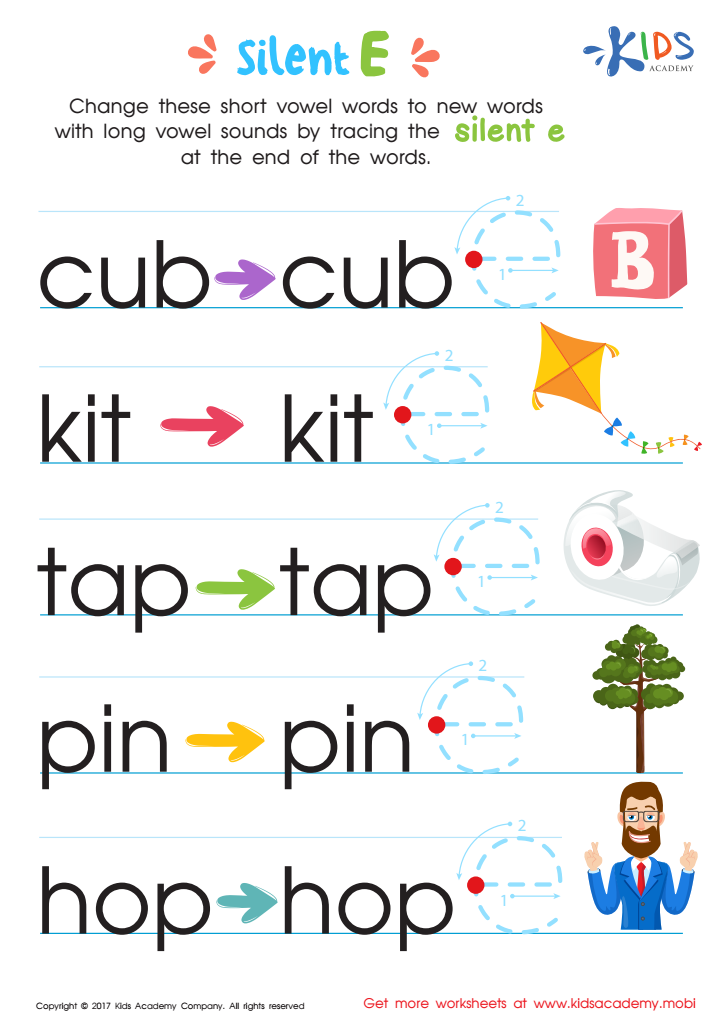
Silent E Words Worksheet
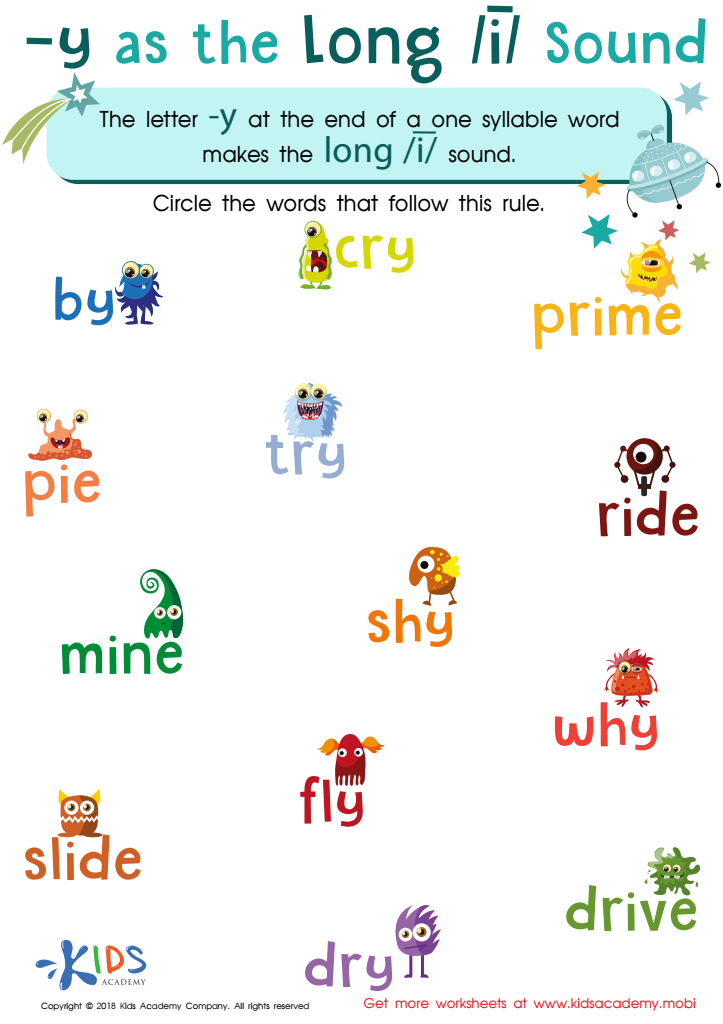
Reading: Y as Long I Worksheet
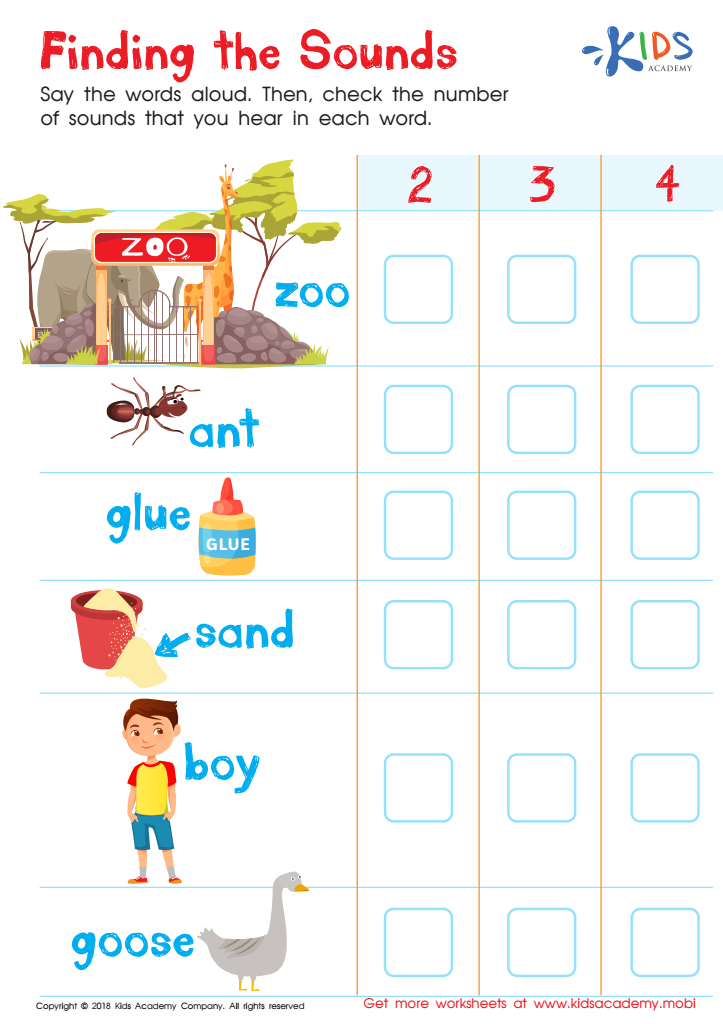
Finding the Sounds Worksheet
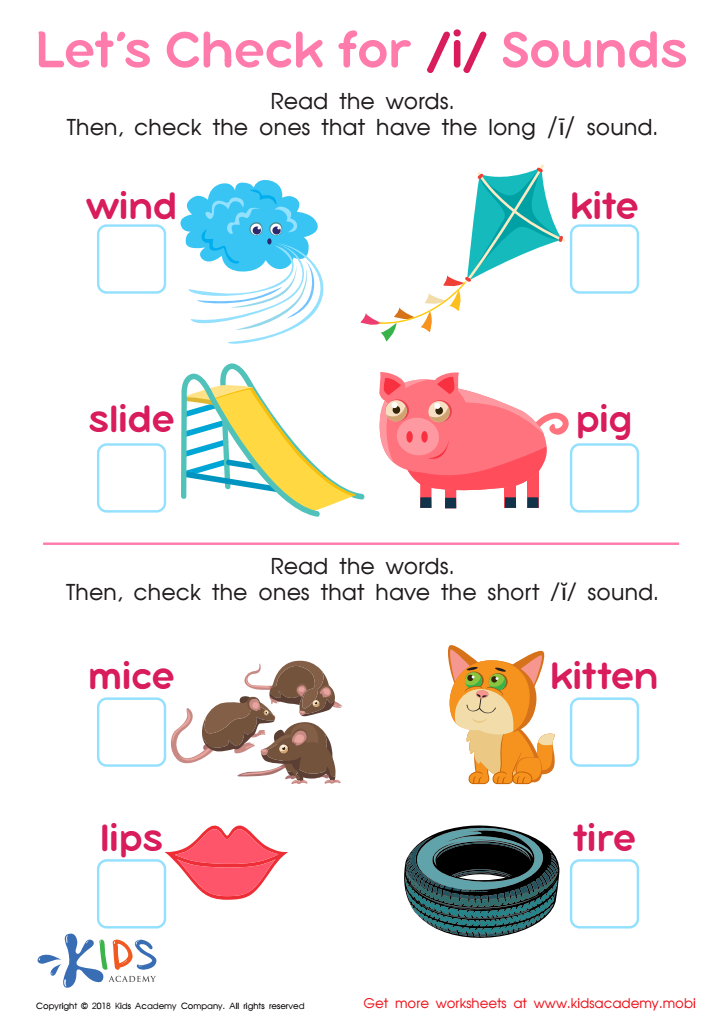
Let's Check for «i» Sounds Worksheet
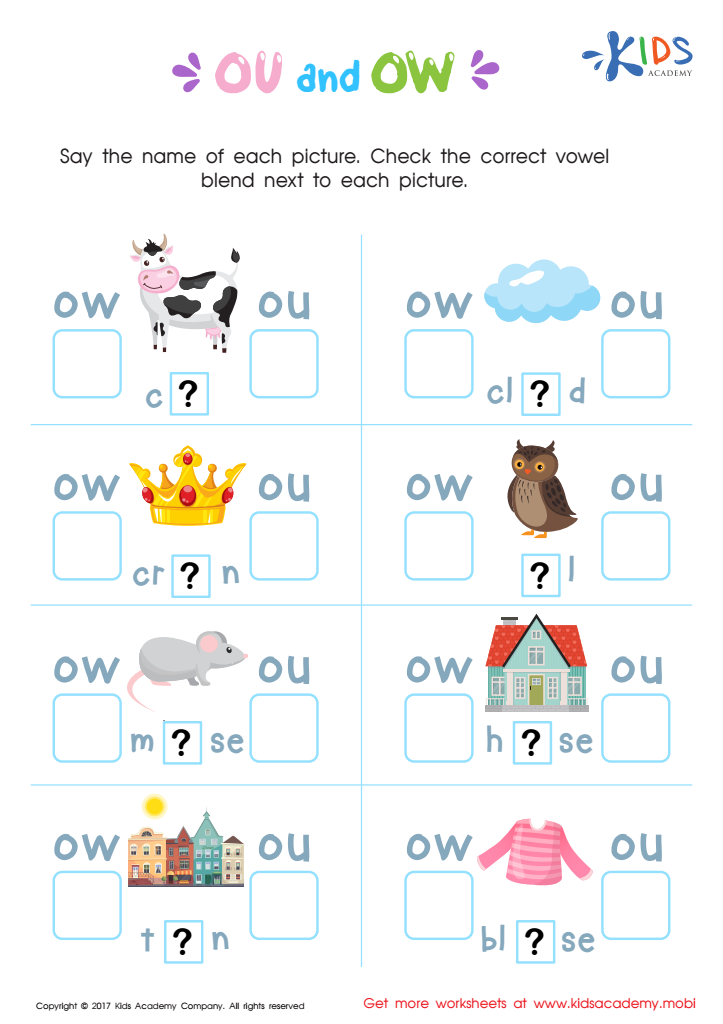
OU and OW Words Worksheet
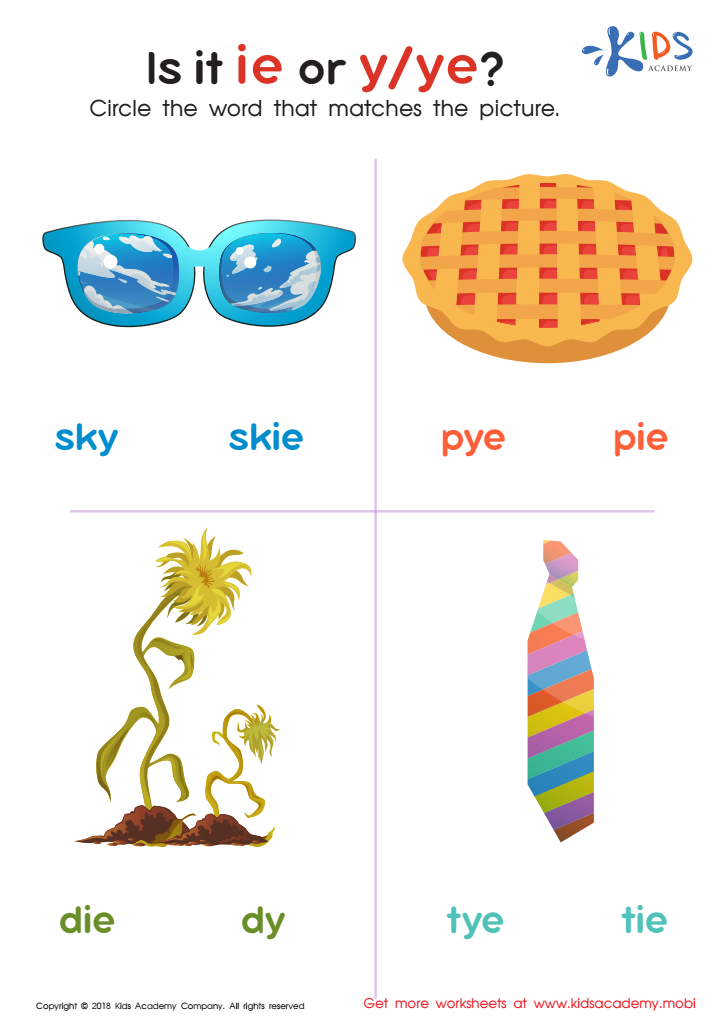
Is It IE or Y/Ye? Worksheet
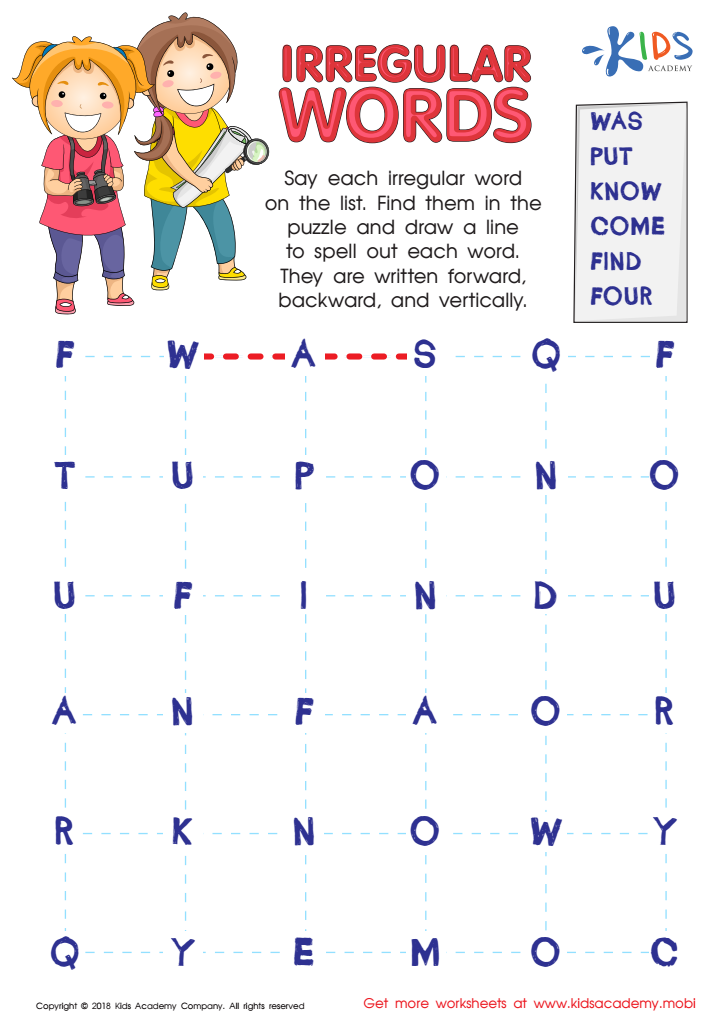
Irregular Words Worksheet
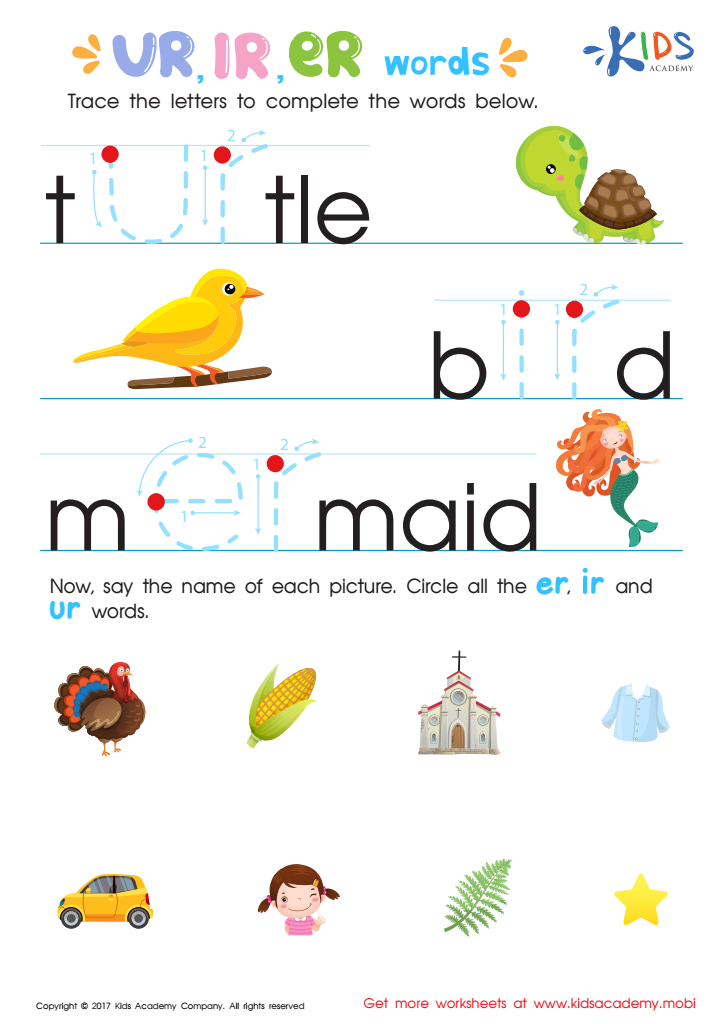
IR UR ER Words Worksheet
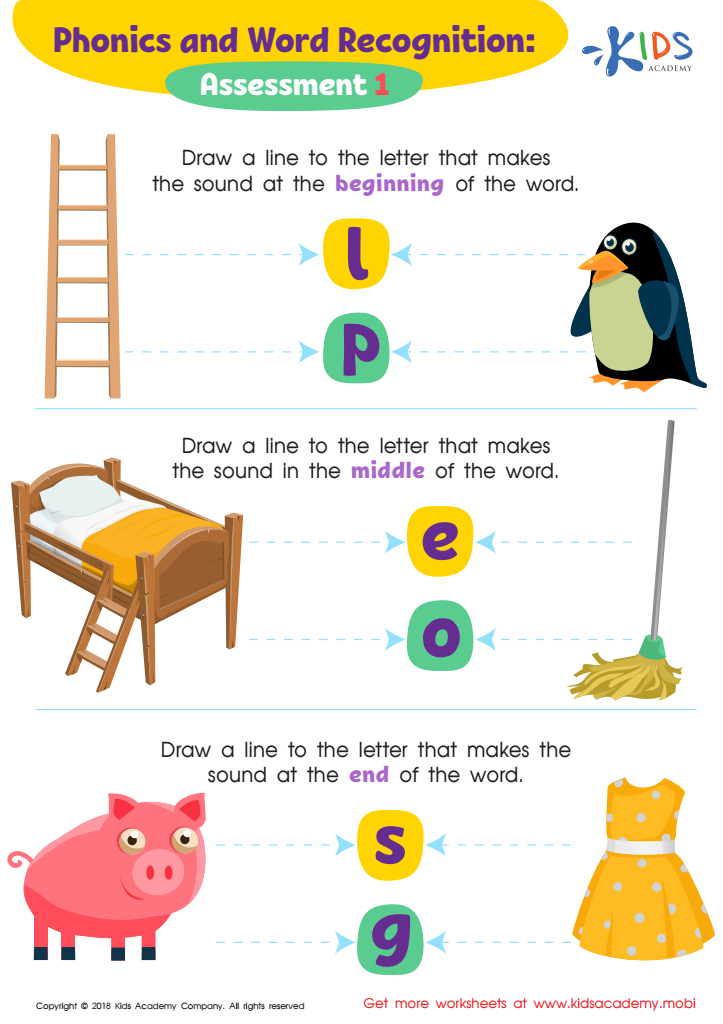
Phonics and Word Recognition: Assessment 1 ELA Worksheet








Parents and teachers should prioritize spelling practice and phonics for children aged 4-7 because these early years are fundamental to language development, critical thinking, and overall academic success. During this period, children rapidly absorb information, making it an ideal time to instill foundational literacy skills.
Spelling practice reinforces phonemic awareness, which is the ability to hear, identify, and manipulate phonemes, the smallest units of sound. This is crucial for reading acquisition and helps children to decode new words, enhancing reading fluency and comprehension. Through regular practice, children also learn the basic rules and patterns of English spelling, which streamlines their ability to write accurately and expressively.
Phonics instruction bridges the gap between written and spoken language, making it easier for young learners to understand the relationship between letters and sounds. This understanding is vital not just for reading, but also for effective communication and self-expression. When children are confident in their spelling and phonics skills, they are more likely to participate in classroom activities, increasing their engagement and love for learning.
Additionally, early competence in these areas lays a robust foundation for other subjects. Strong literacy skills contribute to better performance in subjects like math and science, as children can more easily comprehend instructions and problem statements. Therefore, investing time in spelling practice and phonics is an investment in a child’s overall educational trajectory.







