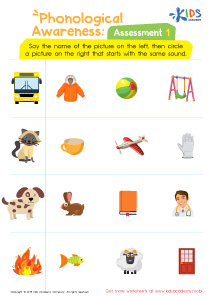
Normal Rhyming Worksheets for Ages 4-7
10 filtered results
-
From - To
Welcome to our "Normal Rhyming Worksheets for Ages 4-7" page! Designed to enhance early literacy skills, these engaging worksheets help young learners identify and create rhyming words through fun and interactive activities. Perfect for preschool and early elementary students, our resources foster critical thinking and phonemic awareness. Each worksheet is crafted to support various learning styles, featuring colorful illustrations and easy-to-follow instructions. Encourage your child’s creativity while strengthening their language skills in an enjoyable way. Download these printable worksheets today and watch your child explore the delightful world of rhymes, laying a strong foundation for their reading journey!
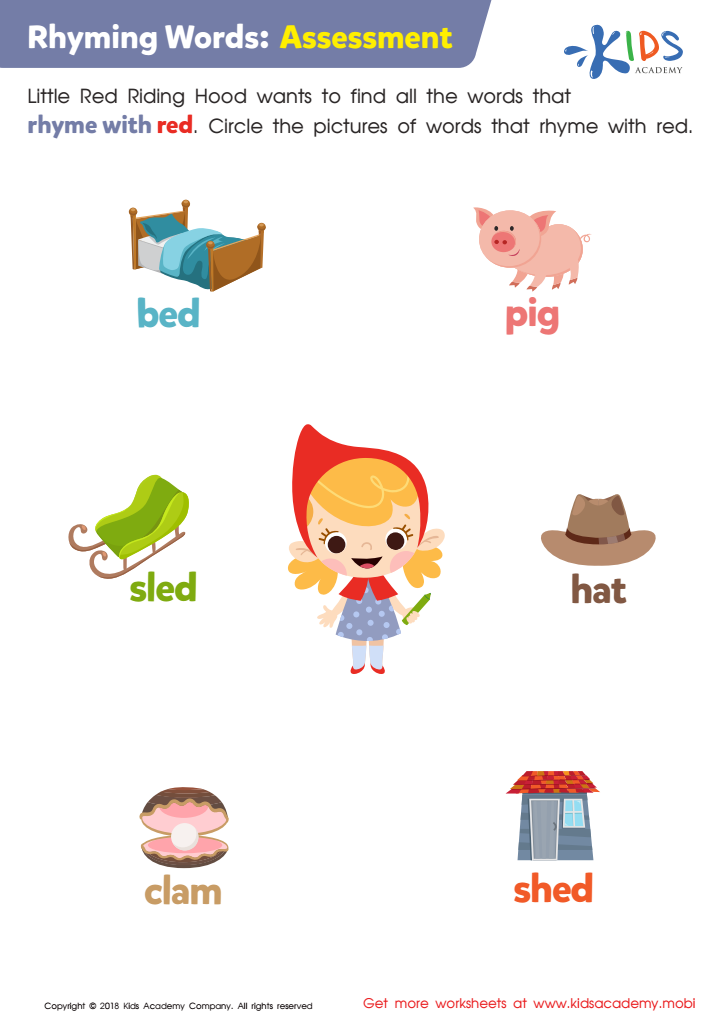
Rhyming Words: Assessment Worksheet
 Assign to My Students
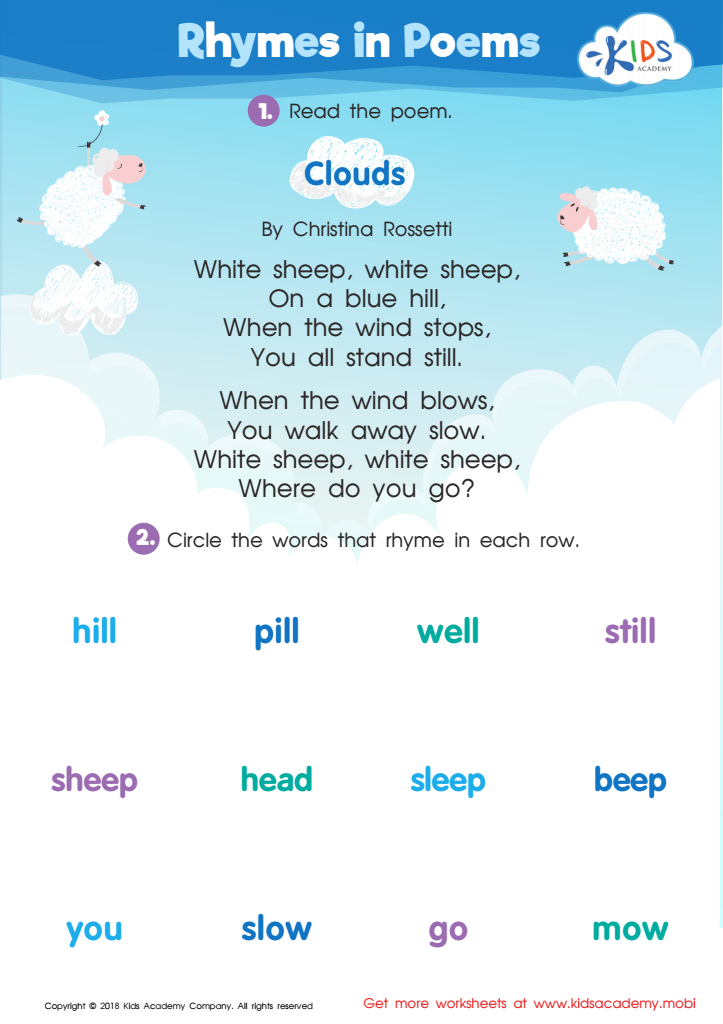
Rhymes in Poems Worksheet
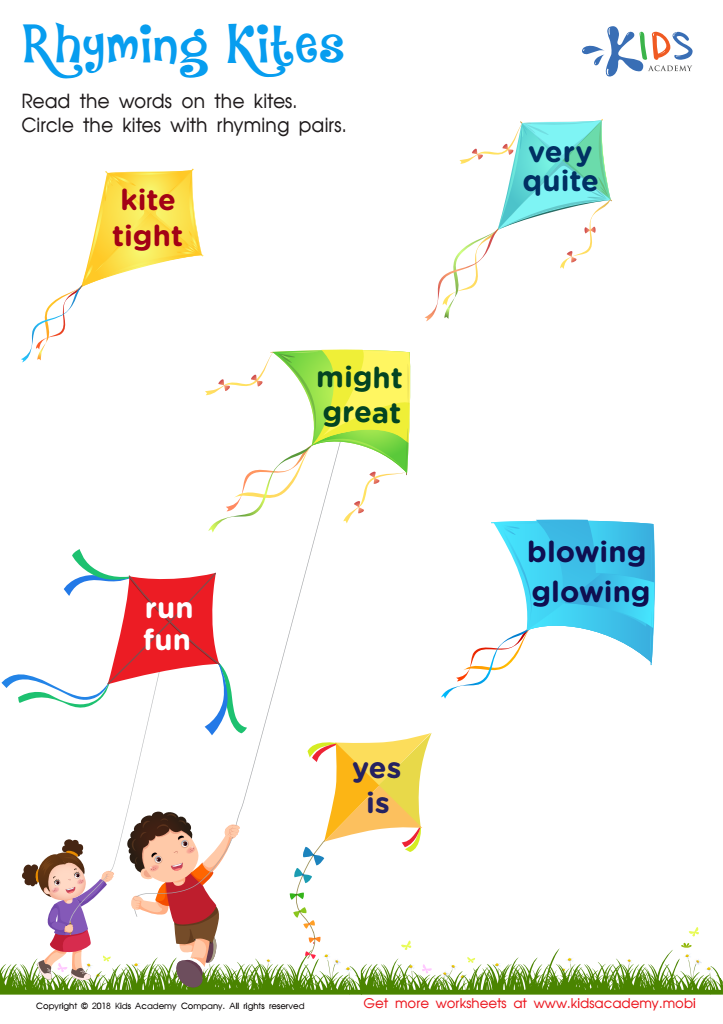
Rhyming Kites Worksheet
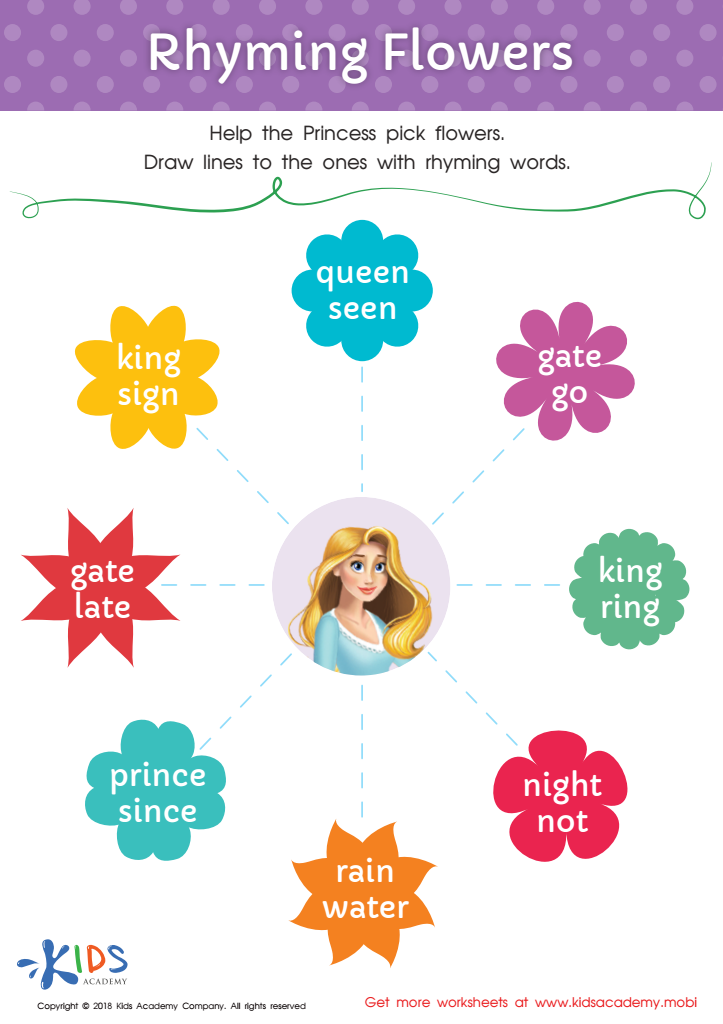
Rhyming Flowers Worksheet
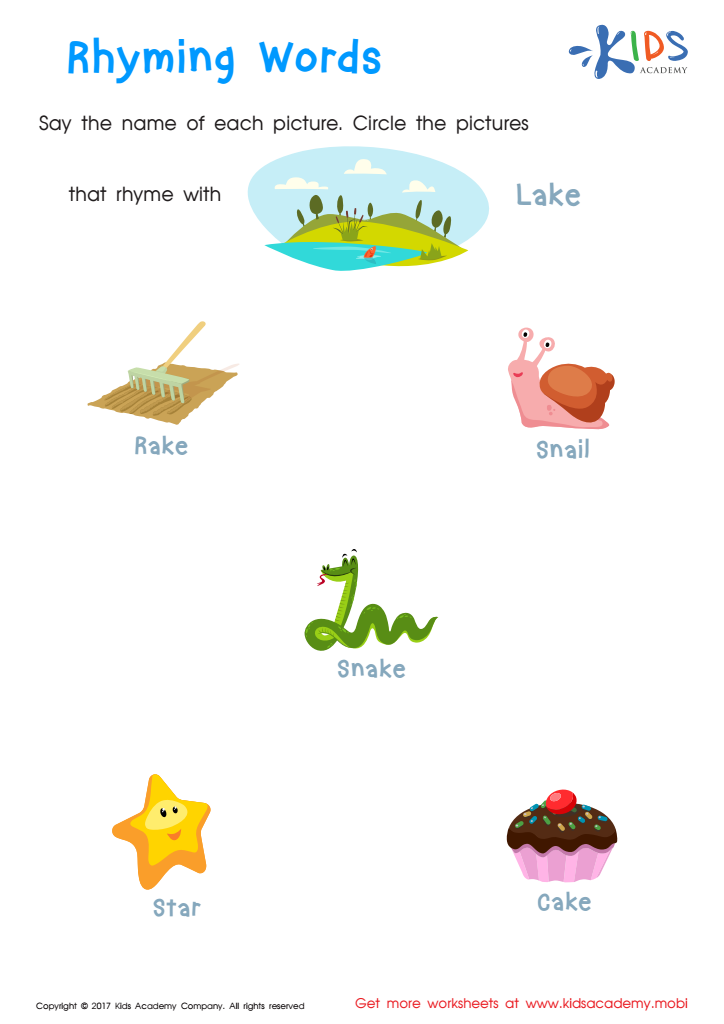
Rhyming Words Rhyming Worksheet
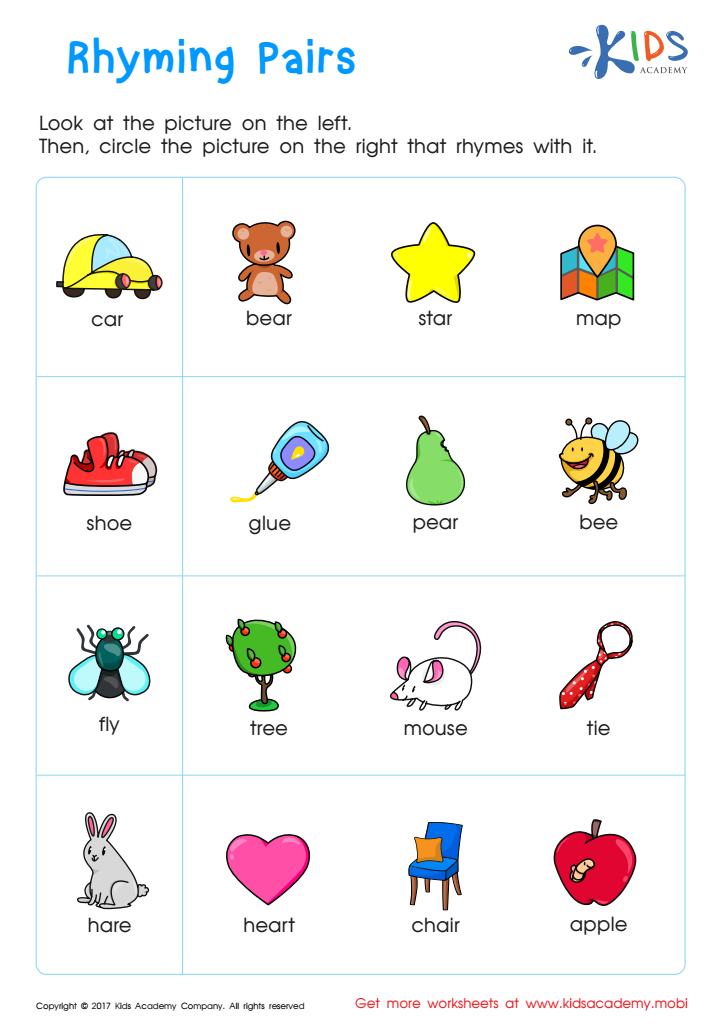
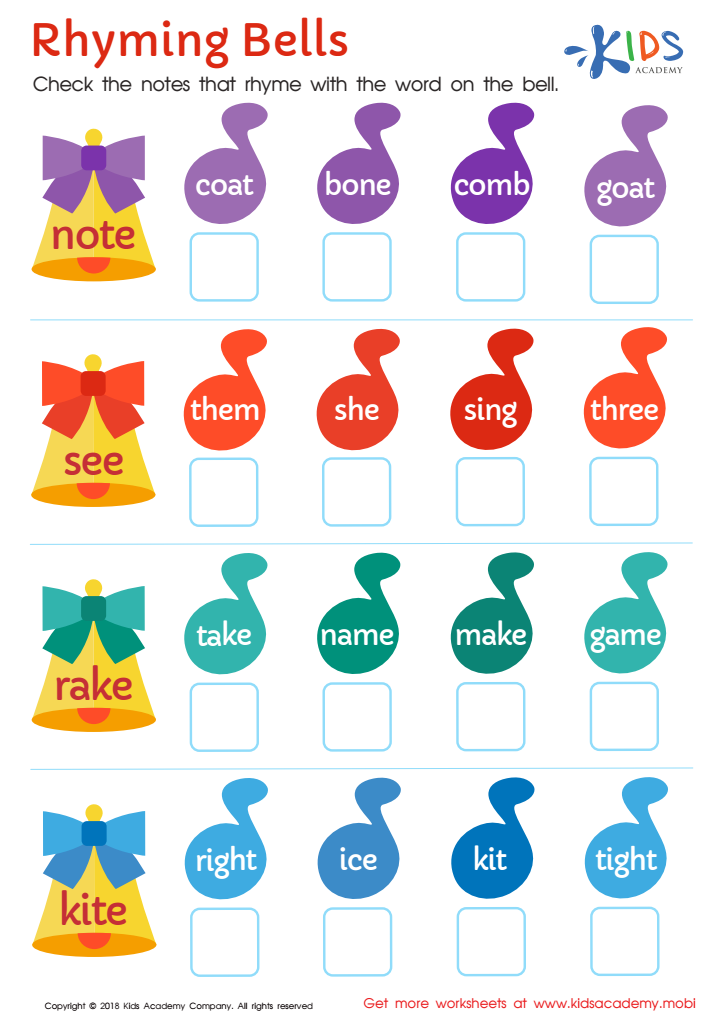
Rhyming Bells Worksheet
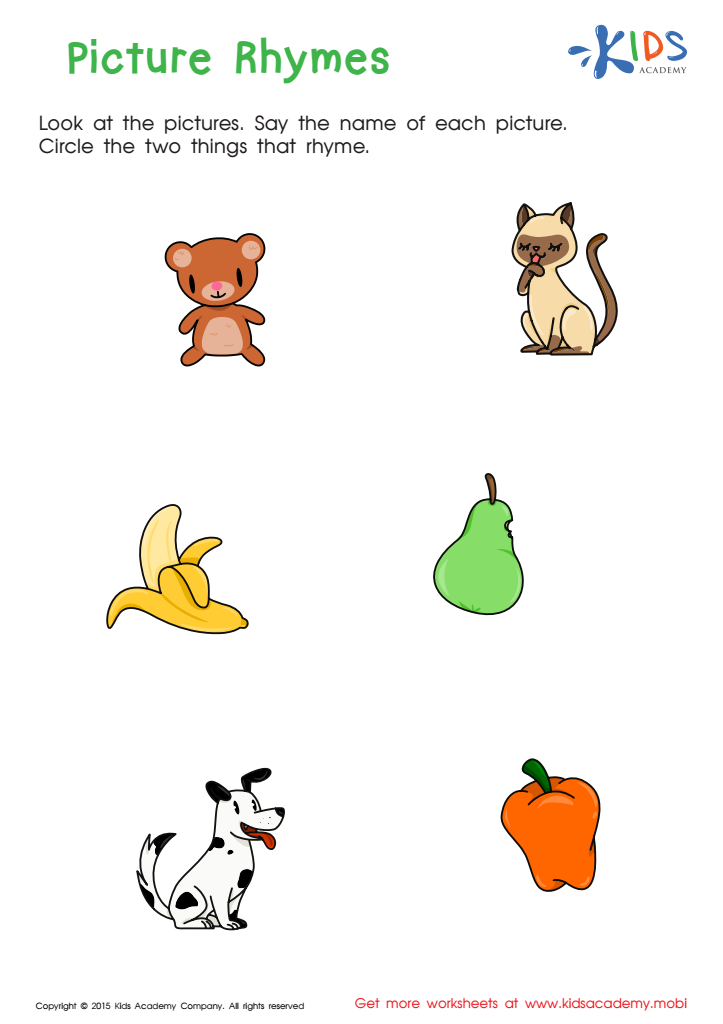
First Words: Picture Rhymes Worksheet
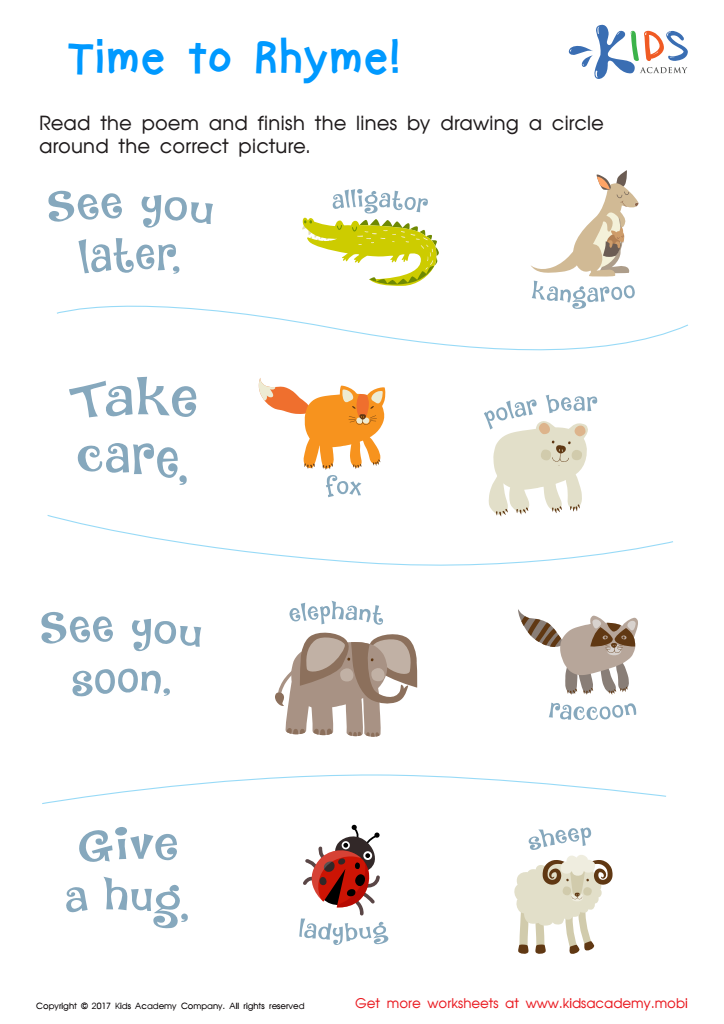
Time to Rhyme Rhyming Worksheet
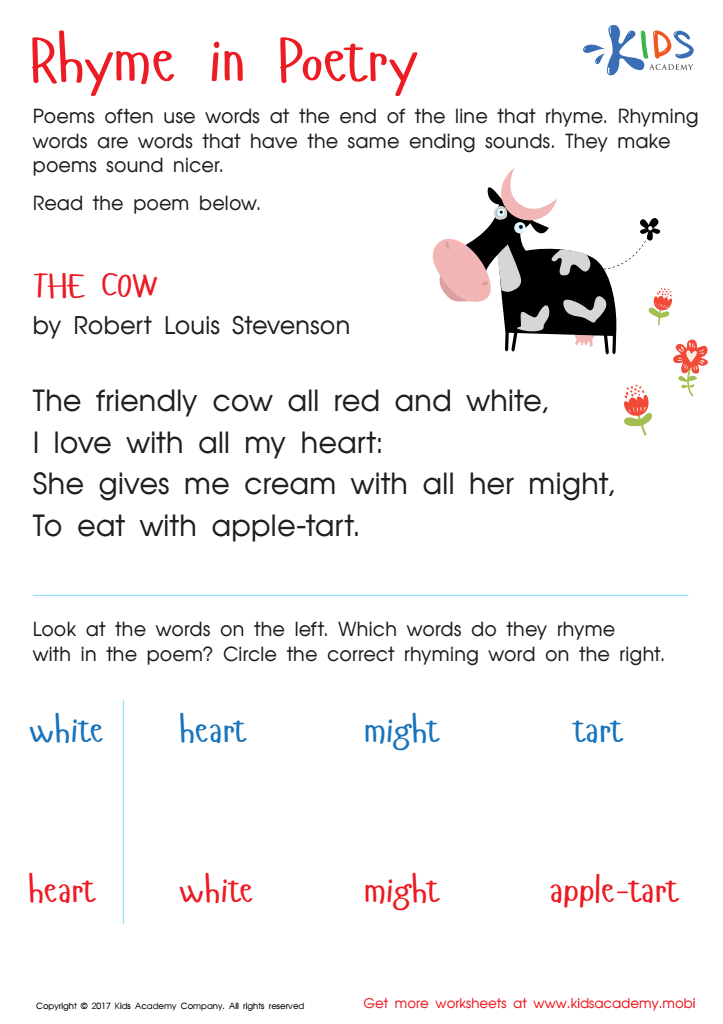
Rhyme In Poetry Worksheet







Normal rhyming, or the ability to recognize and produce rhymes, is an essential skill for children aged 4-7 that significantly impacts their literacy development. For parents and teachers, fostering this skill is vital for several reasons. First, rhyming enhances phonemic awareness, which is the understanding that words are made up of individual sounds. This awareness is critical for children as they begin to decode and read words effectively.
Additionally, engaging with rhyme helps children develop their vocabulary and language skills. Rhyming games and activities introduce new words in a fun and memorable way, encouraging expressive language and comprehension. Furthermore, incorporating rhymes into storytelling and songs fosters a love for reading and listening, enriching children's academic experience.
Normal rhyming also promotes creativity and cognitive development. It encourages children to think critically about word structures and manipulate sounds, which bolsters their problem-solving skills. The rhythmic nature of rhymes can improve memory retention, aiding in learning across subjects.
Ultimately, when parents and teachers prioritize normal rhyming, they equip children with foundational skills that not only enhance reading readiness but also support overall communication and cognitive growth. By nurturing this skill, adults contribute to a strong literacy foundation essential for future academic success.