Vocabulary expansion Normal Vowel Diphthongs Worksheets for Ages 4-7
11 filtered results
-
From - To
Enhance your child's vocabulary with our engaging Normal Vowel Diphthongs Worksheets for Ages 4-7. These worksheets are designed to introduce young learners to diphthongs, helping them recognize and pronounce blended vowel sounds. Each activity uses fun exercises to make learning interactive and enjoyable. By practicing with these worksheets, children will improve their reading skills, build a stronger vocabulary, and gain confidence in their language abilities. Ideal for early grade students, our worksheets are a perfect blend of education and entertainment, making vocabulary expansion a delightful experience for young minds. Download now for endless learning fun!
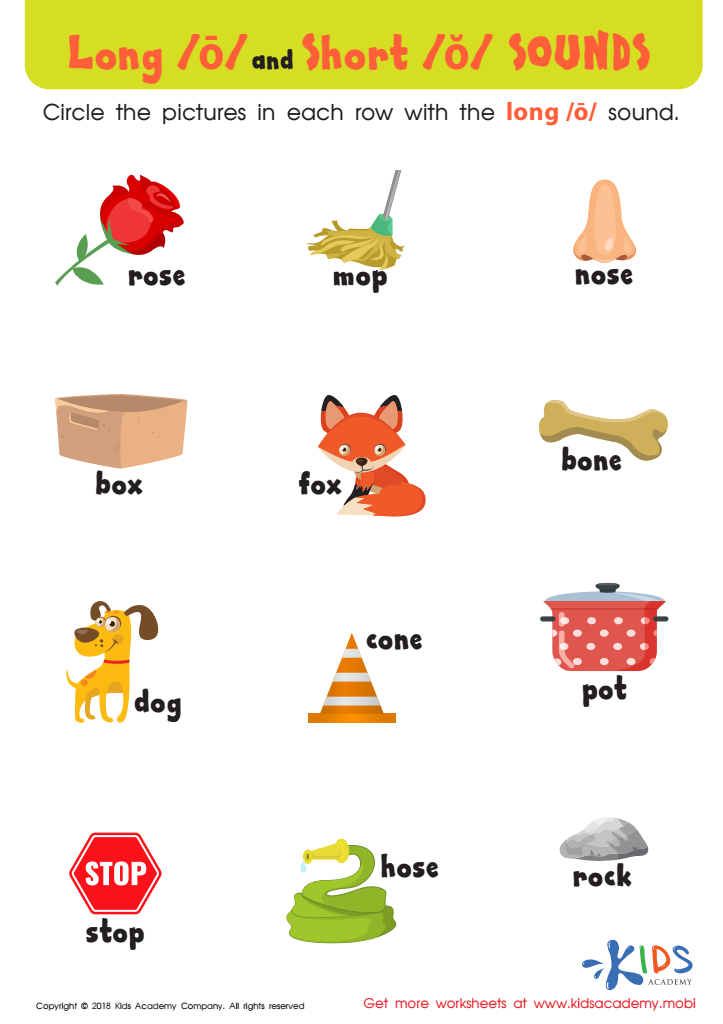
Reading: Long O and Short O Sounds Worksheet
 Assign to My Students
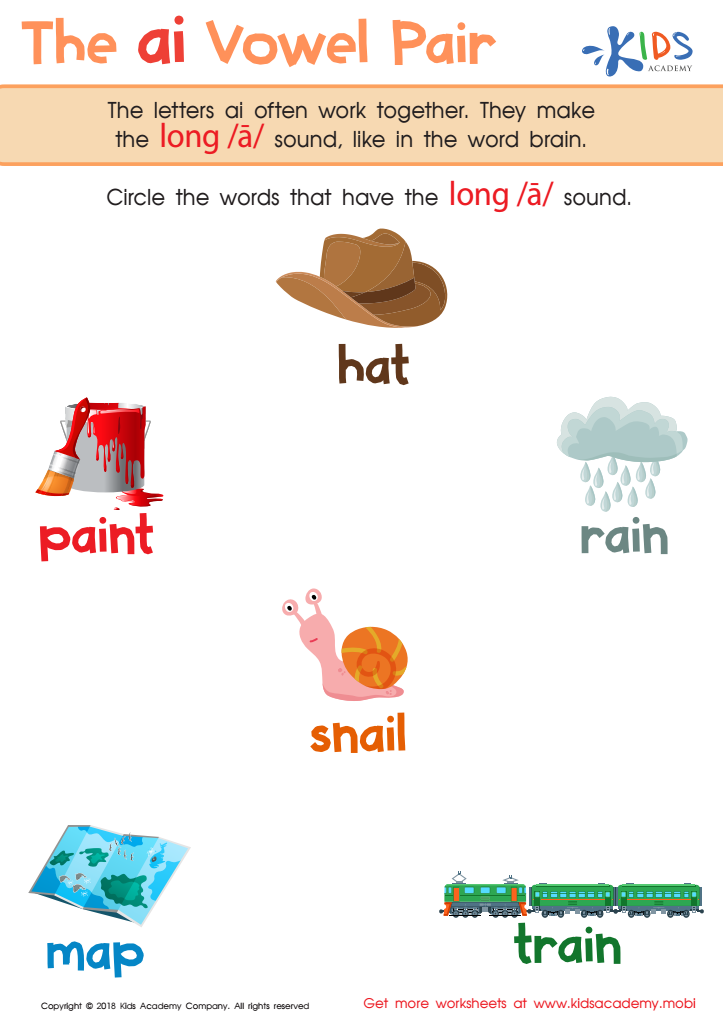
The AI Vowel Pair Worksheet
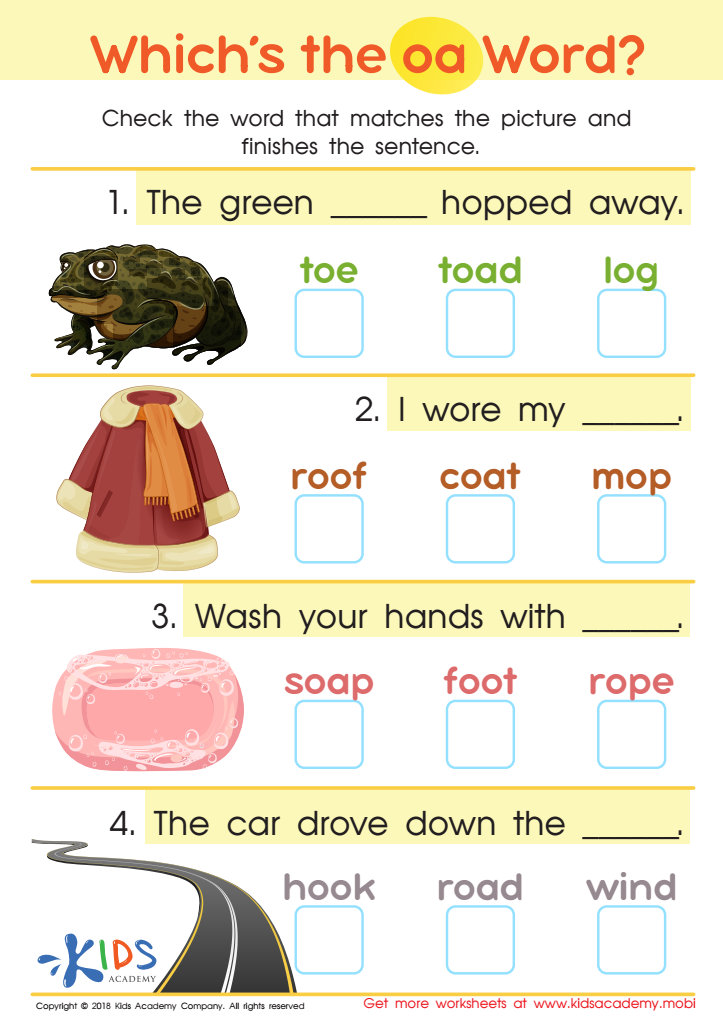
Which's the OA Word? Worksheet
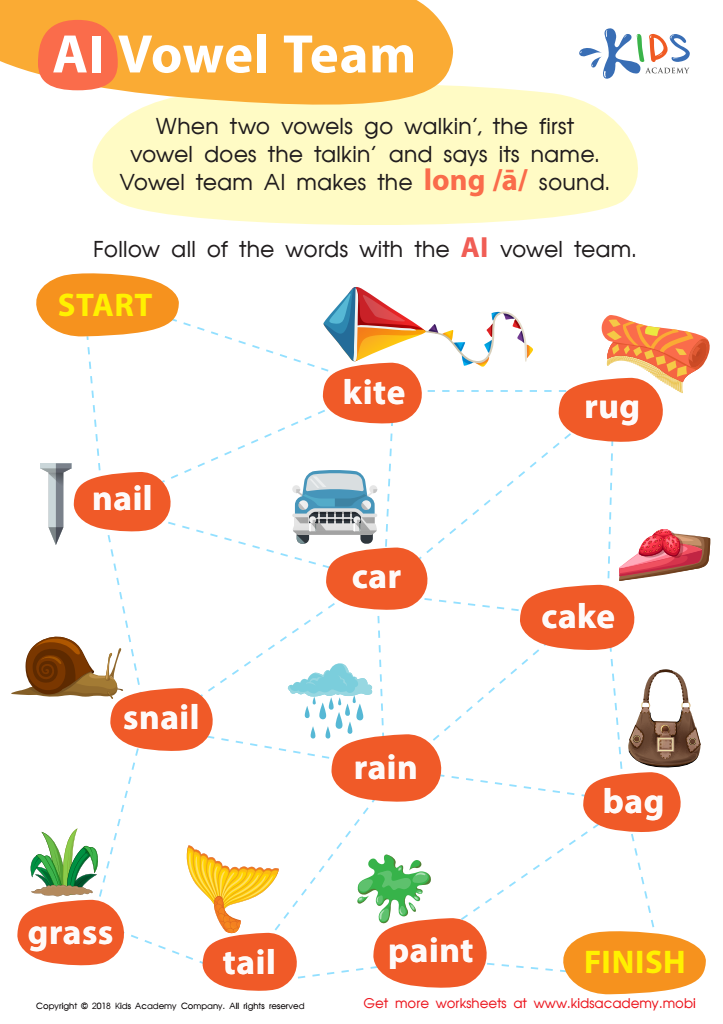
Reading: AI Vowel Team Worksheet
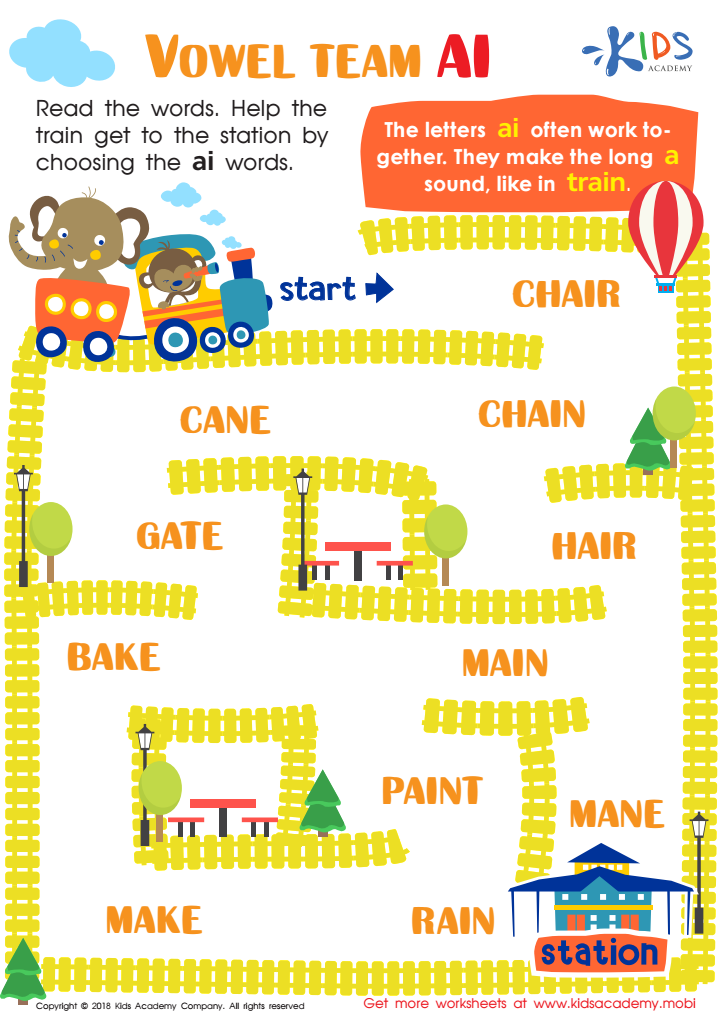
Vowel team ai Worksheet
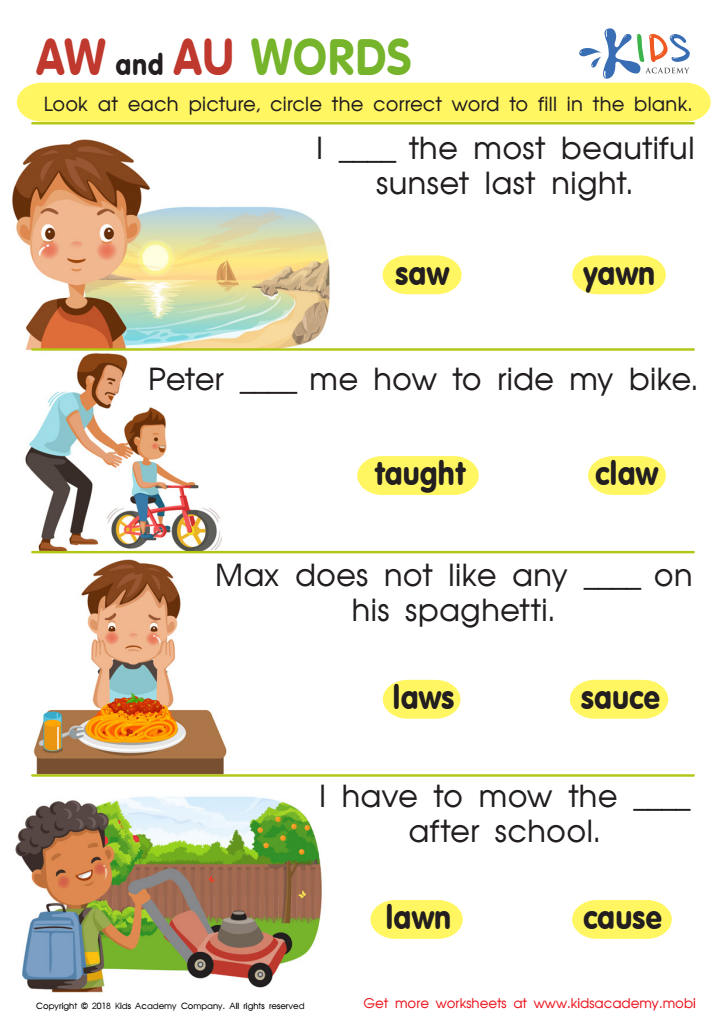
Reading: AW and AU Words Worksheet
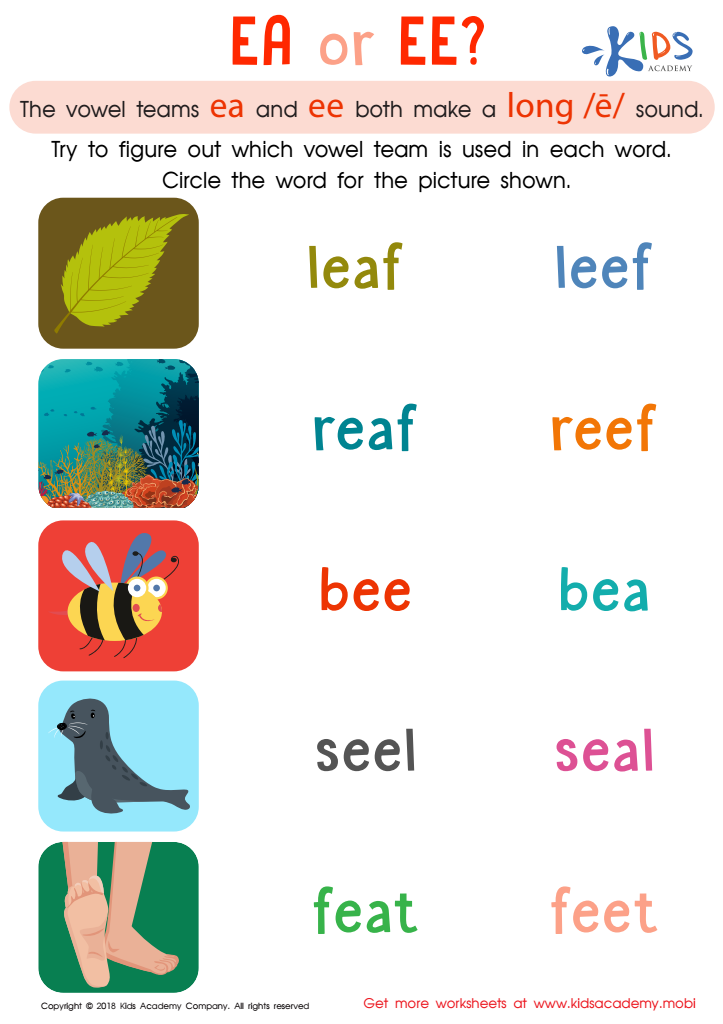
Reading: EA and EE Worksheet
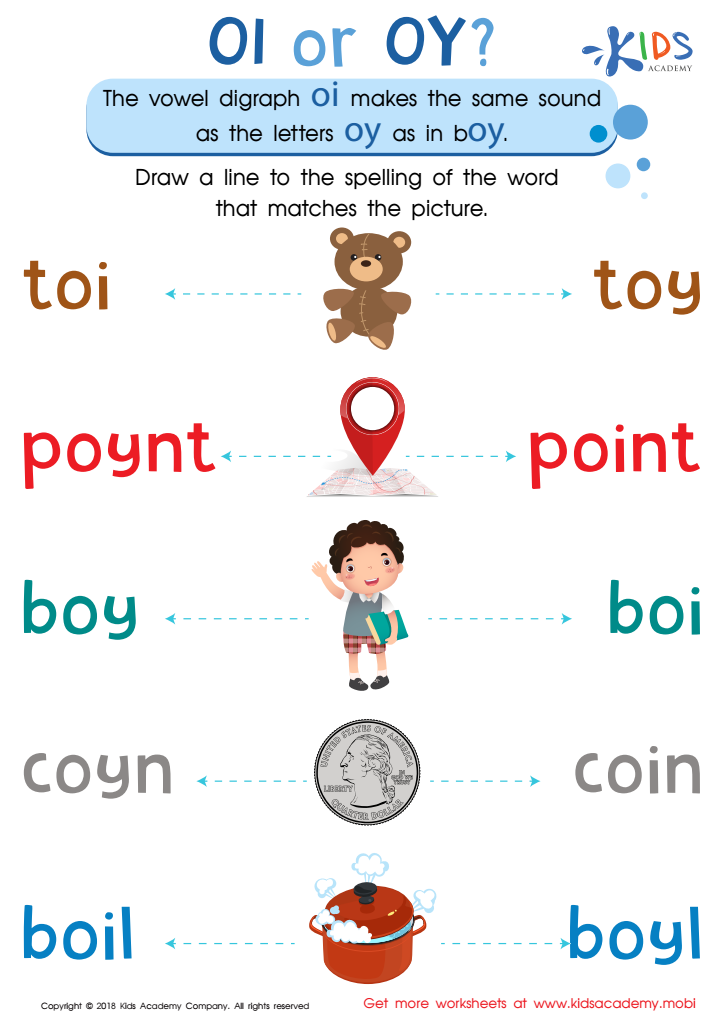
Reading: OI and OY Worksheet
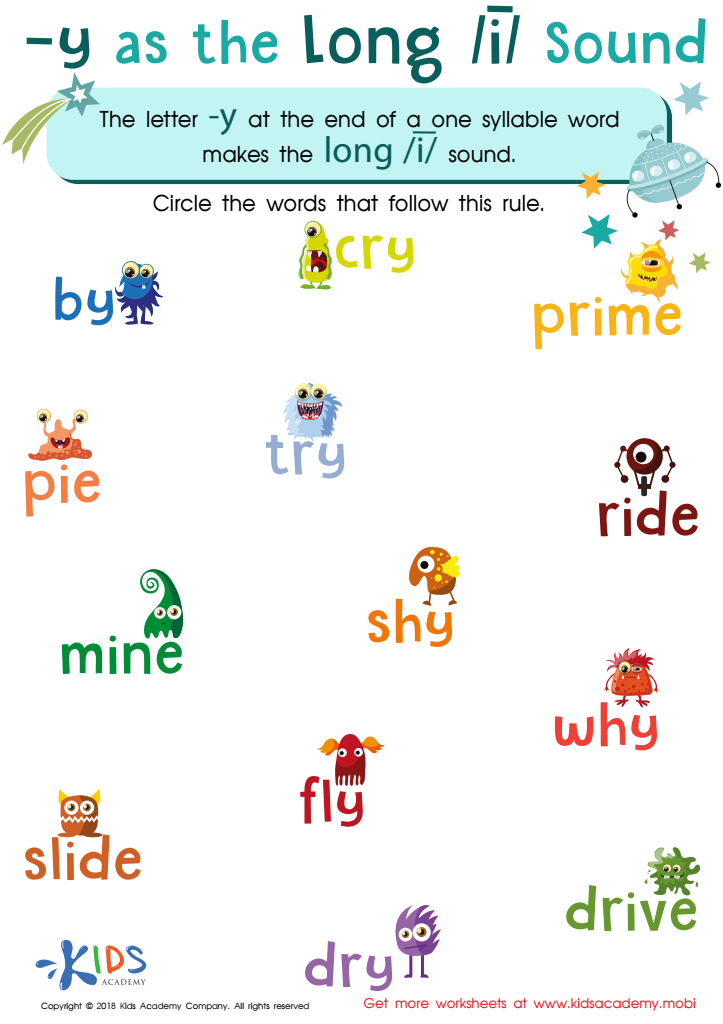
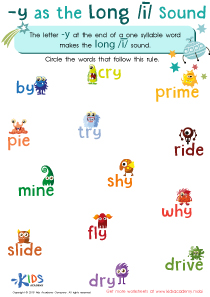
Reading: Y as Long I Worksheet
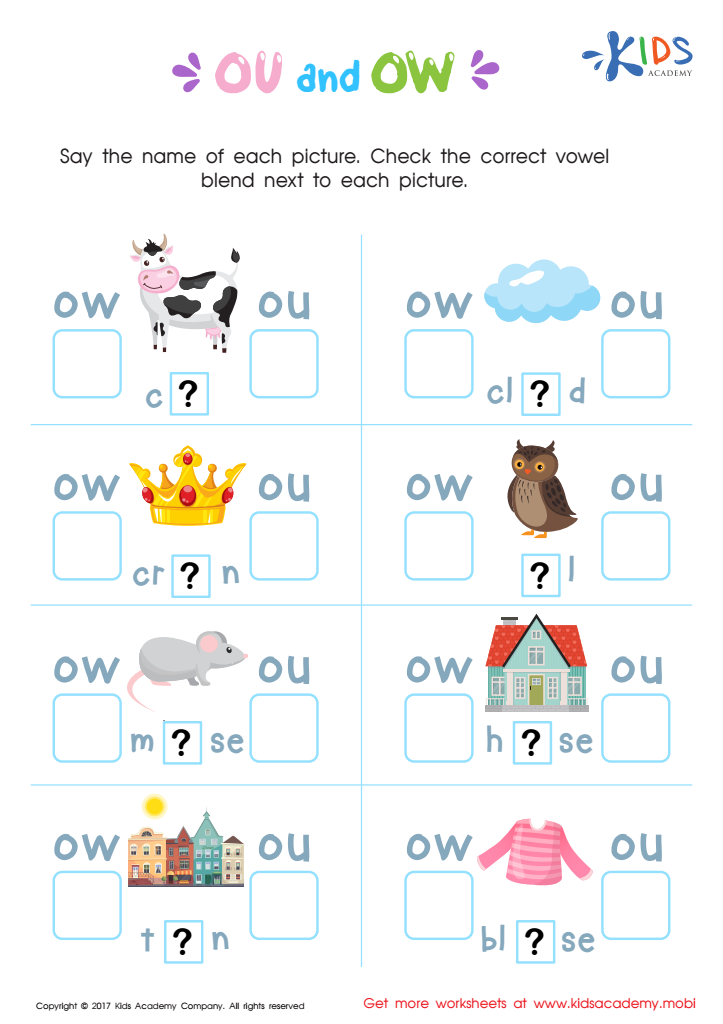
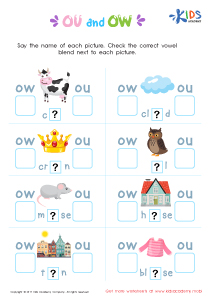
OU and OW Words Worksheet
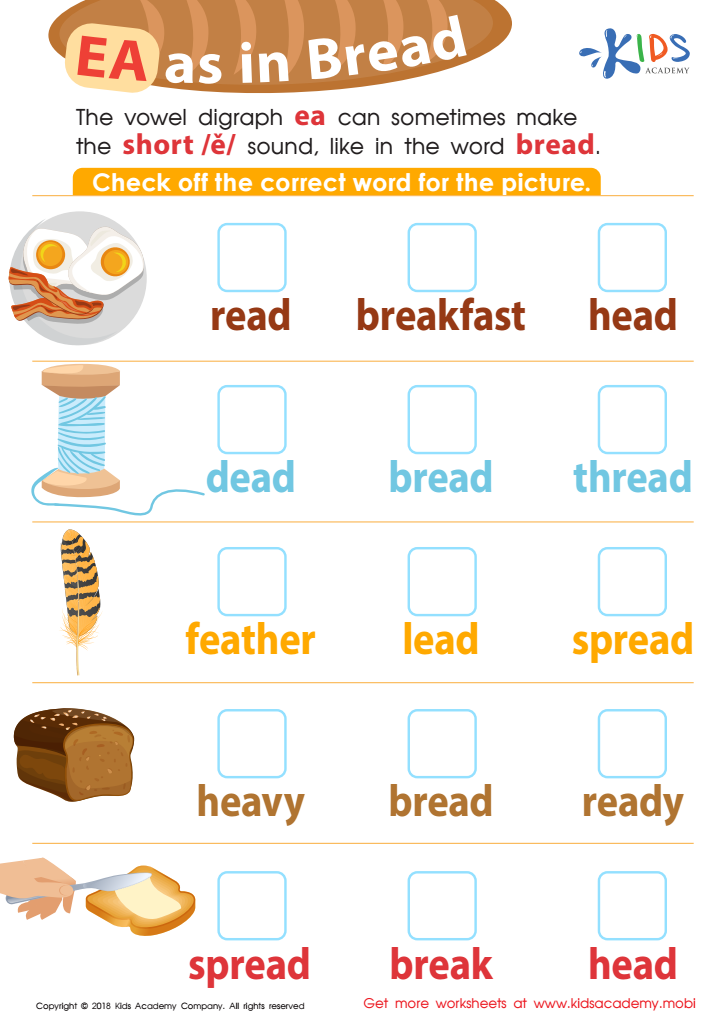
Reading: EA as in Bread Worksheet


Vocabulary expansion and understanding vowel diphthongs are essential components of early literacy for children ages 4-7. Parents and teachers should prioritize these for several reasons:
First, a rich vocabulary helps children express themselves clearly and comprehend the world around them. With a broader range of words at their disposal, kids can better articulate their thoughts, emotions, and experiences, enhancing their communication skills and self-confidence.
Second, normal vowel diphthongs – sounds formed by combining two vowels in a single syllable – play a crucial role in early reading and writing. Mastering vowel diphthongs allows children to decode words more effectively, aiding in fluid, accurate reading. This foundational knowledge simplifies the transition from sounding out words to fluency, paving the way for more advanced literacy skills.
Third, improved reading skills foster a love for books and learning. When children find reading easier and more enjoyable, they are more likely to explore new topics, boosting their overall educational development. This positive cycle supports cognitive growth and academic success.
In summary, focusing on vocabulary expansion and vowel diphthongs equips children with essential tools for effective communication, reading ease, and a lifelong passion for learning. By investing in these areas, parents and teachers set young learners on a path to academic and personal growth.