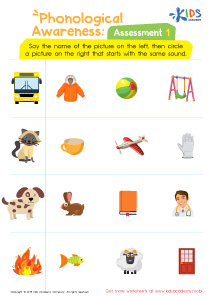
Phonics Skills Normal Vowels Worksheets for Ages 4-7 - Page 2
29 filtered results
-
From - To
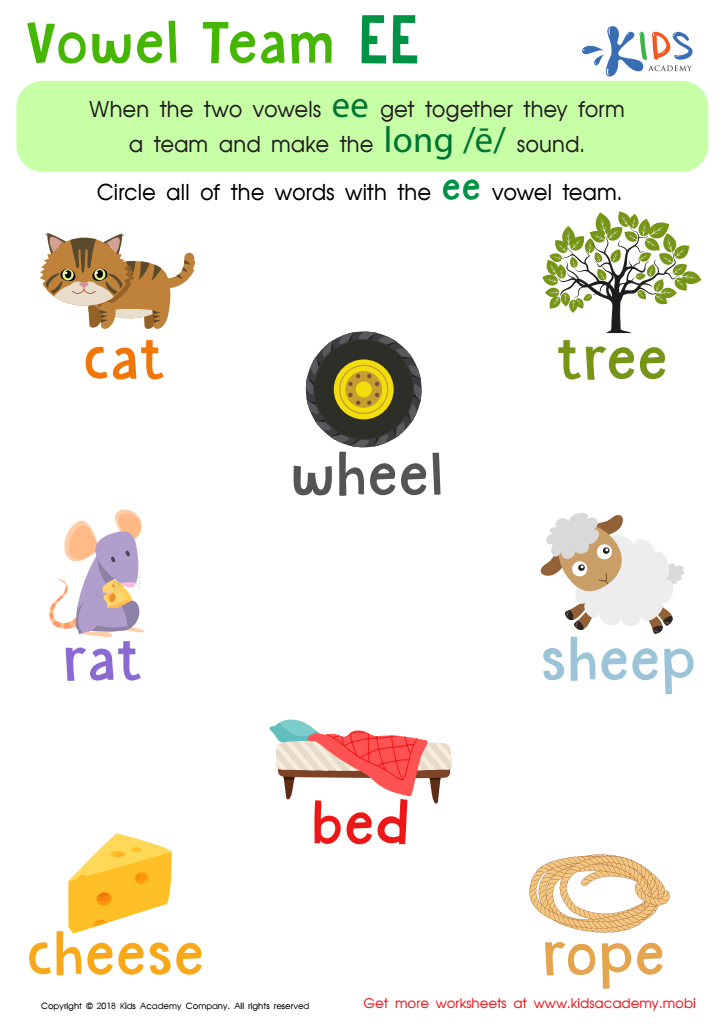
Reading: Vowel Team EE Worksheet
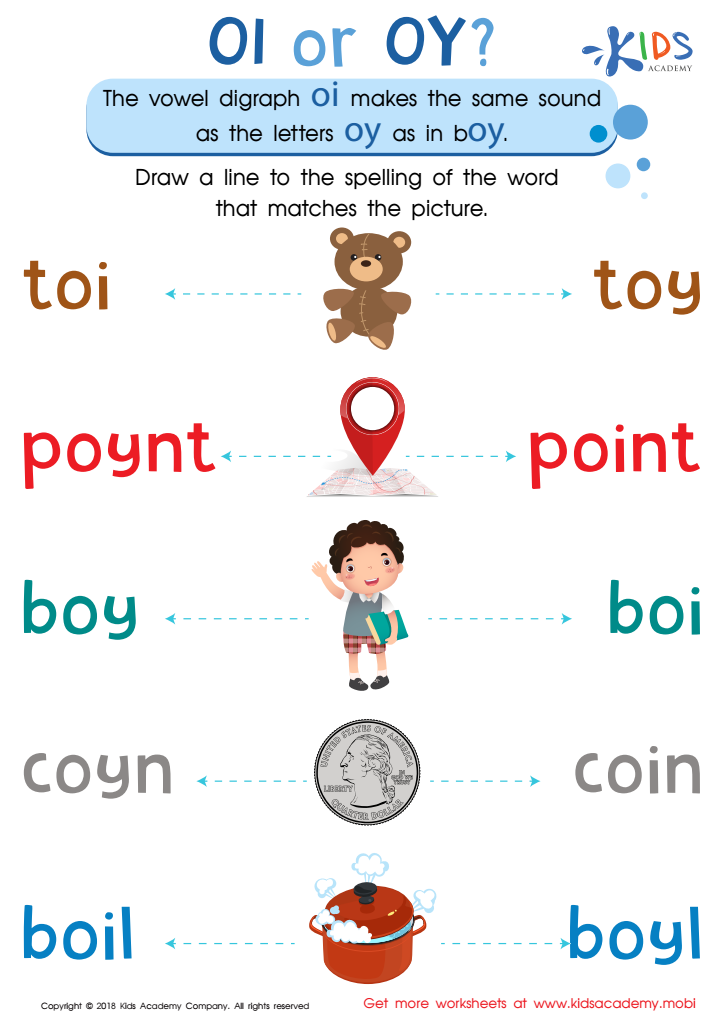
Reading: OI and OY Worksheet
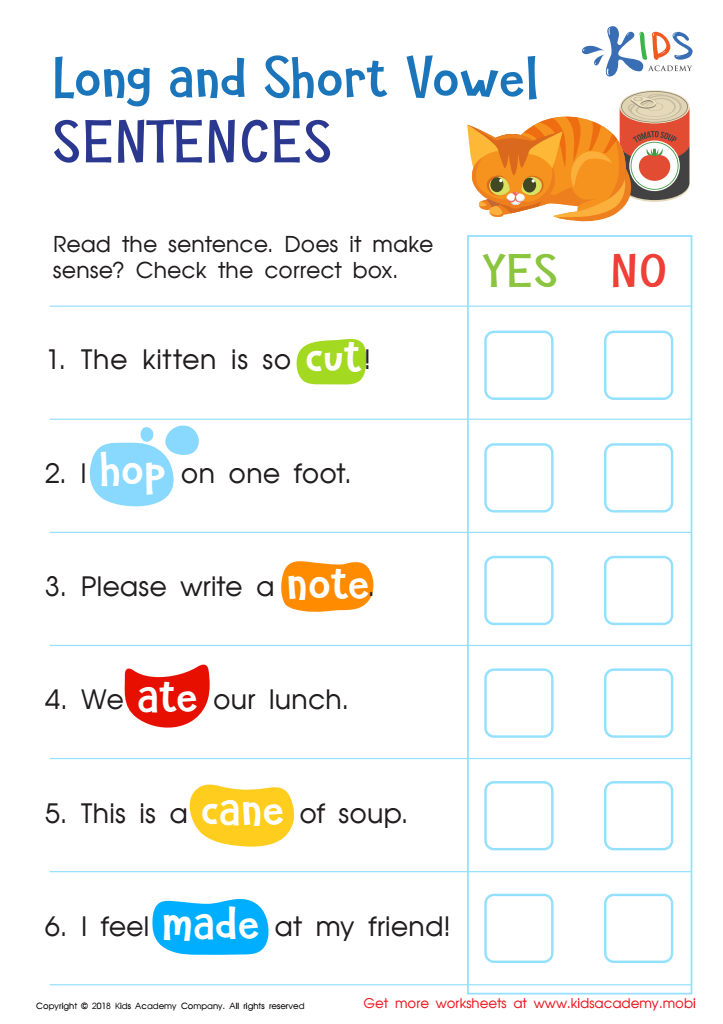
Long and Short Vowel Sentences: Assessment Worksheet

Long and Short E Worksheet
 Assign to My Students
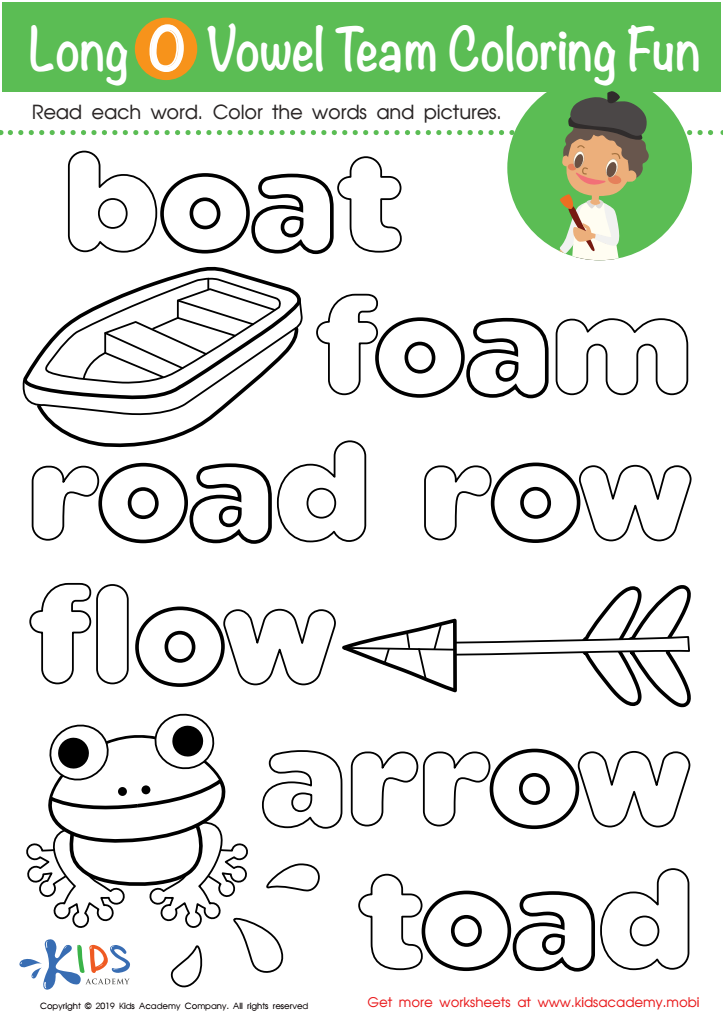
Long O Vowel Team Coloring Worksheet
Assign to My Students





Phonics skills, particularly with normal vowels, are crucial for children aged 4-7 as they lay the foundation for reading and writing. During these formative years, children are developing essential literacy skills, and understanding vowel sounds is a significant part of this process. Normal vowels (a, e, i, o, u) are pivotal in forming words, and children must learn to recognize, blend, and manipulate these sounds to decode and spell effectively.
Parents and teachers should care about phonics skills because a strong grasp of vowels directly impacts a child's reading fluency and comprehension. Early phonics instruction supports a child's ability to read independently, fostering a love for literature and enhancing communication skills. Moreover, difficulties in phonics can lead to reading challenges later, affecting a child’s academic performance and self-esteem.
Engaging with phonics in everyday activities helps children make connections between spoken and written language, reinforcing their learning. Effective phonics instruction can occur through playful activities, songs, and interactive games, making learning enjoyable. Ultimately, investing time in developing phonics skills in young children not only promotes their language development but also equips them with essential tools for lifelong learning.