Animal knowledge Normal Worksheets for Ages 4-7
5 filtered results
-
From - To
Enhance your child's understanding of the animal kingdom with our engaging "Animal Knowledge Normal Worksheets for Ages 4-7." These fun-filled and educational worksheets, designed specifically for young learners, explore various animals, their habitats, behaviors, and characteristics. Each worksheet offers interactive activities, colorful illustrations, and simple language to keep children interested. Perfect for both parents and teachers, these resources support early learning and help develop critical thinking and observation skills. Boost your child's curiosity and knowledge about animals while providing a strong foundation for future learning with our expertly crafted worksheets.
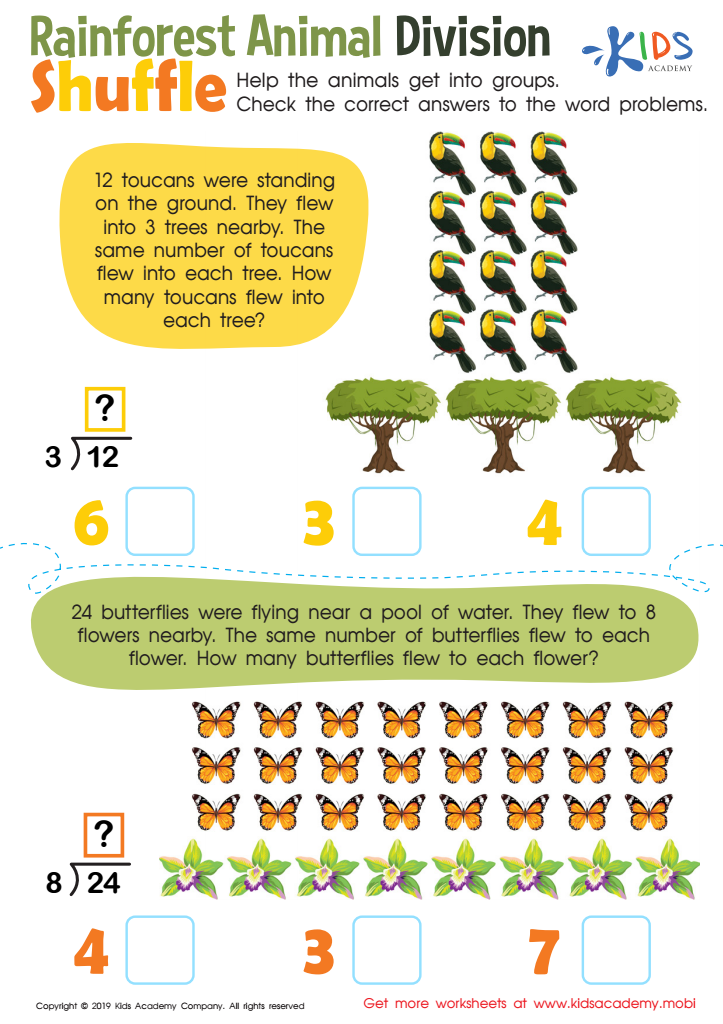
Rainforest Animal Division Worksheet
 Assign to My Students
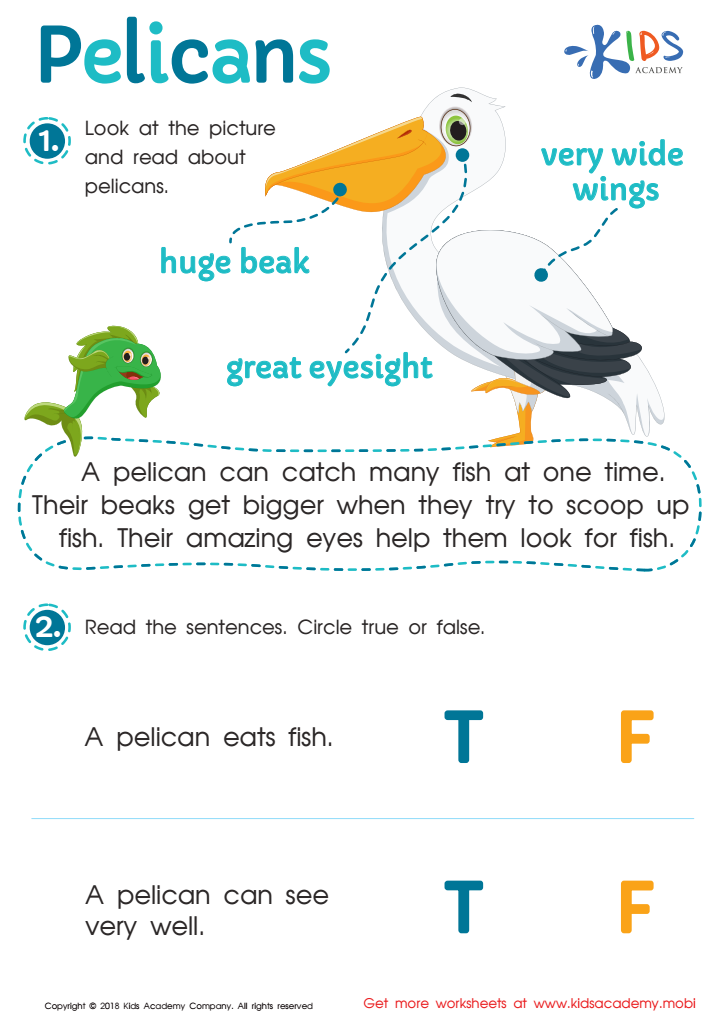
Pelicans Worksheet
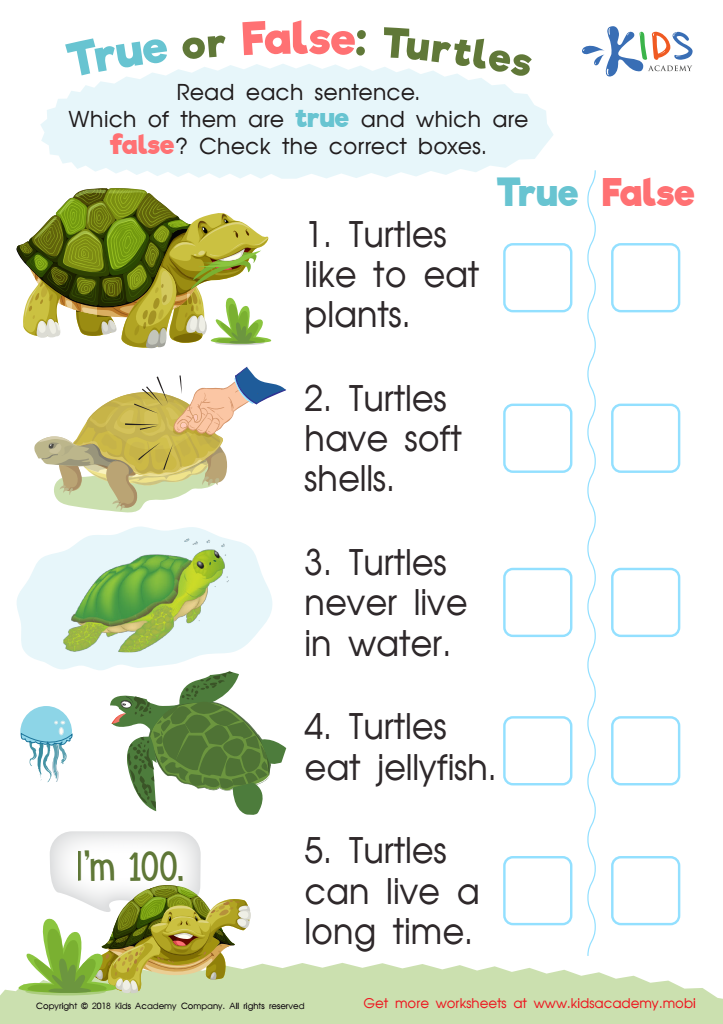
True or False: Turtles Worksheet
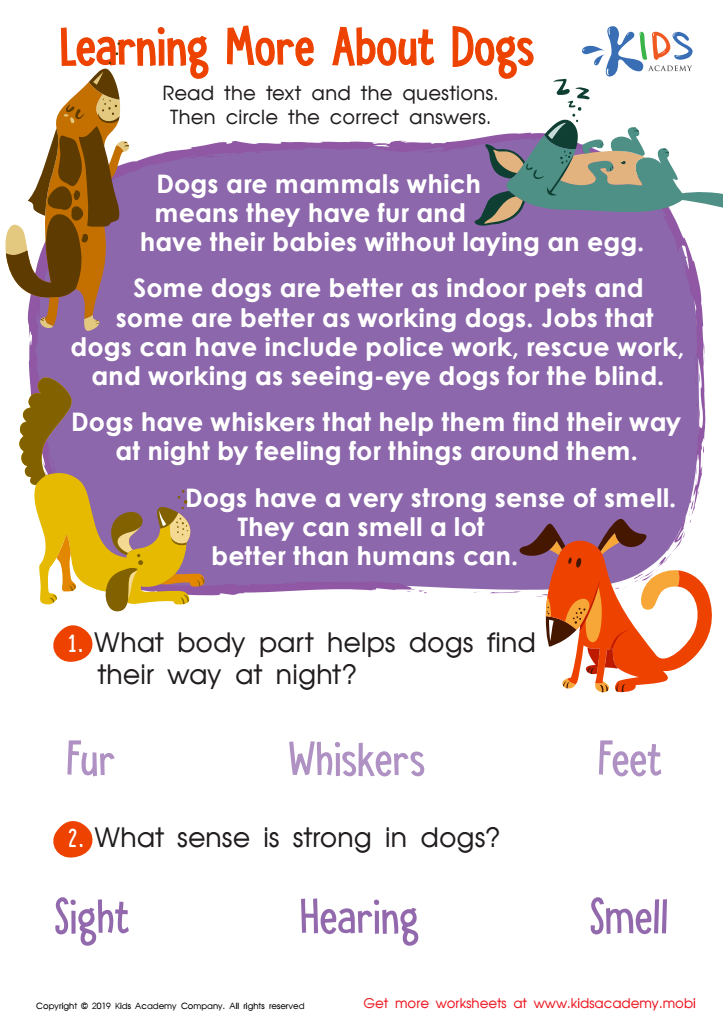
Learning More About Dogs Worksheet
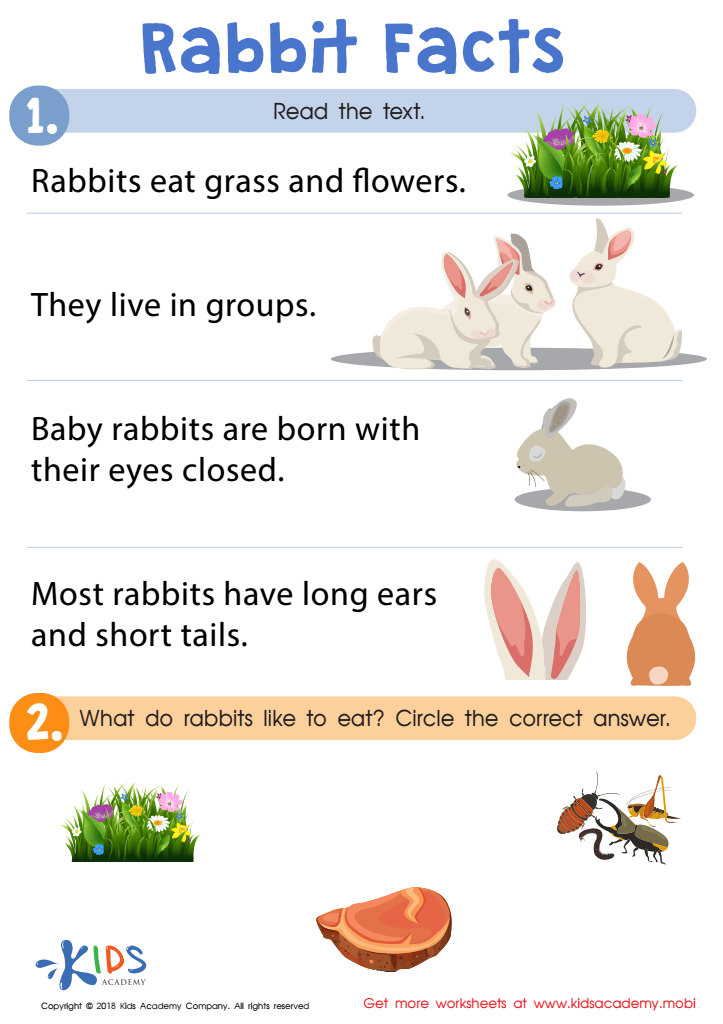
Rabbit Facts Worksheet







Understanding animals is an invaluable component of early education for children aged 4-7. At this stage, children are naturally curious about the world around them, and animal knowledge provides a rich, engaging entry point for this exploration. From a developmental standpoint, learning about animals can enhance various cognitive and emotional skills. When children recognize different animals and their habitats, they build on their categorization and memory skills, which are foundational to further learning in subjects like science and geography.
Moreover, animal knowledge fosters empathy and a sense of stewardship towards living beings. By learning that animals have needs, behaviors, and emotions, children develop compassion and responsibility. These lessons can translate into caring relationships not just with animals, but also with people.
Socially, understanding animals can fill a captivating role in children's play and interactions. It can spark imaginative play, stories, and discussions, aiding in language development and social skills. Interaction with pets or domesticated animals also provides real-life experience for these young learners to apply their academic knowledge, bridging theories with tangible realities.
Finally, integrating animal knowledge into early education often aligns with curriculum standards and fosters a love for learning. Parents and educators should care about this aspect to nurture well-rounded, compassionate, and intellectually curious individuals.








