Basic Addition Skills Normal Worksheets for Ages 4-7
11 filtered results
-
From - To
Discover our "Basic Addition Skills Normal Worksheets for Ages 4-7," designed to make math fun and engaging for your child! Tailored for early learners, these worksheets cover fundamental addition concepts, helping young minds develop strong arithmetic skills. With visually appealing graphics and simple exercises, children can practice and master basic addition at their own pace. Ideal for at-home learning or classroom use, these worksheets emphasize hands-on learning and foster confidence in early math abilities. Give your child the essential tools to build a strong math foundation with our expertly crafted addition worksheets!
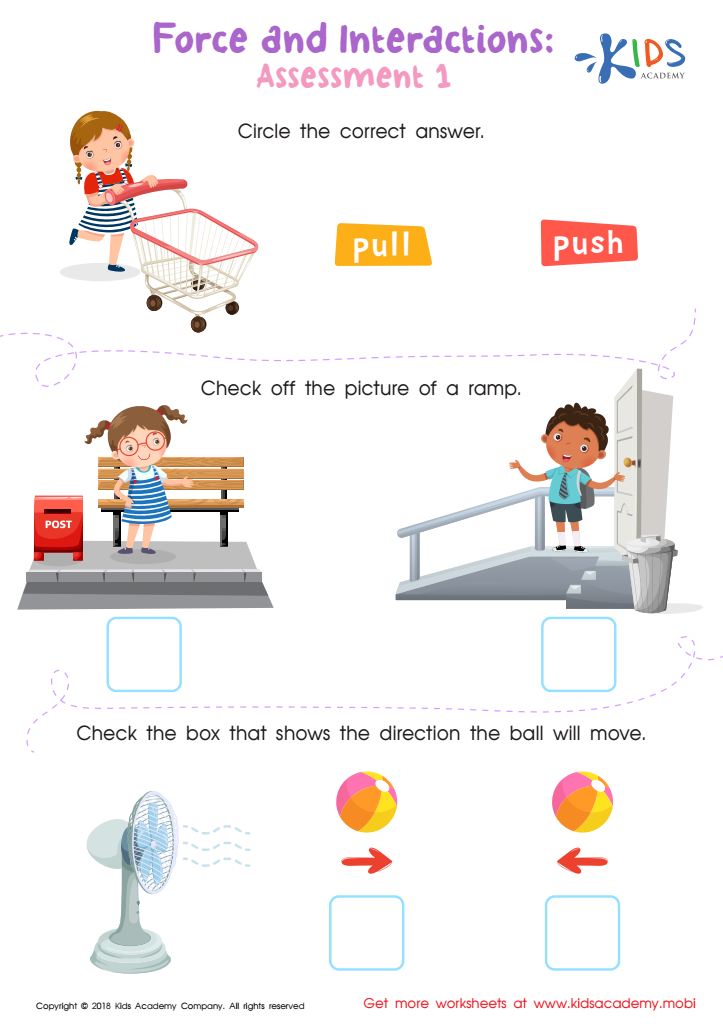
Force and Interactions: Assessment 1 Worksheet
 Assign to My Students
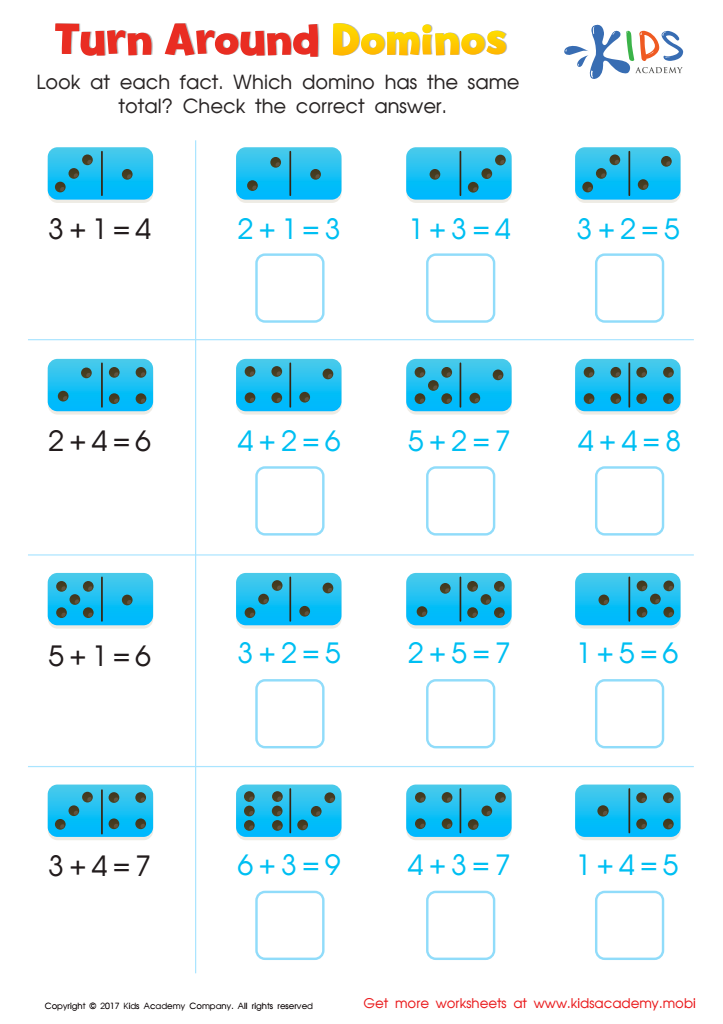
Turn Around Dominos Worksheet
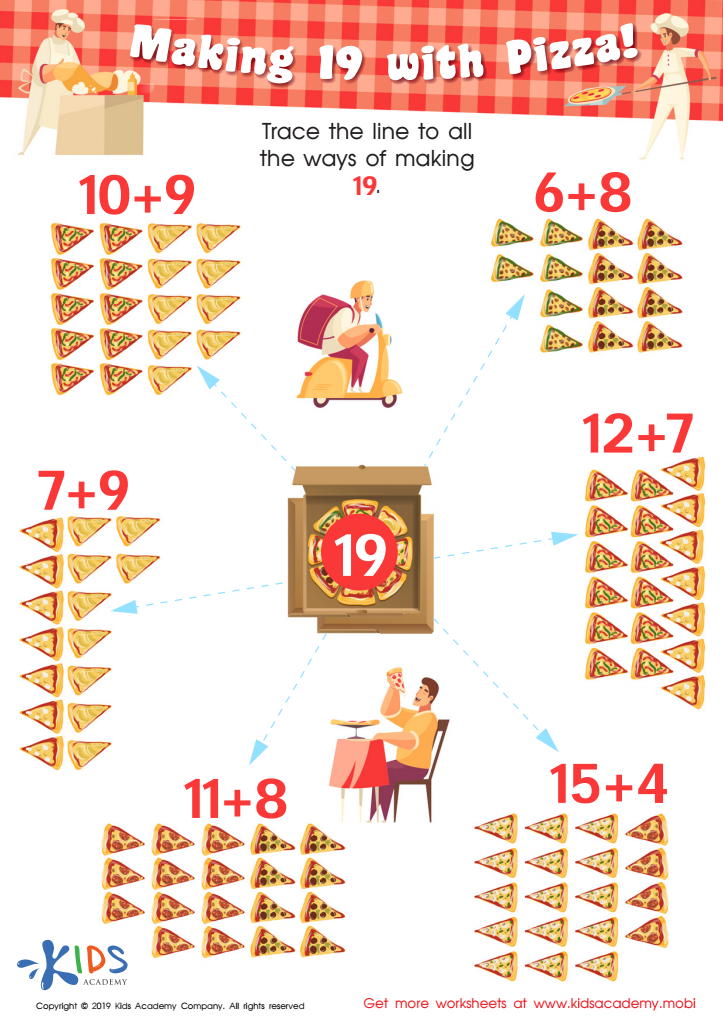
Making 19 with Pizza! Worksheet
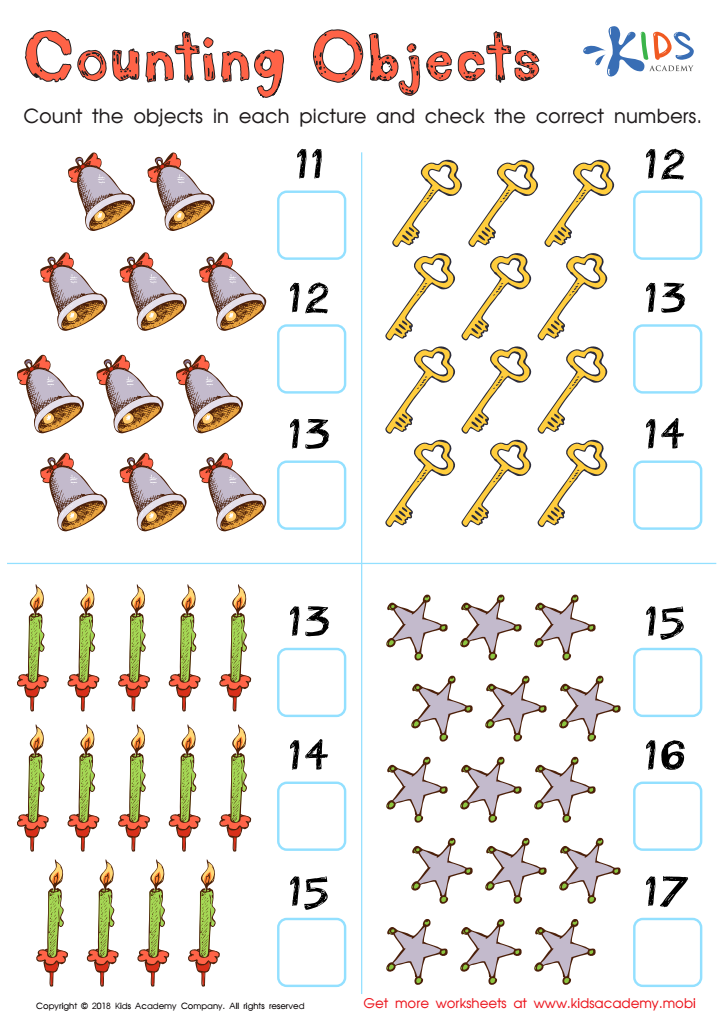
Counting Numbers Worksheet For Kindergarten
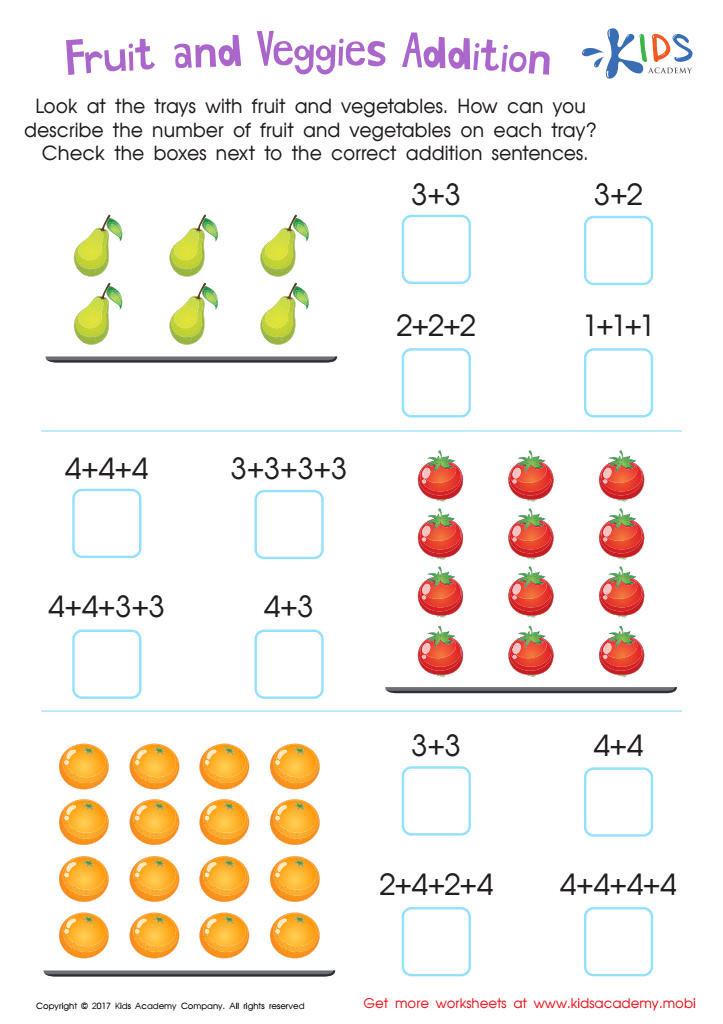
Fruit and Veggies Worksheet
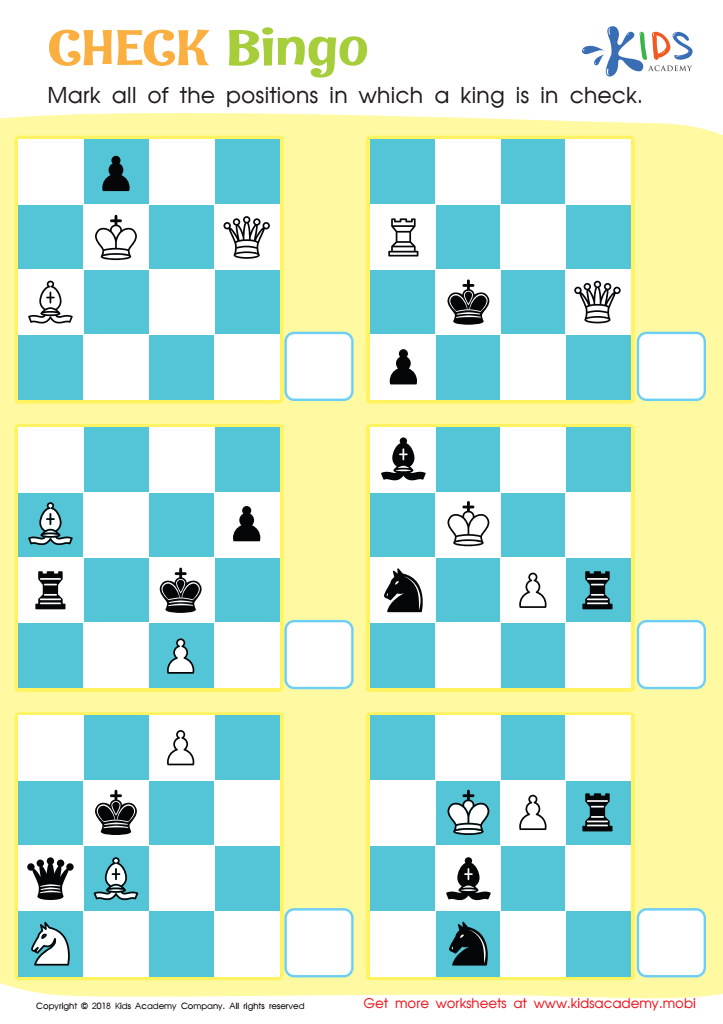
Check Bingo Worksheet
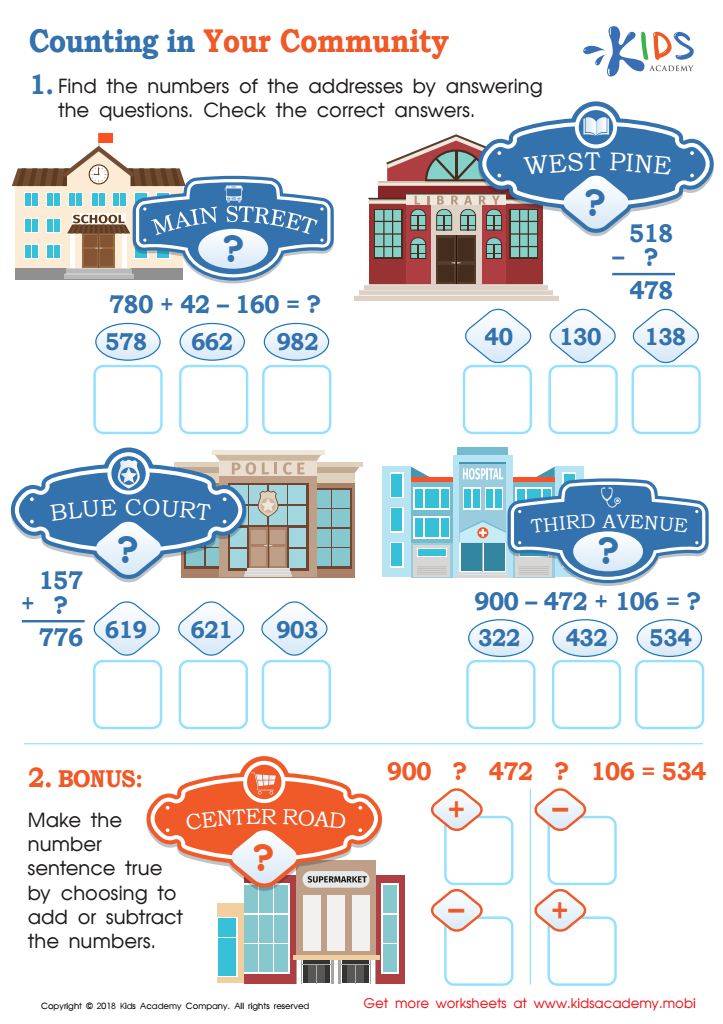
Counting in Your Community Worksheet
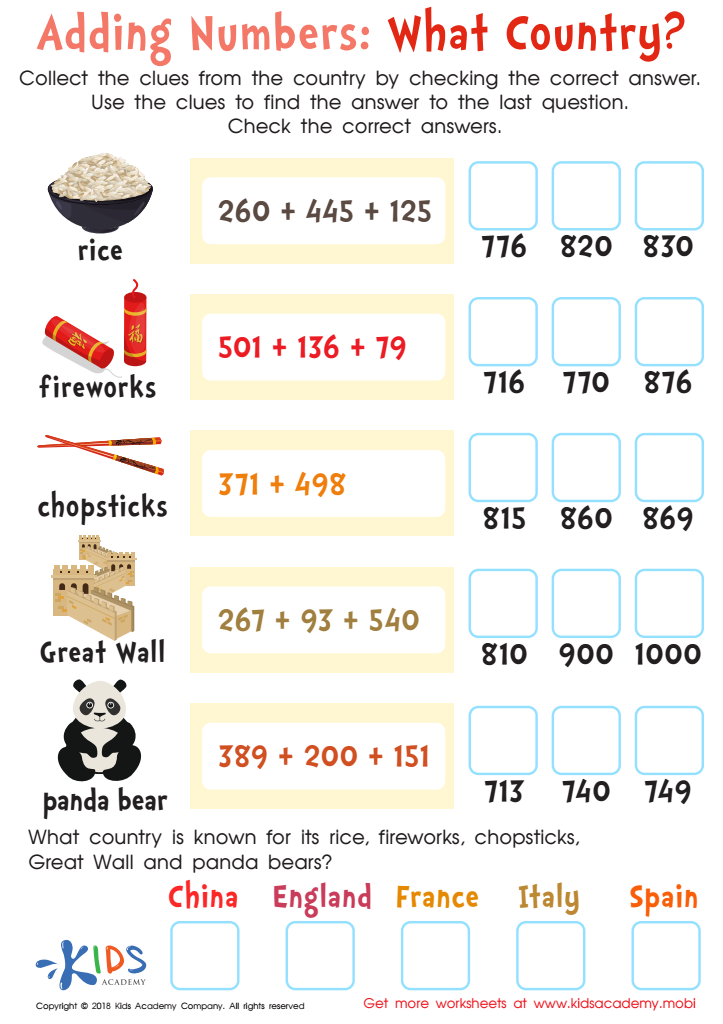
Adding Numbers: What Country Worksheet
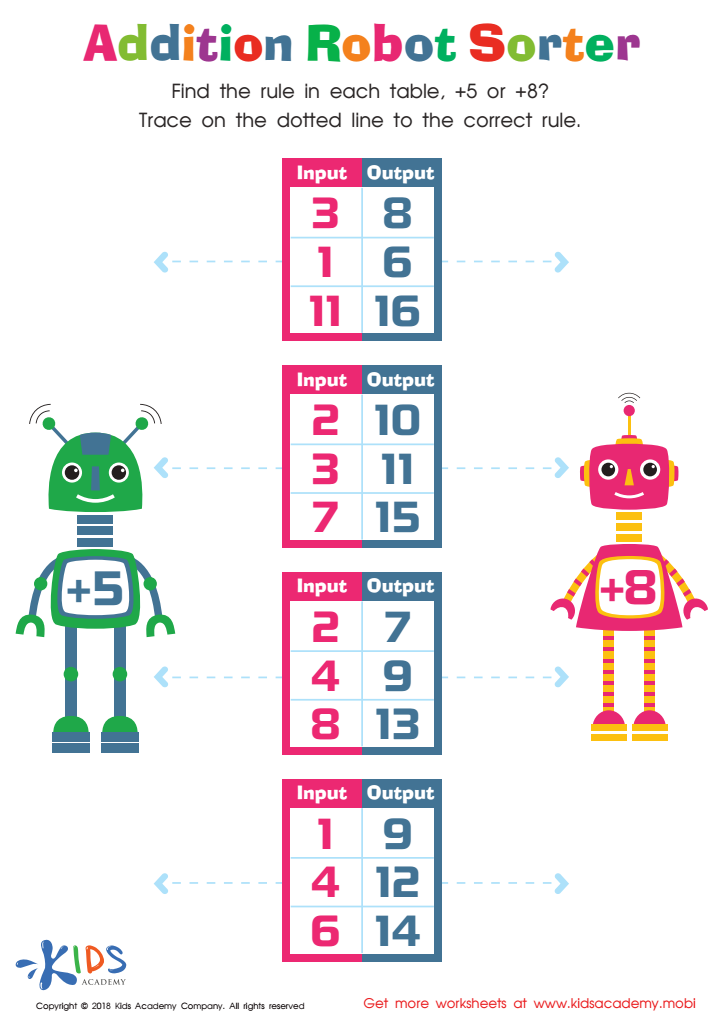
Addition Robot Sorter Worksheet
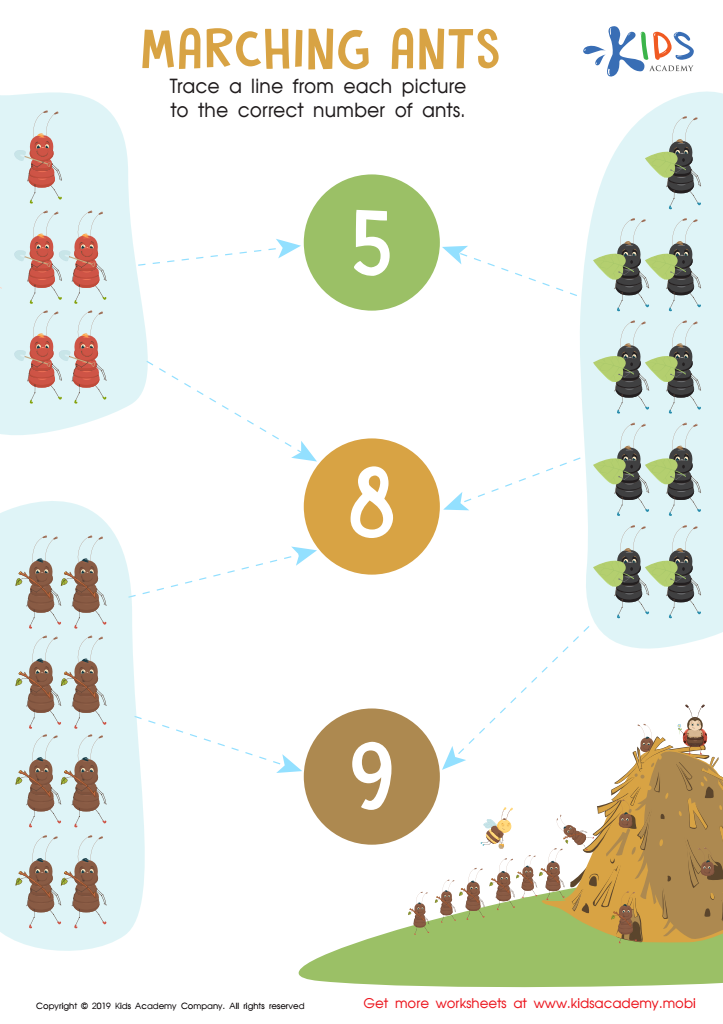
Marching Ants Worksheet
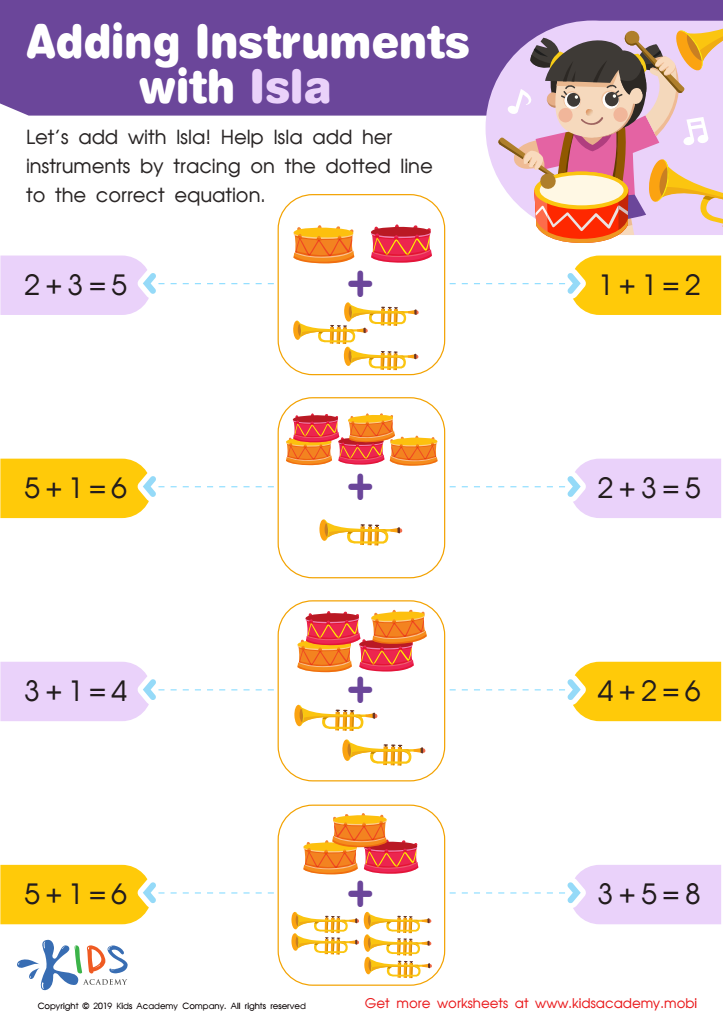
Adding Instruments with Isla Worksheet


.jpg)




Parents and teachers should pay close attention to the development of basic addition skills in children aged 4-7 because these skills form the foundation for all future math learning. At this early stage, children are developing critical thinking and problem-solving abilities, which are significantly enhanced through activities involving basic addition. Mastery of these skills at a young age builds confidence and helps prevent math anxiety, setting a positive stage for more advanced mathematical concepts later on.
Early competence in addition also fosters a love for learning and encourages curiosity. When children feel successful with their early math experiences, they are more likely to approach new challenges with enthusiasm rather than apprehension. Additionally, basic addition skills are closely linked with everyday practical activities, such as counting items, understanding money, and time-telling, making it an essential life skill.
For teachers, tracking the progress in addition skills allows for early identification of any learning difficulties, enabling timely support and intervention. For parents, reinforcing these skills at home with fun and engaging activities strengthens the child’s understanding and retention. Therefore, investing in the development of basic addition skills not only boosts academic performance but also supports overall cognitive development and prepares children for a future of lifelong learning.








